
Subscribe now for full access and no adverts
Ruperra Castle (Castell Rhiw’r Perrai; ‘pear-tree hill’) is garlanded with heritage designations, being a Grade II*-listed building and a Scheduled Monument, set within a Grade II Registered Park. Sadly, it is also on the Heritage at Risk Register for Wales, and parts are at risk of collapse. Abandoned in 1935, the gardens were left to go wild and the requisitioned building was gutted during occupation by British troops in 1941. When the National Trust later considered buying and restoring the castle as a war memorial, their country-house expert James Lees-Milne reported: ‘I could not see any point in it at all’.
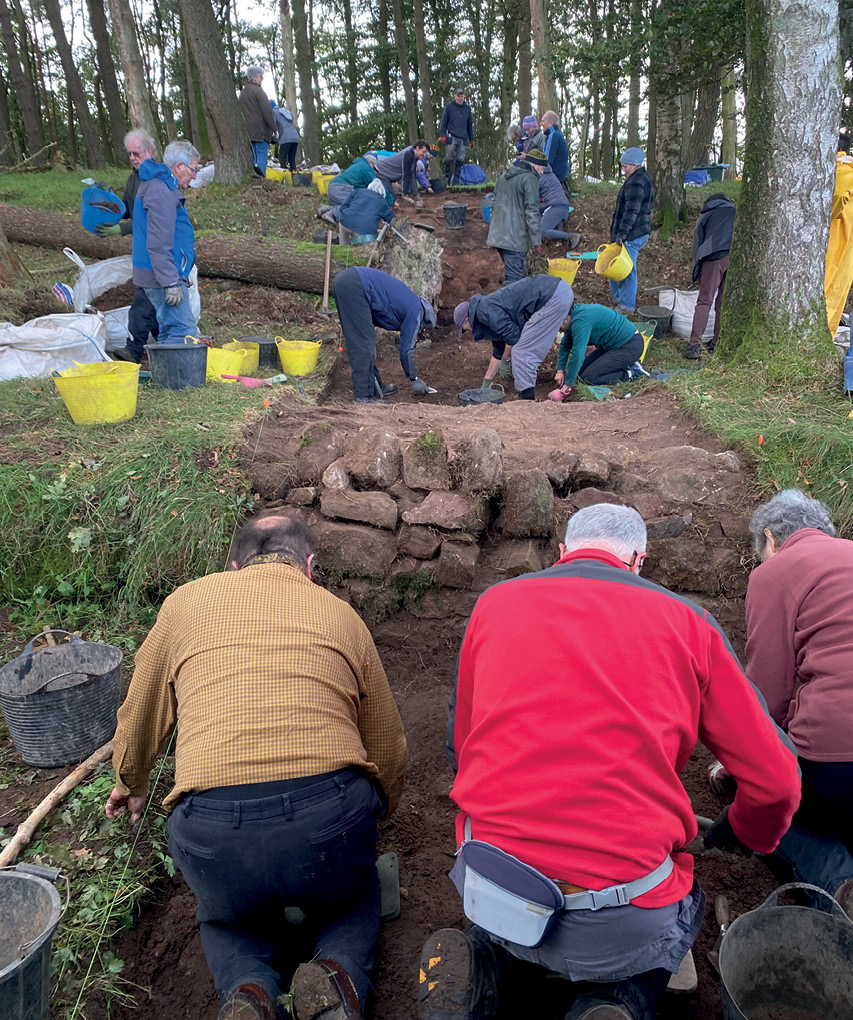
The Ruperra Castle Preservation Trust (RCPT) can see the point, however: the castle and its landscape represent a rich historic landscape within the heavily developed triangle of south-east Wales that lies between Caerphilly, Newport, and Cardiff, and they wish to see it saved and reunited with its 150-acre park. The latter was acquired by the RCPT’s sister-trust, the Ruperra Conservation Trust, in 2000 and is managed as a Site of Special Scientific Interest. One of the glories of the estate is its elevated position, and the wooded ridge above the castle contains a hillfort and a motte.

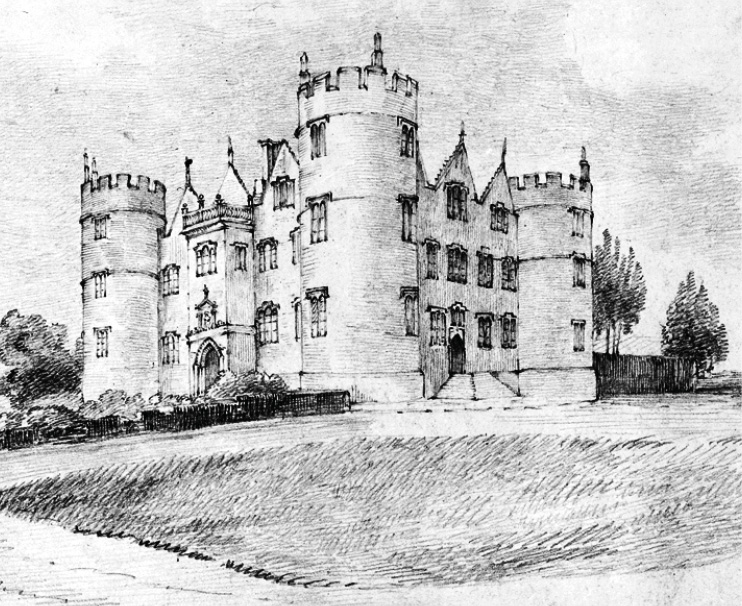
The Trust describes the four-square building with its corner turrets as a ‘pageant castle’ – one built for show, not defence, by Sir Thomas Morgan in 1626. Morgan knew about pageants, having served between 1600 and 1621 as the estate steward to the 2nd and 3rd Earls of Pembroke at Wilton House in Wiltshire; one of his duties was to organise the masques written by Ben Jonson and designed by Inigo Jones for the entertainment of James I and visiting dignitaries.
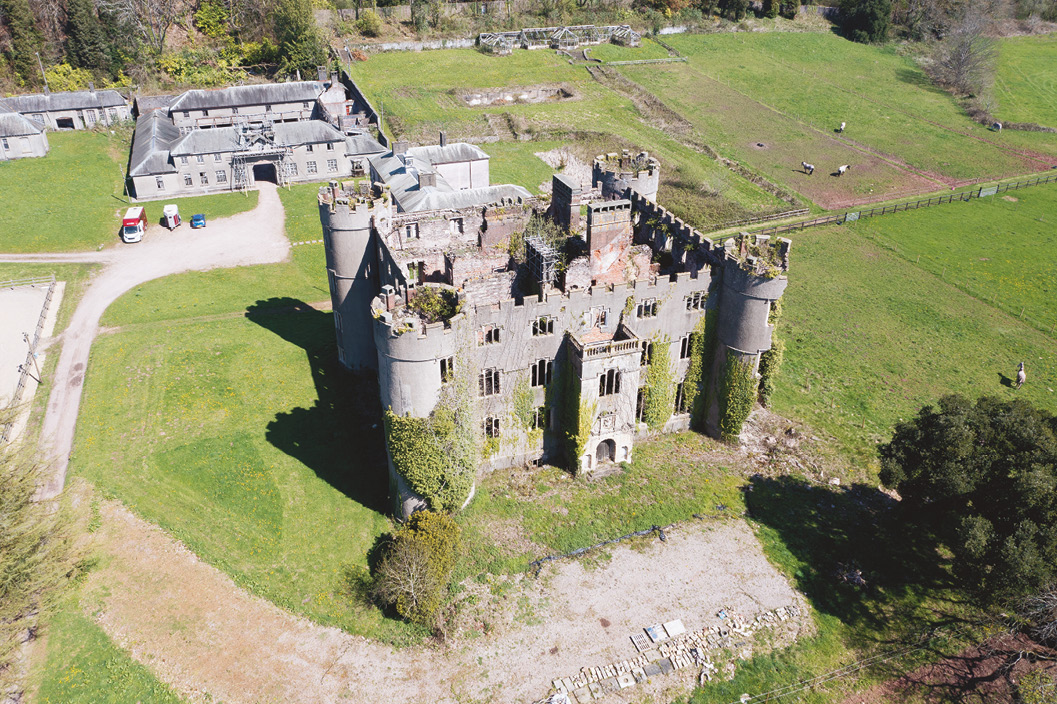
Soaked in the chivalric ideals that the Earls of Pembroke cultivated at Wilton House, Morgan built Ruperra as an exercise in nostalgia – posing as a medieval castle but, in reality, a modern Jacobean home of a sophistication not previously seen in Wales, incorporating the earliest known use of brick in Glamorgan (though that is now hidden beneath depressingly grey later render).
Determined to see the castle preserved for community benefit, the Trust is planning exhibitions and events to celebrate the 400th anniversary, including a history of the estate and of the Morgan family.
Further information: http://www.ruperracastle.wales
Text: C Catling / Images: Ruperra Castle Preservation Trust; Ruperra Castle Preservation Trust/Len Smith

Is there a society that you would like to see profiled? Write to theeditor@archaeology.co.uk