
Subscribe now for full access and no adverts
About halfway into War and the Mind, a new exhibition on the psychology of conflict at the Imperial War Museum in London, sits a Minenwerfer, or mine launcher. This hulking piece of German weaponry from the First World War points ominously at the ceiling and still looks like it is ready to fire.
The Minenwerfer was used to attack frontline troops, observation posts, and gun emplacements at close range, with shells tumbling through the air before they landed. They would have struck utter terror into those unlucky enough to be at the receiving end.
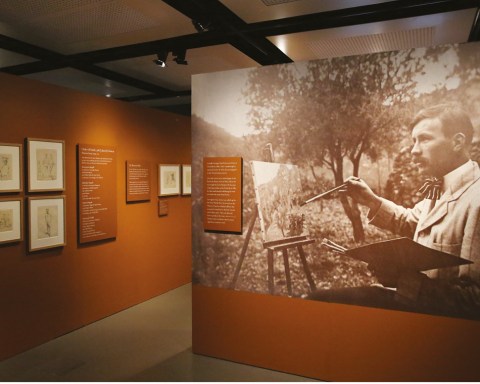
As an artefact, it is one of the most memorable of the many on display in this exhibition, which takes visitors on a winding route through a partitioned space on the museum’s third floor. A collaboration showcasing the results of six research projects funded by the Arts and Humanities Research Council, the exhibition is very effective at highlighting the psychological aspects of warfare, particularly in ways that visitors may not previously have appreciated.

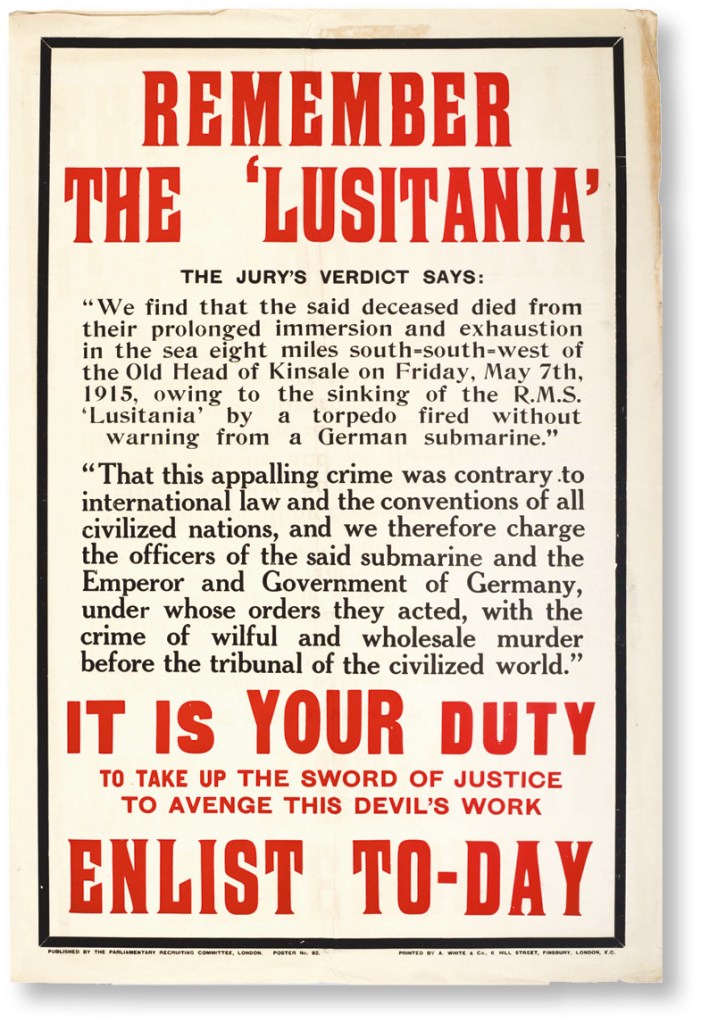
For instance, a popular memory of the outbreak of the First World War in Britain is of young men marching gleefully together to recruiting offices, signing up in droves for what they believed would be an exciting adventure. But what part did propaganda play in persuading them to enlist? The opening section of the exhibition looks closely at how public opinion was moulded through what were essentially marketing campaigns for war, which promised adventure and camaraderie but also appealed to a young man’s sense of duty.
‘I am glad to die for my country,’ says the headline of a poster of Edith Cavell, the British nurse executed by the Germans in 1915. The implication is clear: that all those who read it should be glad to do so too. Although Cavell’s death was shocking, often the propaganda was either exaggerated or tasteless. Nearby is a ‘German Crimes Calendar’, showing a picture of the sinking Lusitania for the month of May. Messages of this kind were very rarely subtle.
Enduring wars
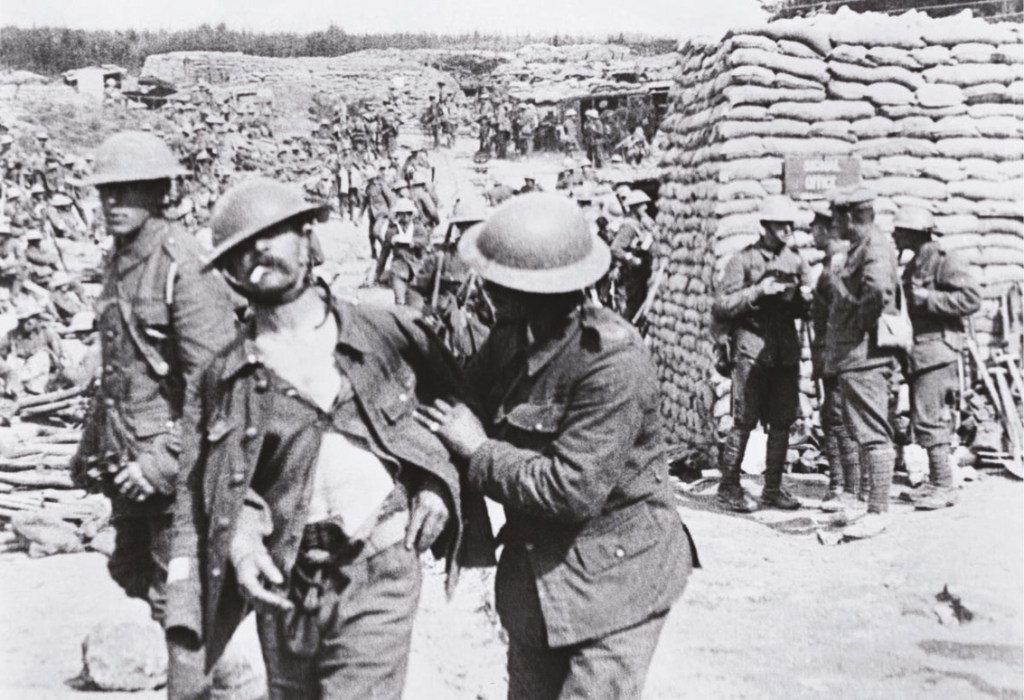
The central section of the exhibition looks at those who had to fight and endure wars, particularly once any sense of excitement or adventure was broken by the harsh reality of conflict. Here, along with the Minenwerfer, are some of the exhibition’s most terrifying objects.
Another German invention on display is the S-mine, one of almost two million planted by the Third Reich to protect their positions in World War II. When triggered, it sprung up in the air and sprayed shrapnel in all directions. The fear these devices would have stoked – of injuring the limbs and genitals – links rather grimly with a modern pelvic protection device on display from the Afghanistan war. This strange piece of equipment, like an armoured nappy for soldiers, gave its wearers some reassurance that their masculinity would be protected from blasts.
But the fear of detonating a mine, or of being hit by a low-flying mortar, was often enough to hinder or even deter the enemy. Fear was a kind of advanced weapon, produced by so many of these killing machines before they’d even been activated. It was particularly true of poison gas. Although it caused less than 1 per cent of all deaths in the First World War, chemical attacks were a constant worry among the enlisted. The wartime poet Wilfred Owen described those in fear of the gas as acting as though they had ‘temporarily lost their reason’.
Sustaining hatred
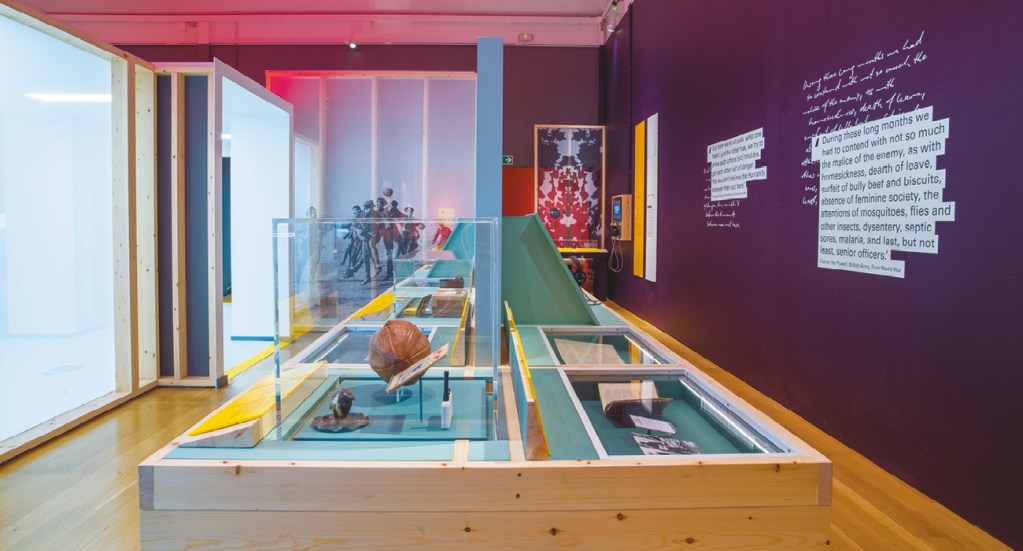
War and the Mind spends time, too, looking at how soldiers sustained themselves through the months and even years of drudgery that came with active service. At times when fighting turned into a stalemate, as it so often did during the First World War, other psychological factors came into play – such as a loss of morale, boredom, and homesickness. There are many quotes on the walls. One of them is from Second Lieutenant Alfred Sinkinson, a British army officer during World War II. ‘When you are out here you begin to realise that sustained hatred is impossible,’ he said.
It is well known that Allied soldiers were given amphetamines to keep them going during long periods of intense activity, but when there were lulls in action, they had to entertain themselves in more conventional ways. Some of the more personal items on display include objects such as a leather football belonging to British POWs, and a child’s mitten taken on missions by a Lancaster gunner to remind him of home. Some men turned to cigarettes, prostitutes, and illicit alcohol, while others had religion: the displays include pocket-sized Korans, Bibles, and crucifixes salvaged from war zones.
Shell shock
On the home front, as well, the threat of invasion had an immense psychological impact. The German V-rockets launched on Britain were in some ways similar to the Minenwerfer – the noise of the rockets, once described as sounding like a ‘motorcycle in bad running order’, was their most terrifying aspect. And yet the V-weapons were only launched towards the end of war, when most Britons had become grimly used to the threat of death from the skies.
The government measured public opinion very intensely during this time through the Mass Observation Surveys, the results from some of which are integrated into the exhibition. Many ordinary citizens freely revealed not a determined and upbeat spirit – as wartime propaganda may have wanted them to feel – but often a mix of anger, boredom, and resentment at the blackouts and food shortages. Dying for your country was often a secondary concern.

Later sections of the exhibition look at the aftermath of conflict, which left families destroyed and veterans traumatised by what they had experienced. By the end of the First World War, psychologists were beginning to formulate the concept of ‘shell shock’, but the research had a long way to go. A 1922 report on display has one contributor dismissing the syndrome as ‘practically non-existent’ and a ‘form of disgrace to the soldier’.
The IWM recommends an hour and a half to get round the exhibition, and it is worth taking your time as there is a lot to see and read. Across the hall is another temporary exhibition, Churchill in Cartoons: satirising a statesman (running to 23 February 2025), showing how Britain’s wartime leader was depicted during his time as prime minister.
The sketches, taken mostly from newspapers and created by artists such as Carl Giles and Leslie Illingworth, show a grinning Churchill, typically armed and in uniform, and there on the frontlines with other soldiers. The persona Churchill created for himself, which the newspapers of the day echoed enthusiastically, was as effective a piece of propaganda as any other from World War II.
War and the Mind
Until 27 April 2025 (free entry)
Imperial War Museum, Lambeth Road, London, SE1 6HZ
www.iwm.org.uk/events/war-and-the-mind
+44 (0) 20 7416 5000
MHM visits…
EXHIBITIONS
Fighting for the Right to Fight: African American Experiences in World War II
Until 27 July 2025
National WWII Museum, 945 Magazine Street, New Orleans, LA 70130, USA
http://www.nationalww2museum.org/visit/exhibits/special-exhibits/fighting-right-fight-african-american-experiences-world-war-ii
Adult $35
Throughout the Second World War, African Americans faced restricted opportunities in the highly segregated armed forces. This newly expanded exhibition honours the significant role of millions of service members who helped to secure an Allied victory while battling against discrimination from within their own ranks.
The Age of Uncertainty: 1980 to Today
Permanent display
RAF Museum London, Grahame Park Way, London, NW9 5LL
http://www.rafmuseum.org.uk/london/things-to-see-and-do/exhibitions-2/age-of-uncertainty
Free entry
Over the past 45 years, the Royal Air Force has undergone dramatic change. Situated in Hanger 6 of the museum, this exhibition examines the force’s recent history from the Falklands War to the present day, examining how technology has led to a more agile, adaptable, and responsive service.
LECTURE SERIES
David Olusoga: A Gun through Time
2-22 November 2025
http://www.fane.co.uk/david-olusoga
Prices vary
What stories lie behind the guns that shaped empires, wars, and even criminal underworlds? In this lecture series, touring across the UK in November, historian David Olusoga discusses the history of three firearms – the Thompson sub-machine gun, the Maxim gun, and the Lee–Enfield rifle – that changed the course of history.