
Subscribe now for full access and no adverts
Hever Castle reopens refurbished Boleyn Apartment
Hever Castle in Kent is best known as the childhood home of Anne Boleyn, and is the only house associated with her family to have survived largely structurally unaltered – including a suite of rooms where they lived.
Today known as the ‘Boleyn Apartment’, these rooms have reopened to visitors following a major refurbishment that has seen them entirely refurnished, redecorated, and rehung with textiles to suggest their appearance when Anne used them. No contemporary inventories for the castle survive, but the curatorial team has made a detailed study of comparable lists, together with Holbein’s paintings, to guide their work, and Tudor historian Dr David Starkey has also advised on the project.
Now adorned with tapestries, rush-matting, and 16th-century furniture, the rooms trace Anne’s life and impact on England’s history, monarchy, and religion. Successive spaces explore her childhood, her years at the French court, and her perilous position as ‘queen in waiting’, becoming increasingly opulent to match Anne’s rising status.
For more information, see http://www.hevercastle.co.uk.

Beckford’s Tower and grotto open to the public
Another recent reopening is Beckford’s Tower and Museum, a neoclassical folly outside Bath, which has undergone a three-year, £3.9 million refurbishment financed by the National Lottery Heritage Fund and other public and private sources.
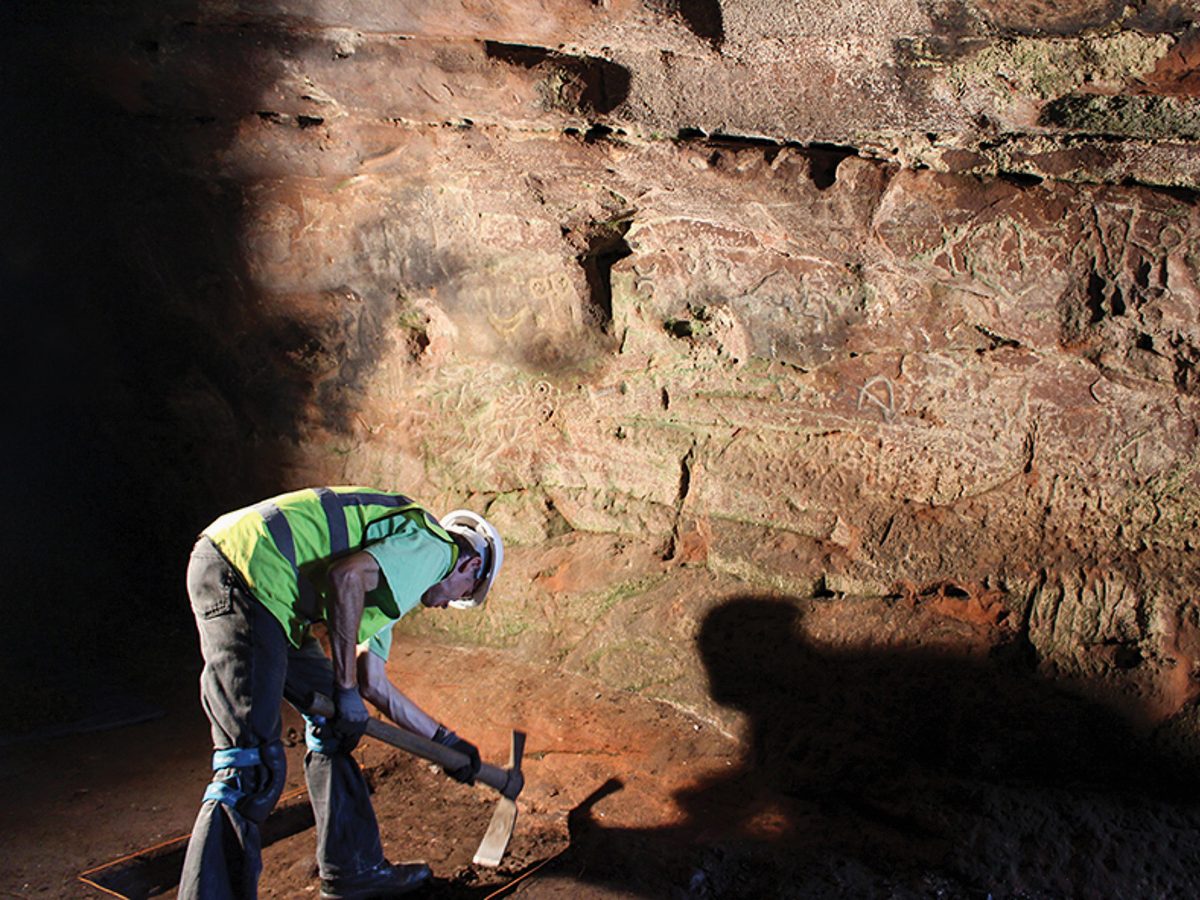
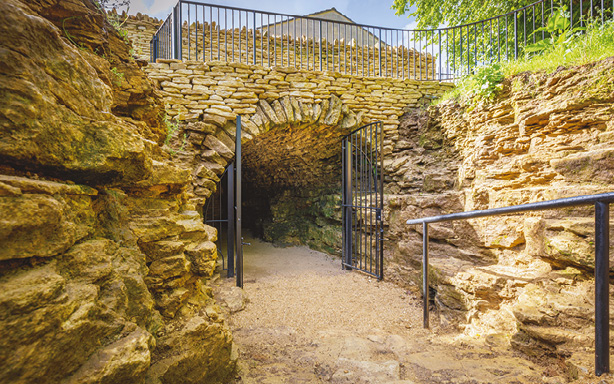
As well as essential repairs, the project has seen the excavation of a 19th-century grotto (below), now open to visitors for the first time. The museum itself has been reimagined with new interpretations exploring its diverse collections and the complex story behind them.
William Beckford (1760-1844) inherited and amassed huge wealth from sugar plantations in Jamaica and the transatlantic slave trade, and he used these riches to create one of the greatest collections of art, furniture, and books in Georgian England. New displays showcase key pieces from these holdings, while also placing them in the wider context of their origins, developed through extensive consultation with a diverse cross-section of the local community.
For more details, see https://beckfords tower.org.uk.
New dating evidence illuminates Bronze Age mining
Cornish heritage is indivisibly associated with mining – and new dating analysis of two Bronze Age artefacts at the Royal Cornwall Museum in Truro has demonstrated quite how long this history is.
Led by Dr Alan Williams of Durham University, the study focused on an antler pick and an oak shovel found in the Carnon Valley in the 19th century. Radiocarbon dating – undertaken as part of Project Ancient Tin, with a grant from the Royal Archaeological Institute – revealed that the shovel is around 3,200 years old, while the pick dates back c.3,600 years, making it the earliest evidence for the extraction of tin and/or alluvial gold in the British Isles.
The past and future of Cornish mining are explored in a new Mineral Gallery, which opened in July – part of a museum-wide transformation continuing into 2025.
For more information, see http://www.royalcornwallmuseum.org.uk.
Images: Newbery Smith Photography; Casper Farrell
New exhibitions
Athelstan 1100 exhibition
Athelstan Museum, Malmesbury, Until 30 September, http://www.athelstanmuseum.org.uk/athelstan-1100
Brick History
Museum of Gloucester, Until 6 October, http://www.museumofgloucester.co.uk/events/lego-brick-history
‘In All Weathers’: National Historic Ships Photography Exhibition
Historic Dockyard, Chatham, Until 17 November, https://thedockyard.co.uk/events/national-historic-ships-photography-competition
Game On
National Museum of Scotland, Edinburgh, Until 3 November, http://www.nms.ac.uk/exhibitions-events/exhibitions/national-museum-of-scotland/game-on
Last chance to see
A Wiltshire Thatcher – a photographic journey through Victorian Wessex
Wiltshire Museum, Devizes, Until 1 September, http://www.wiltshiremuseum.org.uk/exhibitions
Hebridean Light & Archaeology
Museum nan Eilean, Lionacleit, Isle of Benbecula, Until 24 August, http://www.outerhebridesheritage.org.uk/event/hebridean-light-archaeology