Subscribe now for full access and no adverts
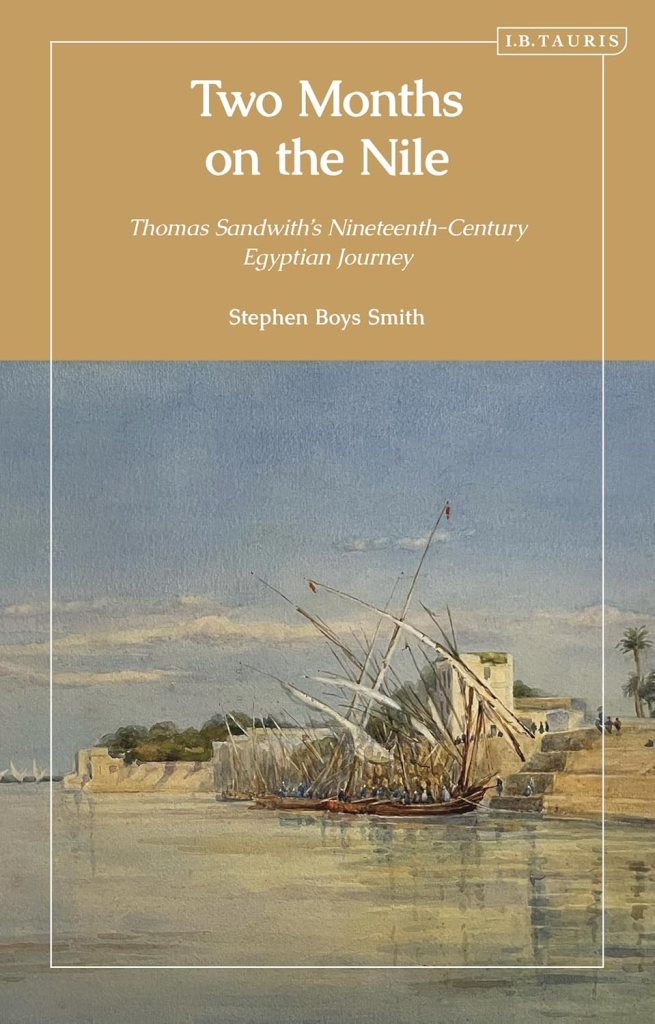
Thomas Sandwith was a British diplomat who served as consul in the Levant from 1855 to 1891. This is the second volume in a biography written by historian and former senior British civil servant Stephen Boys Smith, which covers Sandwith’s retirement and his journey through Egypt.
To further his long-standing interest in archaeology, in January 1893 Sandwith and his daughter Charlotte travelled by dahabiya, along the Nile from Cairo to Aswan and back. His handwritten diary of the journey, which is published as written, is introduced with supporting context, commentary, and notes by the editor, who argues that the Egyptian Diary is ‘Consul Sandwith’s last and fullest despatch from the Levant’.
The book begins with an introduction to Sandwith (his consular career, quasi-archaeological experience in Cyprus and Crete, and collecting of antiquities), and then provides background to Egypt, Egyptology, and tourism in the 1890s. The diary is followed by a dramatis personae of people Sandwith met or mentioned, including earlier travellers and artists, cross-referenced to relevant diary dates, and a glossary.
As confirmed by Boys Smith, Sandwith’s diary was written in the spare and straightforward style of his despatches held in the British National Archives. While in Egypt, the retired diplomat drew on his knowledge of Arabic and Turkish to converse with the local people. Since Egyptian antiquities were Sandwith’s principal interest, he brought reference books including Edwards (1877), all volumes of Wilkinson (1837), and guides by Baedeker and Murray. He recorded detailed descriptions of the sites and monuments he explored, and likewise special visits to Egyptologists and current excavations, including Newberry at Amarna and Naville at Deir-el Bahri. Sandwith spent about ten days in Luxor, which was by then a substantial centre for visitors with modern amenities and services. During the journey, Sandwith saw and noted the juxtaposition of the old and the new in Egypt. His observations on flora and fauna, the environment, and geology are constants during the journey, but there is little mention of interactions with fellow passengers, nor conditions of comfort on board. For speed and to avoid expense, he switched to train for the return to Cairo.
That this clear and concise Nile diary is by an educated and well-read observer with extensive knowledge of the Levant assures its special place in the genre of accounts by travellers in Egypt. Boys Smith’s meticulously researched contributions facilitate a fuller understanding of Sandwith’s diary, including information about topics and people encountered or referenced. A map and 14 illustrations accompany the book.
REVIEW BY CATHIE BRYAN
Two months on the Nile:: Thomas Sandwith’s Nineteenth-Century Egyptian Journey
by Stephen Boys Smith
I B Tauris, 2025
ISBN 978-0-7556-5606-6
Hardback, £85