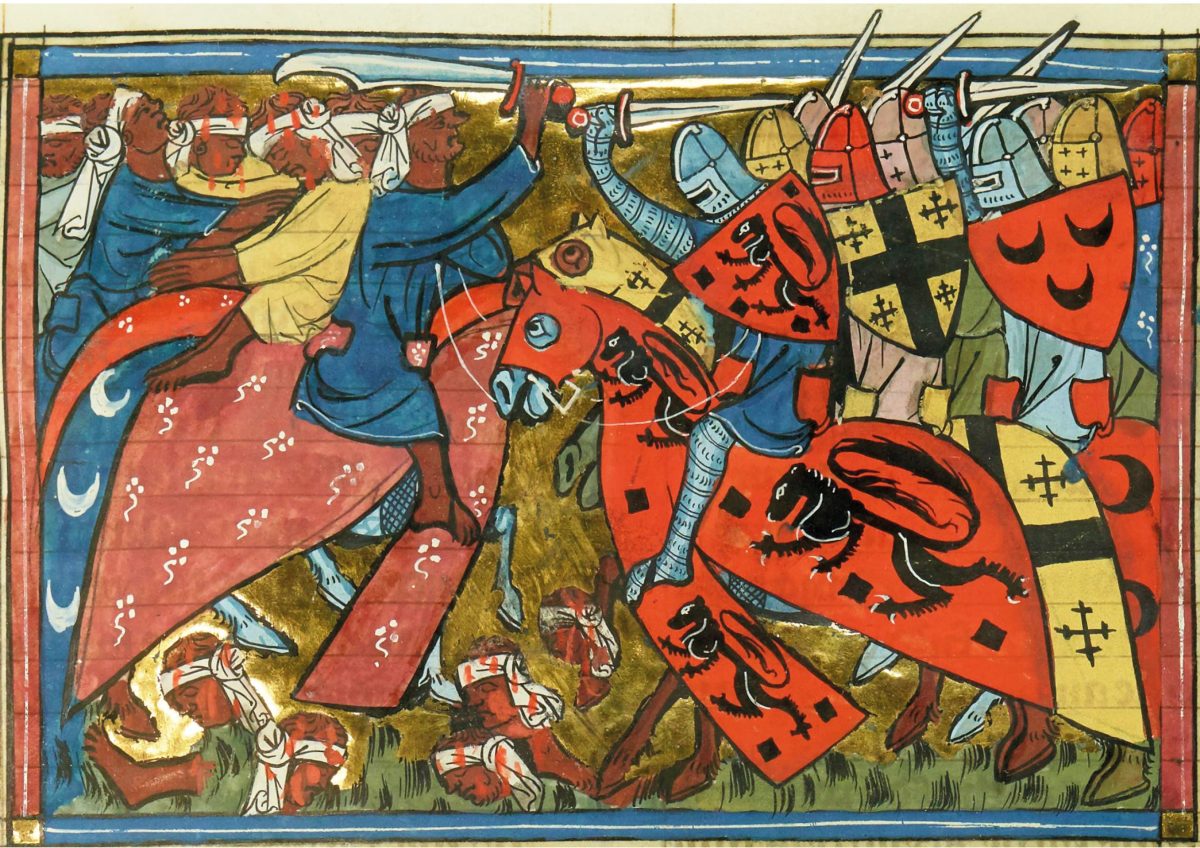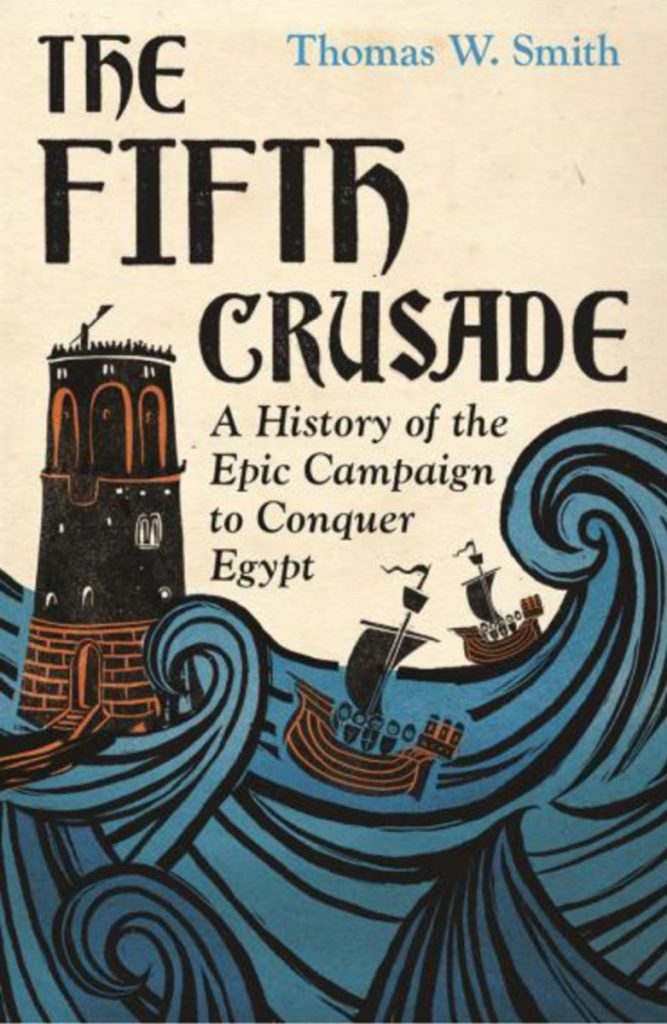
The medieval Crusades in the Middle East were a series of expeditions from AD 1097 to 1291. The First Crusade had, against the odds, succeeded in capturing Jerusalem and the Holy Land for the Latin Christians in 1099. Holding the territory proved more difficult, and in 1187 Saladin re-captured the Holy City and expelled the Crusaders from most of Palestine. The Fifth Crusade was part of the attempt to win back the lost territory. It was first called by the vigorous Pope Innocent III in 1213, and lasted from 1217 to 1221.
Having sailed first to Acre, the Crusaders decided to attack Egypt in order to undermine the Ayyubid Dynasty, now led by Saladin’s brother al-Adil. They laid siege to the city of Damietta in the eastern Delta, and after 18 gruelling months the city was taken. Success seemed at hand, and the new Sultan al-Kaˉmil even offered to restore Jerusalem to Christian control in exchange for Damietta’s return. Then, in the summer of 1221, the expeditionary force moved south down the Nile and there met with disaster. The Egyptians knew the lie of the land and understood the inundation process of the Nile in July and August. The Crusaders did not – and found themselves trapped by the rising flood waters and had to surrender. The important prize of Damietta had to be given up and the Crusaders departed with nothing achieved. So near, and yet so far!
This is a new account of the Fifth Crusade, and the author has produced a readable and accessible narrative. He introduces the power politics of the time, and the major players both on and off the scene. This includes a walk on part for St Francis of Assisi, as well the absent Holy Roman Emperor Frederick II, with the shadow of Genghis Khan waiting in the wings. Each chapter begins with an imaginative depiction of a moment in the Crusade’s history, before presenting a careful exploration of the details. Smith makes good use of contemporary written sources from both Latin and Muslim writers, and takes into account not only the military aspects of the campaign, but also the theological forces driving it. There was a strong apocalyptic expectation that the events prefigured the ‘End of the World’.
Eventually Frederick II did set out for the Holy Land in the Sixth Crusade. Despite being excommunicated by the new Pope, he succeeded in regaining Jerusalem by diplomacy. But once again success was short-lived. The Seventh Crusade led by the French king Louis IX once again targeted Egypt, but was even more disastrous, with the capture of the monarch, and the payment of a ‘king’s ransom’.
For those who want a reliable introduction to this period of medieval history and the role of Egypt in it, this book is highly recommended.
REVIEW BY MICHAEL TUNNICLIFFE
The Fifth Crusade: A History of the Epic Campaign to Conquer Egypt
by Thomas Smith
Yale University Press, 2026
ISBN 978-0-300-28395-2
Hardback, £25
Find out more about the Fifth Crusade with an article by Thomas Smith here.