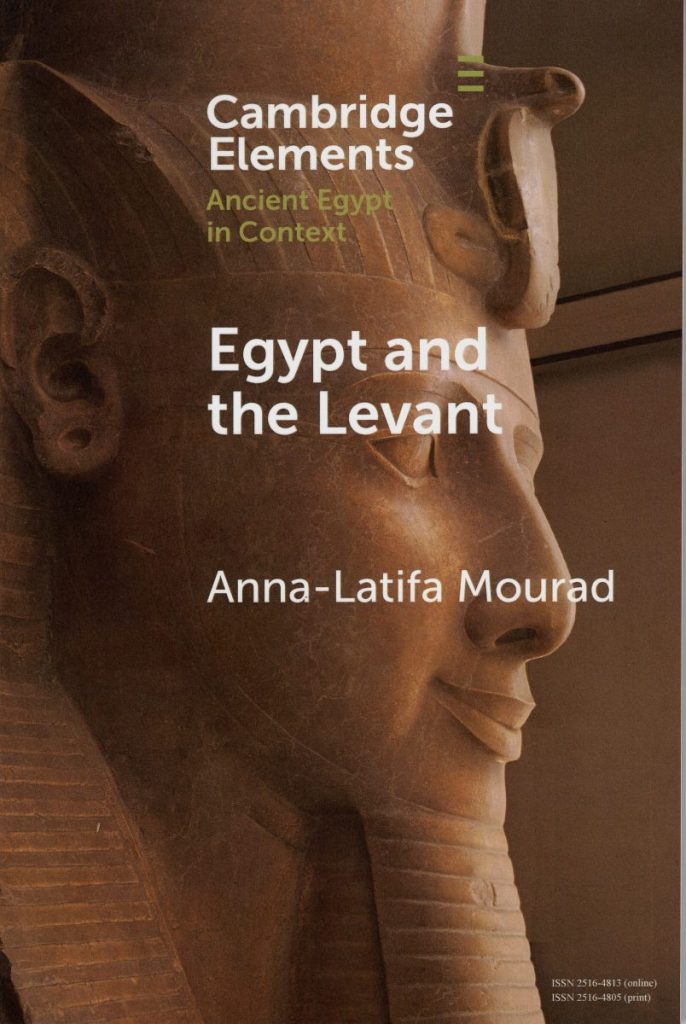
This latest volume in the Cambridge Elements series offers a snapshot of what we understand about connections between Egypt and the Levant in the early to mid-Bronze Age, a period that covers the Levantine Early Bronze Age (Egypt’s Predynastic and Old Kingdom periods) and Middle Bronze Age (from Egypt’s Middle Kingdom to the beginning of the New Kingdom). Mourad offers a shift in emphasis from the traditional ‘Egypt as dominant-power’ approach to an exploration of the many ways people, places, and ideas were connected across regions, while acknowledging the bias inherent in the greater amount of evidence surviving in Egypt compared to the Levant.
The book is divided into three sections, exploring methods and evidence, encounters and their shifting nature, and the maintenance of these regional connectivities. It considers the three main elements of long-distance exchange: the ‘entities’ (what was exchanged – including objects, concepts, images, people, animals, and plants); the physical spaces of connectivity (where the exchanges happened – such as routes, harbours, and administrative complexes), and transmission of ideas, culture, and artistic techniques (abstract spaces); and how the entities were exchanged – via agents such as traders, migrants, and state operatives.
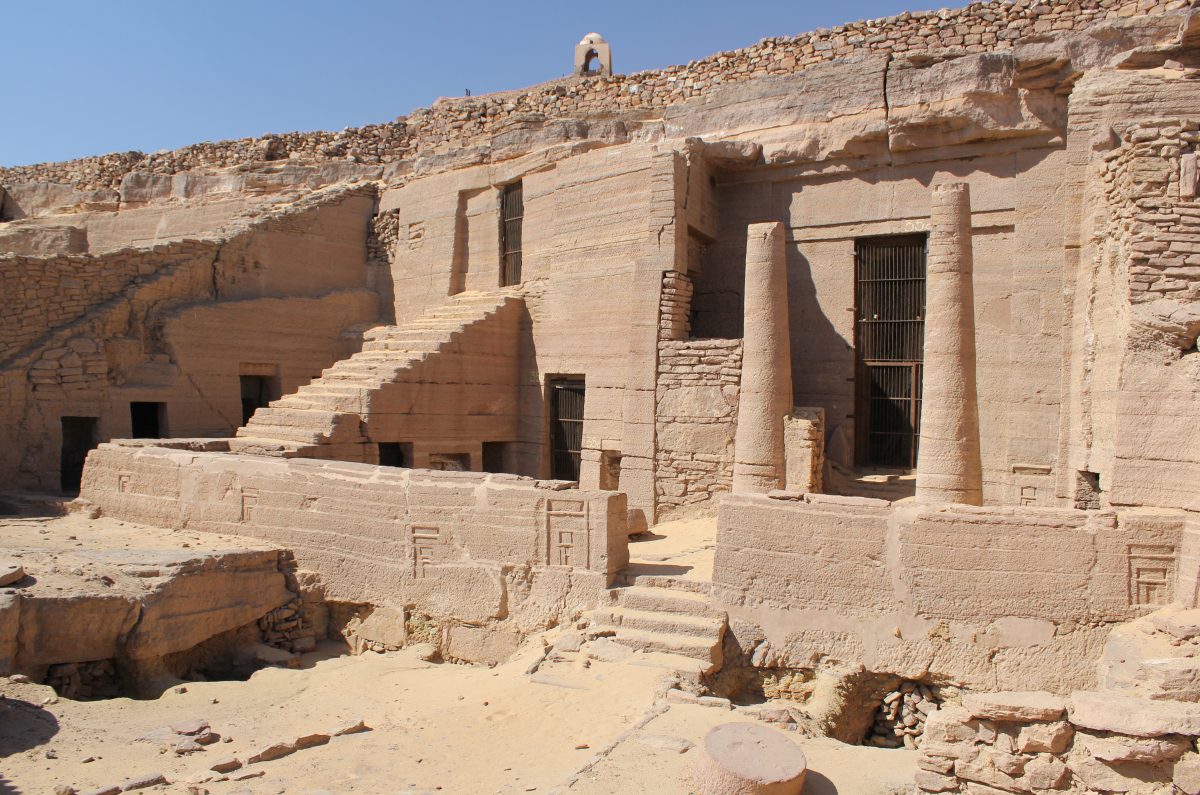
Encounters between the two regions can be traced back to a time before the emergence of the Egyptian state, with evidence of trade in ceramics and luxury products. In the Old Kingdom, these are represented in expeditionary texts, and in royal and religious contexts, with the first scenes of hostility emerging in the Fifth and Sixth Dynasty funerary complexes. There is no evidence for Egypt’s imperial control over any part of the Levant at this time – rather there were multifaceted relations between the two states. During the Middle Kingdom, exchanges involved both royal and non-royal agents. The author explores the famous scenes in the Beni Hassan tombs, as well as texts such as the Tale of Sinhue, and evidence of a possible collaborative mining venture at Serabit el-Khadim. Unusual funerary customs (including donkey burials) at Tell el-Dab‘a suggest a multicultural settlement where Egyptian and Levantine cultures intermingled. It was here that more hostile north-easterners – known as Hyksos – eventually set up their capital Avaris, until driven out by the Eighteenth Dynasty kings. Mourad concludes that the long-distance connectivities of these earlier periods formed the foundation for the extensive international trade and diplomatic network that emerged at the beginning of the New Kingdom.
Although only 95 pages long (more than 20 of which form the comprehensive bibliography), Egypt and the Levant is a fascinating account of the complex transformations across the Bronze Age that will interest scholars and general readers alike.
REVIEW BY SARAH GRIFFITHS
Egypt and the Levant
by Anna-Latifa Mourad
Cambridge Elements: Ancient Egypt in Context,Cambridge University Press, 2026
ISBN 978-1-009-41333-2
Paperback, £18