
Subscribe now for full access and no adverts
REVIEW BY GRAHAM GOODLAD
The Second World War saw the parachute and glider used to deploy troops in large numbers for the first and last time in military history. The technology had simply not been available in the Great War, and by the 1950s the helicopter could transport soldiers into the battle zone with much greater precision.
Nonetheless, British airborne operations in 1940-1945 have received considerable attention, with first hand accounts supplemented by general histories and specialist studies. Just two years ago, for example, Mark Urban’s Red Devils told the story of the Parachute Regiment through the experience of six diverse individuals.
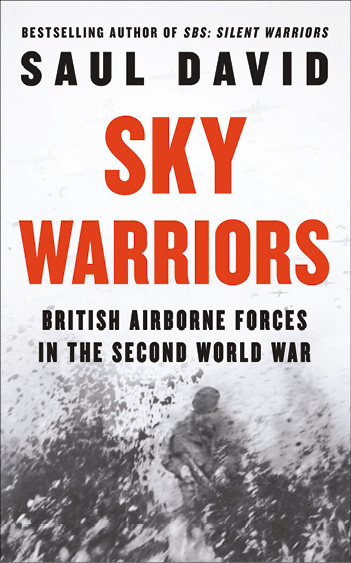
Now we have Saul David’s overview of the subject, Sky Warriors. It begins with a gripping narrative of the first British paratrooper operation, codenamed ‘Colossus’, aimed at sabotaging a key aqueduct in southern Italy in February 1941. It concludes just over four years later, with the airborne forces’ finest achievement, the crossing of the Rhine in Operation Varsity – a mission that helped to end the war in Europe.
David deftly traces the steep learning curve between the two operations, as the troops developed their skills and trained for combat-readiness. The process had to be improvised from scratch, after Churchill called for the creation of an airborne force in June 1940. The shortage of suitable aircraft for parachute drops, and the hazards of exiting a Whitley bomber through an aperture cut in the floor, were problematic before the Dakota transport plane became available.
The success rate varied immensely. David vividly relates, for example, the remarkable Bruneval Raid in early 1942 (see here). At the other end of the scale are the tragic losses incurred in the glider-borne assault on Sicily, in which numerous craft landed in the sea or far from their intended destination.
The personal stories of key participants make this a genuine page-turner. Sky Warriors will leave you with a renewed sense of admiration for the bravery of Lieutenant Colonel John Frost and Major John Howard, among many others. They faced huge odds. Glider landings were rough and dangerous. Parachutists often landed in hostile territory at a distance from their air-dropped heavy equipment.
David chronicles the incompetence of some of those given responsibility for deciding how and where the paratroopers were deployed. A basic failure of intelligence, for example, resulted in a disastrous drop in Tunisia in November 1942, leaving 2nd Parachute Battalion in desert terrain at the mercy of German forces.
So what is the overall contribution of Sky Warriors to our understanding of the subject? In the introduction, David cites authors who have covered different episodes – some concerned with paratrooper operations, others with glider missions. His aim, he says, is to join all these narratives together for the first time to tell the whole story of British airborne operations.
He certainly covers a great deal of ground, and does so in an always engaging manner. But there are some notable omissions. Operation Thursday, the landing of Chindits by glider in Burma in March 1944, is not discussed. Nor is Operation Dragoon, the Allied invasion of southern France in August 1944. These are efficiently covered in James E Mrazek’s Airborne Combat, a Stackpole Books reprint of a 1970s text, which does not feature in David’s bibliography. It is also open to question whether Arnhem – perhaps the most thoroughly covered of all airborne expeditions – merits almost 100 pages, more than five times the space allocated to the larger-scale and much more successful Operation Varsity.
These reservations apart, Sky Warriors is a serviceable and well-written synopsis, which can be recommended to anyone seeking a reliable introduction to the subject.
Sky Warriors: British airborne forces in the Second World War
Saul David
William Collins, hbk, 552pp (£25)
ISBN 978-0008522162