
Subscribe now for full access and no adverts
REVIEW BY GEORGE NASH
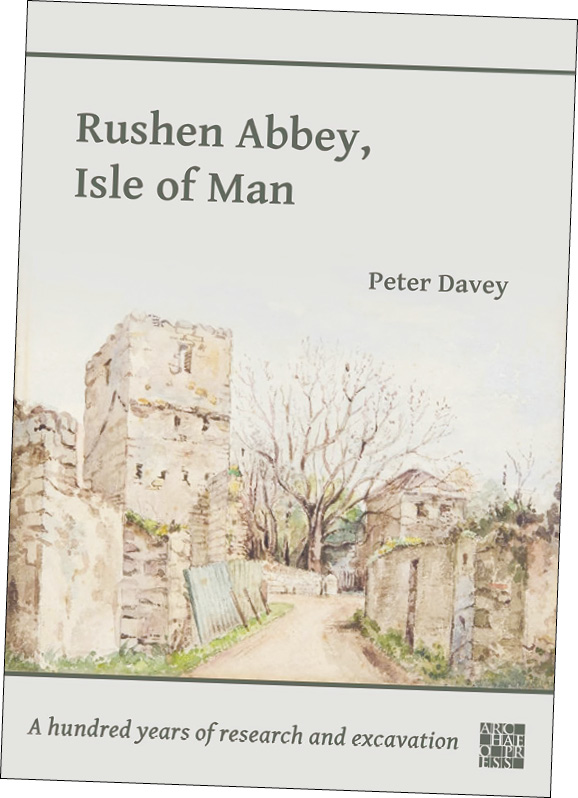
I have always thought that, for many archaeological projects, the process of data-gathering and reporting on previous archaeological activity is as important as the archaeology itself; the investigative activity at Rushen Abbey, including more than 100 years of investigation, is no exception to this principle.
Like elsewhere in the western British Isles, examples of medieval and post-medieval monastic activity on the Isle of Man are numerous and well-documented, including in the archaeological record. In this book, Peter Davey captures the very essence of that archaeological record for one of the most visible monastic sites on the island.
Rushen Abbey, founded by a Cistercian community in 1134, was a victim of the Reformation in 1540. The Abbey and its community were probably the most powerful monastic institution on the island during the medieval period.
Davey’s book is organised into eight informative chapters with supporting appendices. Chapter 1 (in the form of a Preface) deals with the complex history associated with the founding, development, and eventual demise of the abbey, while Chapter 2 and Chapter 3 provide a chronological contextual narrative of the excavation history of the site.
In Chapter 3, the various excavations that have occurred over the past 100 years are discussed. The earliest excavation was undertaken by Deemster Gill between 1895 and 1897. He concentrated on two small areas, around the south range and the kitchen, and the northern transept of the church. This excavation programme was followed by the William Cubbon excavations in 1912-1913 and 1926, and included strategic excavations along the structural walls of the church and refectory building. Using modern archaeological field methods, excavations undertaken by Lawrence Butler commenced in 1978-1979 around the presbytery and transepts. A further excavation programme located a new chapel building, a section of the monastic cemetery, and a charnel pit. This was followed by a full excavation of the east range between 1988 and 1989.
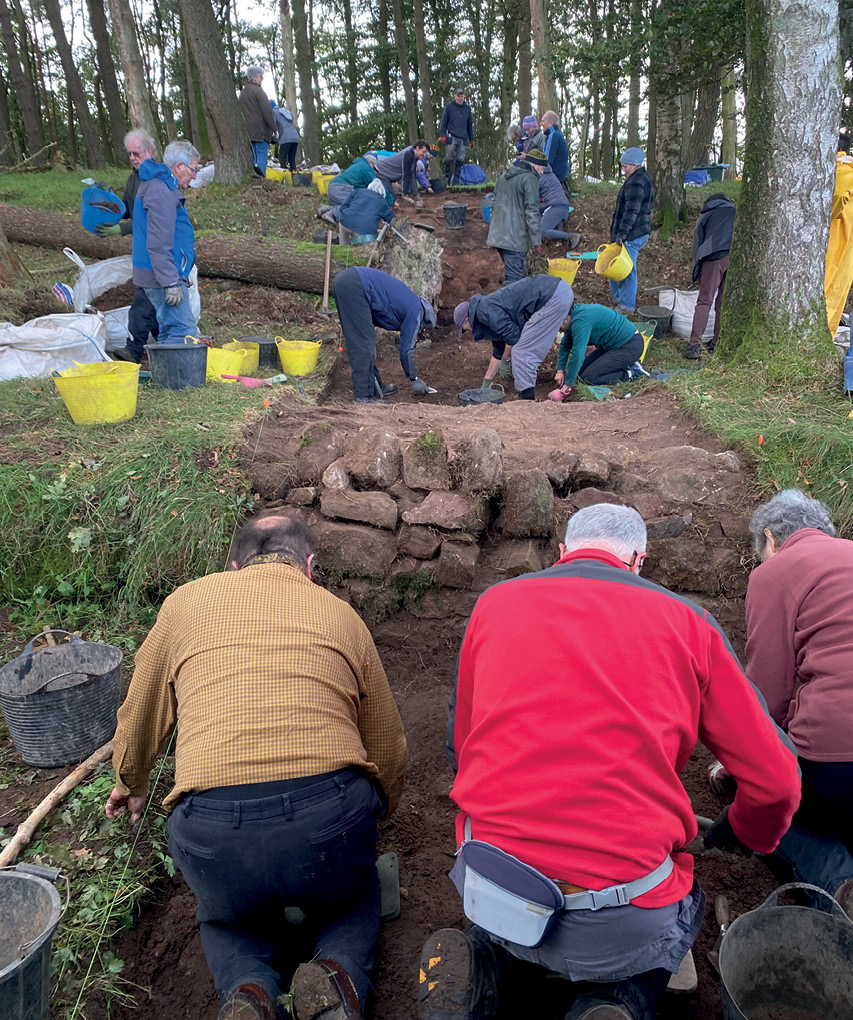
In recent times the abbey site was under threat from potential development and, as a result, the Manx Government purchased the abbey and its precinct in 1998. This purchase enabled a team from the Centre for Manx Studies (University of Liverpool) to undertake an extensive excavation programme between 1998 and 2008. It is from this programme that a greater understanding of the site was obtained through systematic excavation.
Chapter 4 (with Marie C Weale) focuses on the burial deposition within the various cemetery areas that are located within the precinct. The burials, accounting for around 279 inhumations, were excavated between 1896 and 2016. Chapters 5 (with Pauline Stewart), 6, and 7 place the site and its archaeology into an historic context, the focus being the artefacts retrieved from recent excavation activity. Finally, in Chapter 8, Davey considers a future field research programme that would involve a wider search of the abbey precinct. In his plan (fig.8.2), Davey outlines large areas of the precinct that contain a high potential for archaeological remains.
The four appendices focus on various aspects of the history and archaeology that arguably form the baseline of the book. They comprise notes of the abbots of Rushen Abbey (Appendix 1); the recovered coinage, from the early medieval period to the reign of Henry III (Appendix 2); an assemblage of radiocarbon dates from the most recent excavations (Appendix 3); and, finally, Accession Numbers for the various finds recovered from various excavations (Appendix 4).