
Subscribe now for full access and no adverts
REVIEW BY RP
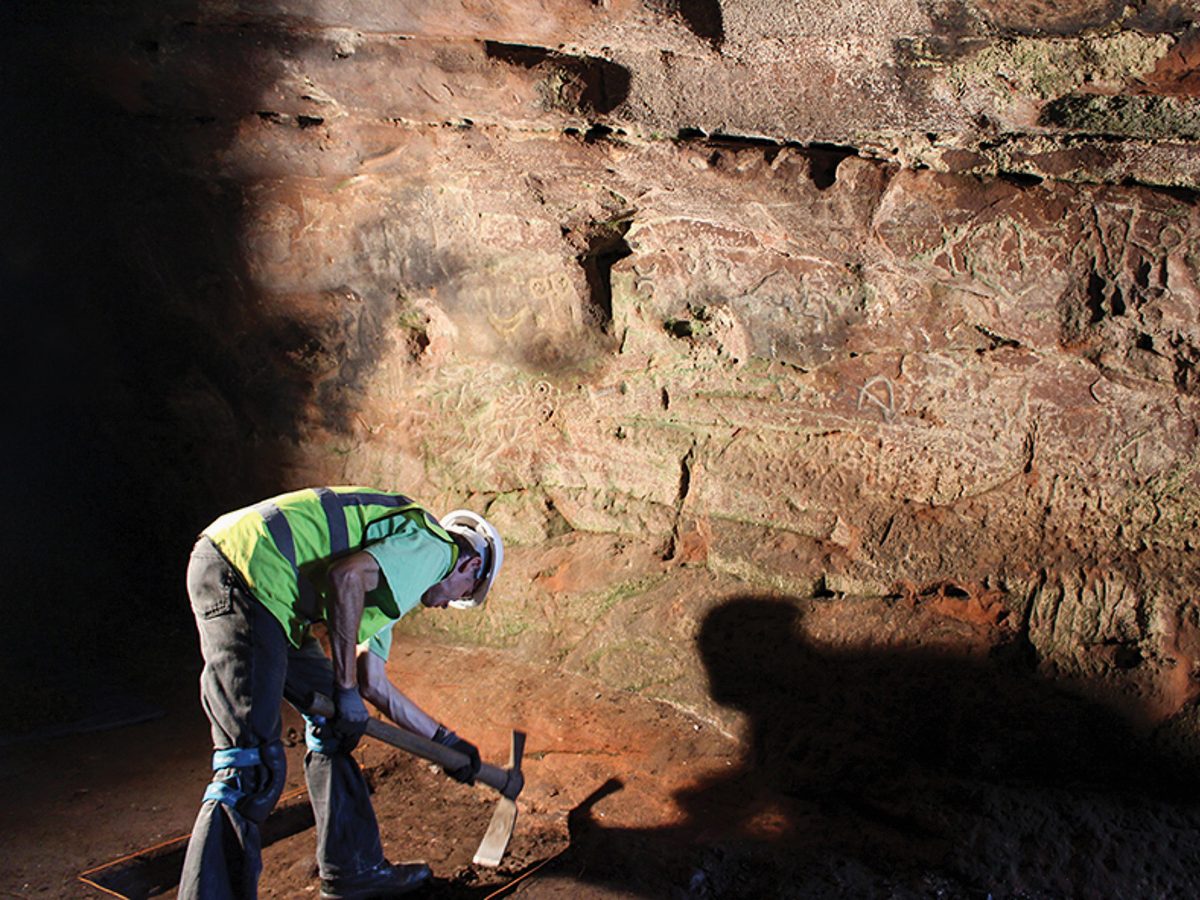
This volume compiles the findings of excavations carried out by Wardell Armstrong at Botchergate, a main street to the south-east of Carlisle’s city centre. There, works undertaken ahead of the construction of a new municipal building revealed two periods of Roman activity in the form of a roadside cremation cemetery from the early 2nd century AD, which was then replaced by structures such as workshops as the settlement of Luguvalium expanded outwards.
For those unfamiliar with the context of the excavations, an introduction lays out the background of Roman Carlisle and its forts, placing the city in the context of Hadrian’s Wall through the remains that have been discovered there. The reader is offered an overview of Carlisle from the Roman invasion, through the Flavian period and 2nd century, up to the modern sites that have been excavated in the Botchergate area.
The volume then dives into the stratigraphic sequence of the site, looking at each of its nine phases in detail. While in some excavation reports these details can come across as dry or difficult to interpret, this chapter is helpfully illustrated with explanatory colour photographs and section drawings that facilitate easy understanding of the site and its sequencing.
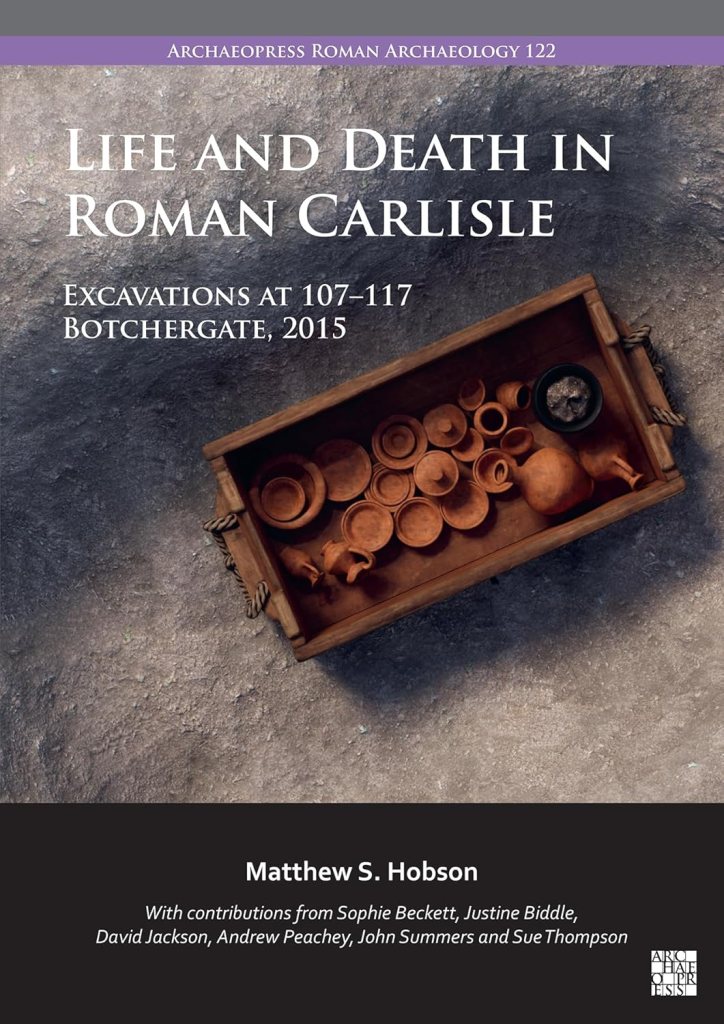
Following the stratigraphic tour of the site, the volume continues with a detailed catalogue of the 22 burials excavated on site, helpfully organised in chronological order. Each burial (or possible burial) is succinctly described alongside a small and pleasing plan, with an accompanying list of the finds from each one. The authors have also illustrated the finds from the two most richly furnished graves (Cremation Burials 2 and 10), each provided with two pages of images: first in photographs, and then in profile drawings. Later, a reconstruction of Cremation Burial 10 by Mark Hoyle (the cover image for the volume) brings to life the since-decayed wooden chest which originally contained the rich array of vessels, including the burnished cremation urn.
Sophie Beckett’s chapter discussing the human remains themselves is succinct, yet packed with interest. Particularly notable is the section discussing what aspects of cremation and funerary practice can be gleaned from the cremations, taking into account details such as the colour of the burnt bone and the displacement of remains within the burials, as well as the faunal remains recovered from most of the burials.
For pottery enthusiasts, Andrew Peachey’s contribution to this volume provides a detailed account of the 4,184 sherds that were recovered from the site. Details of the supply patterns, fabric groups, and vessel types are covered at length, interspersed with images, as well as tables and graphs for those who like their data neatly organised. Particularly interesting is the discussion of the assemblages found in aforementioned Cremation Burials 2 and 10, which Peachey explains have no contemporary parallels on record in the UK, but instead find comparisons in certain parts of France and Belgium (a tantalising foreshadowing of the concluding interpretation that follows).
A final chapter provides a detailed interpretation of the cemetery site, setting it within the context of Roman Carlisle, before comparing it with several other notable cemeteries from across northern Britain (such as Birdoswald and Lanchester), as well as making broad comparisons with burial practices from south-east Britain, and even Gallia Belgica. While perhaps surprising, the latter highlights striking similarities between the two most richly furnished Botchergate cremations (2 and 10) and those of the Belgic Nervii tribe, which points to a hitherto unrecognised Nervian diaspora in Carlisle, most likely in the form of a new military unit arriving from the Continent. Using evidence of pottery imports to support this, the volume ends on an intriguing yet fascinating note, which begs further investigation into this interpretation.
Overall, this is a volume for experts and novices alike: while the detailed cataloguing of stratigraphy, burials, and pottery gives plenty for the data-happy to get their teeth stuck into, the engaging introduction to the site and the helpful illustrations make it an accessible volume for the armchair archaeologist.
Life and Death in Roman Carlisle
Matthew S Hobson
Archaeopress, £40
IBSN 978-1803278438