Subscribe now for full access and no adverts
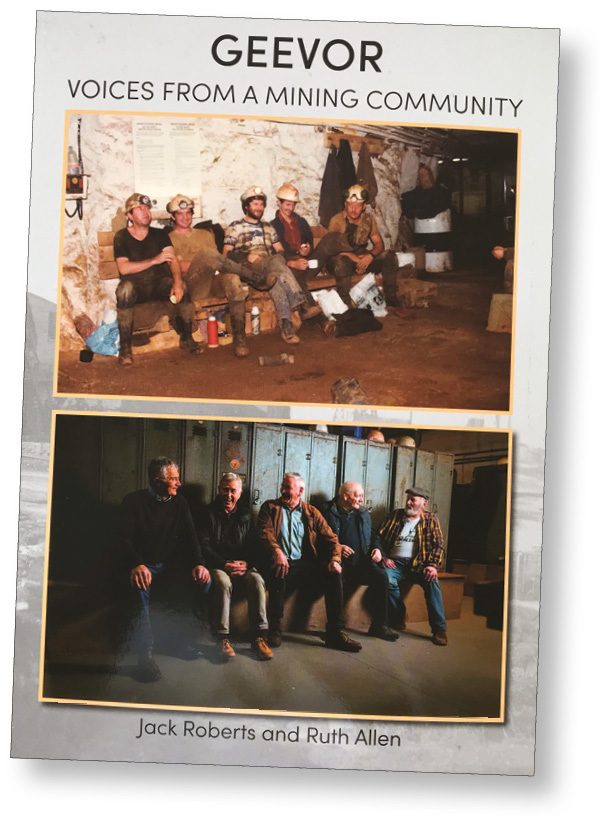
Mining is rooted in Cornish heritage and woven into the fabric of Cornwall’s historic landscape, and so it seems fitting, as we mark the 20th anniversary year of the Cornwall and West Devon Mining Landscape becoming a UNESCO World Heritage Site, to discuss a book telling the stories of local mining communities, examining the lives, losses, and legacy of mineworkers and their families.
Written by Jack Roberts (Museum and Operations Manager) and Ruth Allen, Geevor: voices from a mining community draws on in-person interviews with former miners and archival footage to highlight the intangible cultural heritage of mining over 70 pages. Physical remains of this industry pepper the Cornish landscape, and no visit to the area comes without sighting at least one Engine House, but it has been wonderful to learn more about what we don’t see.
We know of Cornish miners, and the intergenerational nature of their work, but what this book does brilliantly is share some of the less-frequently told stories. Chapter 5, for example, delves into the experiences of miners who were born elsewhere in Europe but chose to live, work, and have families on the Cornish coast, downing farming tools and taking up pickaxes in the aftermath of the Second World War. My grandfather Michele and his brother Domenico were two such men – and within Domenico’s cohort alone there were nine Italians who had chosen the Cornish climate over Italy’s sunny fields to work at Geevor. Perhaps this landscape did not feel entirely alien, though – Great Western Railway had been creating travel posters comparing Cornwall with Italy as early as 1907, and while language barriers would inevitably have been challenging at first, these newly made miners soon became part of a close-knit community, where ‘the sense of community transcended nationality’ (p.39). What this book does really well is in the way that it examines what Cornishness and community are: not just where you were born, but where you chose to make a life for yourself and your family. Why did so many choose to mine here? By the 20th century, many Cornish miners (and their pasty recipes!) had left to seek employment elsewhere in the world. By the 1950s, recruitment shortages saw mines look further afield for workers, and Geevor mainly focused on Italy, Poland, and Ireland. Even today, if you visit the neighbouring rural town of St Just, there are many people with Italian or Polish surnames, and the sweeping moorland cemetery on the turnpike to Land’s End also contains areas dedicated to former miners of these nationalities. As the book demonstrates, Cornish mining was renowned throughout the world, and its highs and lows were not an insular affair, instead seeing repeated cycles of emigration and immigration. Ultimately, ‘the legacy of those that settled here is etched through the community of Pendeen and St Just’ (p.39).
In July, my family and I attended the book launch, and the room was overflowing with support, love, and a powerful sense of identity. Families of former miners had travelled from all over Cornwall to visit a place deeply sentimental to all those connected to it, both as a collective and as individuals. This book goes beyond discussing Geevor’s past: it is also concerned with its present and, perhaps most importantly, its future. The legacy of former miners is captured in its pages for future generations. This, for me, is what community archaeology is all about: it surpasses statistics and the physicality of place to encapsulate a living, breathing society that has been shaped by its past, but is also an active architect of its own destiny.
Research for the book included working with local schoolchildren, many of whose parents once worked at Geevor. In a fitting tribute to these voices (some perhaps future custodians of Geevor), the book closes with artwork and poetry inspired by the mine’s place in the local community. Evie (aged 11) writes: ‘Drills are loud/And the miners are proud’ (p.70), encapsulating how many former miners and their families feel about this poignant place, which continues to shape the surrounding community. Nestled in the West Penwith moorland, among abundant prehistoric monuments, you will find a very special mine, with some very special stories to tell.
REVIEW BY LAURA MIUCCI
Geevor: Voices from a mining communityJack Roberts and Ruth Allen
£9.99; available from the Geevor Tin Mine shop, in person or by post (email shop@geevor.com)
ISBN 978-1789258684