Subscribe now for full access and no adverts
REVIEW BY FINOLA O’CARROLL
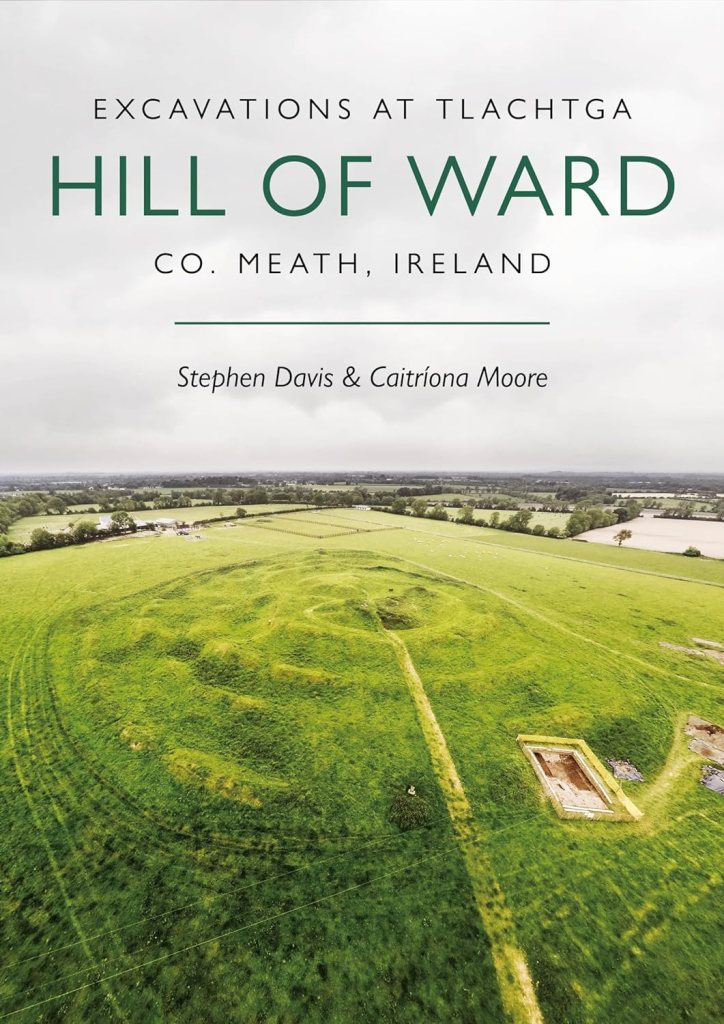
This book details the results of research into the monument known as Tlachtga, which combined LiDAR and geophysics to build a picture of an extensive multi-phase monument, confirmed by three seasons of excavations from 2014 to 2016. The first part details the project background, and contextualises the site in its landscape setting and the archaeology of the area. It contains a review by Edel Bhreathnach of its history, including the link between Tlachtga and the festival of Samhain.
The project rationale is clearly set out, the key piece being to disentangle the relationships between the three different but overlapping monuments, two of which are only visible because of geophysical survey, and find datable material to phase them. The other two objectives were to characterise the remains and to understand their changing functions.
What follows is a detailed account of the results of the excavation of eight trenches and three test-pits over the three seasons. The trivallate enclosure revealed by geophysics, which lies partly beneath the upstanding quadrivallate enclosure, encompasses an area of 2.15 hectares – this gives an indication of the scale of the site. So, when the authors remark that ‘no clear structural remains are present’ in the interior of the trivallate enclosure, this is perhaps stretching interpretation of the results of just two trenches a little. Excavations confirmed that the trivallate monument was constructed between 1100 BC and 800 BC, and the two other monuments were built probably contemporaneously in the 5th century AD. A possible cereal-drying kiln was dated to the middle Iron Age, and activity within the main, visible monument continued to the 11th century, when a mound was erected over the central enclosed space. The site continued in use into the 13th century, after the arrival of the Anglo-Normans.
The second half comprises detailed specialist reports into the considerable amount of ecofacts (principally animal bone; palaeoenvironmental remains were scarce), metal-working, and artefacts, which include a hoard of 10th-century Anglo-Saxon coins and a possible hair-ring of presumed late Bronze Age date.
This is a comprehensive and readable account of a fascinating and hitherto little-known site.
Excavations at Tlachtga Hill of Ward, Co. Meath, Ireland
Stephen Davis and Caitríona Moore
Oxbow Books, £35
ISBN 979-8888570449