
Subscribe now for full access and no adverts
REVIEW BY NICOLA TRZASKA-NARTOWSKI
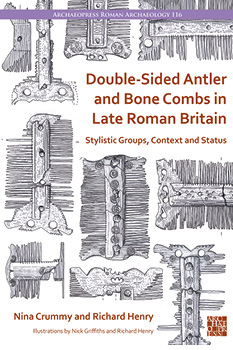
Keeping up appearances seems to have been as much a part of the ritual of daily life in late Roman Britain as it is today. Combs are such personal items that it is not surprising that they were often placed in graves for use in the afterlife. From a study of just over 150 combs, largely from funerary contexts, it has been possible to explore the new technology of the double-sided composite comb and date its first appearance to around AD 360. Intriguingly and copiously illustrated in the volume, the complexity of their construction is mirrored by the intricacy of their decoration, which frequently has zoomorphic renderings of horses, dolphins, and owls on the end plates. Nearly a quarter of the assemblage derives from around Winchester, and may represent a local workshop and perhaps reflects the availability of antler. Although both sexes embraced grooming, the majority of combs were found in adult female graves, with other indications of wealth or status, as the detailed catalogue reveals. An added bonus to this fascinating monograph is access to an interactive map of the distributions of the stylistic groups, itself an example of new technology.
Double-Sided Antler and Bone Combs in Late Roman Britain: Stylistic Groups, Context and Status
Nina Crummy and Richard Henry
Archaeopress, £30
ISBN 978-1803276441