Subscribe now for full access and no adverts
REVIEW BY MARY DEEVY
Viking Dublin was absolutely crawling! It is a rich treasure trove for an archaeoentomologist like Eileen Reilly, who examined 12,895 of its tiny inhabitants from 100 samples taken from 13 phases of habitation at Fishamble Street. Here the beetle evidence is teased out, combined with other environmental findings, and contextualised to offer new insights into Dubliners’ dirty lives. In some cases, the beetles complemented other environmental evidence to confirm interpretations of animal pens and chicken coops, even when structural evidence was missing. In others, a concentration of certain species in the side aisles, corners, and walls of houses suggested dried meats, hides, or skins being used as wall covering, bed coverings, or partitions. New arrivals of previously non-native species are indicative of miniature stowaways on ships’ timbers and traded goods. Archaeology has transformed Dublin’s relationship with its Viking origins. This study will transform our appreciation of what tiny creatures underfoot can reveal of human experience. Eileen’s enthusiasm for beetles was infectious, and she had so much more to give. Her untimely loss leaves an enormous void. Ar dheis Dé go raibh a anam.
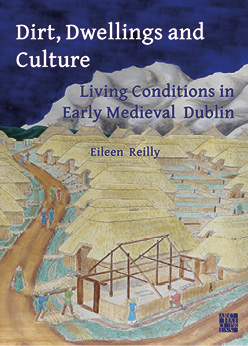
Dirt, Dwellings and Culture: Living Conditions in Early Medieval Dublin
Eileen Reilly
Archaeopress, £34
ISBN
978-1803276526