
Subscribe now for full access and no adverts
REVIEW BY PAUL T CRADDOCK
This is a very thorough description of every aspect of the prehistoric copper mines on the Great Orme at Llandudno. It is also an attempt to recreate and describe an ancient community/activity not just from the physical archaeological remains, but ultimately from the lives and experiences of the people themselves.
The opening chapter sets the mine in its broader geographic and archaeological context. There follows a detailed description of the geology, topography of the immediate area around the mines, and the likely chronological development of the workings. This is a complex subject and exhaustively discussed, with a good closing summary, concluding that the scheme of development laid out in Andy Lewis’ 1996 Master’s thesis ‘Prehistoric mining at the Great Orme: criteria for the identification of early mining’ (unpublished, but available online) is broadly correct.
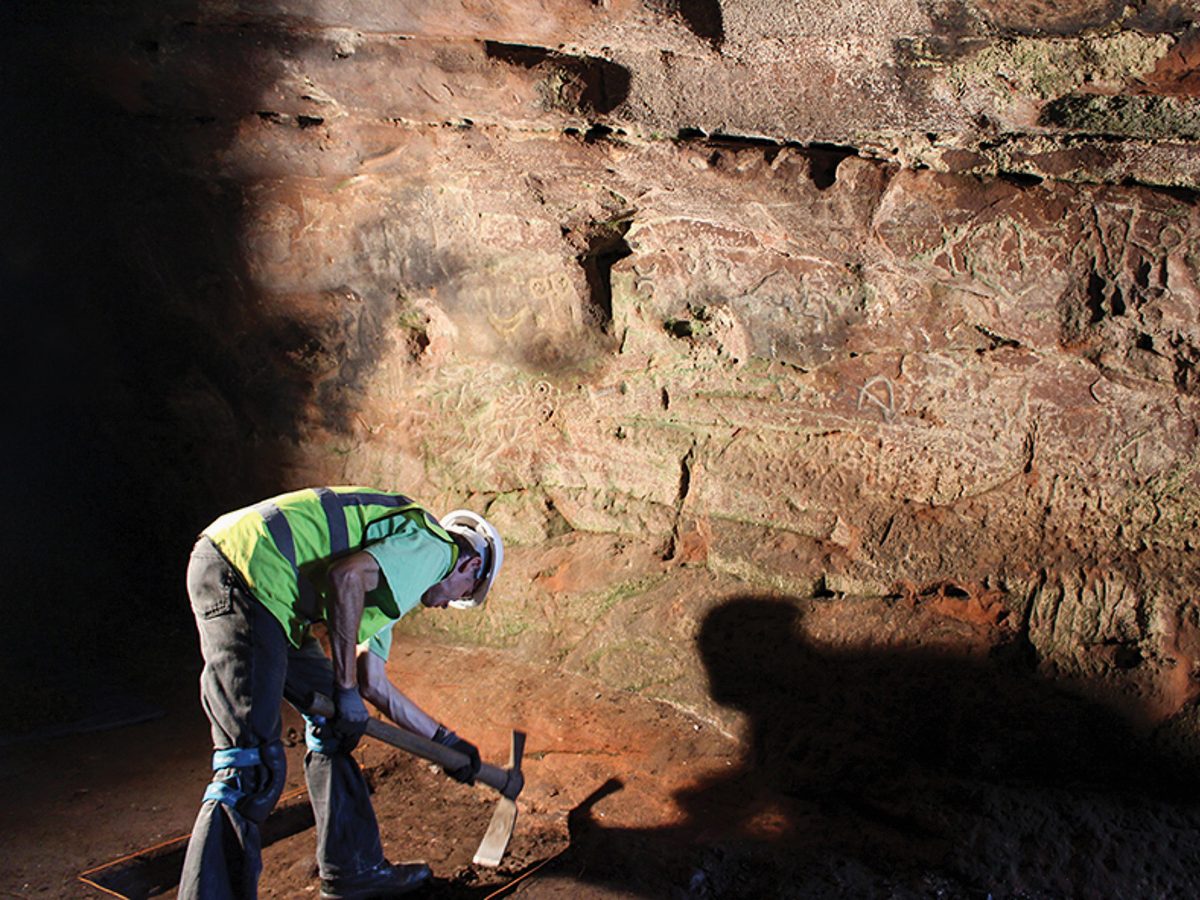
The business of mining then follows, not just the actual mining at the rock face but the full châine opératoire sequence, including procuring the materials (stone, bone, and wood) to fashion into tools to be used. All of which convincingly demonstrates that mining required a great deal of background activity that involved the whole community.
Wager has the archaeological evidence from within the mine workings, but once that ore comes to the surface there is an almost total blank, as later mining at the site has more or less obliterated the immediate surface and thus potential evidence for the beneficiation: the sorting and crushing of the ore which almost certainly did take place at the mine. A smelting site has been located at some distance from the mine, but it is tiny and very late, after the main mining activity had ceased.
This highlights a more general problem. Wager argues strongly, and I think accurately, that the whole operation was likely to have been a very local, small-scale operation. At the time that the archaeological evidence suggests maximum activity at the mine, trace element and isotope analysis of the contemporary Middle Bronze Age bronze – known as the Acton Park Industry – shows the Great Orme copper was widely used. Wager argues against the concept that an organised industry at Great Orme was knowingly established to supply a much wider market. The problem remains, however, that somehow the copper from this local ore did wind up in those bronzes from this period, in quantity and widely distributed, some of which, such as the shield-patterned palstaves, seem to have a direct association with Great Orme.
The absence of the contemporary land surface likewise makes the more sociological aspects of the study well-nigh impossible. No trace of contemporary occupation or of burial has been found within the vicinity of the mine, and thus many aspects of its people’s lives and views are ultimately surmised. If, as postulated, the mining was a seasonal activity of a people whose main occupation was subsistence farming, then a châine opératoire study of their way of life and death, as represented by the many small isolated roundhouses and burial mounds and cairns in the locality, is valid for the study of the miners’ existence. The trouble here is that the study becomes a general description of life in prehistoric North Wales, with little direct reference to the mines.
The work as a whole is exhaustive in its pursuit and discussion of material from a wide background and other disciplines, as well as from a more purely archaeological viewpoint, backed up with a comprehensive bibliography, although the absence of an index is a major drawback. A wealth of information and of ideas is brought together, although this is in no sense the conventional archaeological site publication to update Lewis’ 1996 report that the Great Orme mine still needs. The style is relentless – it is not an easy read – but there are useful summaries at the end of each chapter. The final chapter, ‘A fundamentally social archaeology of Bronze Age mining’, is in fact a summary of the whole, and being far more concise I would recommend reading that first.
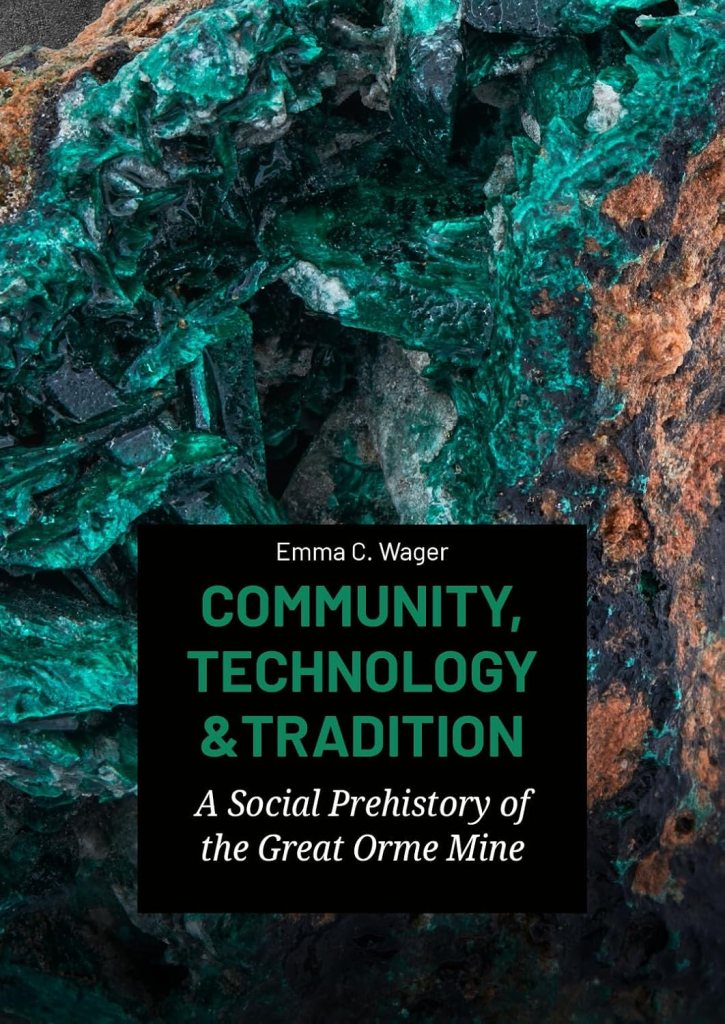
Community, Technology and Tradition: a social prehistory of the Great Orme Mine
Emma C Wager
Sidestone, £15 eBook, £40 paperback, or £95 hardback
ISBN 978-9464270907