
Subscribe now for full access and no adverts
REVIEW BY SOPHIA CHAPPLE
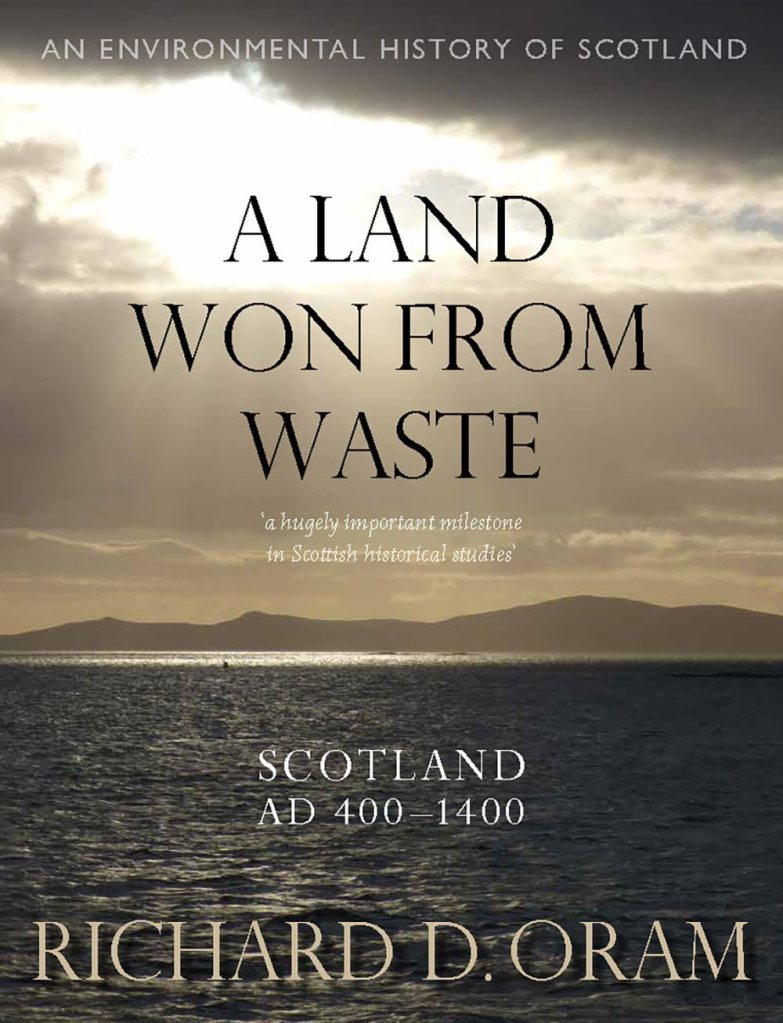
Richard Oram presents a thorough and digestible environmental history of medieval Scotland in his new book A Land Won from Waste. Covering AD 400-1400, this is one of three in a wider series spanning from AD 400 up to COP26 (the 26th annual UN climate summit, which was held in Glasgow in 2021).
Oram’s work is always extensively researched, yet his language offers accessibility to a wider lay audience. A Land Won from Waste is not only for environmental historians, but also for a wider span of researchers, including but not limited to environmental scientists, archaeologists, and policymakers. It even lends itself to informing those merely curious about how humans who have inhabited what is now Scotland interacted with and shaped their environments through time. This is particularly marked in the concise yet informative context he gives on environmental phenomena, historical events, and even theoretical frameworks that would be well known to people within the field of environmental history, but less so to those unfamiliar with the literature base for this niche.
The introduction begins with a few quotes from the VisitScotland tourism website, which sets a modern tone to a work that is primed to focus on a history of, at its earliest, 1,600 years ago. Not only does this use of contemporary media make a potentially daunting tome a bit more digestible right at the outset, but it is also a reminder that history is ever living and the environmental threads have woven themselves so deeply within the historical narrative that environmental perceptions and crises today can be attributed to some of the earliest human interactions with the land.
Beginning with Scottish prehistory and the attempted Roman conquests, Oram addresses the challenges of decolonising historical narratives given that, in this case, those living in what is now Scotland did not leave much surviving evidence of their perspective on the Roman settlements. In addition, there is not much written in the Roman records about the weather or environment of Scotland. Therefore, filling in these gaps for the sake of decolonisation would at once be disingenuous and could be misleading historically and environmentally. Oram makes sure to mention the importance of archaeological evidence when facing a dearth of written records, and gives credit to historical archaeology in adding further context to narratives that otherwise would be left blank.
Oram weaves the palaeo-climatic evidence throughout his work, and makes a point of explaining what exactly they are and what they indicate. Palaeoclimatology can often prove to be a challenging subject, with high barriers to entry for the uninitiated, but Oram presents his climatic analysis as just another piece of a complex puzzle rather than placing great emphasis on the interdisciplinary approach he is taking. The interdisciplinarity speaks for itself, as he smoothly weaves archaeological, historical, and palaeoclimatological evidence together to create a comprehensive yet cohesive narrative of medieval human relationships with their Scottish regional environments.
There is a notable lack of studies conducted on the historical fishing industries and the challenges that coastal communities faced during this period, which Oram explains is the reason behind the lack of citations to existing literature. The relationship between atmospheric and ocean circulation patterns is addressed, and studies referring to waterways in other parts of Europe are cited as examples of what might have occurred in Scotland. He looks to palaeoenvironmental and archaeological evidence to fill in these gaps. This is not reflective of Oram’s research, but highlights a general dearth in literature focusing on marine resource-use and the fluctuating relationship between humans, the sea, and fresh waterways in Scotland during this period. This instance demonstrates how Oram excels at drawing together fragmentary evidence to form a coherent and lucid historical narrative.
A Land Won from Waste is an invaluable addition to Scotland’s environmental historical narrative. Any scholar or lay person interested in this period of Scotland’s history would benefit from giving it a read.
A Land Won from Waste: Scotland AD 400-1400
Richard D Oram
Birlinn Ltd, £75
ISBN 978-0859767194