Subscribe now for full access and no adverts
A spectacular tomb associated with the ancient Zapotec civilisation has been uncovered on Cerro de la Cantera, in San Pablo Huitzo, Oaxaca, south-western Mexico.
The burial was brought to the attention of archaeologists from INAH thanks to an anonymous report of looting at the site. Subsequent investigations have revealed a richly decorated Zapotec tomb dating to the Late Classic period (AD 600-900), which appears to have been the final resting place of a prominent member of society.
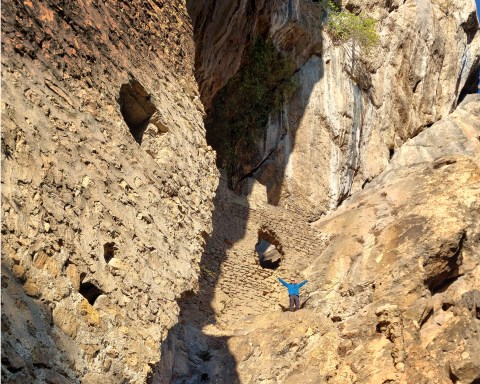
The stepped-vaulted crypt, reached through a shaft, is built of limestone slabs and grey quarry stone covered in stucco, and measures 5.5m long and 1.66-2.79m wide, ranging in height from 1.68 to 2.6m. Above the tomb’s entrance sits an owl – a bird that symbolised night and death in Zapotec culture – with its beak extending down over the stuccoed, red-painted face of a Zapotec lord with bared teeth, who may represent the ancestor to whom the tomb was dedicated. The doorway is flanked by two large jambs decorated with male and female figures, each adorned with headdresses and ceremonial clothing and holding artefacts of symbolic value. It is suggested that these could denote either people buried in the tomb or the guardians of this sacred place.
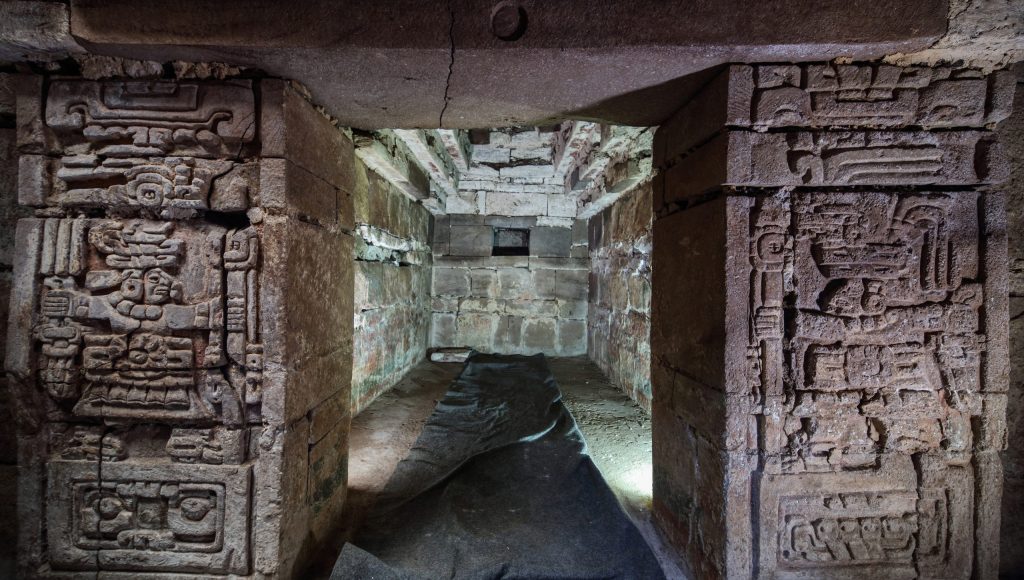
Inside the antechamber, another doorway leads into the main burial chamber. Above this entryway is a lintel decorated with a frieze of stone slabs engraved with calendrical names (the Zapotec identified gods and important people by symbols associated with their birth dates). The walls of the burial chamber itself are decorated with a mural showing a procession of people carrying bags of copal (tree resin used as incense), which is painted in ochre, white, green, red, and blue pigments.
Conservation of the tomb, focused on stabilising the fragile mural, is currently under way. Meanwhile, ceramic analyses are being carried out on vessels found outside the chamber, along with iconographic and epigraphic analyses of the tomb’s decorations, and anthropological study of the few bone fragments recovered. It is hoped that these investigations will improve our understanding of the rituals, symbols, and funerary practices associated with Zapotec burials. Already, though, the value of this discovery is being recognised, with Mexican President Claudia Sheinbaum Pardo describing it as ‘the most important archaeological discovery of the last decade in Mexico’.
Text: Amy Brunskill / Image: © Luis Gerardo Peña Torres INAH