Subscribe now for full access and no adverts
A basilica built by the pioneering Roman architect Vitruvius has been rediscovered in the city of Fano, in the Le Marche region of Italy.
Marcus Vitruvius Pollio was born in Fanum Fortunae (modern-day Fano) in the 1st century BC and is best known for his treatise De Architectura (Ten Books on Architecture), the only work of its kind to survive from antiquity. His instructions on the Classical proportions of buildings underpinned the work of artists and architects for centuries afterwards, leading him to be regarded as a founding figure in Western architecture. The basilica of Fanum Fortunae is described in this famous text as a majestic and beautiful public building used for the administration of justice and business affairs; it is also the only building whose construction Vitruvius explicitly claims to have supervised. However, the precise location of the 2,000-year-old basilica had been lost for centuries.
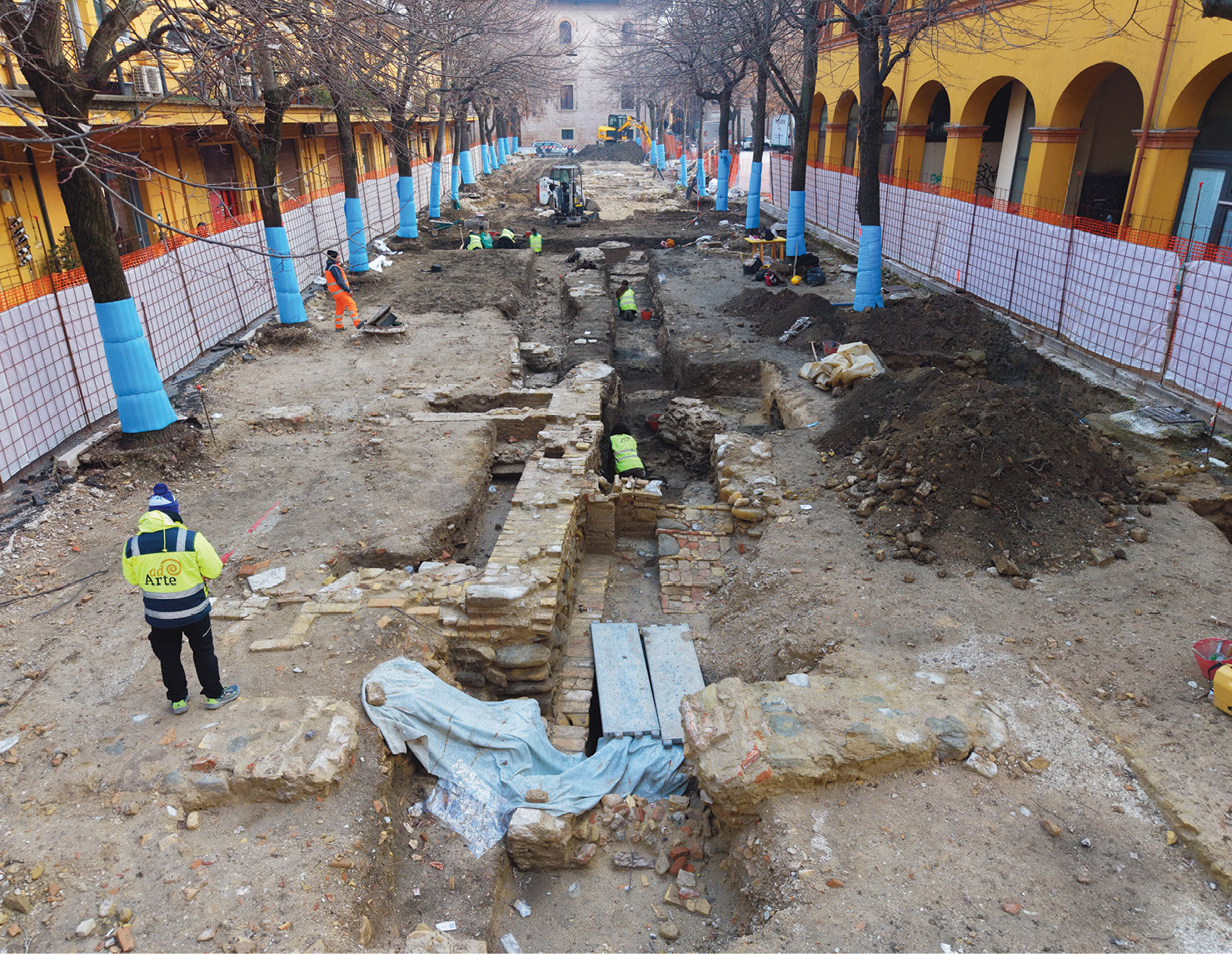
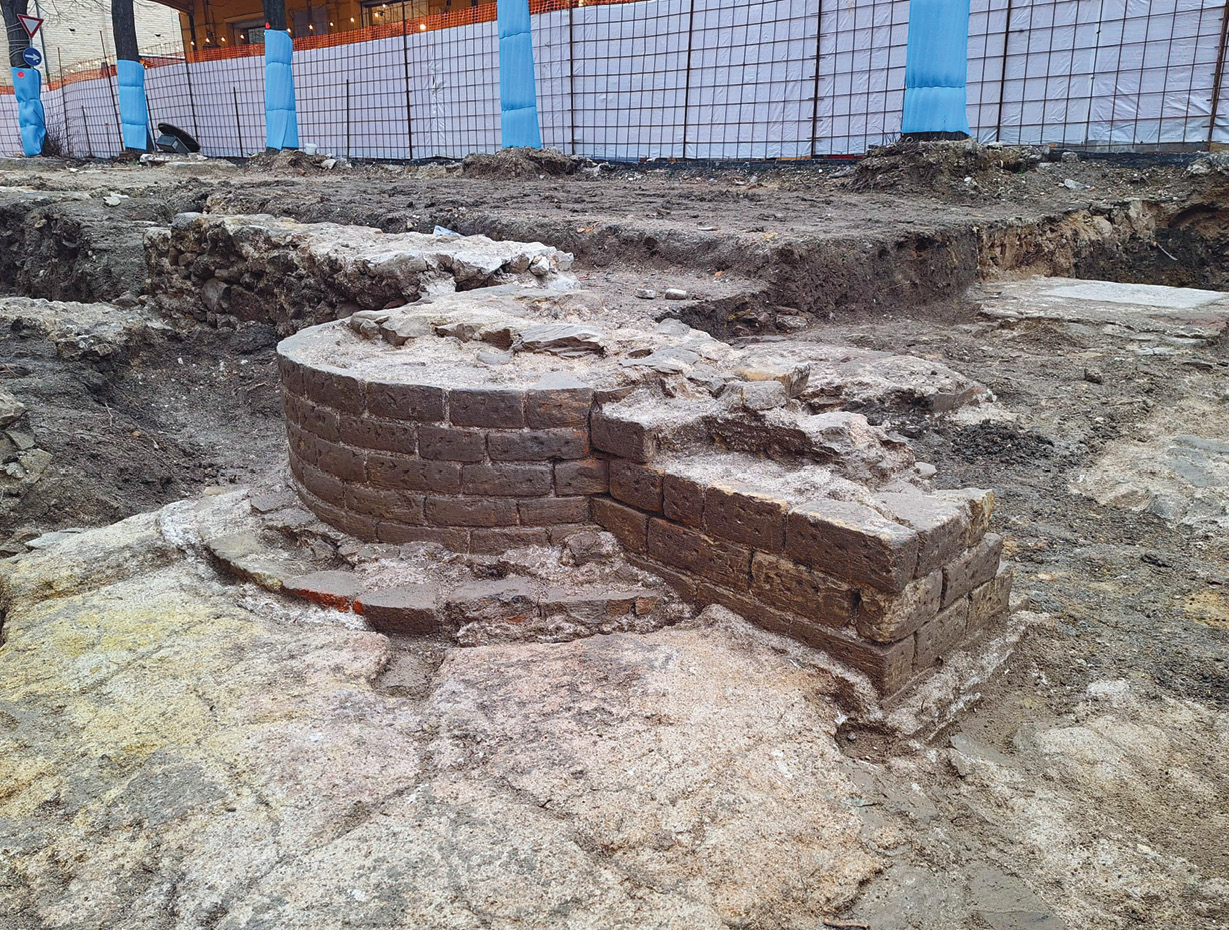
Now archaeologists working in the Piazza Andrea Costa, in the heart of Fano, have uncovered unmistakable evidence of the elusive building. The basilica is described by Vitruvius as a monumental construction, measuring c.50m by 35m, with side porticoes: dimensions exactly confirmed by the recent discoveries. Of particular note is the presence of five opus vittatum columns, each measuring five Roman feet (1.5m) in diameter, covered at the base with black plaster, and spaced c.4m apart, precisely as described by Vitruvius, down to the centimetre. Other discoveries include a section of the perimeter wall with black plaster still attached, two quadrangular bases that were probably intended for statues, and large areas of the prepared flooring of the basilica hall. It is hoped that further investigations will shed more light on currently unresolved aspects of the building, such as the layout of the rooms of the basilica complex. Already, though, this discovery has been described as one of the utmost importance, as both a critical part of Fano’s heritage and as one of the most famous buildings in the history of Roman architecture.
The findings offer an opportunity to understand better the wider archaeology of the centre of Fano. It now appears that the temple identified beneath the Sant’Agostino church nearby is not the Temple of Fortune, as previously suspected, but the Temple of Jupiter, which is known to have been aligned with the basilica. In the area behind the basilica, researchers have located a macellum (market) and a bathhouse. Meanwhile, another large structure found on the via Vitruvio three years ago, which had been proposed as the possible location of the basilica, has been confirmed to be a different public building.
Text: Amy Brunskill / Images: SABAP AN-PU URP