Subscribe now for full access and no adverts
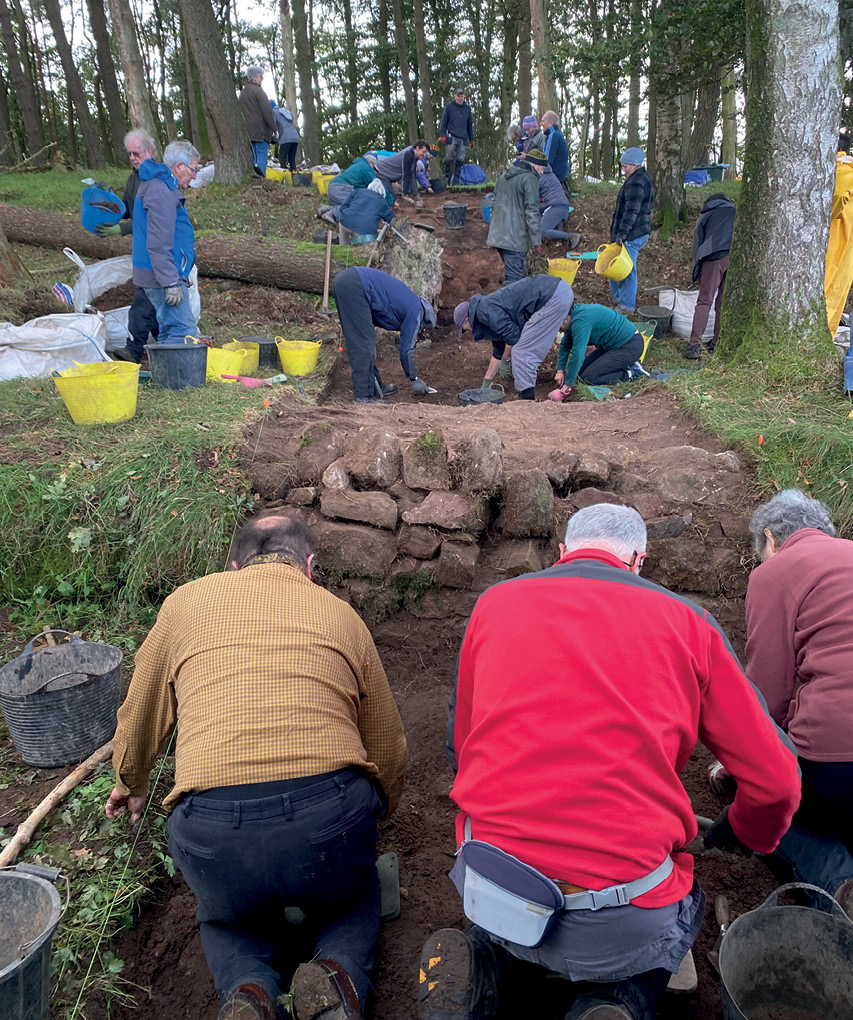
Excavations as part of a project to create a new entrance to York railway station have revealed the original Victorian paved approach to the station, as well as ditches littered with medieval rubbish.
As part of the project, a new temporary road has been put in over the long-stay car park on Queen Street while the bridge is being demolished. It is here that York Archaeology have uncovered the interesting finds, including a large area of the scoria flags that lined the approach to the original building, which opened in 1877.
Scoria bricks began to be produced in the Victorian era as an innovative solution to the molten slag waste being produced by industrialists. Joseph Woodward founded a company in Middlesborough in 1872 to repurpose the waste into the bricks, which have a distinctive silvery-blue colour and are still visible in many Victorian towns today.
Below the rectangular scoria flags at York Station, archaeologists found a 19th- century drainage ditch. Deeper still were some large medieval ditches that may have been used to dump rubbish from the city at the time; the finds from the latter have included animal bones and pottery of several different types, including Humber Purple Glazed Ware (below).
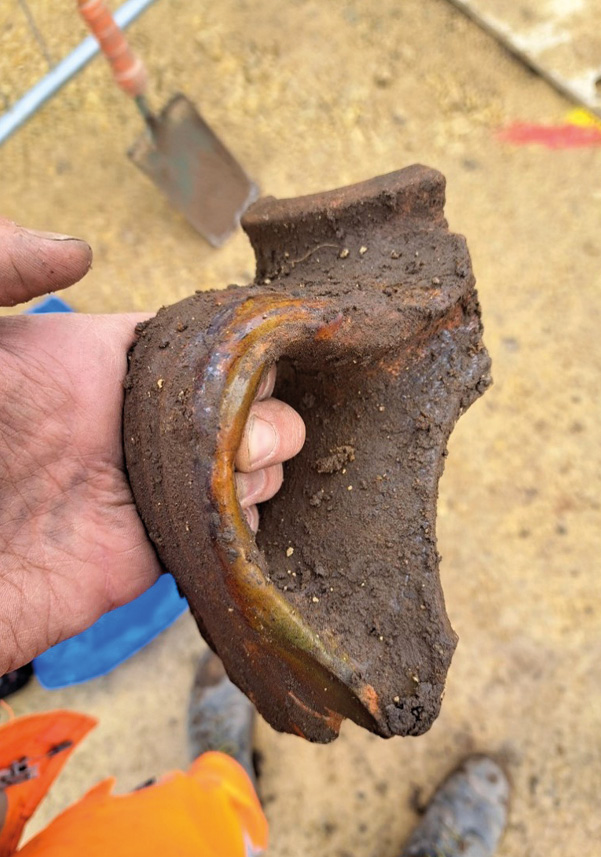
Mary-Anne Slater, project manager from York Archaeology, explained that the bones and pottery could be dated to between the 13th and 14th centuries. At this time, the site of the station excavations would have been outside the main city bar walls in an area of agricultural land.
York’s rich archaeological terrain may yet yield even earlier finds from the area: a Roman cemetery is known to have existed on the station site. The 2nd- to 4th-century burial ground was destroyed when the Victorian station was built. So far, aside from some tantalising disturbed bone that may have been lifted from lower levels by ploughing, there has been no evidence of Roman inhumations or cremations during the current excavations. However, archaeologists are aware that the possibility of uncovering these burials is high after Roman skeletons were unearthed during building works at the station in 2020, and more examples may be found when excavations are continued between the removal of the bridge on Queen Street and the installation of the permanent road.
Text: Rebecca Preedy / Image: York Archaeology