
Subscribe now for full access and no adverts
Ritual practices in prehistoric Poland
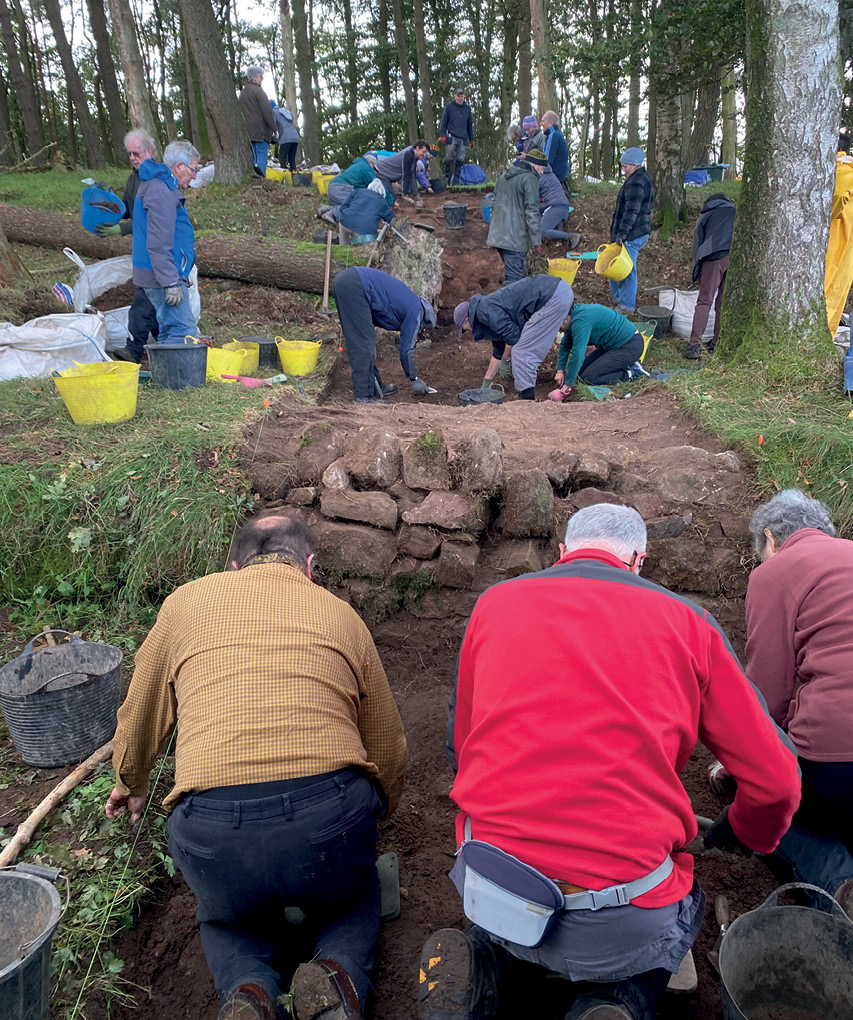
A considerable number of large Bronze Age and early Iron Age artefacts have been unearthed by archaeologists in a dried-up lakebed at the site of Papowo Biskupie in north-central Poland. It is believed that members of the Chełmo group, one of the northernmost communities of the Lusatian culture, lived in this region c.1300-500 BC.
Finds were first reported by metal-detectorists in early 2023, sparking a rescue excavation led by the Provincial Office for the Protection of Monuments in Torún. This revealed 550 bronze artefacts, including pieces of arm- and neck-jewellery, earrings, and horse paraphernalia. The disarticulated remains of at least 33 humans were also found nearby. While the human remains were radiocarbon dated to c.1040-780 calBC, the metal objects were found to date to c.760-410 BC. This has led the team to suggest that this might reflect a shift in practice, from human sacrifice to metal votive offerings. The full results were recently published in Antiquity: https://doi.org/10.15184/aqy.2023.198.

Image: A Piasecka
Gaming culture in Kenya
A series of shallow pits, carved into a rock ledge, has been found in central Kenya in Lewa Wildlife Conservancy. There are at least 20 ‘boards’, each made up of 24 holes arranged in rows of two or more. It is believed that these might be early examples of the game mancala – a two-player strategy game that involves moving tokens across a series of holes in a board.
The ‘boards’ have yet to be dated, but mobile pastoralists first reached this region c.4,000 years ago, so they could have been made anytime between then and now. There is some evidence to suggest that older, more heavily eroded examples exist under the more immediately visible ones, which could suggest that whomever made them returned to the site over a period of time.
Unravelling the mystery of Rapa Nui’s writing system
A new project examining the history of Rongorongo, the complex writing system used by the historical inhabitants of Rapa Nui (Easter Island), is shedding new light on its evolution. Radiocarbon dating of four wooden tablets – held in Rome and taken from Rapa Nui in the 19th century – revealed that while three were made from wood felled in the 18th to 19th centuries, the last tablet dates to the mid-15th century, pre-dating the earliest European arrivals to the island in the 1720s. This could suggest that the native communities had established a writing system irrespective of their contact with Europeans, something that had previously been in question.
Intriguingly, the wood from this earlier tablet appears to be from Podocarpus latifolius, a species of tree native to south-eastern Africa and South America, but which has never been grown on Rapa Nui, suggesting that the material may have made its way to the island as driftwood.
Text: Kathryn Krakowka