Subscribe now for full access and no adverts
Earliest evidence of Yersinia pestis?
As DNA analysis of human remains continues to expand, evidence is mounting that Yersinia pestis, the bacterium that causes the plague, has been ravaging human populations for millennia. Now a new study has identified the earliest-known example of the bacterium among hunter gatherer communities in Siberia c.5,500 years ago.
An international team of researchers analysed dental calculus around the teeth of 46 individuals excavated from four mid-Holocene hunter-gatherer burial sites near Lake Baikal in south-east Siberia. They found that 18 samples (or 39% of the individuals represented) contained Yersinia pestis DNA. Given the age of these remains and the likelihood of DNA degradation in that time, the team think it likely that even more individuals were probably affected, perhaps even all of them. This is supported by the fact that a large number of interments contained multiple individuals, with no evidence of the graves having been reopened, suggesting that they had all died at the same time.
Iron Age chariot burial found in Germany
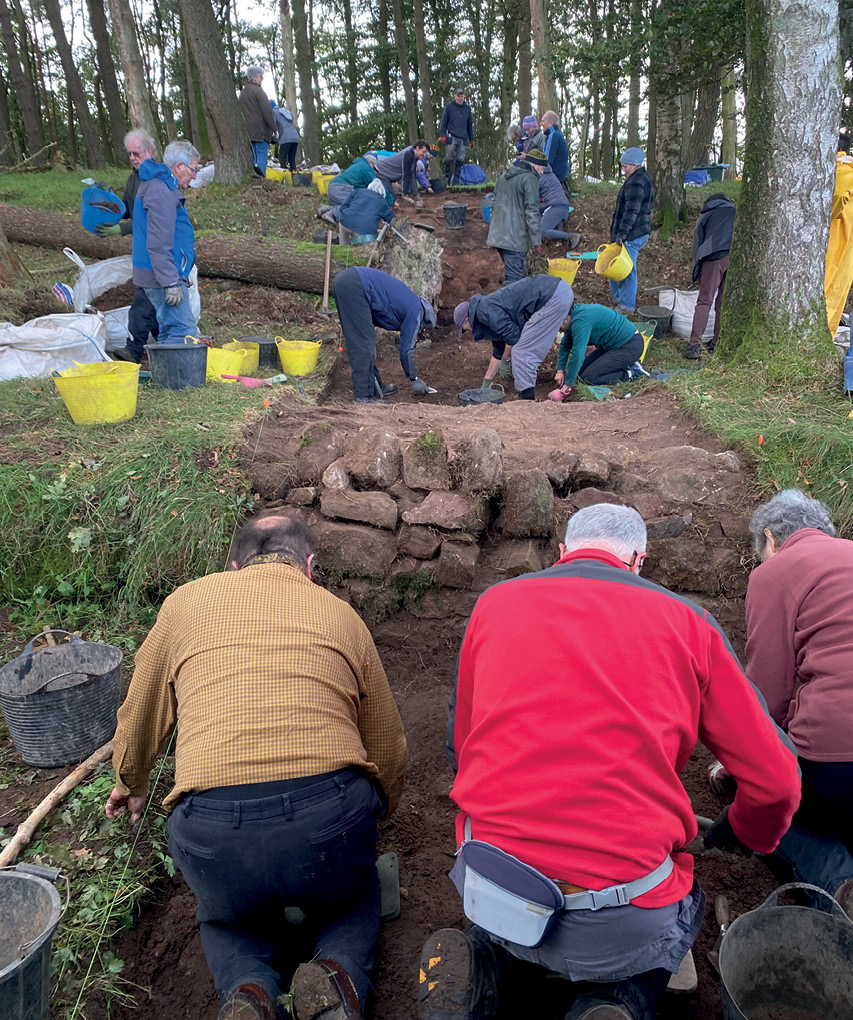
A richly furnished grave dating to the Iron Age, c.2,400 years ago, has been found in Bad Camberg, Germany. It was discovered during an excavation in advance of a solar park and, while no human remains were found, the objects in the grave speak of this having been an individual of some status.
The grave goods include several pieces of simple but substantial gold jewellery, an Etruscan beaked jug probably imported from present-day Tuscany, and several fragments from a number of weapons such as a spearhead and a knife. Even more exciting, however, was the discovery of two wheel-hub fittings, axle-cap fittings, and iron wheel-rim fittings, suggesting that this was a chariot burial. It is a rare find, as only a handful of Iron Age chariot burials have previously been found in the Hesse region of Germany.

Tutankhamun’s tomb plaster on display
The original mud-plaster sealings that once secured the burial chambers of Tutankhamun’s tomb have gone on display at the Luxor Museum for the first time. Made of a Theban plaster material traditionally known as habiya (a mixture of calcite and clay, combined with natural additives like sand, vegetable fibres, and gypsum), they were broken by Howard Carter when he entered the tomb during his excavation of 1922. While Carter collected the fragments, no record was made of them. A recent conservation project of the plaster, however, led by Dr Abdel Ghaffar Wagdy, has worked to document, conserve, and reconstruct these unique archaeological remains for the first time. They have been found to bear official necropolis seals that reflect royal funerary rituals and administrative authority connected with the young pharaoh’s burial.
Text: Kathryn Krakowka / Image: © Lars Görze MA, LfDH