
Subscribe now for full access and no adverts
Oldest figurative art identified
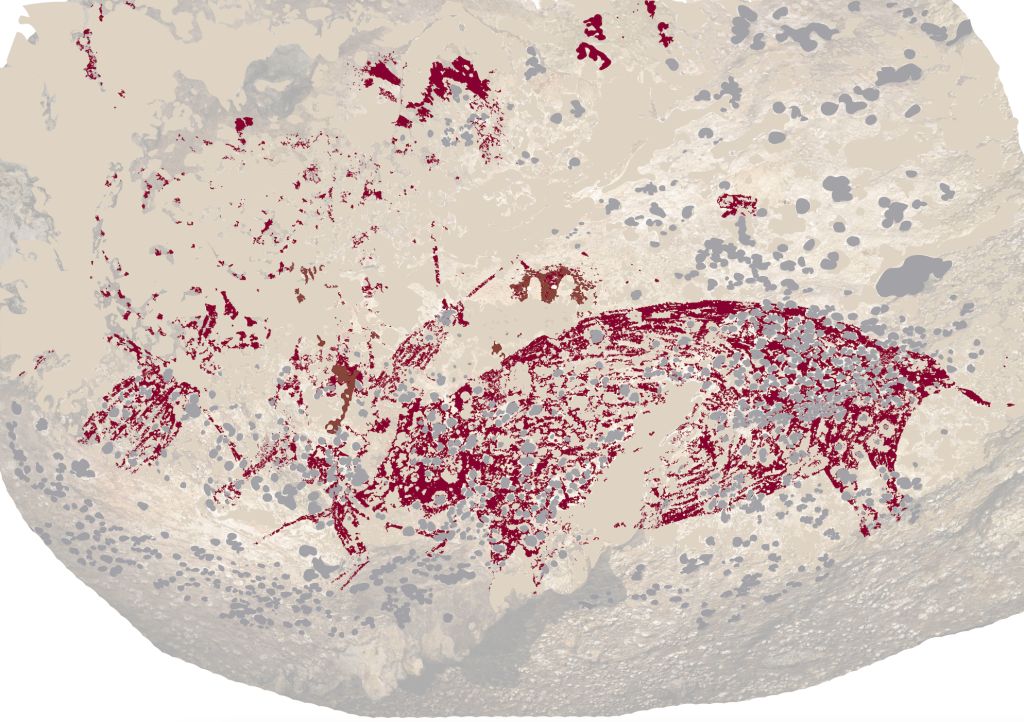
The oldest narrative art in the world has been identified in Indonesia during new analysis of rock-art sites on the island of Sulawesi. A new method of dating called laser- ablation uranium-series (LA-U-series) imaging uses a laser to take tiny calcium carbonate samples from mineral deposits on the artwork, and has produced a new date for a rock-art panel at Leang Karampuang, which is now believed to be at least 51,200 years old. This makes the artwork, a red-painted scene depicting a pig and three human-like figures, the earliest known example of figurative narrative art found to date.
Ancient sea-shell communication
Ancient Pueblo communities in the south-west United States possibly communicated using conch shells, according to new research. Burials on the New Mexico site of Chaco Canyon, an ancient Pueblo settlement occupied from AD 850 to AD 1150, contained 17 trumpets made from conch shells. Soundshed Analysis was used by researchers to explore how far the sound of these shells could be heard, using five of the more than 200 surrounding Chacoan communities as test subjects. The results revealed that the conch shell could be heard in all five test-sites, suggesting that this may have been used as a method of communication between settlements. The full research is published in Antiquity: https://doi.org/10.15184/aqy.2024.54 (open access).
Victims of Vesuvius found at Pompeii
The remains of a man and woman who were killed during the eruption of Vesuvius in AD 79 have been uncovered during continuing excavations in Insula 10, Regio 9, of Pompeii. Their remains were found in a house that was in the middle of being renovated at the time of the disaster, in a service area that was being used as a temporary bedroom. The adjoining living room was filled with pumice, trapping the pair inside where they were killed by the pyroclastic flow. The woman, who had valuable items including coins and gold and pearl jewellery with her, was found lying on a bed.
Text: Rebecca Preedy / Image: A A Oktaviana, R Joannes-Boyau, B Hakim et al. (2024) Nature