Subscribe now for full access and no adverts
New research is exploring how ancient Pueblo communities in the Southwest United States may have been connected by sound.
Chaco Canyon in north-west New Mexico was once a bustling ancient Pueblo settlement, occupied c.AD 850-1150. Among the items found in burials across the site are 17 trumpets made from conch shells, of a type still used today by modern Pueblo people in ritual activities. The area surrounding the canyon was also home to more than 200 smaller Chacoan communities, each made up of a number of houses centred around a larger, monumental building known as a ‘great house’. Researchers selected five of these communities in the greater Chaco landscape and used a tool called Soundshed Analysis to model digitally how far the sound of a conch-shell trumpet would have travelled from the great house – taking into account factors like terrain and ambient noise – to test whether it could be heard in different locations.
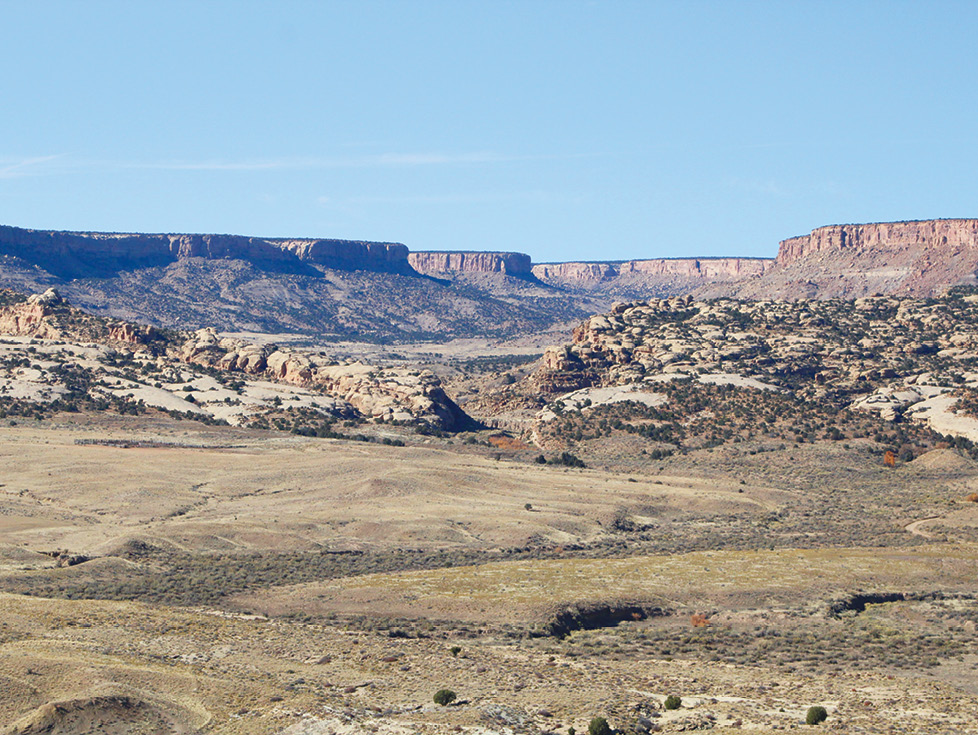
The analysis found that at all five sites a conch-shell trumpet blown from the great house at the centre of the community could be heard by the majority of the surrounding dwellings. It is likely that this sound was used by leaders at the great houses to call the attention of their whole community, perhaps to signal events such as religious ceremonies, like church bells in a medieval town. It has therefore been proposed that, among other things, the construction of these settlements may have been influenced by the audible range of the trumpet.
The research has been published in Antiquity (https://doi.org/10.15184/aqy.2024.54). Further investigations are needed, but the study highlights the value of recognising multisensory experiences of the past and their impact on social relationships and community identity.
Text: Amy Brunskill / Image: Kellam Throgmorton