
Subscribe now for full access and no adverts
In 1350, the Black Death had begun to ravage Scotland after spreading north from London. Over the next three centuries, the plague would return to Scotland multiple times, with the last major outbreak occurring in 1644-1649, thought to have been initially transmitted by soldiers being marshalled on the borders of Selkirk Forest.
Studies of the Black Death in Scotland have made use of historical sources, as well as archaeological evidence from the plague pits that were dug to bury victims quickly in an attempt to minimise the spread of disease. Until recently, however, the bacterium Yersinia pestis, which causes the three types of plague (pneumonic, septicaemic, and bubonic) had not been identified in any archaeological samples from Scotland.
This has all changed with a new study led by researchers at the University of Aberdeen. Making use of a combination of osteoarchaeological, ancient DNA (aDNA), and historical research, the project team sought to establish what had caused Scotland’s last plague outbreak, and to map the geographical spread of the epidemic and examine the funerary behaviours that emerged as a result.
The study’s archaeological research focused on the remains of four individuals two adult women, a possibly adult male, and a male adolescent aged around 12.5 years who had been excavated in 1987 from an industrial compound in York Place and are now kept in the collections of Aberdeen Art Galleries and Museum. The area on Queens Links (a Scots term for coastal sand dunes) where they were found has been associated with the general location of plague pits that were in use during the last outbreak in Aberdeen.
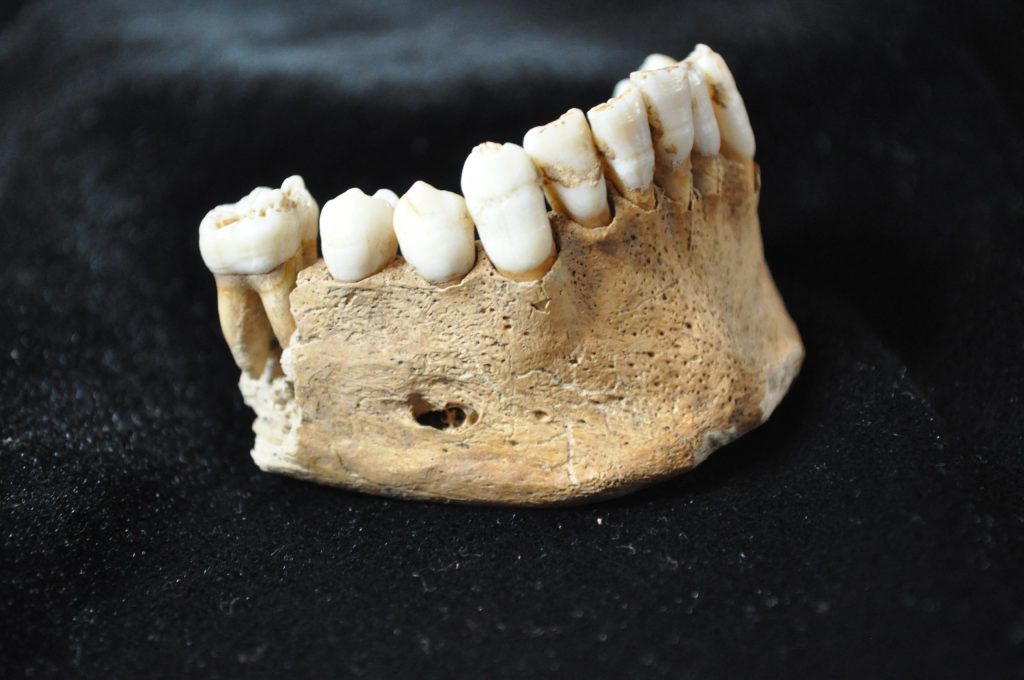
The human remains were first radiocarbon dated, which confirmed that their deaths lined up with the 1644-1649 plague. The next step was to identify how they had died. A tooth taken from three of the four individuals (the fourth had no surviving dental remains) was sent to the University of Tartu Institute of Genomics, Estonia, for aDNA testing. The roots of the teeth were removed, sterilised, and rinsed with water and ethanol before being dried under a UV light and processed to produce double-stranded, dual-indexed dual-indexed DNA samples that could then be sequenced. The resulting data was compared to that of Y pestis revealing that the bacterium was present in all three sampled individuals.
This was backed up by additional Basic Local Alignment Search Tool (BLAST) screening, which compared results from the samples again to the Y pestis bacterium, in order to highlight the statistical significance between the two. The results of the study are the first confirmed evidence of Y pestis as far north as Aberdeen, and the first direct archaeological proof of the plague in Scotland.
By 1647, the fear of plague in northern Scotland was becoming apparent in written sources: during their complementary historical research, the project team found an entry in the Council Register of the Burgh of Aberdeen which noted that the plague was ‘raging in Inverbervie’, a town located around 26 miles to the south. By the end of May, Aberdeen Council meetings had stopped completely, and by the time the disease had run its course the following December it had claimed the lives of some 1,600 people.
It has been widely believed that the spread of the Black Death in Scotland was initially caused by the movement of Scottish troops. While the study has highlighted a lack of conclusive evidence to prove this, it does raise the point that the devastating effects of the Civil War (which in Scotland saw conflict in 1644-1645, between Royalist supporters of Charles I and Covenanters who were allied with English Parliamentarians) created an ideal ecological climate for the effective spread of infectious diseases.
Despite the apparent dread of infection mentioned in historical sources, however, not all Scottish victims of the Black Death were consigned to plague pits: the study found numerous examples of plague victims being interred in church grounds, following more conventional practices. While we may associate the Black Death with panicked mass burials, the researchers point to evidence of continued care and compassion for the dead which persisted even during this time of fear and uncertainty.
Overall, the study has done much to further our understanding of the last outbreak of the Black Death in Scotland.
The research has been published in full in PLOS ONE (free, open access): https://journals.plos.org/plosone/article?id=10.1371/journal.pone.0306432.
Text: Rebecca Preedy / Image: Marc Oxenham