
Subscribe now for full access and no adverts
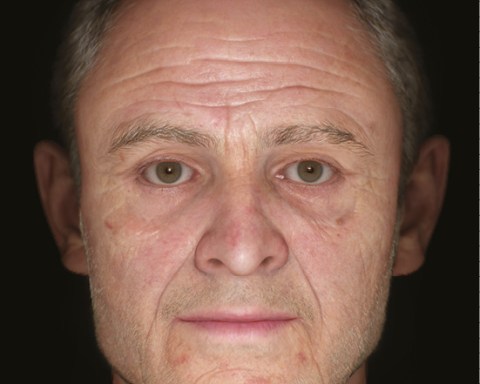
The face and head of an Iron Age woman whose remains were discovered in Dorset’s Kimmeridge Bay 25 years ago have been reconstructed by an MSc Bioarchaeology student at Bournemouth University.
The woman’s skeleton was discovered in 2000, when cliff erosion disturbed her burial. Analysis of the remains suggests she was in her mid-to-late 20s when she died, and pottery fragments associated with the grave, comprising local Iron Age Black Burnished Ware and Romano-British types, indicate a likely burial date of the late 1st century BC to mid-1st century AD; something confirmed by radiocarbon dating of the bones.
Dubbed ‘Kimmeridge Woman’ by the Bournemouth University team, the skeleton has recently been re-examined as part of a Master’s dissertation project by Amber Manning. Focusing on the forgotten women of Dorset, Amber selected five archaeological individuals from various locations and time periods in order to investigate the benefits and limitations of taking an osteobiographical approach to learning about women’s lives in the past.
Part of Amber’s research involved reconstructing the head of Kimmeridge Woman by using photogrammetry – a method which takes large numbers of photographs from different angles – to create a 3D digital image of her skull. This was then 3D printed by university engineers to produce a life-size replica, on which Amber could build up layers of muscle and tissue to reconstruct the Iron Age individual’s face (below). ‘Projects like this have become more accessible in recent times due to improvements in the technology,’ Dr Martin Smith, Associate Professor in Forensic and Biological Anthropology at Bournemouth, explained.

Kimmeridge Woman’s skeleton revealed interesting insights about the life she may have led: her leg bones showed signs of extended periods of squatting, and her arm bones indicate that they were well-muscled, leading to the suggestion that Kimmeridge Woman was involved in repetitive manual labour of some kind.
This hard, yet ordinary life, is something that drew Amber to the idea of reconstructing Kimmeridge Woman’s head, since many such reconstructions are focused on major historical figures or events. ‘I think that having a reconstruction of just an ordinary woman from this time is an important step in creating a balanced representation of the past,’ she explained. ‘Beyond that, research has shown that these models help us to empathise with the people we study, which I feel is an important aspect when looking at the ethics of displaying and investigating human remains.’
The reconstruction of Kimmeridge Woman is currently on display in Wareham Town Museum, alongside her bones.
Text: Rebecca Preedy