
Subscribe now for full access and no adverts
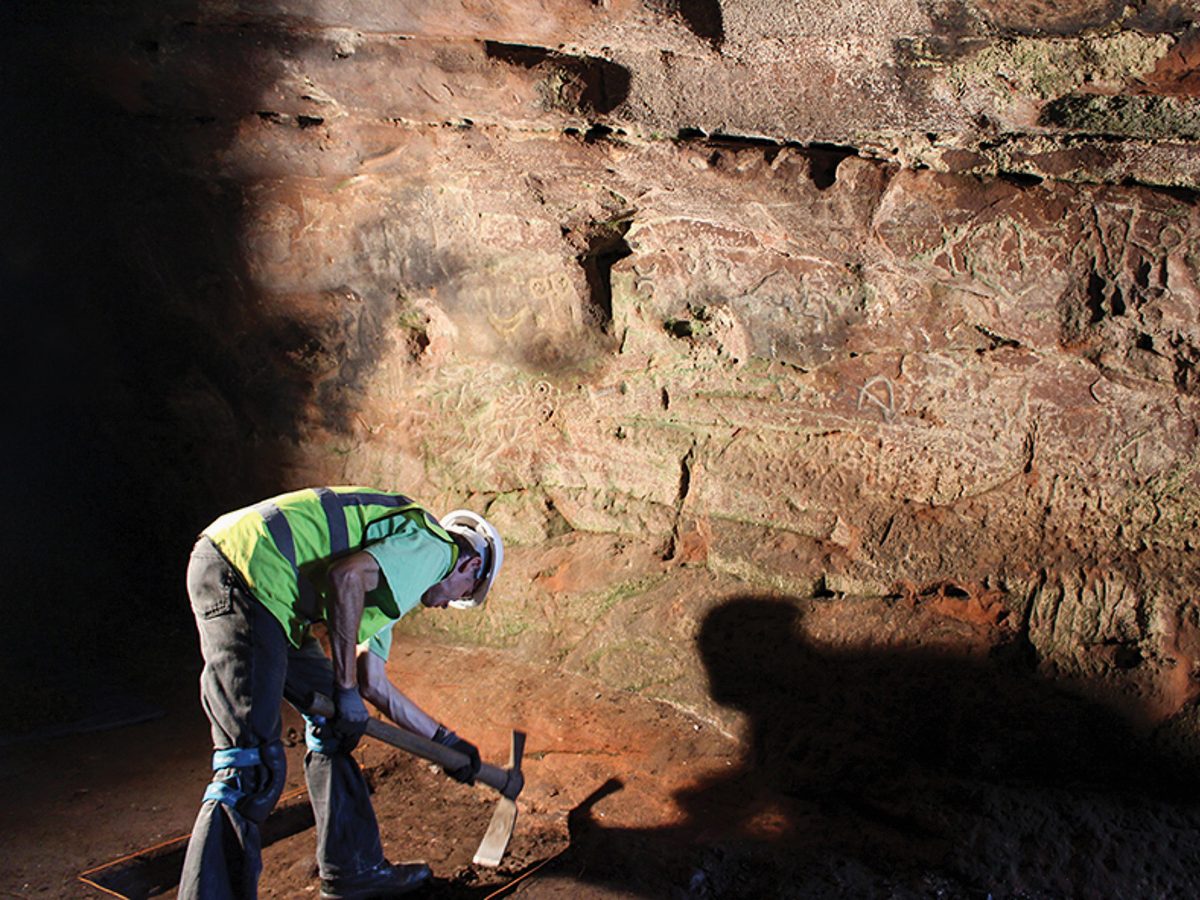
Two burials were discovered this past December along the coastline in front of the Wemyss Caves in Fife. While investigations are ongoing, it is thought – based on the date of other burials that have previously been found nearby – that they might possibly have been part of an early medieval cemetery.
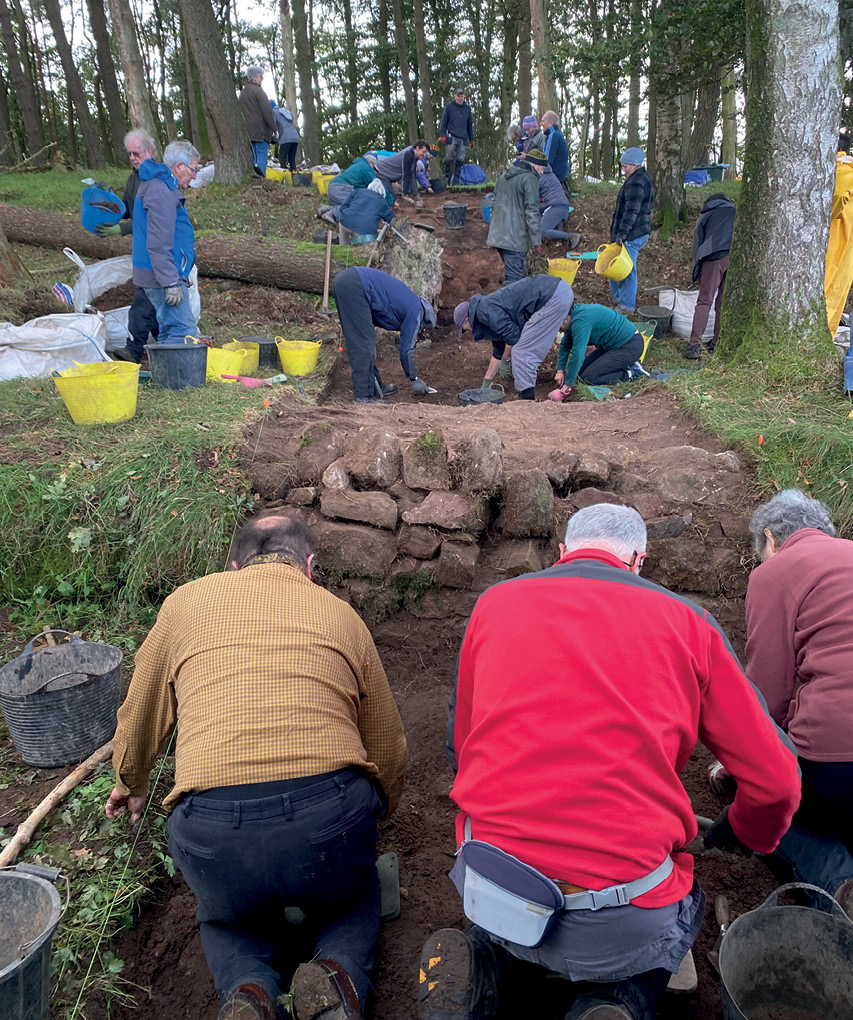
The human remains were first identified by Stuart Cook, who works as the site ward for the Save Wemyss Ancient Caves Society (SWACS; see CA 296), when he saw them poking out of the sand after recent storms. The site was then excavated by AOC Archaeology on behalf of Historic Environment Scotland, along with the Fife Archaeological Unit and SWACS volunteers. This revealed a largely complete skull, which was all that survived of one burial, while a second, complete burial was found alongside. This second individual was in a crouched position and was found to be lying directly on top of the bedrock; they had been covered by a layer of stones, some of which were still in place.
Joanna Hambly, archaeologist with the SCAPE Trust, said: ‘At least five skeletons have previously been found along the coast, the most recent in 1988 and 1993. These last two were radiocarbon-dated to around the 11th century, so it’s probable that the new finds are at least 1,000 years old. We know from other archaeological evidence that there was lots of activity inside the Wemyss Caves from the first to the sixth centuries AD, so it would be exciting if the burials were within this date too. No grave goods (e.g. pottery or metalworking) have been found with any of the burials.’

With no known associated religious site in the area, it remains obscure why this site was used for medieval burials. Christian crosses have previously been found in several caves in Fife, however, including two of the Wemyss Caves: Jonathan’s Cave and the now-collapsed West Doo Cave. It seems these spaces may have served as important places in early Christianity, and may even have been places of pilgrimage. It might be for this reason that the site was chosen as a burial location.
AOC added: ‘Unfortunately, the discovery of exposed archaeological human remains on eroding coastlines isn’t unusual, and we have worked on many projects in collaboration with Historic Environment Scotland to ensure the full recovery and excavation of exposed sites in the last few years. This site in particular is especially interesting as it was discovered by the local community who were really involved in the recovery works. We cannot wait to see the results of the post excavation analysis.’
Text: Kathryn Krakowka / Image: Save Wemyss Ancient Caves Society