
Subscribe now for full access and no adverts
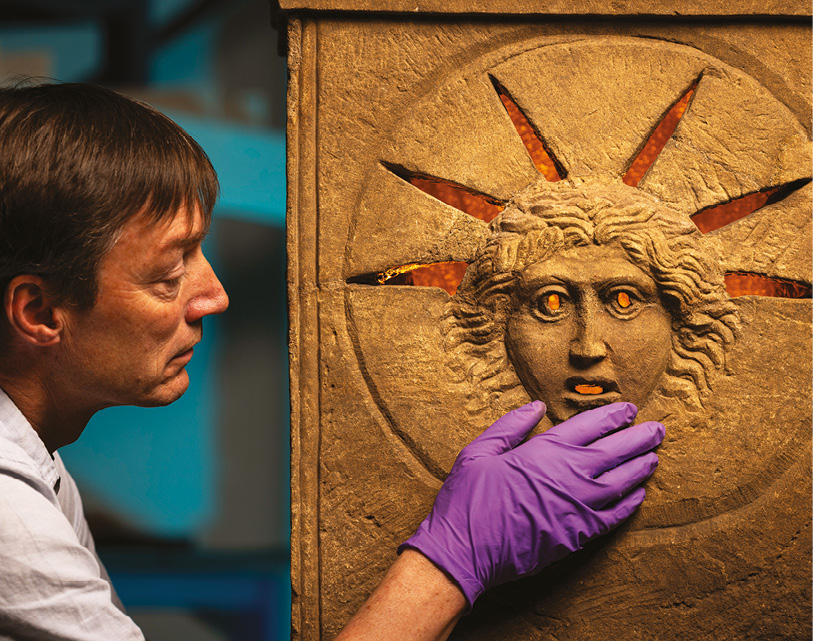
A Roman relief of a Genius – a protective guardian spirit – has recently been found at the Roman fort of Vindolanda, hidden underneath the floor of a barracks. While inscriptions dedicated to genii have been found across Roman Britain, attesting to the widespread belief in their protective powers, carved stone reliefs depicting them are relatively rare, particularly in situ. This example provides the unusual opportunity to study a Genius in a secure archaeological context.
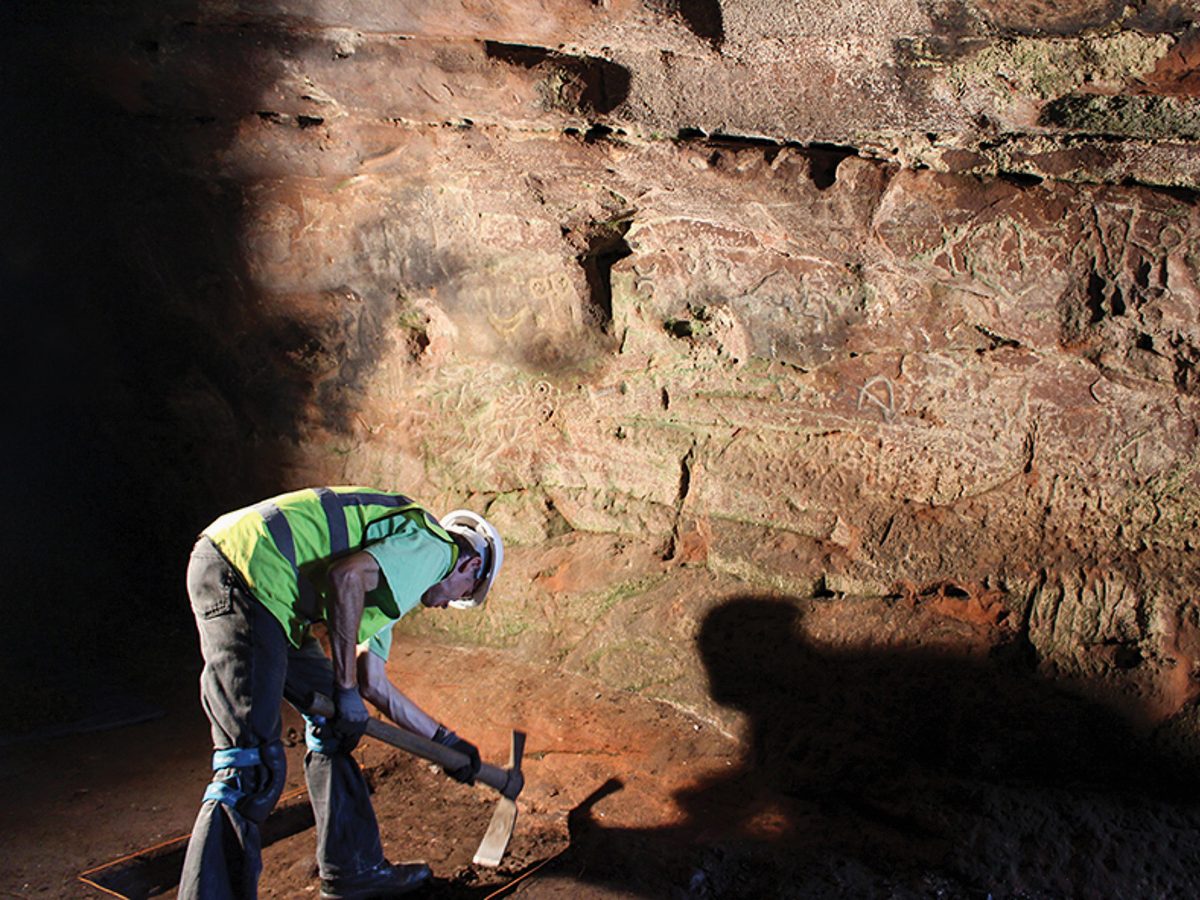
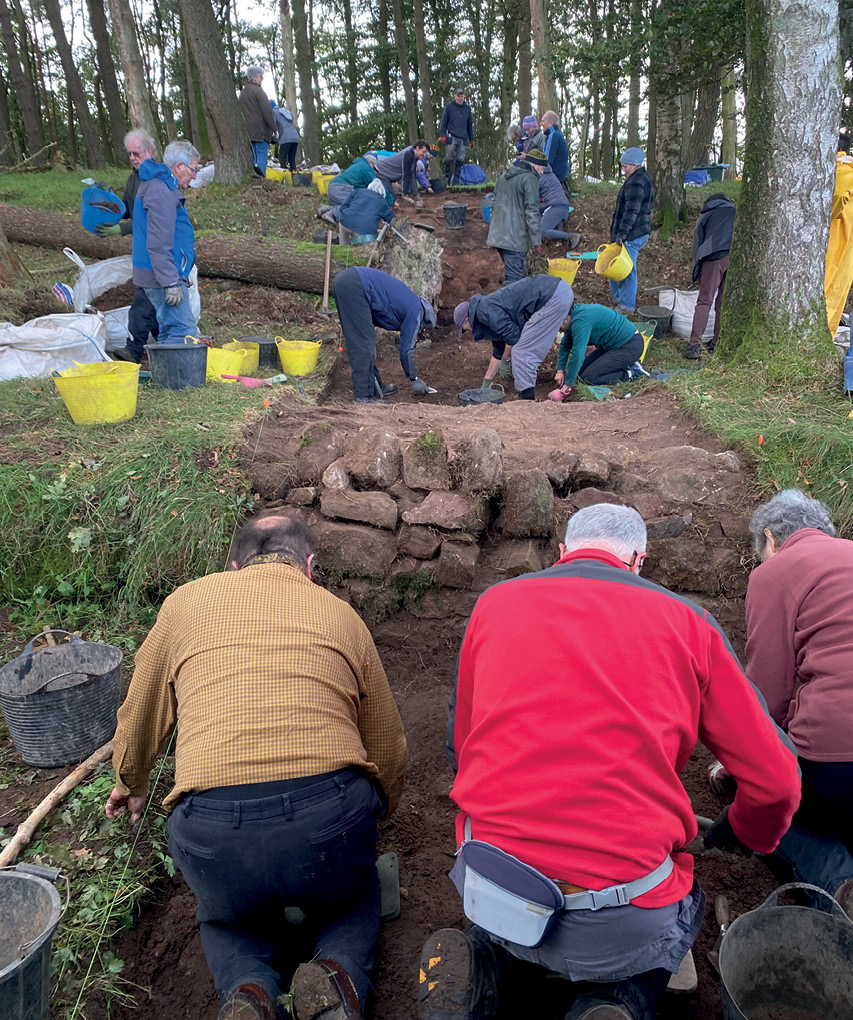
The Genius was discovered this past June, during excavations at the Roman auxiliary fort of Vindolanda, just south of Hadrian’s Wall. It was found by the CEO and Director of Excavations for the Vindolanda Trust, Dr Andrew Birley (one of our nominees for Archaeologist of the Year in 2024, see CA 407), whose family has been running excavations at the site since the 1930s. As Andrew was digging the floor of the 4th-century barrack block, which is currently the focus of excavation at the Roman site, he noticed an unusually rounded flagstone. On carefully turning over the stone, he soon discovered the carved face of the Genius looking up at him.
After sharing photos of the unusual sculpture with Romano-British scholars, the relief was identified as that of a Genius. It is depicted holding a cornucopia in one hand, which symbolises prosperity and abundance, while the other hand holds a patera, a shallow dish used in ritual offerings. As a protective spirit, it may have been buried at the barracks to offer protection to the soldiers housed within. It is believed to have been carved nearby, either at Vindolanda itself or by a sculptor at a regional carving workshop, such as the one known from the Roman fort of Lanchester in County Durham.

Commenting on his discovery, Andrew said: ‘I have been fortunate to have worked at the site for many years and made some wonderful discoveries along the way, but I was completely unprepared for what I found on the other side of this stone. It was an extraordinary moment, one that we were able to share with the team of archaeologists and volunteers whose hard work makes discoveries like this possible.’
The sculpture is undergoing conservation. It is hoped that it will be displayed at the Vindolanda Museum once that process is completed.
Text: Kathryn Krakowka / Image: Vindolanda Trust