Subscribe now for full access and no adverts
Radiocarbon dating at Woodhenge has revealed that it was built at almost exactly the same time as the circle at neighbouring Stonehenge. This exciting new data shows that Stonehenge was not a one-off in its original landscape.
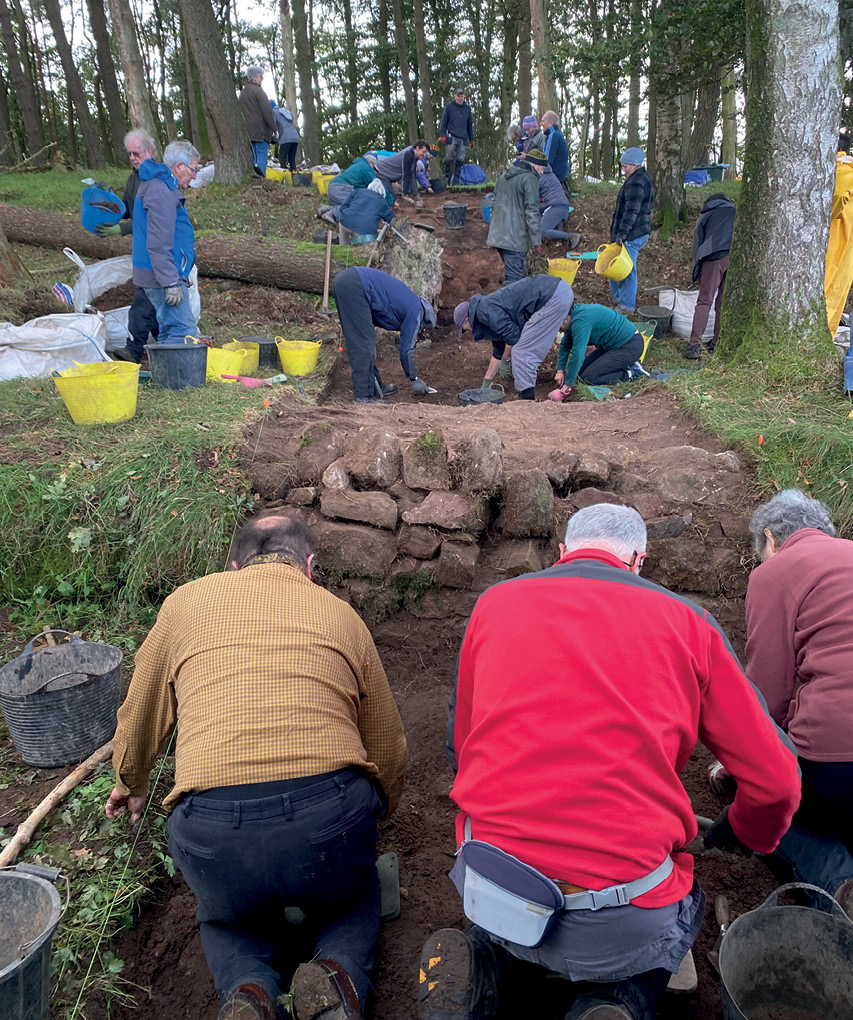
Woodhenge lies just 3.2km from its more famous neighbour on Salisbury Plain, and was originally thought to have been built around 200 years after the iconic Neolithic stone circle. The site was excavated in the 1920s, and dated using pottery and other material culture found on-site. Half a century later, 1970s excavations led to an early radiocarbon dating of the site, and it was thought that the standing posts of Woodhenge (below) could be dated to around 2300 BC. With Stonehenge dating to around 2500 BC, this left a two-century gap between the proposed construction of Amesbury’s stone circle and its wooden one.

However, more reliable carbon dating was recently funded by Historic England using material from Wiltshire Museum. This has provided a new date for Woodhenge, aligning it almost exactly with the erection of the stones at Stonehenge.
The new dating at Woodhenge also revealed that it was built in at least two phases. The timber rings, now known to have been built around 150-200 years before the henge itself, lie along an identical solstitial axis to Stonehenge. Coupled with the fact that the monuments were built in close chronological proximity, this suggests a connection between the groups of people settling in the two parts of Salisbury Plain at this time.
Amanda Chadburn, English Heritage’s former lead adviser at the Stonehenge and Avebury World Heritage Site, worked on the project. She said that ‘the two sites may have been used and built by the same group of people’, but that this would be impossible to tell.
Considering Stonehenge as one of a contemporaneous group of monuments, rather than an earlier outlier, could change the way we look at the monument and its ancient setting. ‘Future research may try to find out why this is the case, and whether other similar sites exist – and, equally, why they have not been found in places like Avebury,’ Chadburn said. ‘Prehistoric peoples were sighting the solstices at a number of monuments in this exact area, and at the same time. This is truly exceptional.’
The new findings were published this month in Stonehenge: sighting the sun by Liverpool University Press on behalf of Historic England.
Text: Rebecca Preedy / Image: Amanda Chadburn