Subscribe now for full access and no adverts
To mark the 80th anniversary of the legendary Allied breakout from a German concentration camp in March 1944, a new exhibition is exploring other ‘great escapes’ that took place during the Second World War.
The exhibition, which opened last month at the National Archives in Kew, south-west London, promises to ‘offer a glimpse of the courage and ingenuity that is possible in desperately hard times,’ its curators said.
Along with the famous flight from Stalag Luft III, later immortalised in the 1963 film The Great Escape starring Steve McQueen, a number of other POW breakouts occurred during the war, not only in Europe but as far away as East Asia.
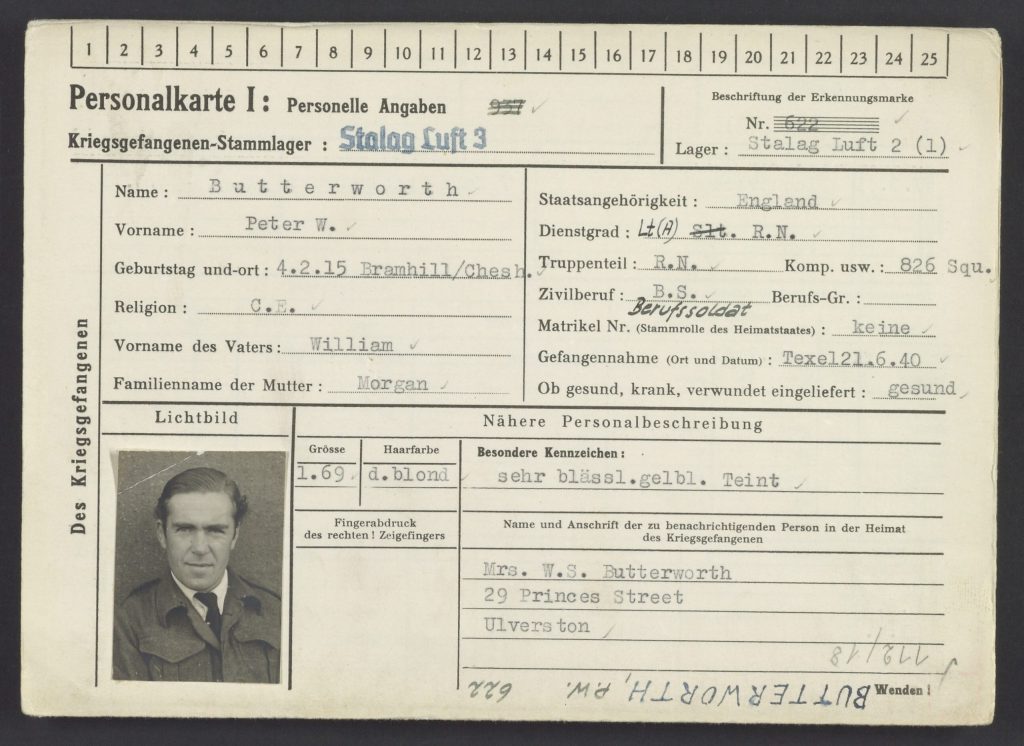
The new show focuses on around 30 individuals, some of whom became well-known following the war. The Carry On… actor Peter Butterworth, for instance, participated in the 1943 ‘Wooden Horse’ escape, also from Stalag Luft III, while Airey Neave, later a prominent Conservative MP, was the first British POW to flee Colditz Castle.
Along with Allied soldiers, the exhibition looks at captured civilians, such as the author P G Wodehouse. Interned in Upper Silesia, Wodehouse was encouraged by the Nazis to make English-language broadcasts on German radio, which caused great controversy in Britain.
Axis prisoners interned in the UK are profiled in the exhibition, too, among them Bert Trautmann. As goalkeeper for Manchester City, he would play the last 15 minutes of the 1956 FA Cup final with a broken neck. Even some animals are profiled, such as a navy dog called Judy. A companion of British prisoner Frank Williams, Judy was awarded the Dickin Medal, the ‘animal equivalent’ of the Victoria Cross (one of the many artefacts on display at Kew), for her bravery.
The exhibition also showcases some 200,000 recently catalogued record cards of prisoners incarcerated by the Germans, as well as intelligence reports by escapees, the novel written by P G Wodehouse while interned, and a plan of Colditz that was drawn from memory by Airey Neave.
Other artefacts include a deck of cards with a concealed map, a shoe brush containing a compass, and various civilian disguises. These items were typically supplied by MI9, the War Office department tasked with aiding captured prisoners.
‘Many of these stories are about hope despite the incredibly difficult circumstances prisoners and internees faced during the Second World War,’ Dr William Butler, co-curator of the exhibition, said on its opening.
Great Escapes: remarkable Second World War captives runs until 21 July at the National Archives in London and is free to visit.