Subscribe now for full access and no adverts
Dating analysis of a monument on Bodmin Moor in Cornwall has revealed that it may be 4,000 years older than previously imagined.
King Arthur’s Hall – comprising 56 standing stones set within a rectangular bank of earth and stone measuring 21m by 49m – was originally listed by Historic England as a medieval animal pound. Owing to the nature of the stone uprights, however, as well as the monument’s north–south alignment, and the presence of ancient tor enclosures nearby, there has long been speculation about possible prehistoric origins.
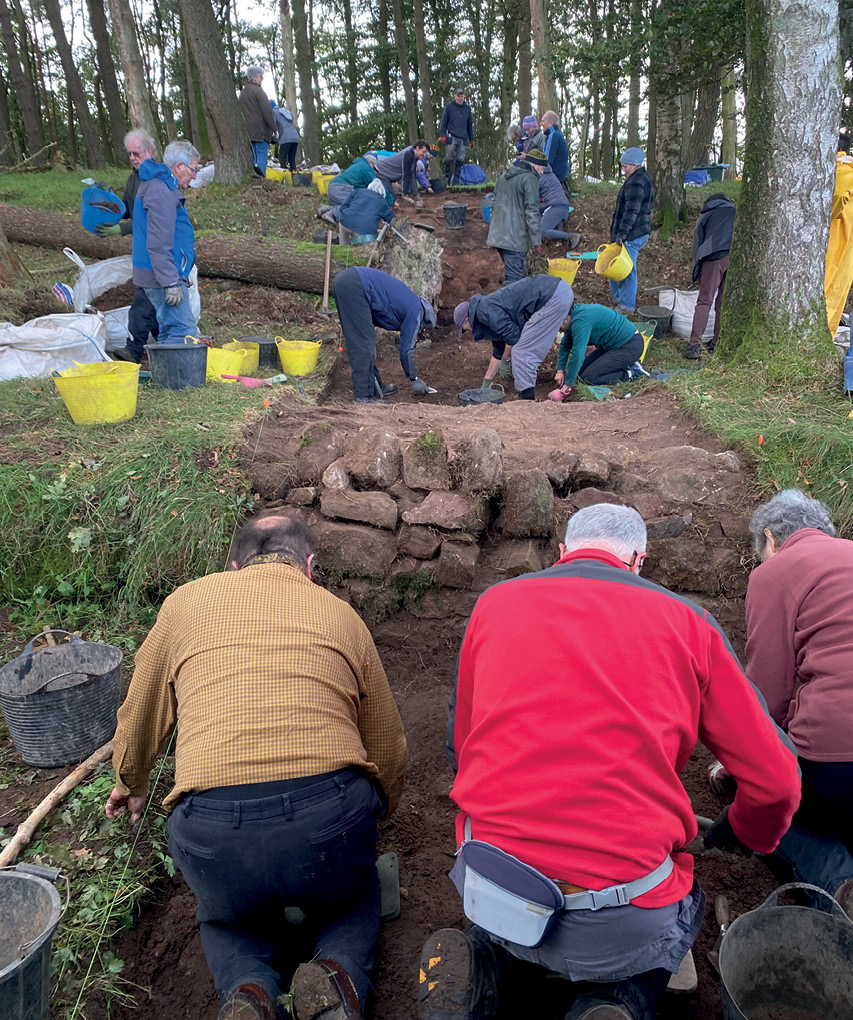
With the aim of defining a clear chronology for the site, and establishing its role in the wider landscape, the Cornwall Archaeological Unit (CAU), assisted by a team of volunteers and project staff, led excavations there in September 2022. Supported by a National Lottery Heritage Fund grant, along with a grant from Cornwall Heritage Trust, the investigations were carried out as part of Cornwall National Landscape’s ‘A Monumental Improvement’ project.
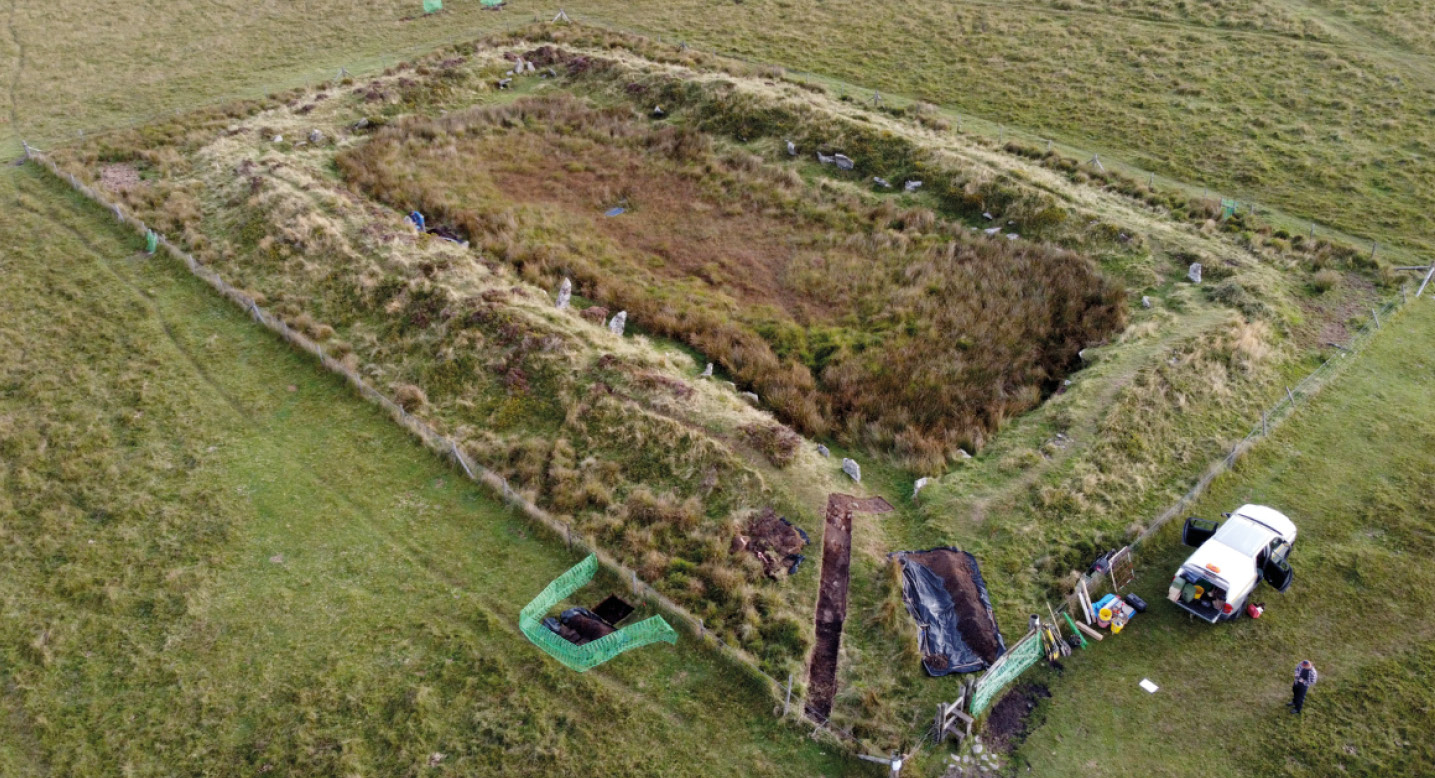
Specialists from the Universities of Reading, Newcastle, and St Andrews used Optically Stimulated Luminescence (OSL) dating to test samples taken from a section cut into the bank, through to soils beneath, in order to ascertain an approximate date for the monument’s construction. This analysis returned a date of the 4th millennium BC, indicating that King Arthur’s Hall was in fact built in the Middle Neolithic period.
Further samples taken from the interior included fossilised animal, plant, and parasite remains, and radiocarbon dating indicates that this inner space had been ‘cleared out’ in the later Iron Age (350-100 BC). Subsequent activity also left its mark on the monument’s marshy interior, with evidence that it was used as a pound, and later a tin stream-working reservoir, between AD 1030 and 1210.
Geological examination of the stones themselves revealed that they had been brought to the site from within a 250m radius, and were probably dug from the interior of the site itself, rather than having been taken from a distant tor.
The new dating of King Arthur’s Hall makes it a unique construction within north-western Europe: no other prehistoric monument sharing its rectangular sunken embankment structure is known, although rare circular examples exist, such as Meini Gwyr in Wales, and Grange Circle at Lough Gur, Ireland. The monument’s unusual form means that it is tricky to determine its function; working theories are that it could be a sacred site, which may have made use of the aquatic nature of the marshy interior for some purpose that is yet to be established.
The new dating evidence has opened up a wealth of possibilities for study of King Arthur’s Hall, as well as other monuments. ‘It acts as a benchmark for successful sampling of this kind, and provides a framework for further scientific dating work on other sites on the Moor and beyond for which we currently know very little,’ James Gossip of CAU commented.
While there are no immediate plans to continue excavations, archaeologists from the organisations working on the site hope that further research could provide a date for the standing stones themselves, as well as establish a clearer understanding of how the monument’s interior was used.
King Arthur’s Hall is a protected scheduled monument at risk from erosion caused by visitors. Livestock is grazed in this area, so visitors must take care to follow the Countryside Code and not disturb the monument or livestock in any way.
Text: Rebecca Preedy / Photo: James Gossip