Subscribe now for full access and no adverts
Human remains that were discovered in peatland at Ballymacombs More in Northern Ireland have been reidentified as belonging to an Iron Age woman who was possibly the victim of a sacrificial rite.
When a bog body was discovered by machine workers in 2023, it was initially interpreted as the remains of a teenage boy. However, new research undertaken by experts from Ulster Museum and Queen’s University Belfast, among others, has revealed that the individual was in fact likely to have been a young woman who died c.343-341 BC.
Detailed forensic and osteo-archaeological analysis was possible thanks to the preservative qualities of the bog waters in which the body had been submerged: some of the woman’s soft tissue and bone remained intact, and close examination of her remains (including imaging using 3D- and CT-scanning) has allowed experts to piece together illuminating details about this Iron Age individual. We now know that she had stood around 5’6” tall, and she had been 16-22 years old at the time of her death.
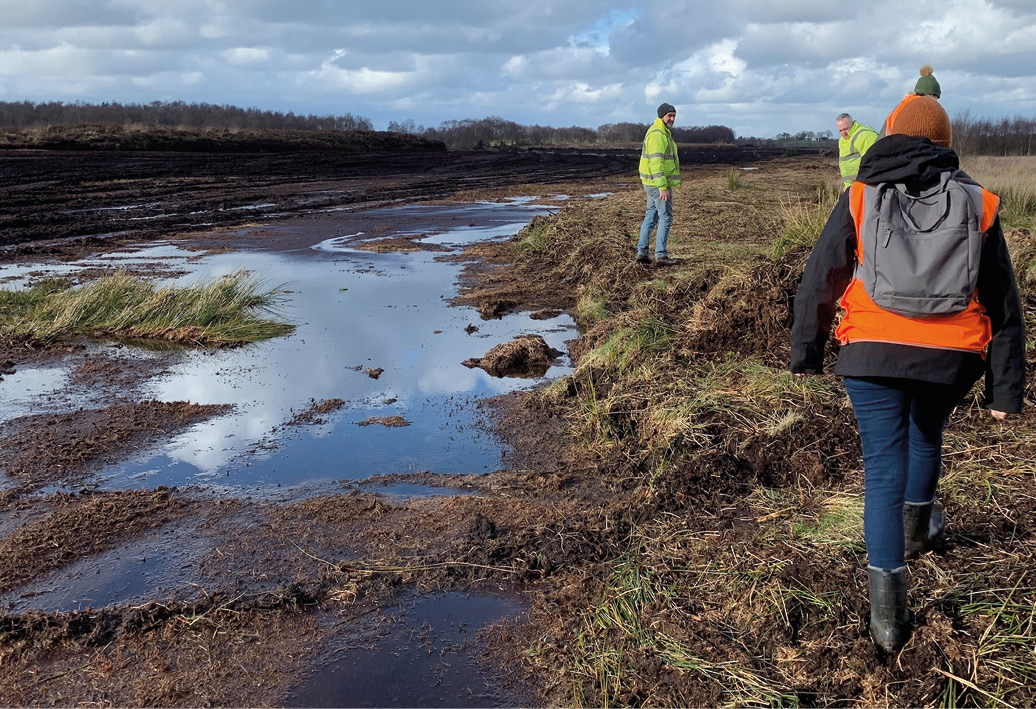
As for how the Ballymacombs More Woman (as the individual is now known) died, clear cut- marks were observed on her vertebrae, which – together with the absence of her skull, and her placement within the peatland – are consistent with patterns seen in Iron Age ritual acts that have the potential to have been sacrificial in nature.
Speaking about the significance of the remains, Niamh Baker, Curator of Archaeology at National Museums NI, said: ‘She is one of the few known female bog-preserved individuals from this period. Her remains provide an extraordinary glimpse into Iron Age society.’
Now that physical examination and imaging of the Ballymacombs More Woman have taken place, researchers are set to carry out isotopic and aDNA sampling which, it is hoped, will reveal clues about her origins, movement, health, and diet. Specialists are also analysing a mysterious woven plant-based item – found beneath the woman’s knees – to determine its material, structure, and potential purpose. Further forensic examination is planned, which may help to reveal the weapon that left its mark on the woman’s vertebrae. Finally, the woman will be subjected to a nine-month controlled drying process in order to preserve her remains.
Text: Rebecca Preedy / Image: © National Museums NI