Subscribe now for full access and no adverts
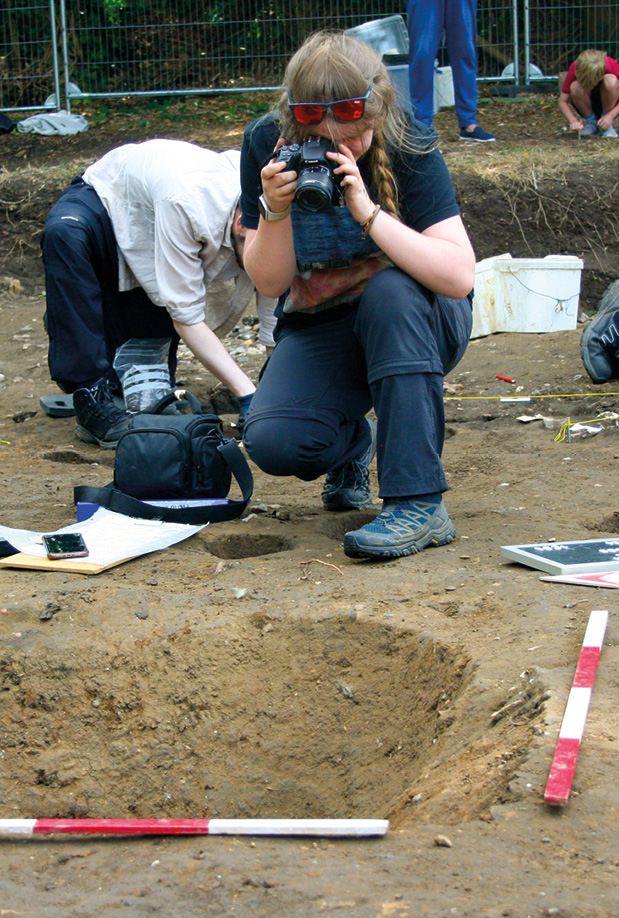
Archaeologists excavating an Anglo-Saxon monastery in Cookham have unearthed 23 intact human burials, along with the disturbed remains of multiple other individuals.
The site, which has been excavated by the University of Reading since 2021 (see CA 392) with permission from and collaboration with Holy Trinity Church, Cookham, uncovered a further 50 individuals in 2023. This new osteoarchaeological material adds to growing evidence that the monastery was a place of care for the sick and dying during the medieval period.
The skeletons, both intact and disarticulated, demonstrate a wide variety of diseases and injuries, including multiple forms of cancer, tuberculosis, debilitating bone fractures displaying signs of healing, and pathological indications of bed sores. The disturbed osteological material is the result of the cemetery’s heavy use over the later 7th and 8th centuries AD, as confirmed by radiocarbon dating. Areas of intercutting burials suggest that the medical care being given at the monastery lasted over several successive generations.
Gabor Thomas, Professor of Early Medieval Archaeology at the University of Reading, explained that the discoveries highlight the importance of monasteries as centres of healing and medical care in the Anglo-Saxon period. ‘We can gain an impression of this role from contemporary historical sources, but Cookham is one of the first archaeological sites to provide detailed physical evidence for the range of diseases involved and medical care dispensed by contemporary monastic communities’, he said.
Other finds from the extensively preserved monastic landscape included wooden objects retrieved from the bottom of a 9th-century well, which was first uncovered in the 2023 excavations. Among them was a very rare lathe-turned wooden bowl. Further timber buildings were also identified within the monastery’s domestic quarters, and excavation of a deep artificial channel near the River Thames uncovered a timber lining indicating that it was a leat used to power a vertical wheeled watermill. Next to it were substantial stone foundations and associated flooring for what is believed to the original mill building. Preliminary indications are that the mill dates to the 8th century and formed part of the infrastructure of the monastery. Mill remains of this date are incredibly rare and, if confirmed, the preservation of both the leat and mill building in association would be an exceptional discovery.
Excavations will continue in 2025, with aims to clarify the extent and spatial organisation of the cemetery, to recover further evidence for the domestic buildings within the monastery, and to confirm the attribution of the mill building.
Text: Rebecca Preedy / Photo: University of Reading