Subscribe now for full access and no adverts
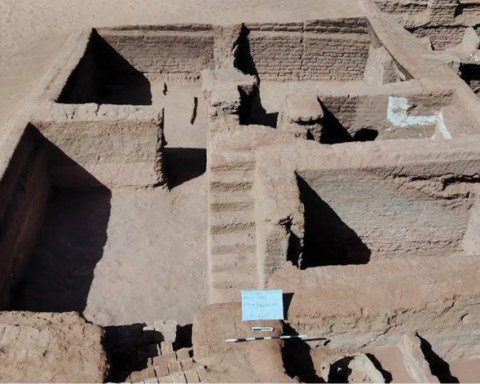
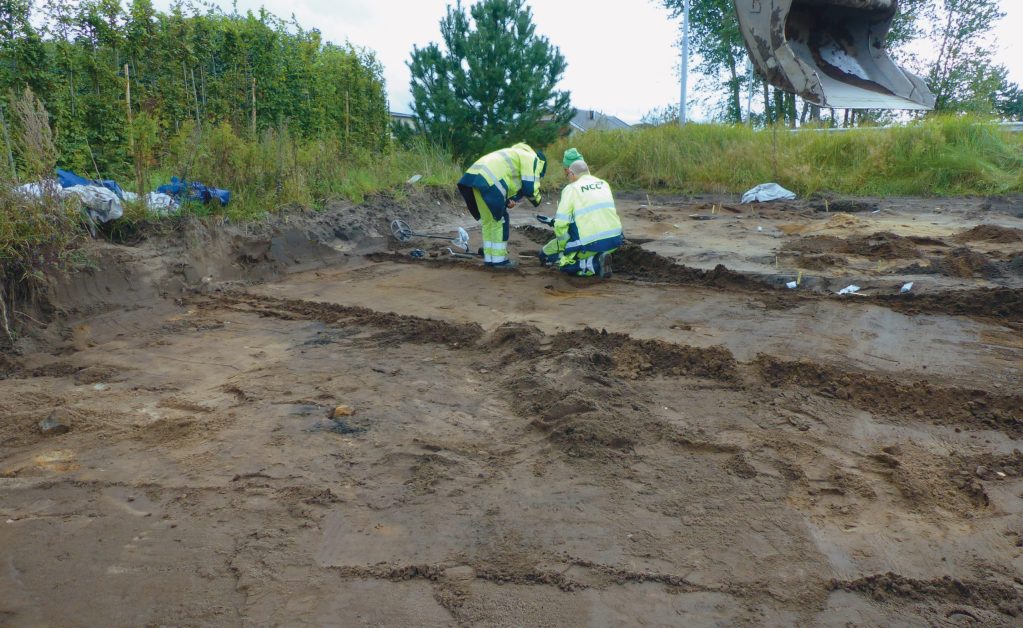
In 2017, a team from Arkeologerna, part of the National Historical Museum of Sweden, were carrying out pre-excavation survey of a Stone Age site in the village of Tvååker when they unexpectedly came across the remains of a Viking Age burial ground. The site had been nearly destroyed by agricultural activity and other disturbances over the centuries, but systematic excavations revealed a wealth of archaeology hidden beneath the ground, offering valuable insights into the Viking period in this region.
To date, approximately 139 burials have been identified, some complete and others only partially preserved. Due to the poor condition of the site, these graves and grave-related layers had to be interpreted based on the impressions of cut features visible in the ground, bone layers representing cremation sites, and what survived of robbed stone-lined pits. Analysis was further aided by the finds recovered from the graves, which mainly comprise Viking-era metal objects and early medieval ceramics.
The burial ground
Among the features excavated at the burial ground between 2017 and 2019 are a total of 29 standing stones, 50 burial mounds, ten stone formations, four ship-shaped stone settings (the largest measuring 50m long) and one ship-shaped mound, a triangular stone setting with concave sides, and a stone circle. There are also 43 graves with superstructures that could not be determined, as well as other burials and features such as a water well (see the plan below).
The graves and artefactual finds from the site indicate a relatively large population during the Viking Age; dating of bone and charcoal shows that the burial ground was in use from the 9th to the 11th century. Furthermore, large ship-shaped stone settings like the four examples found here are understood to represent important manifestations of power by local elites in this period.
Grave goods discovered at the site offer an insight into the world of Northern Europe at this time. During the 11th century, Swedish society was undergoing a shift from paganism to Christianity. This was accompanied by a change in burial rituals and grave goods, but when exactly did this take place?
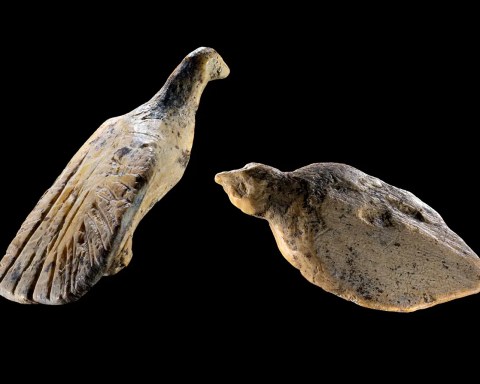
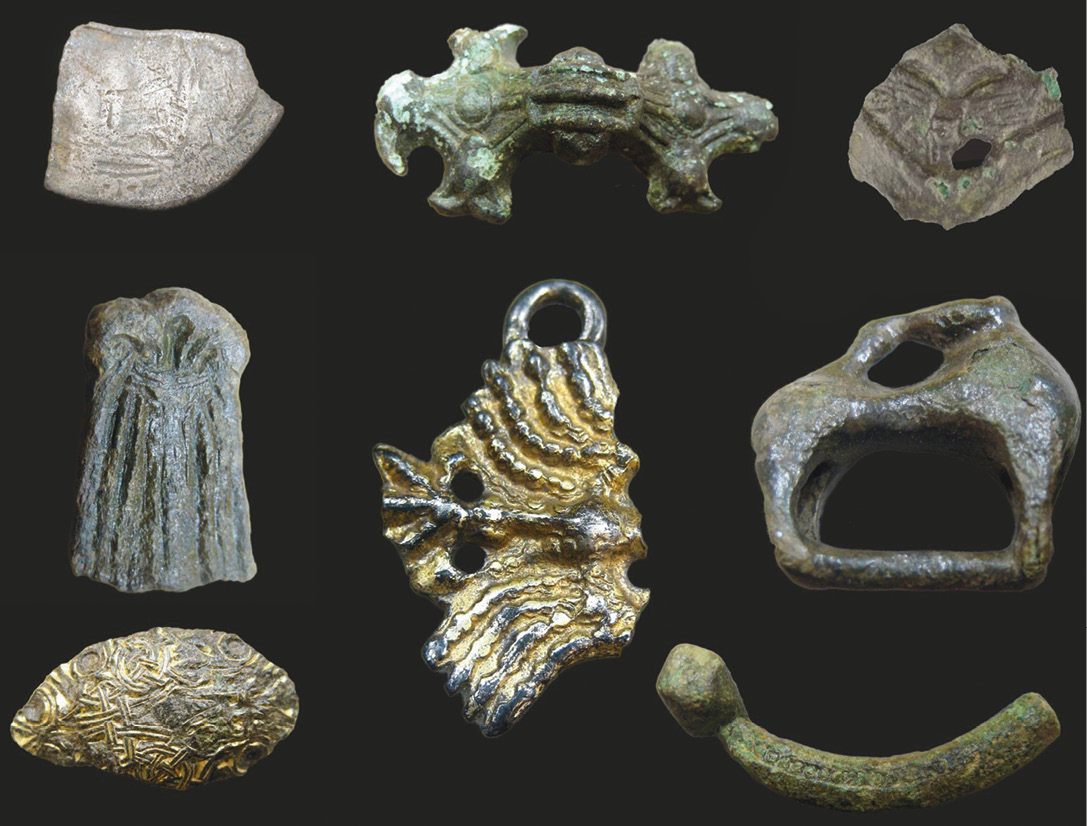
The finds include an Arabic silver coin known as an Abbasid, dated to AD 795-806, and discovered in the ship-shaped mound; a gilded bird pendant from the largest ship-shaped stone setting; single shell brooches, both gilded and in bronze; bronze and iron ring belts; several blue beads (from decoration on items, rather than part of necklaces); and several hundred ceramic vessels; as well as the burnt remains of humans and animals found in the cremation layer associated with a funeral pyre.
Ceramic analysis of the 246 vessels, which were found across 88 graves, has revealed that, while many were imported, several examples were locally produced in the Tvååker area. This may represent the earliest production of this type of goods on the west coast of Sweden.
Another grave good of note is a small fragment of a box brooch depicting a horse biting its tail, for which a parallel has been found in a rich shaman’s grave on Fyrkat, Denmark. In total, four items made of silver, 74 of bronze, and 72 of iron were found in the graves. These burial goods provide clear evidence that the area was home to a wealthy Viking Age aristocracy.

Understanding Tvååker
Other avenues of research offer further insights into the site and its wider context. On a historical map created in 1811, the area where the 50m-long ship-shaped stone setting was found is labelled ‘Jydenshögen’ (‘the mound of the individual from Jutland’), and the surrounding fields are called ‘mound fields’. These mounds have since been totally levelled by agriculture. Even so, we can conclude from this map that we are dealing with the remains of a large Viking Age mound cemetery, of which we estimate only about 6% has been excavated so far.
The site is located beside the Tvååkersån stream (formerly known as the Uttran) and along an old road that was once used to transport iron to the seaport at Gamla Köpstad (a name meaning ‘old market town’), located 10km to the north-west. Work conducted by our colleagues in this area in the 2000s included a project exploring the possibility of a Viking Age emporium at Gamla Köpstad. Two shipwrecks have been found near the shore to the west of the harbour of Galtabäck, which lies just down the coast. These vessels carried cargoes that included cattle hair (used as sealing material), as well as bog myrtle (Myrica gale) and several other types of plant. Cattle bones and those same plant species were also found in contemporary graves at Tvååker, hinting at a connection between the burial ground and an active Viking Age port somewhere nearby. The search for the trading place itself continues.
Another research project, conducted by other archaeologists in the 1990s, explored iron production along the Sandabäcken, a small waterway just south of the Tvååkersån stream. This revealed evidence of technical advances in hydropower and iron production in the area that can be traced back to the Viking Age, including a water mill associated with an ironworks. Meanwhile, a cereal mill found at the site of Utteros, by the Tvååkersån stream, incorporates elements dating back to the 11th century. Could this be where a quern stone found in one of the graves at the Tvååker burial ground was used? Is it even possible that this burial belonged to Utteros’ miller?
The discovery of this 9th- to 11th-century burial ground represents a valuable addition to the area’s rich Viking Age archaeology. However, one key question remains: where did these people live? Given the potentially vast size of the burial ground, there must have been a large village nearby. Research into the complex history of this landscape will continue, and we hope that future investigations may be able to uncover more pieces to slot into this fascinating puzzle.

Images: Arkeologerna CC BY