Subscribe now for full access and no adverts
Established around 600 BC, Caracol, in west-central Belize, was inhabited for nearly 2,000 years, but the city flourished in the Classic Maya period, reaching its peak between AD 560 and 680. Following its abandonment c.AD 900, however, the site lay hidden beneath the Chiquibul Forest until its rediscovery in 1937. Then, in 1985, the site was brought to the attention of Arlen and Diane Chase. Working in collaboration with the Belize Institute of Archaeology, the husband-and-wife team have now been researching at Caracol for more than 40 years, carrying out surveys and excavations, and using airborne LiDAR scans to identify structures beneath the dense jungle (Caracol was the first Maya site to be studied using this technology).
These investigations have revealed that Caracol was once among the biggest and most influential cities in the ancient Maya world. At its height, c.AD 650, the settlement covered an area of more than 240km2 – bigger than modern-day Belize City – and supported more than 100,000 people. Over the years, the team has identified an array of monuments, public plazas, markets, and residential groups, as well as agricultural terraces and reservoirs, a decentralised water system, and an extensive network of internal causeways. However, the latest discovery is among the most significant to date.
An impressive tomb
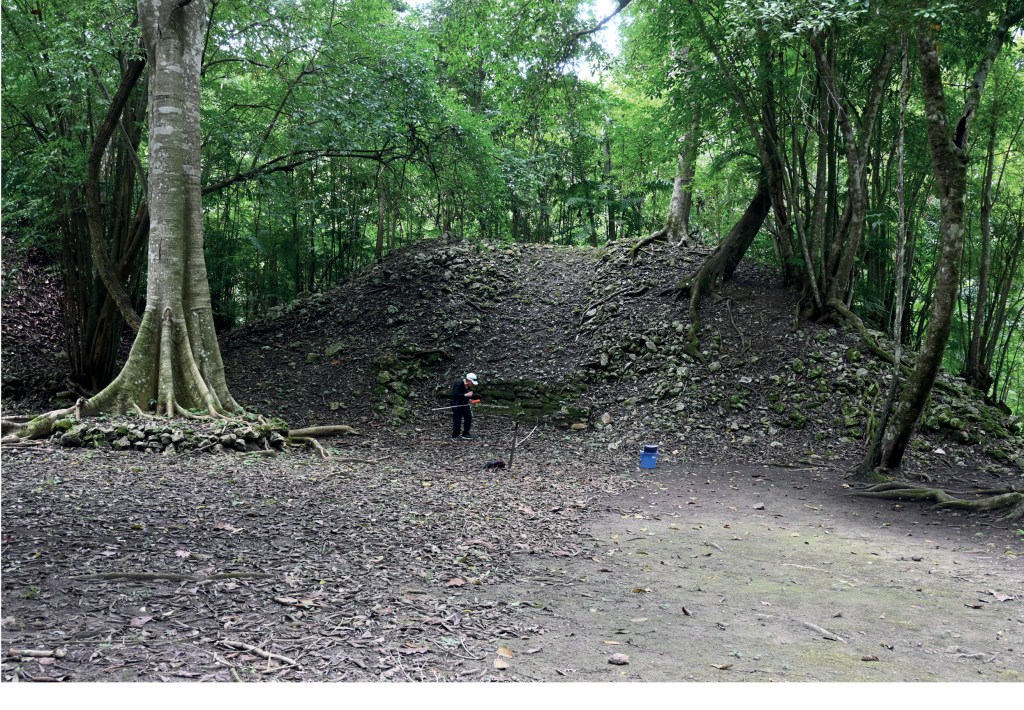
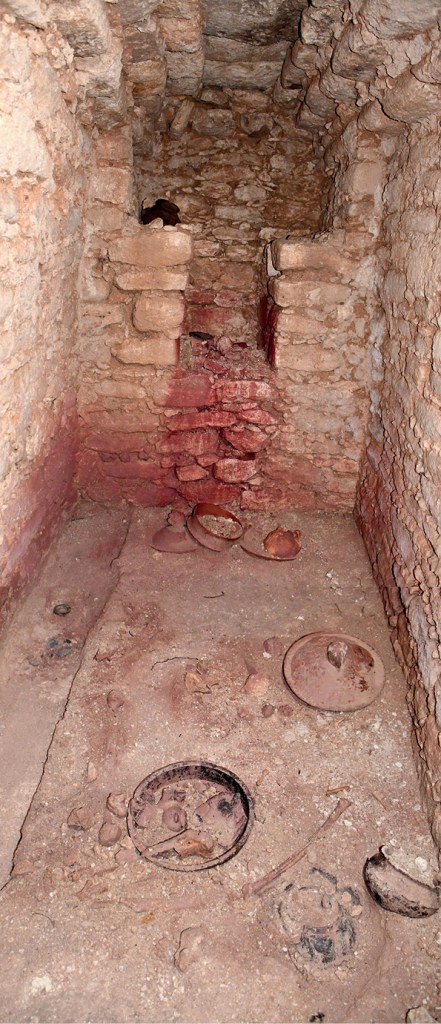
During the 2025 field season, investigations were conducted in the Northeast Acropolis, an elite residential area comprising a raised group of large-scale structures. This part of the site has been the subject of excavations at numerous points since 1993, and this year the team decided to re-excavate an area at the base of a royal family shrine explored in previous seasons. Here, beneath the earlier trench, they discovered a large chamber tomb containing the remains of a man of advanced age and a height of c.1.7m. The chamber itself measures 2.7m long by 1.25m wide and 2.15m tall, and has niches carved into the north and south walls. The tomb’s considerable size combined with its location immediately indicated that the deceased belonged to the highest levels of society. This assumption was reinforced when archaeologists observed that much of the chamber was covered with cinnabar, a bright red pigment often associated with elite Maya burials.
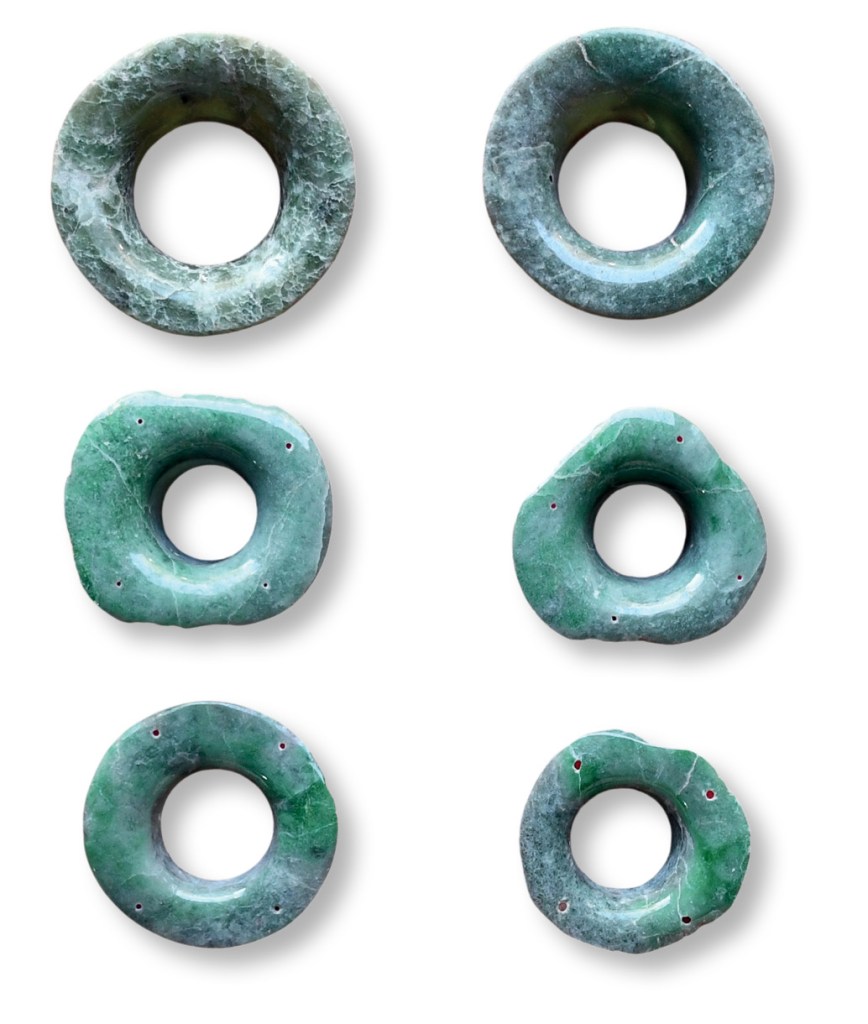
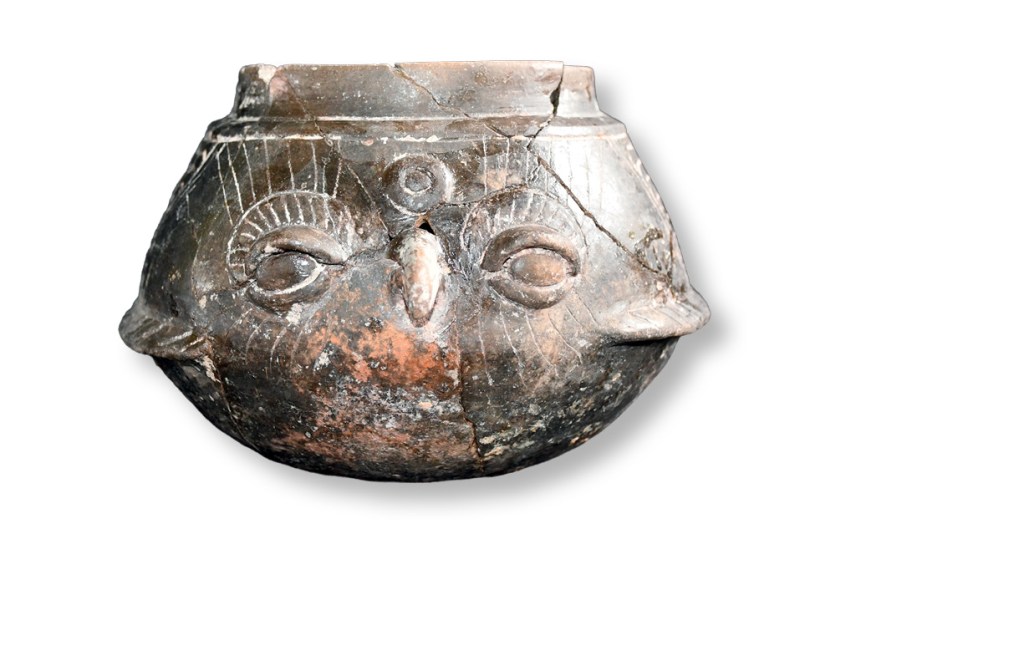
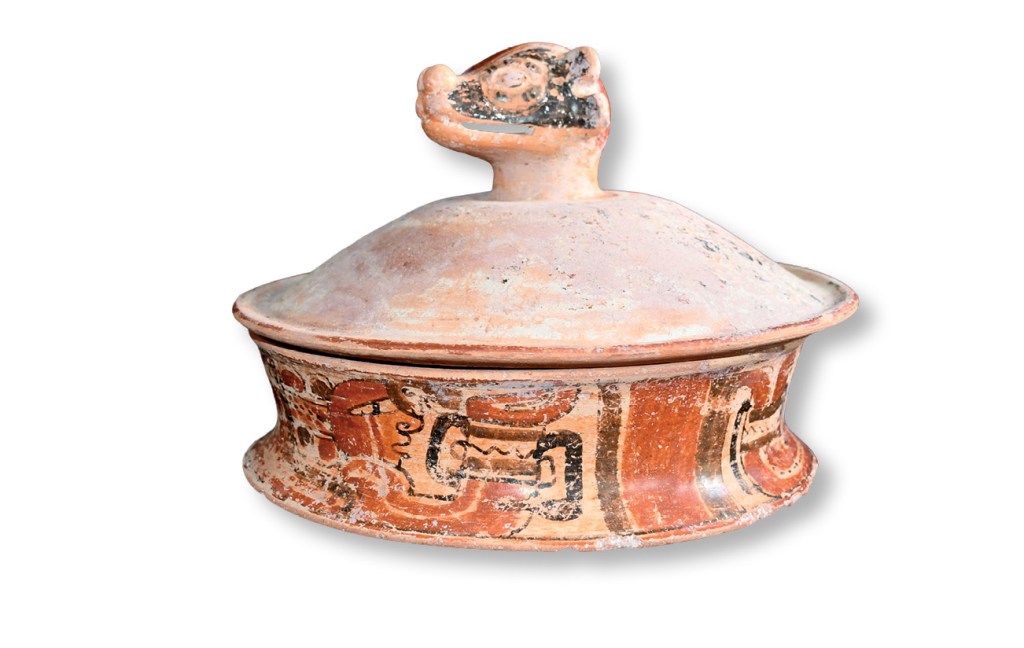
As excavations progressed, the grave goods painted an even more powerful picture. These included 11 finely decorated ceramic vessels and four lids: a large number for a tomb of this date. The pots featured a range of images, such as a Maya ruler receiving offerings; the Maya god of traders, Ek Chuah (who is not commonly found in Classic period imagery); and scenes depicting bound captives. Several of the lids were shaped like coatimundi, an animal later associated with the rulers of Caracol. Other objects were yet more impressive. Of particular note were three sets of jadeite ear flares: ‘It is very rare to find even one set’, stressed Diane Chase: never before have three been found in a single burial. Alongside the ear flares were other pieces of jadeite jewellery, as well as carved bone tubes, Pacific Spondylus shells, and turtle plastrons. The final piece of the puzzle was an assortment of 89 pieces of jade and 29 of shell, originally thought to be a mosaic of some sort, which turned out to be a jade death mask. This left little doubt that the chamber was not just the tomb of a high-status individual, but of a ruler.
The Chases have even identified a strong candidate for the person buried here. The tomb has been dated to AD 330-350 using the pottery styles and the chamber’s stratigraphic relationship to other finds at the site that have been radiocarbon dated. When compared to lists of rulers recorded in inscriptions on monuments at Caracol, this date corresponds to the rule of Te K’ab Chaak, the first king of Caracol, who came to the throne in AD 331, beginning a dynasty that ruled the city for more than 460 years. Although no inscriptions have been found inside the tomb and DNA analysis has not yet been carried out, the researchers are confident that all of the existing evidence supports this conclusion. If this is the tomb of Te K’ab Chaak, it would be a groundbreaking discovery, representing not just the first royal burial found at Caracol so far, but the very first king of the city and the founder of its ruling dynasty.
Teotihuacan connections
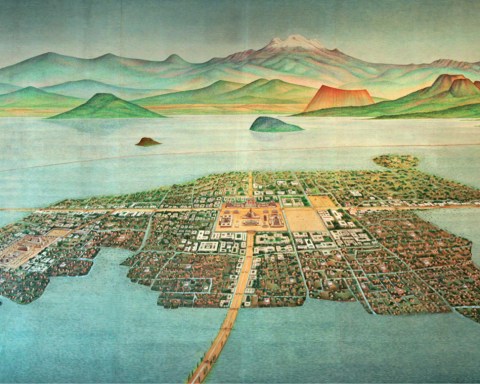
The recent findings also represent a valuable contribution to developing understandings of Caracol’s relationship with other regions in this period, and particularly with Teotihuacan, a powerful city in central Mexico, c.1,200km away. Contact between Teotihuacan and the Maya world is well documented after an entrada (invasion) event in AD 378, but questions remain about the nature of early interactions between the two cultures. The recently discovered tomb is the earliest of three burials found in Caracol’s Northeast Acropolis that occurred around the same time c.AD 350, several decades before the recorded entrada. The grave goods found in the newly unearthed tomb also display particular similarities to objects found in one of these contemporaneous burials: a deposit known as the ‘Teotihuacano burial’. This pit containing the cremated remains of three individuals – one adult and two children – was found in the centre of the Northeast Acropolis plaza in 2010. The location and form of the interment, as well as several of the artefacts within it, reflect strong links with central Mexico, leading to suggestions that the adult buried here was a member of the Caracol royal family who had adopted Teotihuacan cultural practices, and may even have acted as an envoy to Teotihuacan. The discovery of a ruler’s burial that took place a few years before the placement of the Teotihuacano burial and shares a number of its stylistic characteristics provides further evidence that interactions were already occurring between Caracol and Teotihuacan at the highest level of society before the AD 378 entrada, in the earliest days of Caracol’s dynastic tradition. Further research is needed, but already these findings are shedding new light on the extent of Teotihuacan’s influence in the establishment of Maya rulership, which has been one of the main concerns of the research project at Caracol since its launch.
Work is also under way on the reconstruction of the mosaic jade mask, as well as ancient DNA, isotope, and radiocarbon analysis of the human remains in the tomb. Excavations at Caracol will resume next season.
Text: Amy Brunskill / All images: Caracol Archaeological Project