
Subscribe now for full access and no adverts
Excavations at the former Hafod–Morfa Copperworks have revealed rare evidence of copper-processing techniques used in the Lower Swansea Valley during the 19th century which, at its peak, accounted for an extraordinary amount of the world’s copper production.
The Hafod Copperworks was established c.1808 by Cornish entrepreneur John Vivian, and the adjacent Morfa works followed in 1835. Initially, Morfa was a rolling mill, making bars and plates from copper ingots, but smelting is believed to have started soon after. The two works were joined in 1924, when the site began to be operated by Yorkshire Imperial Metals, and it subsequently closed in 1980, by which time it was the last operating copperworks in Swansea.
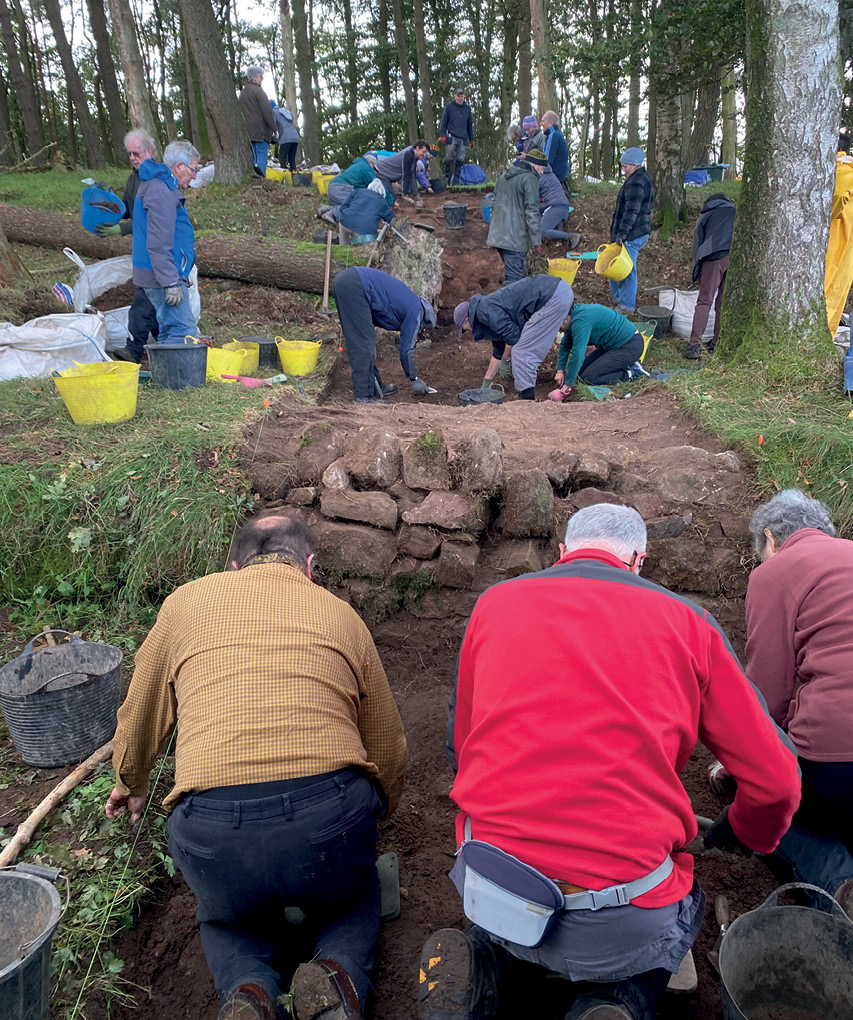
Black Mountains Archaeology have been excavating on the site in advance of a £20m regeneration project that aims to conserve the site as a world-class heritage, innovation, and education destination (see ‘Sherds’ in CA 397). It is a large site to survey, however, consisting of at least 15 extant structures, as well as a number of buried features, and work has been ongoing there since 2018.
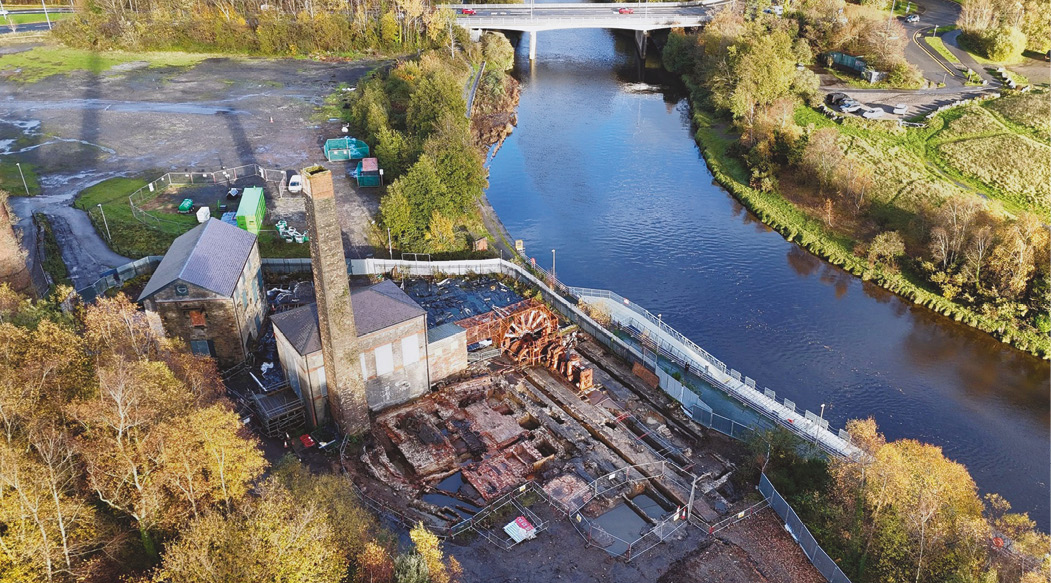
Above ground, the upstanding remains have been thoroughly surveyed and extensively photographed in order to create detailed 3D images of the site. They include the Vivian Engine House, which was built in 1860, and the Musgrave Engine House, which followed 50 years later. The latter structure contains the Musgrave Engine, the only example of its kind still in its original location, and now a Scheduled Monument.
Trenches placed across the site have also provided a comprehensive chronology of the works’ activity. Key finds include the Musgrave rolls machine pit, where original balancing gears lay under surviving copper rolls; a previously unknown copper rolls line, probably associated with the earliest phase of the Vivian Engine House; the likely remains of the 19th-century beam engine house and rolling mill that pre-existed the Musgrave Engine; and an intricate network of brick annealing furnaces and flues, where copper would be heated (‘annealed’) prior to rolling.
The results of these excavations will allow for a better understanding of the site’s history, as well as guiding decisions about how best to conserve it for the future.
Text: Kathryn Krakowka / Image: Black Mountains Archaeology Ltd