
Subscribe now for full access and no adverts
Renewed support for Salisbury mental-health heritage project
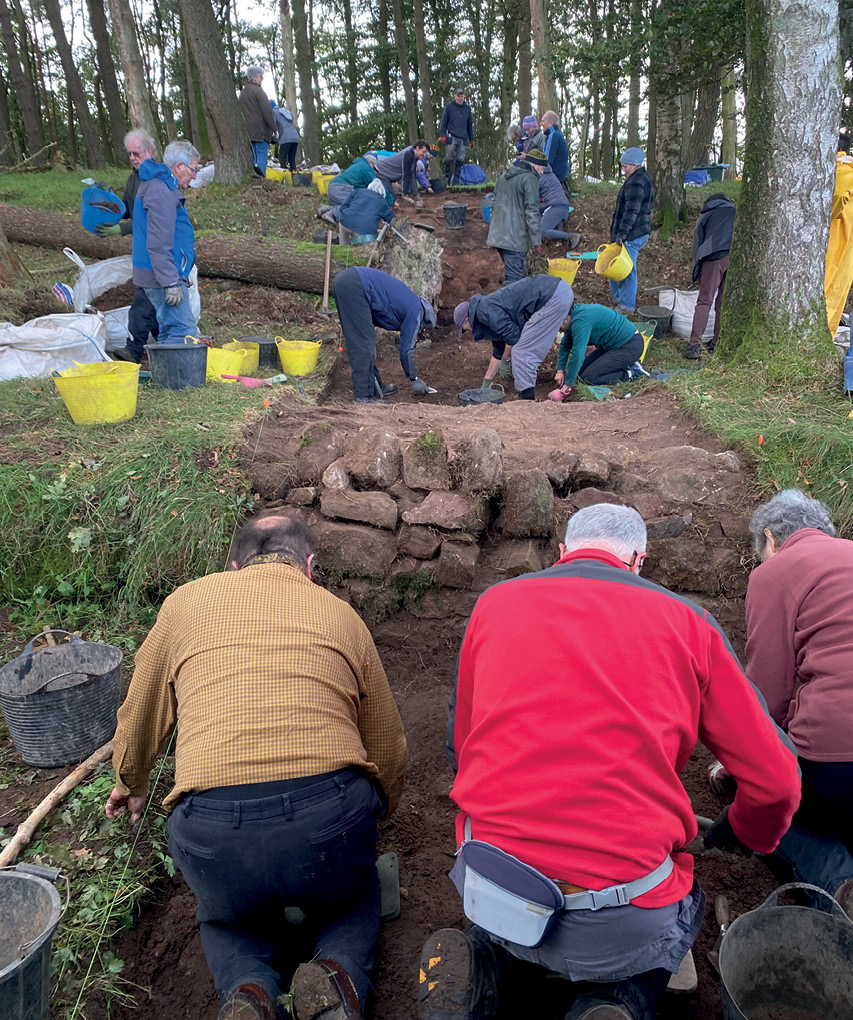
Well-City Salisbury, a project aiming to help people with mental-health needs using arts and heritage courses, has received £368,135 from The National Lottery Community Fund. Bringing together four Salisbury-based partner organisations (ArtCare, Wessex Archaeology, Wiltshire Creative, and Wiltshire Wildlife Trust), the project helps referred individuals by making connections to the arts, landscapes, and community heritage though ten-week creative courses targeted at adults and young adults, thus making positive changes to participants’ mental health. In the past three years, 191 individuals have taken part in 29 creative courses with local artists and referral organisations, with 85% of them achieving their personal course-goals. For more information on how to participate in or support the project, please see http://www.wellcitysalisbury.co.uk.

Project to explore link between historic environment and biodiversity
A new project led by Oxford Archaeology, with funding from Historic England, aims to explore developments in the historic environment and Biodiversity Net Gain, which requires developments in England to deliver a 10% increase in biodiversity either on-site or through off-site habitat creation. The new project aims to highlight how nature-recovery schemes such as BNG affect the historic environment, and how these sites can themselves contribute to the creation of biodiverse landscapes. The project team are hoping to research and collate resources in order to help further understanding of the relationship between the historic environment and various habitats, including their conservation and creation. More details: http://www.oxfordarchaeology.com/news/bng.
Plans to date Neolithic monuments in Scotland
Archaeology Scotland is undertaking a new project which hopes to give more precise dating to a series of Early Neolithic megalithic chambered and passage tombs found in Argyll and Bute, the Western Isles, and the Highlands. Although archaeologists believe the monuments could have been constructed between 6,300 and 5,800 years ago, few of these sites have been scientifically dated. Now, with funding from a bequest left to the Society of Antiquaries of Scotland, small-scale excavations are planned in order to recover material that can be 14C dated. It is hoped that dating these monuments more securely could reveal key information about the arrival of the first farmers to Scotland from continental Europe.
Text: Rebecca Preedy