
Subscribe now for full access and no adverts
On display in Rome until 3 May 2026 is an exhibition entitled Treasures of the Pharaohs. It is housed in the Scuderie (once the stables) of Rome’s Quirinal Palace. The palace was constructed between 1573 and 1583 as the popes’ summer residence, and was occupied by pontiffs from Gregory XIII (1572-1585) to Pius IX (1846-1878); it then became the residence of Italy’s royal family from 1870, and, since 1946, of Italy’s President.
This is the first time that the Egyptian government has mounted an exhibition of its ancient artefacts in Rome, and only the second time that Egypt has lent any of its ancient artefacts to Italy. The 130 objects in Treasures of the Pharaohs are displayed in six sections, thematically and not chronologically: the gold of the pharaohs; life after death; people around the pharaoh; religion; kingship; and ‘The Golden City’. Displayed in dark rooms in spotlit glass cases (some of which include mirrors to see the interiors of coffins) or free-standing but spotlit, the artefacts explore: the importance of gold (Egypt is still an important source today); the complexity of ancient Egyptian society, not only royal power and the divine authority of the pharaohs, but also daily life; religious beliefs; Egypt’s multiple gods and goddesses; funerary customs; the afterlife; and ancient Egypt’s artistic achievements over a period of 3,000 years.
The exhibition’s scope
The exhibition spans the entire arc of ancient Egyptian history, from the Early Dynastic Period (c.3150-2890 BC) to the Late Period (664-332 BC). Only one artefact, an arm-shaped gilded wood incense-burner, dates to a later time – the Ptolemaic Period (332-30 BC) – although such objects were frequently depicted earlier on the walls of temples, tombs, and on religious stelae. For, as the catalogue tells us:
Burning incense was an integral part of religious and funerary practices in ancient Egypt. Its benefits included purifying the space, expelling evil spirits, and invoking the gods.

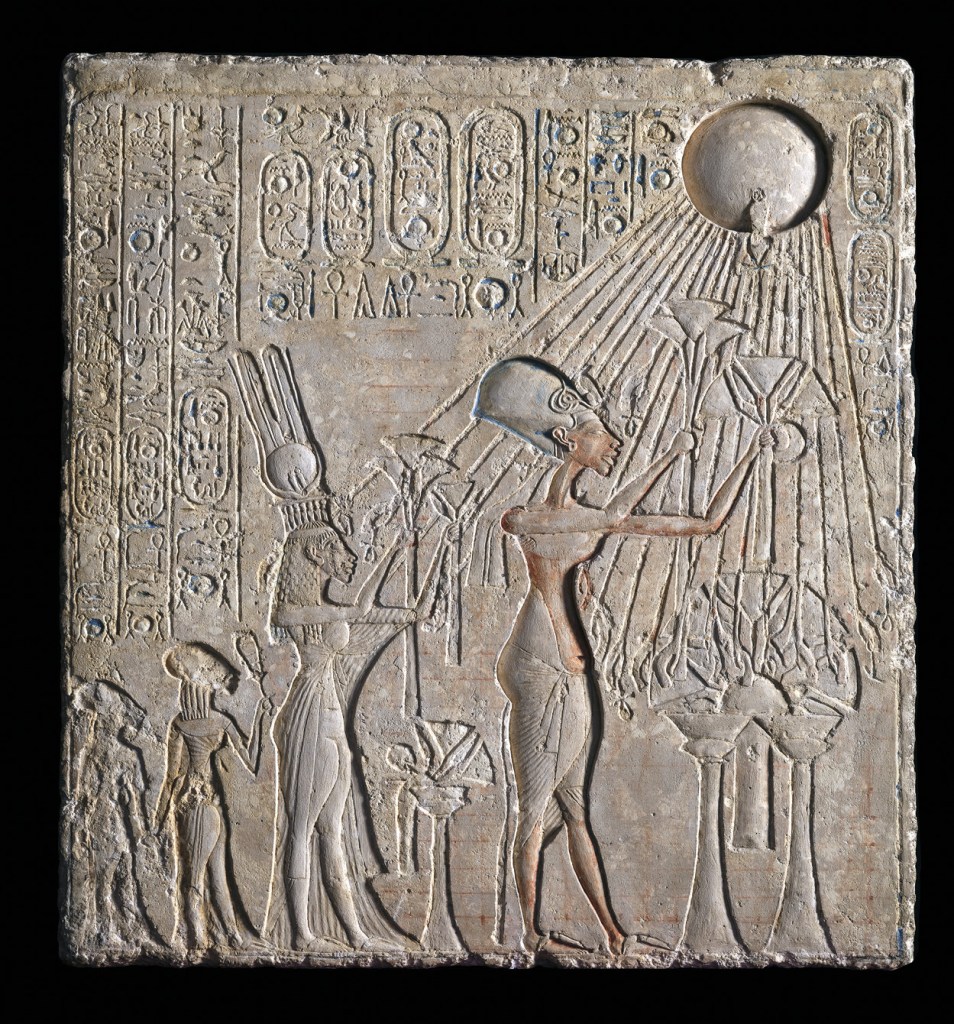
Treasures of the Pharaohs includes artefacts never before exhibited outside Egypt, on loan from the Egyptian Museum in Cairo’s Tahrir Square and the Luxor Museum. It also includes recent discoveries, most notably from the ‘Golden City’, unearthed by an Egyptian team led by Zahi Hawass in Luxor in 2020. The ‘Golden City’ section of the exhibition includes the tools and personal belongings of artisans and craftsmen. This vast urban settlement dates to the reigns of Amenhotep III (c.1390-1352 BC) and his son Akhenaten (c.1352-1336 BC). A rare limestone stela of Akhenaten and his family is included in the section on religion. As the exhibition catalogue recounts:
his reign was the first time that the divine institution of kingship in ancient Egypt allowed the depiction of the royal family and their daily activities. This stela depicts Akhenaten as he worships the god Aten embodied in the sun disc, whose rays extend and terminate in human hands, thus granting the ankh, or life, to the royal family.

The Mensa Isiaca
The only object which is not on loan from Egypt is the Mensa Isiaca or Bembine Tablet. Dating to the 1st century AD, it is the most recent artefact on display and the only one not made in Egypt. No direct parallels are known for this bronze tablet covered with a polychrome profusion of Egyptian figures and pseudo-hieroglyphs, inlaid with gold, silver, zinc, niello (a black metallic alloy), and enamel. The motifs are ‘Egyptian’, but only decorative, without any meaning or rationale. The only recognisable figure is the goddess Isis seated on a throne inside a temple, which suggests that the tablet originated in a Roman centre of her worship, of which there were several.
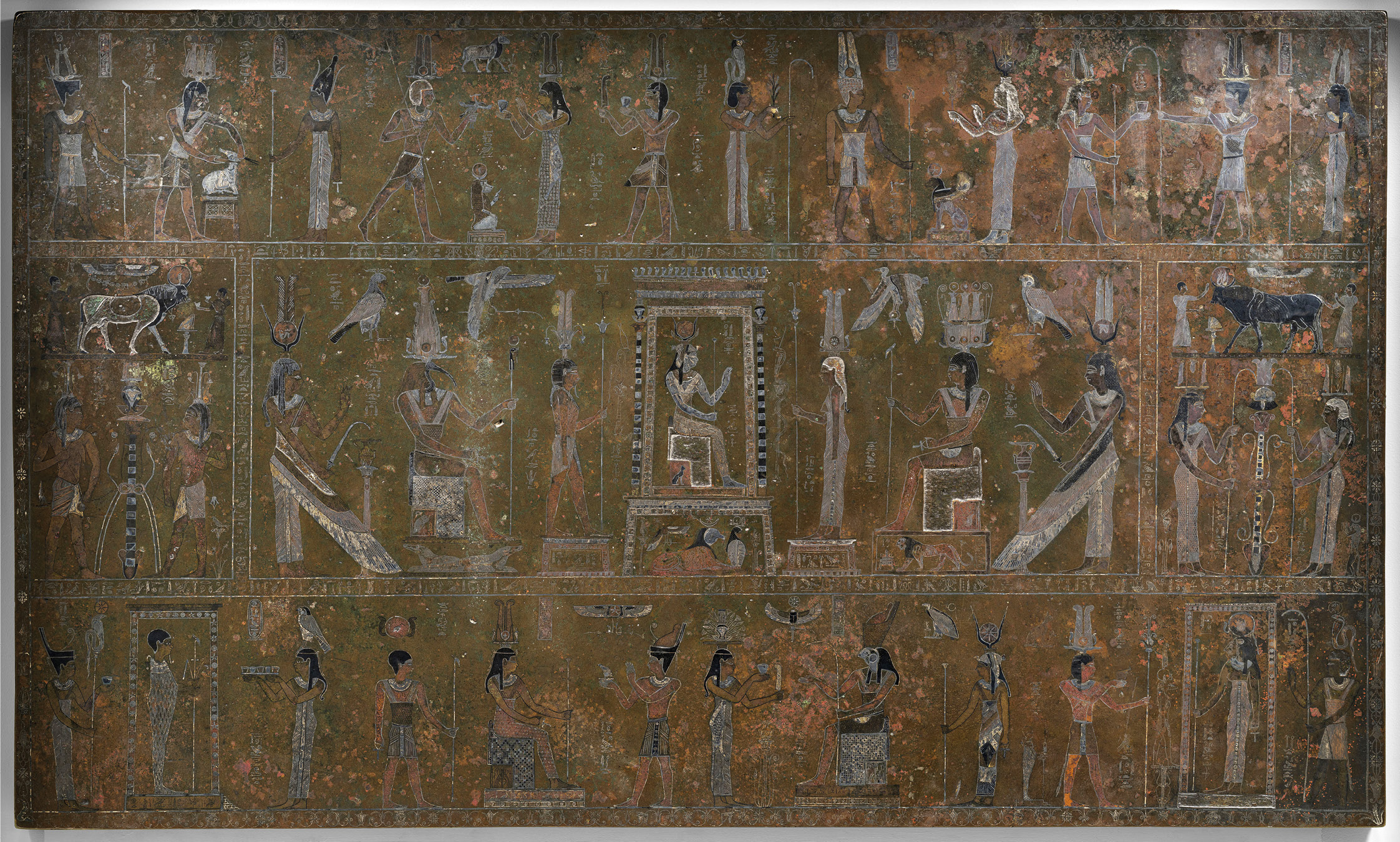
Restored more than once, little is known of the tablet’s early history until after the sack of Rome in 1527, when Cardinal Pietro Bembo bought it from a locksmith or ironworker in Rome. After Bembo’s death in 1547, the tablet was acquired by the Gonzagas, the ruling family of Mantua, and remained in their museum until the city was captured in 1630 by the troops of the Holy Roman Emperor Ferdinand II. It then changed hands frequently until Napoleon’s conquest of Italy in 1797. It remained in France until Napoleon’s downfall, when it was returned to Italy and the Savoy kings, becoming the first ‘ancient Egyptian’ object of their collection, and therefore of Turin’s Egyptian museum. It has never been loaned before.
No direct parallels are known for this bronze tablet [the Mensa Isiaca].
The oldest items
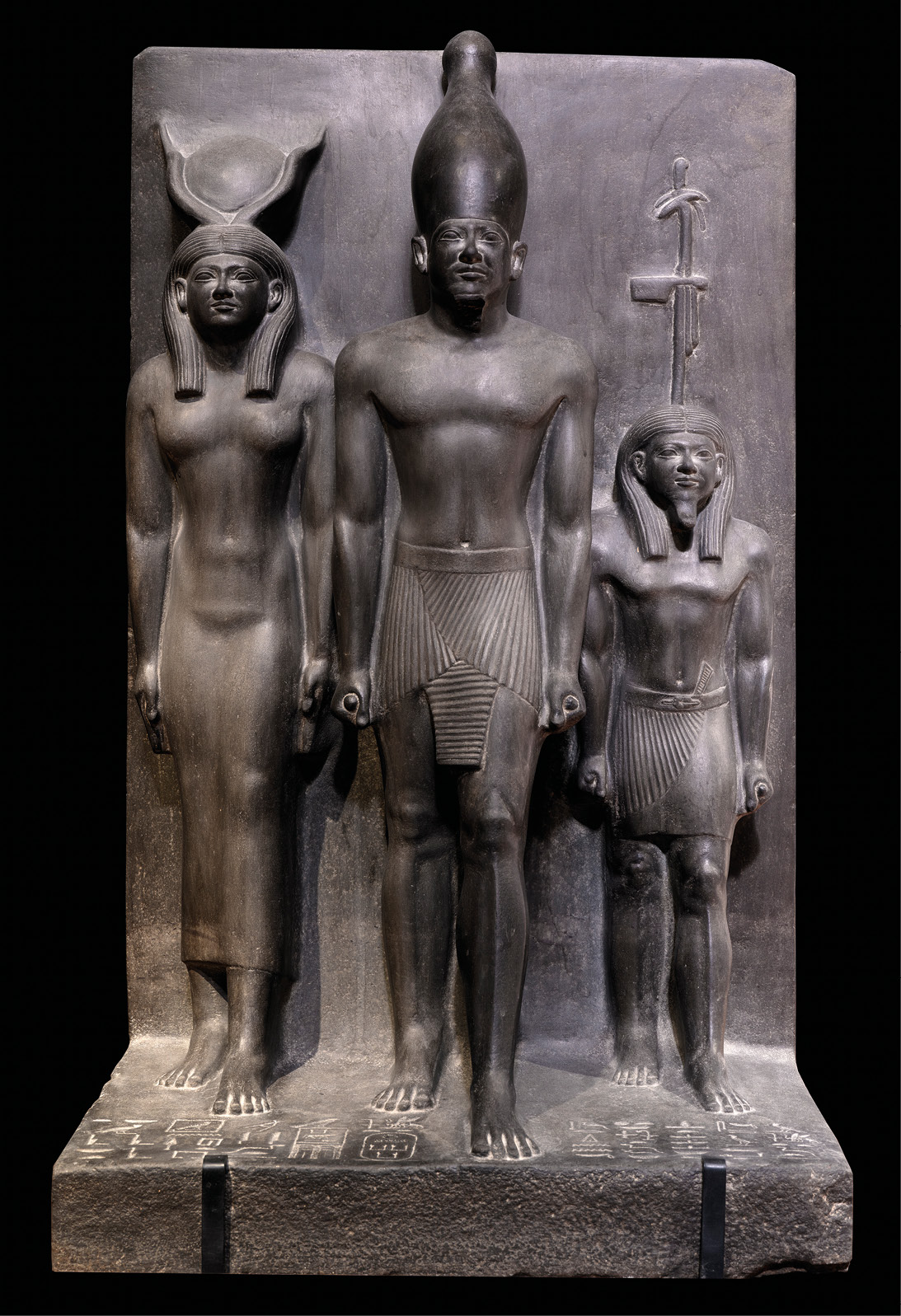
The oldest artefacts on display are two gold pendants from the First Dynasty (c.3000 BC), one a bull, the other an antelope, which probably belonged to a high-ranking official. They were discovered in the ancient necropolis of Naga ed-Deir, located on the East Bank of the Nile in Upper Egypt, some 70 miles north of Luxor. The catalogue tells us: ‘Jewellery [items] of this kind may have served as amulets to be worn in the afterlife or… they may have been simply ornamental objects’. A unique schist basket, dating to the Second Dynasty and discovered in Saqqara, is the second-oldest object on display. Although made of hard stone, it is a perfect imitation of baskets made of papyrus and reeds. Another of the oldest masterpieces on display is the ‘Triad of Menkaura’, depicting the pharaoh who lived over 4,500 years ago during the Fourth Dynasty of the Old Kingdom, and who commissioned one of the three great pyramids of Giza. Menkaura is flanked by Hathor, goddess of love, beauty, music, dancing, fertility, and pleasure, and by the protective deity of the Theban region, underscoring the divine mandate of his rulership.
Gold
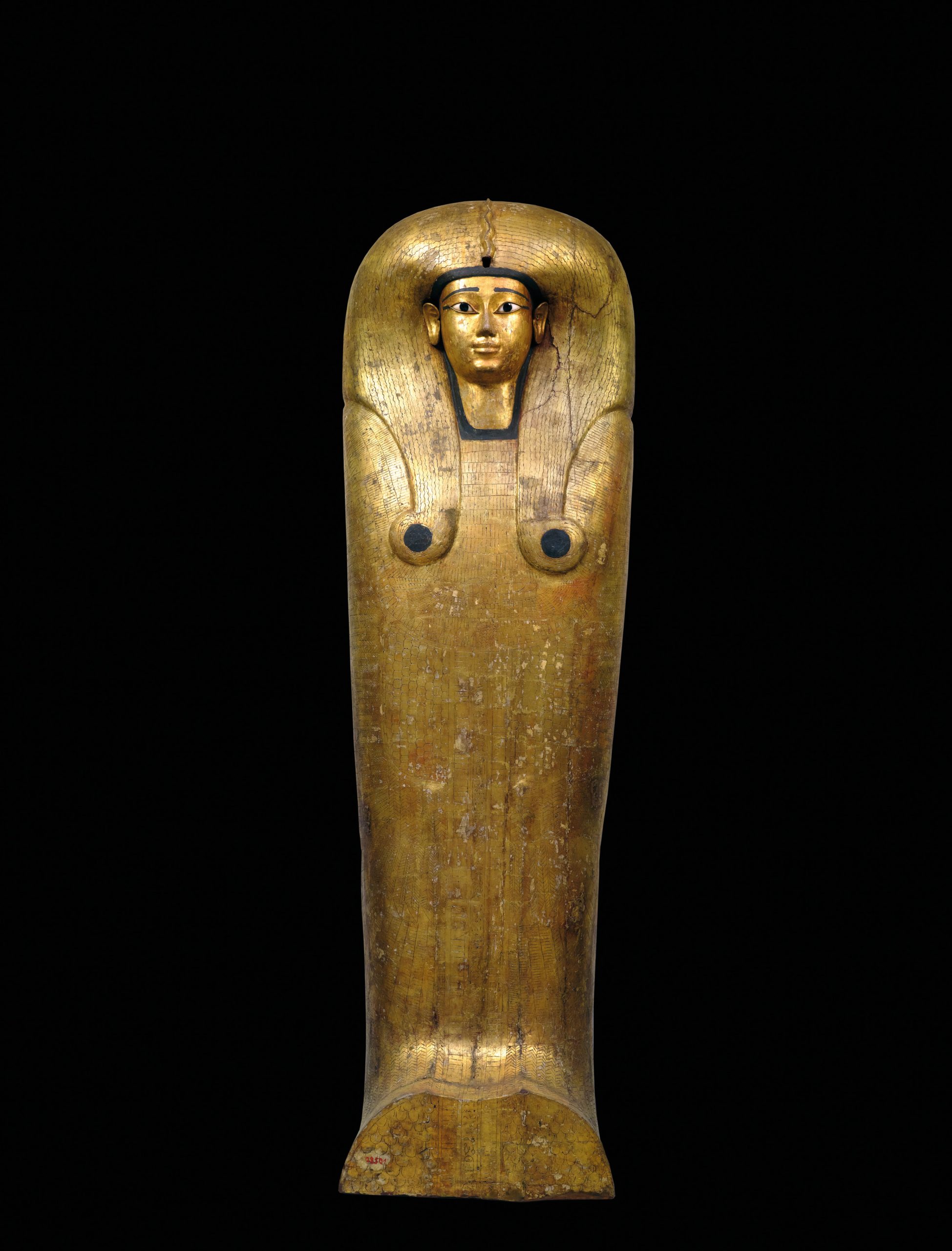
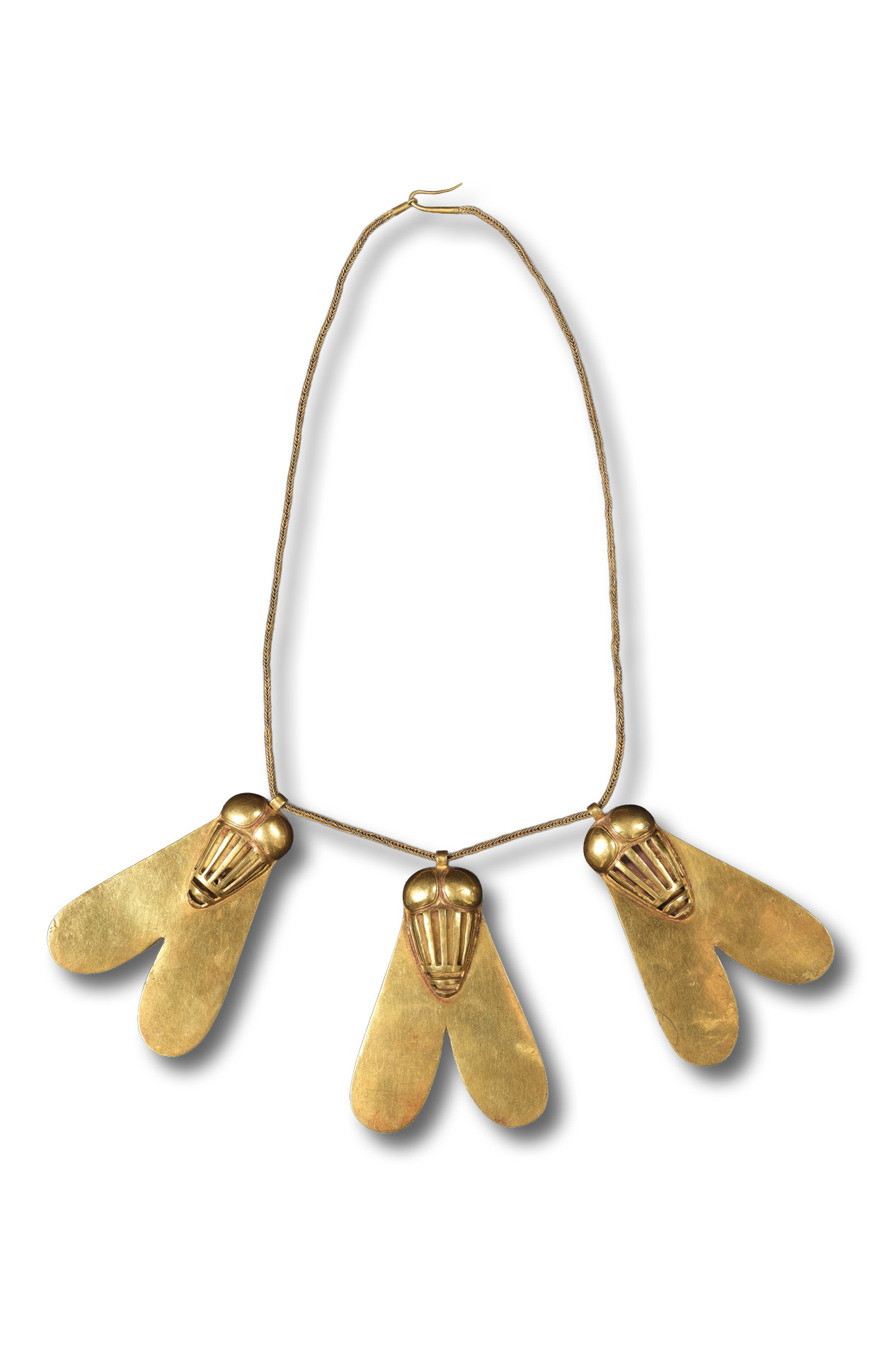
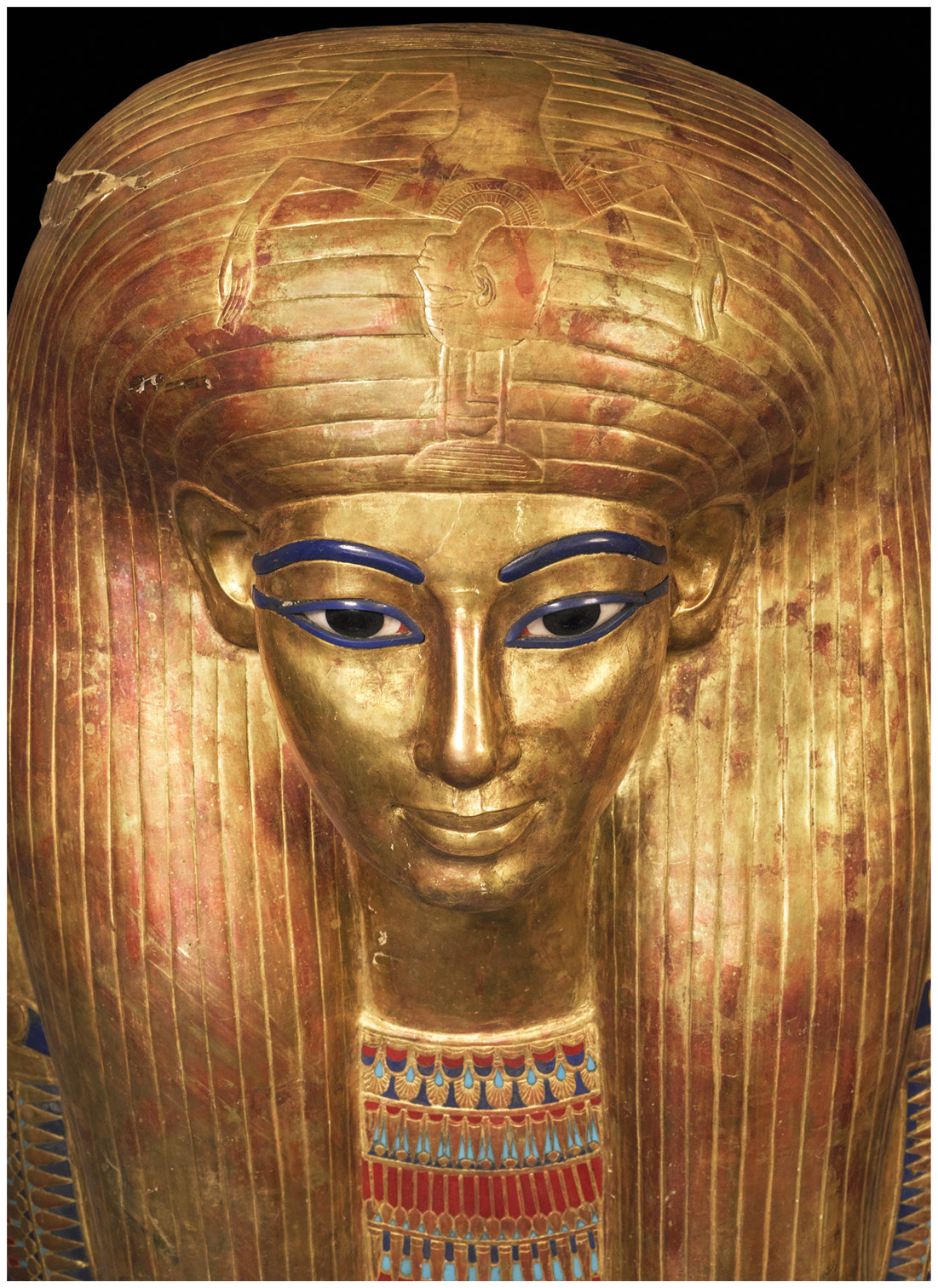
The lid of the gilded wooden coffin of Queen Ahhotep II (pictured above), a magnificent example of funerary art from the New Kingdom, emphasises the importance of gold in ancient Egypt, where the metal was used to exchange for goods before the introduction of currency. Because gold never changes its appearance, many wooden coffins were gilded, and the statues of the gods were made of gold. Thus, most importantly, gold is associated with immortality. Also belonging to Queen Ahhotep II was the ‘necklace of golden flies’. Such necklaces were once thought to be a form of military honour (as incorrectly stated in the press release). They are now known to be powerful amulets (see AE 135).

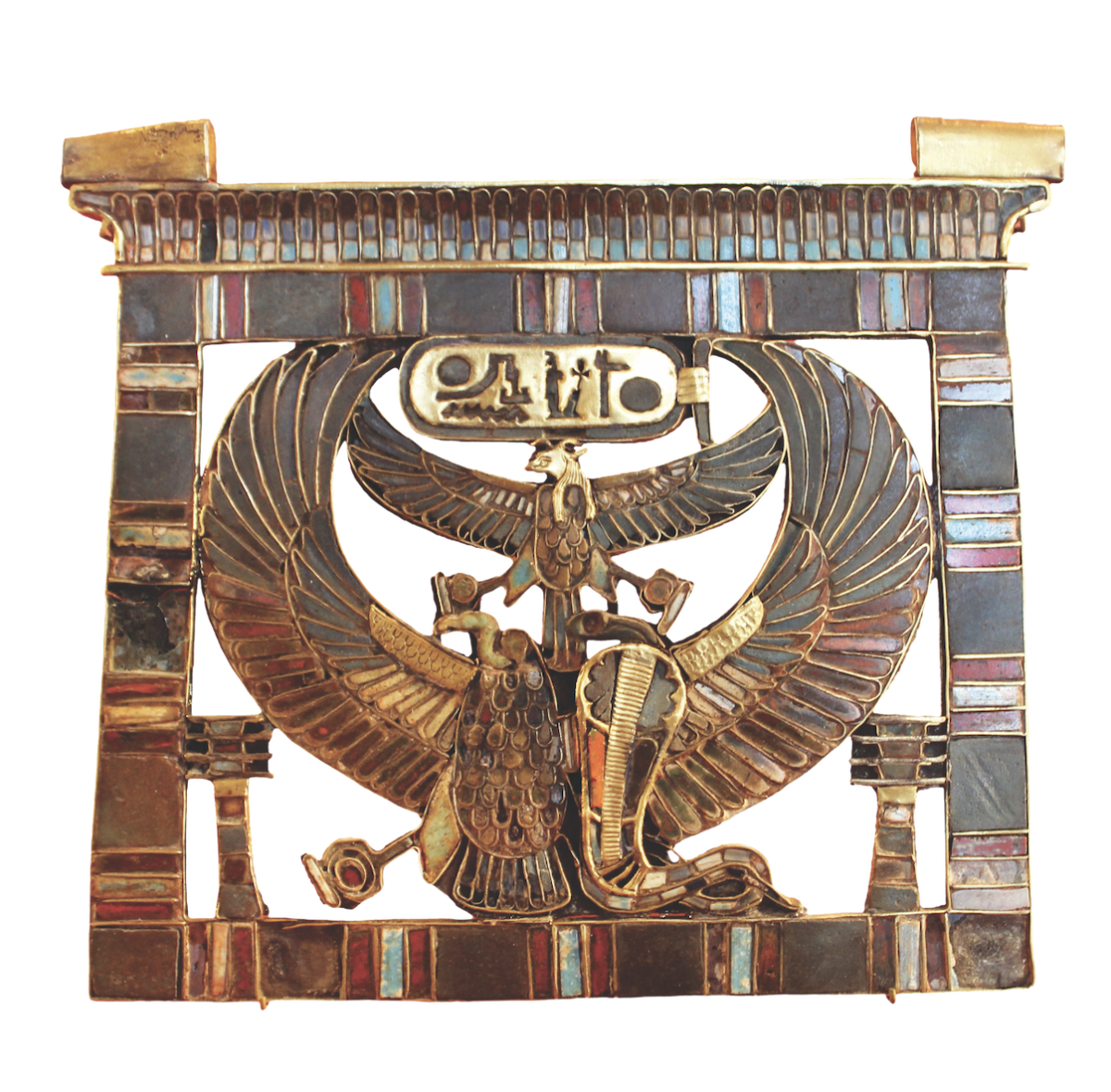
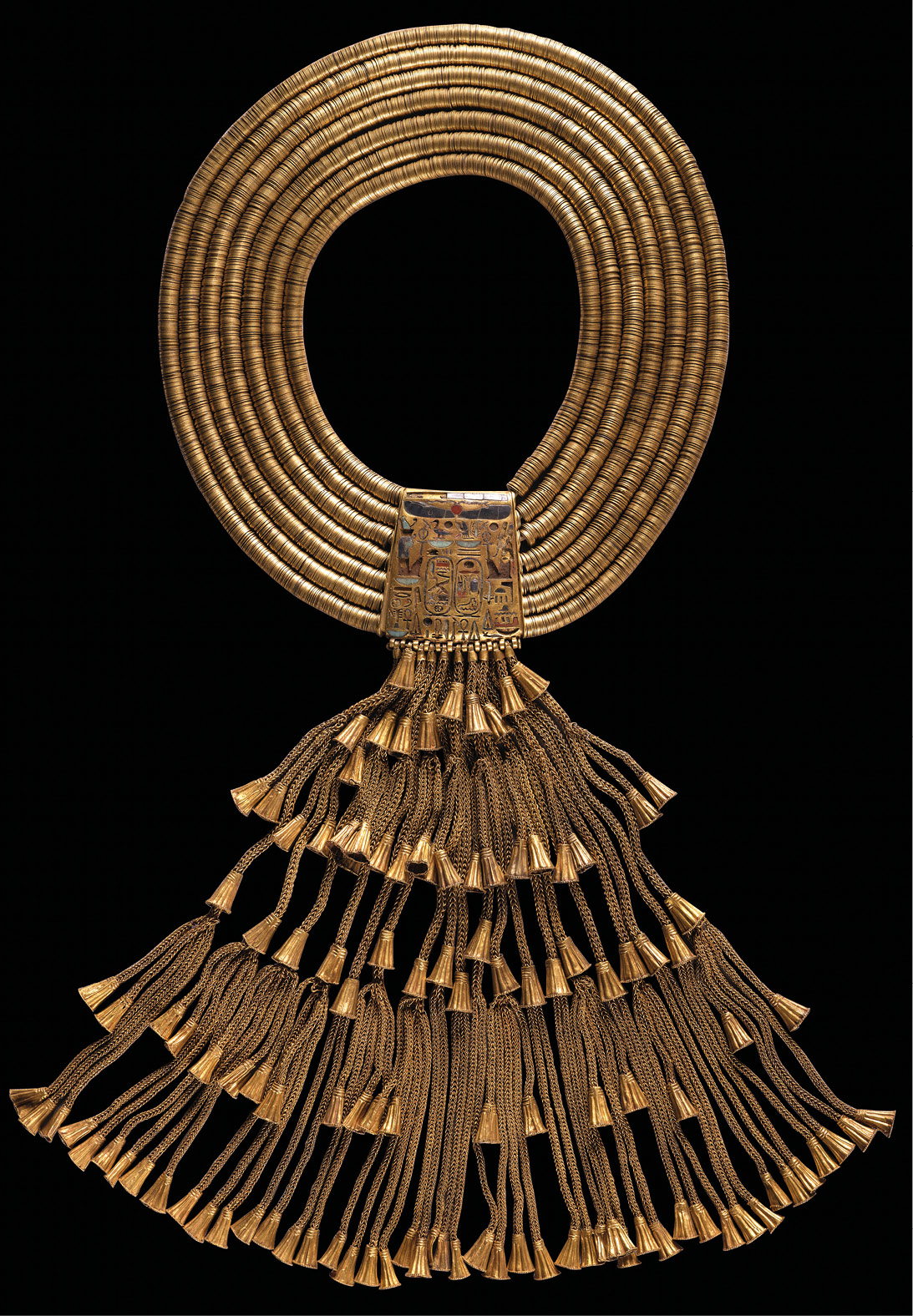
As a symbol of immortality, gold was sacred to the solar deity Ra and is the metal of more than 40 treasures in the exhibition. The unique and priceless broad collar or shebyu of Psusennes I (c.1047-1001 BC) is included, the largest such collar ever found. It has seven strings of more than 6,000 gold discs, and an elegant gold clasp with lapis lazuli, carnelian, and feldspar inlays depicting the pharaoh’s name and titles.
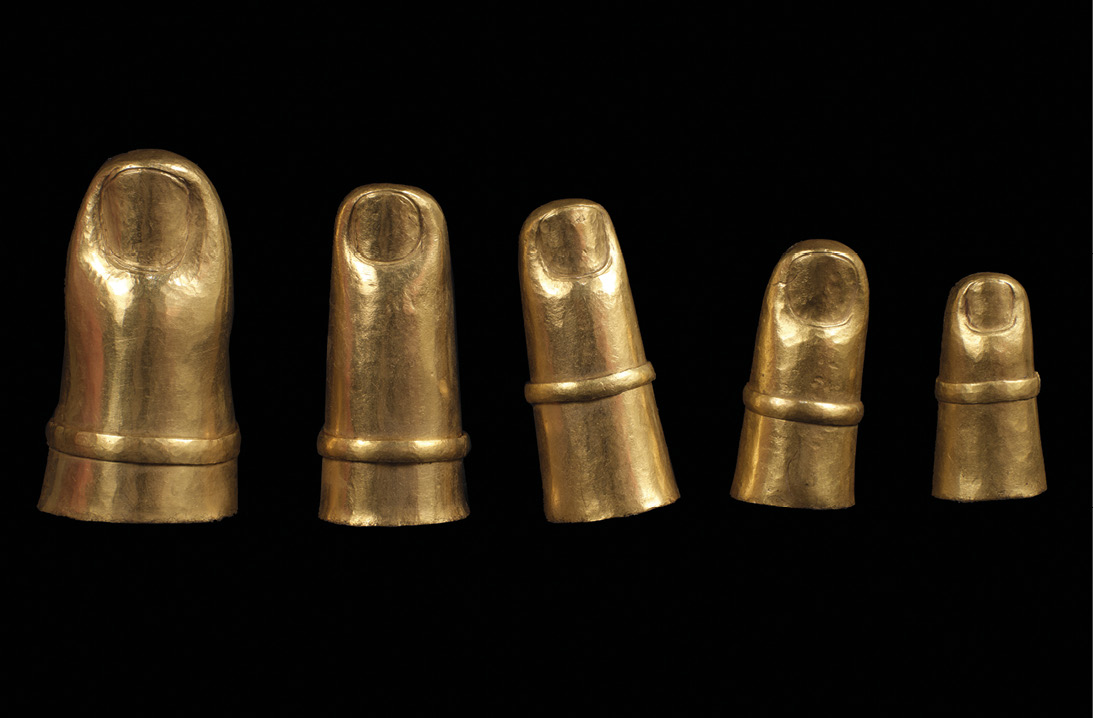
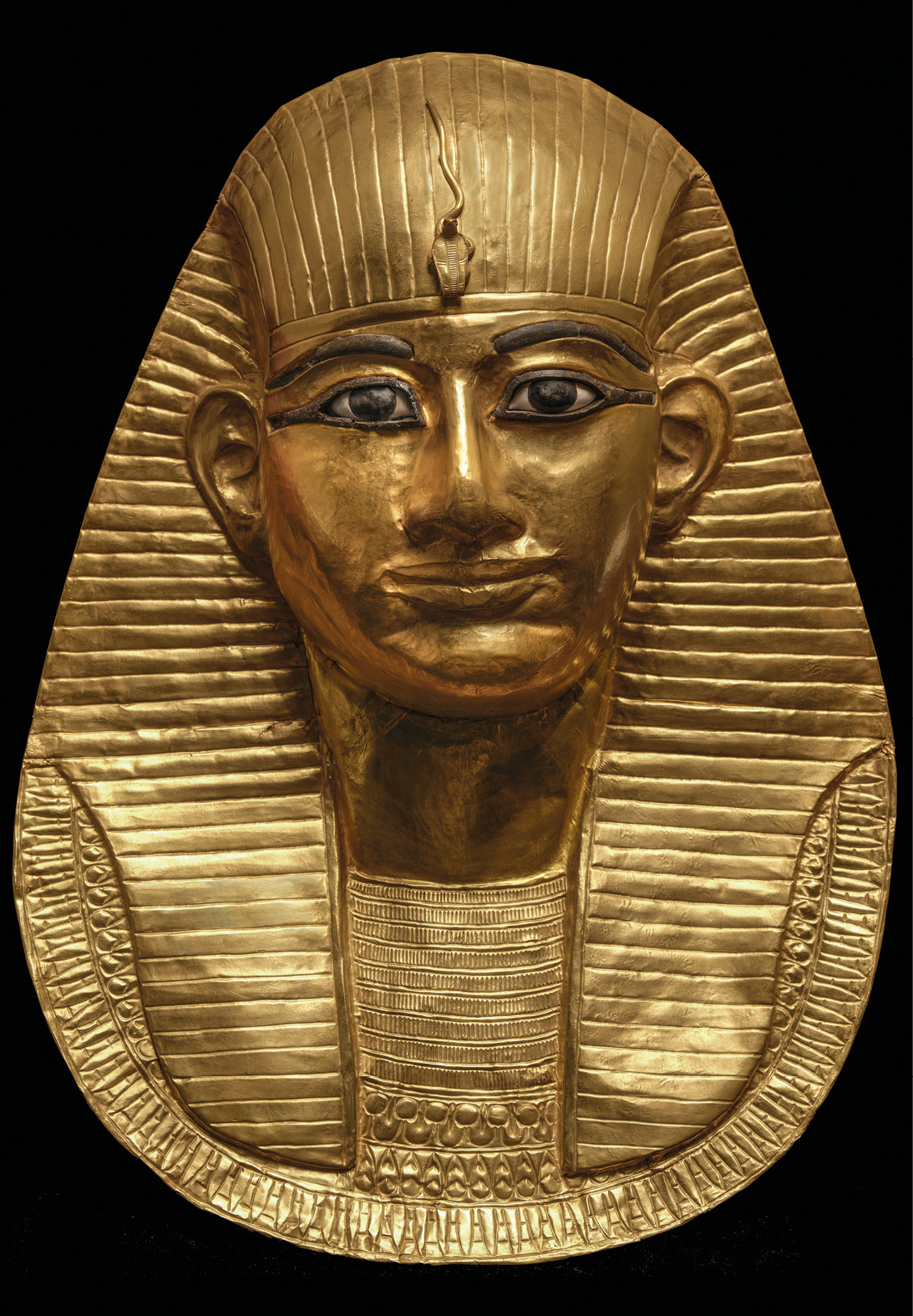
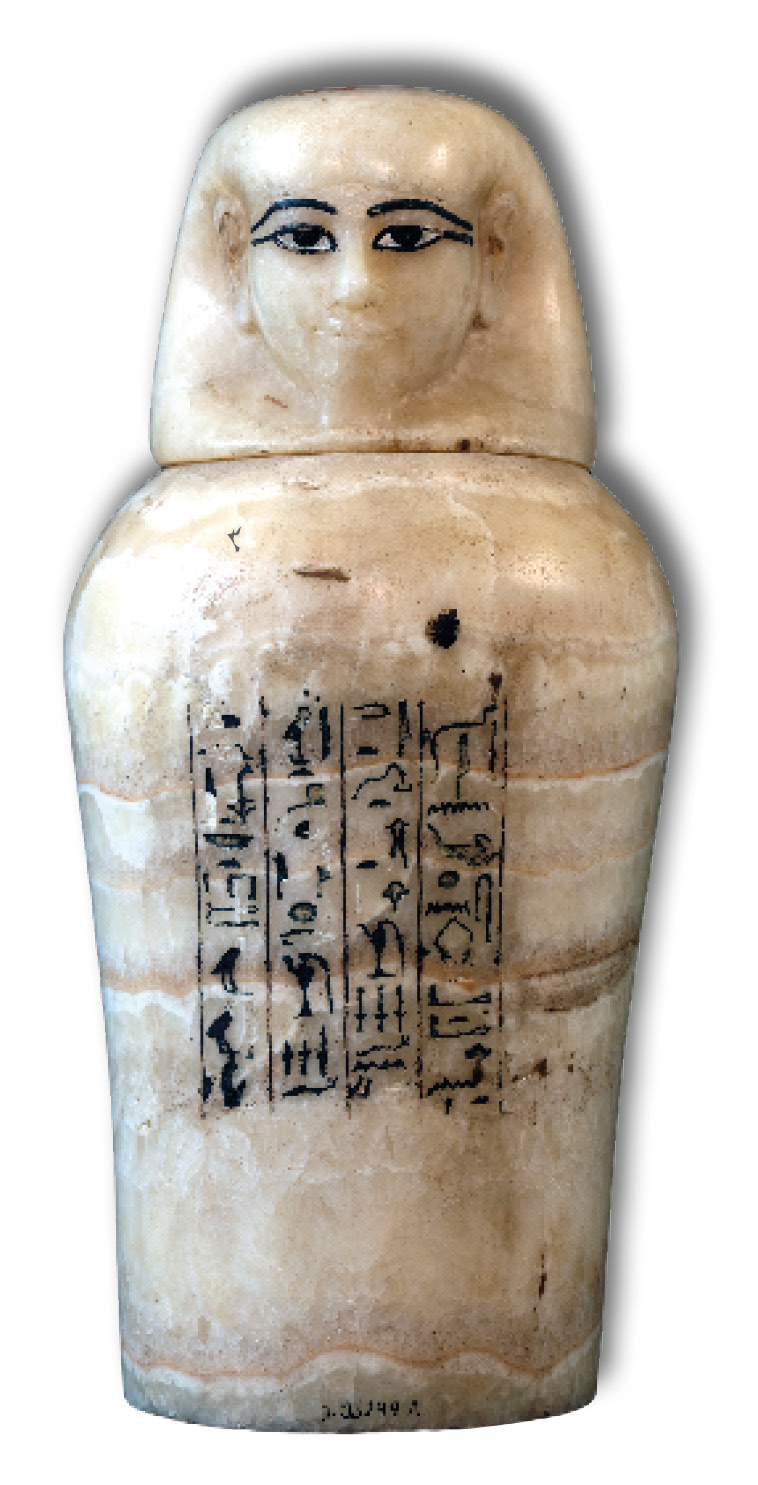
In this section are many other gold items, including five other shebyu; the finger and toe stalls from Psusennes I’s funerary equipment, found in his intact tomb in Tanis; the intricate gold funerary mask of the pharaoh Amenemope (c.993-984 BC), his son, whose tomb was also discovered intact; and the golden coffin lid of Tuya, grandmother of Akhenaten, with its intricate decoration and hieroglyphic inscriptions (which has been used as the logo for the exhibition). Nearby are Tuya’s funerary bed, an alabaster canopic jar, and the canopic chest of her husband Yuya, magnificently decorated with gold figures.

Statuary
Also on display are imposing statues. One is of Sennefer, a nobleman who was the mayor of Thebes and ‘Overseer of the Granaries and Fields of Cattle of Amun’. Being a favourite of Amenhotep II, he accumulated great wealth and was allowed to place this grey granite triad statue of himself, his wife Senetnay, and their daughter Mutnofret in the Temple of Karnak. Like Yuya’s canopic chest, it is displayed so that, for the first time, all four sides of this statue of seated figures and their hieroglyphic inscriptions are visible.
Many wooden coffins were gilded, and the statues of the gods were made of gold.
Another three important statues are those of Ramesses VI (c.1143-1136 BC) from Karnak Temple; of Thutmose III (c.1479-1425 BC), the stepson and co-ruler of Hatshepsut; and of Hatshepsut (c.1473-1458), in red granite, kneeling and dressed as a full male pharaoh.
Other artefacts
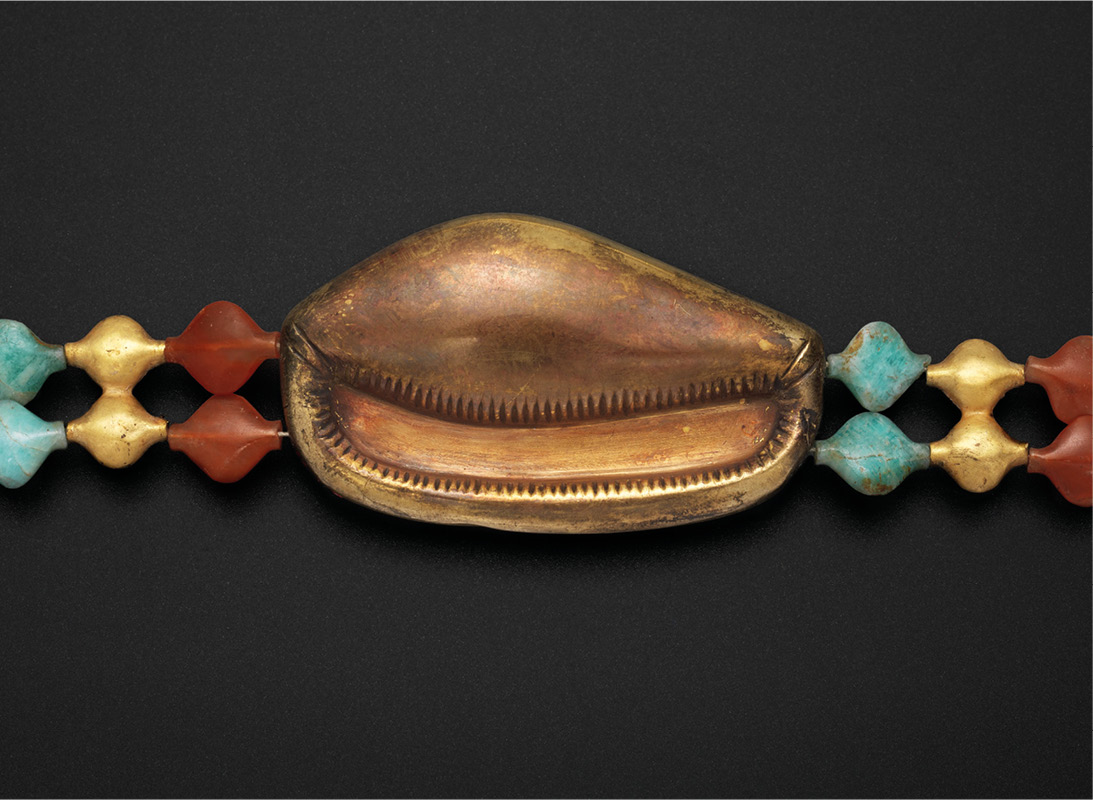
Other artefacts on display include the elaborately decorated wooden armchair of Princess Sitamun, the granddaughter of Tuya and Yuya. Its seat of woven linen strings is still intact, although there is clear evidence that the chair was used. There are also many examples of exquisite royal jewellery from several historical periods, each revealing the extraordinary artistic sophistication of ancient Egypt. Among these are five of the 21 gold bracelets of the Third Dynasty pharaoh Sekhemkhet (c.2648-2640 BC), from Saqqara, considered to be the oldest treasure of this size ever discovered belonging to an ancient Egyptian pharaoh, although the bracelets were probably made for a queen or a princess.


In addition to gold, the ancient Egyptians favoured lapis lazuli, which they imported from Mesopotamia. The most striking jewels made of, or decorated with, lapis lazuli displayed in the exhibition are the pectoral of the Eighteenth Dynasty scribe and ‘Overseer of the Granary of the Aten’, Hatiay; the bracelet of Eighteenth Dynasty pharaoh Ahmose I (c.1550-1525 BC) found in the tomb of Queen Ahhotep II; the bracelet of pharaoh Sheshonq II (c.873 BC) with a central lapis scarab; and a Twenty-second Dynasty pendant of Hathor. This goddess was a very popular subject of amulets and architectural decoration throughout ancient Egyptian history. She was depicted with the face of a beautiful young woman with a stylised triangular-shaped head and cow’s ears, wearing a heavy wig.

Catalogue and tickets: The exhibition is accompanied by a richly illustrated catalogue written by Zahi Hawass, with photos by Massimo Listri, published in Italian and English editions by Allemandi Editore. Tickets for the exhibition are on sale via the Scuderie’s website: http://www.scuderiequirinale.it.
Lucy Gordan has been Culture Editor of the bimonthly magazine Inside the Vatican since 2004, columnist for La Voce di New York since 2017, and was special correspondent, covering ancient Egyptian collections and exhibitions, for KMT: a Modern Journal of Ancient Egypt from 2003 until 2023 when it ceased publication.
All images: © Fotografie di Massimo Listri, unless otherwise stated