
Subscribe now for full access and no adverts
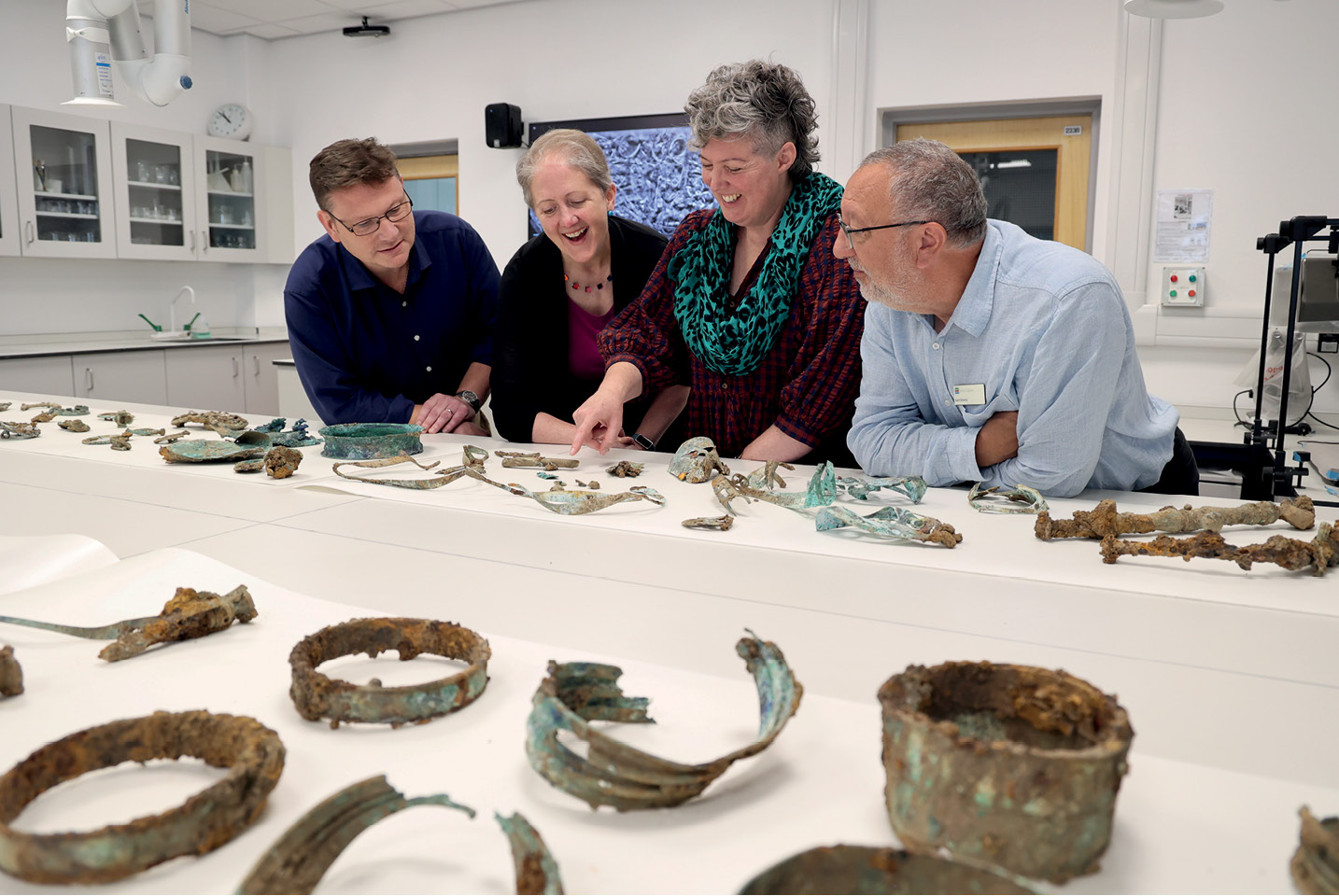
As Peter Heads passed his metal-detector over a field outside Melsonby, it seemed like any other day in 2021. He had been investigating this area of North Yorkshire farmland for some time, with the landowner’s permission – but on this occasion he made a truly significant discovery. Responding to a signal from his machine, he began to uncover pieces of what appeared to be copper-alloy horse harness. He knew immediately what to do: resisting the temptation to dig further, Peter instead picked up the phone and contacted Professor Tom Moore, Head of the Department of Archaeology at Durham University, who had been carrying out geophysical surveys nearby. After examining the finds – which proved to be elaborately decorated harness fittings – they called the Portable Antiquities Scheme and, recognising it was likely to be Treasure case, contacted Dr Sophia Adams, the British Museum’s Curator of First Millennium European and Roman Conquest Period Collections.
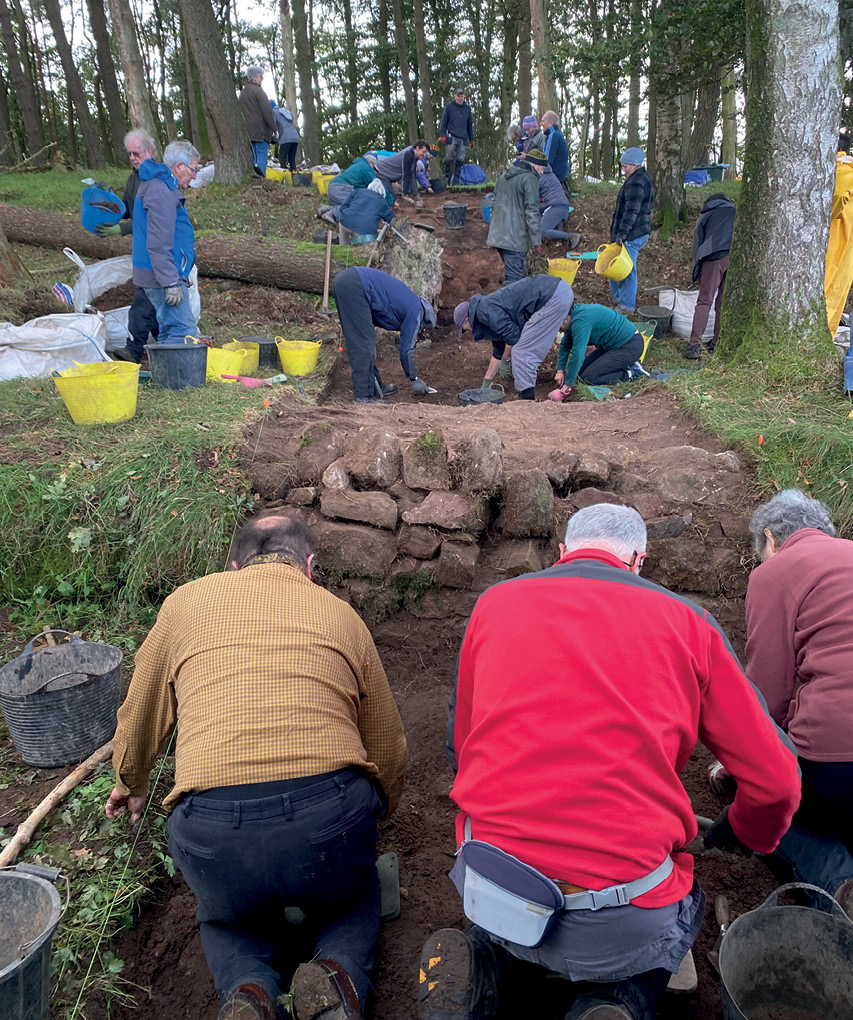
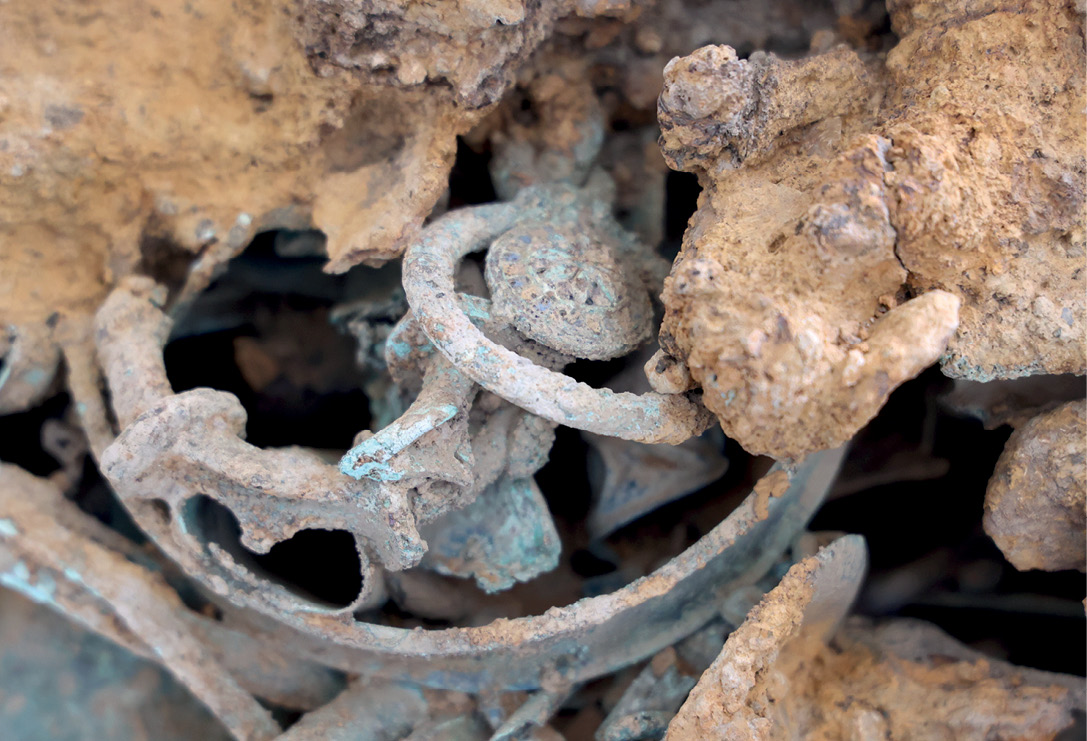
So it was that, in 2022, a team from Durham’s Department of Archaeology and the university’s professional Archaeological Services returned to the field, led by Tom and advised by Sophia. They had initially anticipated a week-long dig, but, as the scale of Peter’s discovery became clear, the project was swiftly expanded, with funding from Historic England and support from Dr Keith Emerick, Inspector of Ancient Monuments for the North East and Yorkshire. Over the course of two months, the team recovered what is now known to be one of the largest hoards of Iron Age metalwork found in the UK – and Peter’s initial restraint meant that vital contextual clues had been preserved to shed light on the circumstances of its burial.
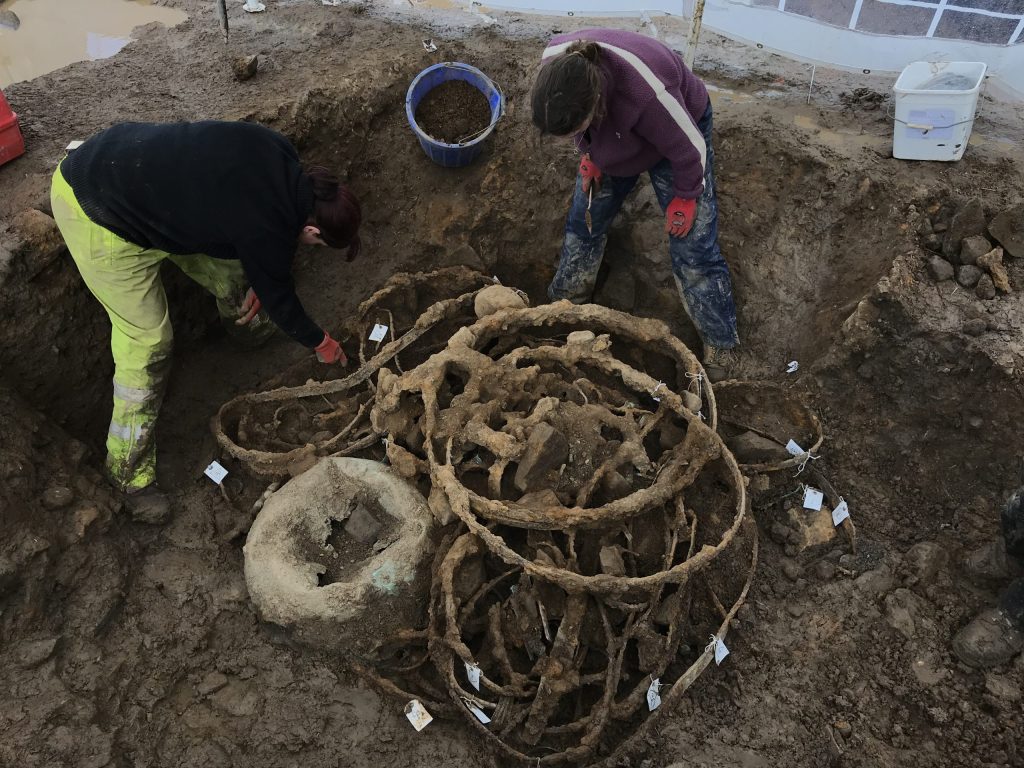
Hundreds of metal objects had been buried in two deposits, which were carefully placed at the bottom of ditches some 20m (65.6ft) apart. Based on typological analysis of their contents, both collections are thought to have been buried in the 1st century AD, around the time of the Roman conquest of southern England (radiocarbon results are still forthcoming, and will hopefully help to refine this further). The larger assemblage, from Trench 1, yielded over 800 items. These were carefully recovered layer by layer, with each item being photographed, logged using GPS, and 3D-recorded so that the team could reconstruct precisely how the artefacts had been arranged in the ground. Excavating the Trench 2 deposit was a rather different matter, however. Its contents had corroded together into a mass of metalwork that was swiftly nicknamed ‘the Block’, and this was instead block-lifted and transported to Southampton University so that it could be CT-scanned to reveal what was preserved inside.
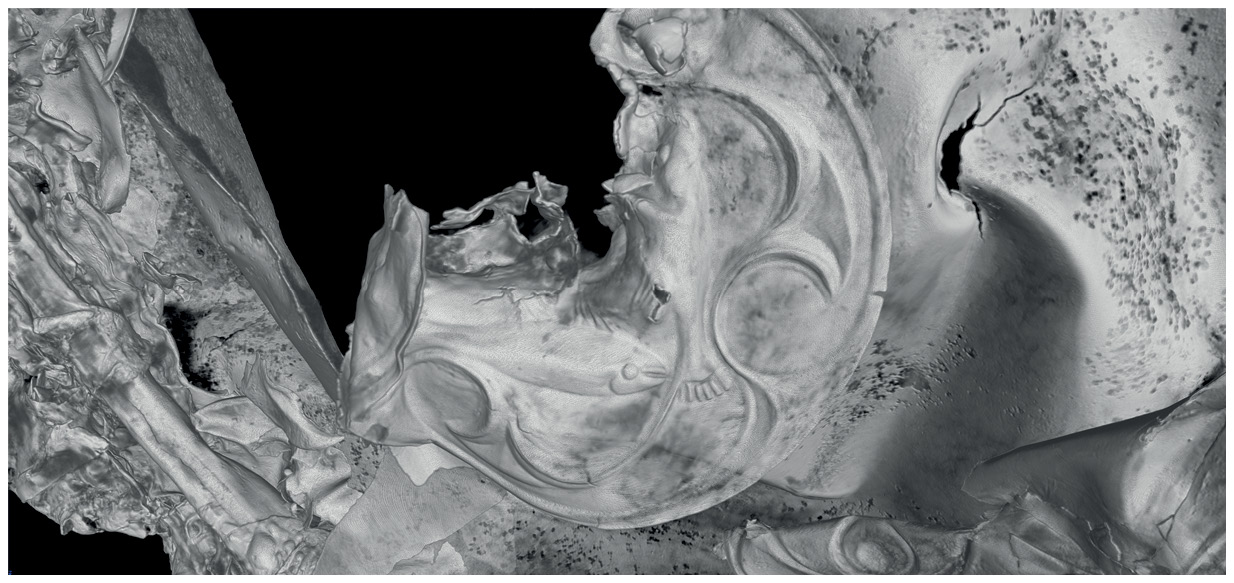
The resulting images confirmed that the Block was made up of a broadly similar range of artefact types as those from Trench 1 but, as many of these items appear to have been deliberately looped and threaded together, and others are joined through corrosion, it has been decided to keep the Trench 2 collection intact, rather than damaging or destroying any of its components by breaking them apart. Preservation of both groups of artefacts was overseen by Dr Emily Williams, a specialist conservator at Durham University, and, with the legal Treasure process now concluded, research into this remarkable collection has begun in earnest. Even in these early days of analysis, illuminating insights are already beginning to emerge from the hoard.
Ornate vehicles
Looking at the Trench 1 artefacts you immediately get a sense of movement, and of ostentatious display, as the finds are dominated by elaborate horse gear (of which, more below) and pieces of at least seven Iron Age vehicles. This latter group includes linchpins, nave bands (iron hoops that – like alloys on modern cars – were both practical and decorative, helping to hold wheel hubs together), and 28 iron tyres of various sizes, possibly from chariots or larger carts. Nippy, two-wheeled chariots are well-attested in Iron Age Britain: their use in battle is described by Roman writers including Tacitus and Caesar, while their physical remains have been discovered in ‘Arras Culture’ burials excavated at sites like Pocklington (CA 327 and 347), Garton (CA 51 and 103), and Wetwang Slack (CA 93), all in the East Riding of Yorkshire. Some of the metalwork from the hoard, however, including chunky iron straps that do not look like chariot parts but hint at heavier, slower vehicles, may instead represent the remains of four-wheeled carts or wagons. If so, this would be a significant find: four-wheeled vehicles are known from Iron Age France, Denmark, and Germany, but have not previously been identified in Britain.
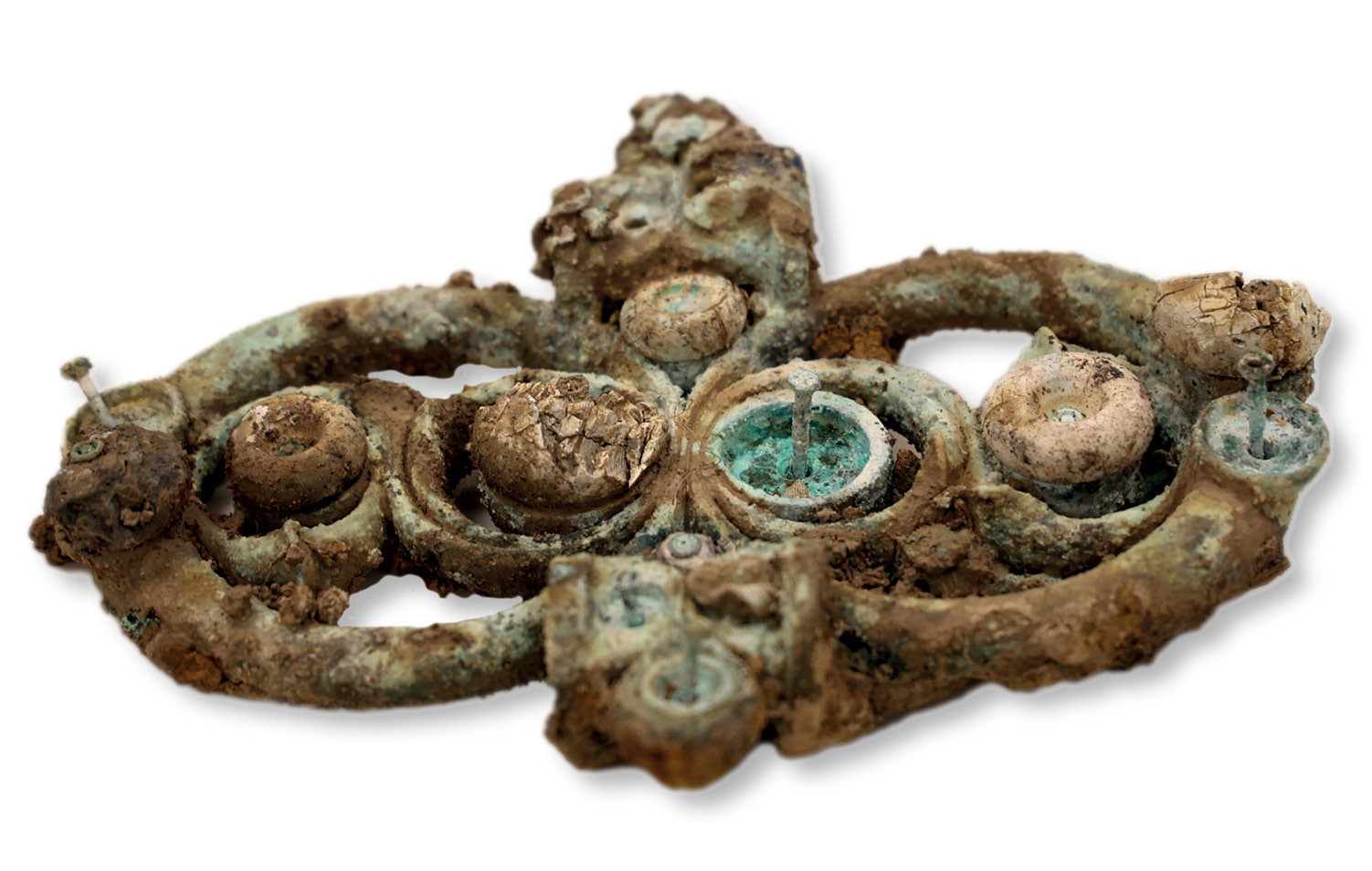
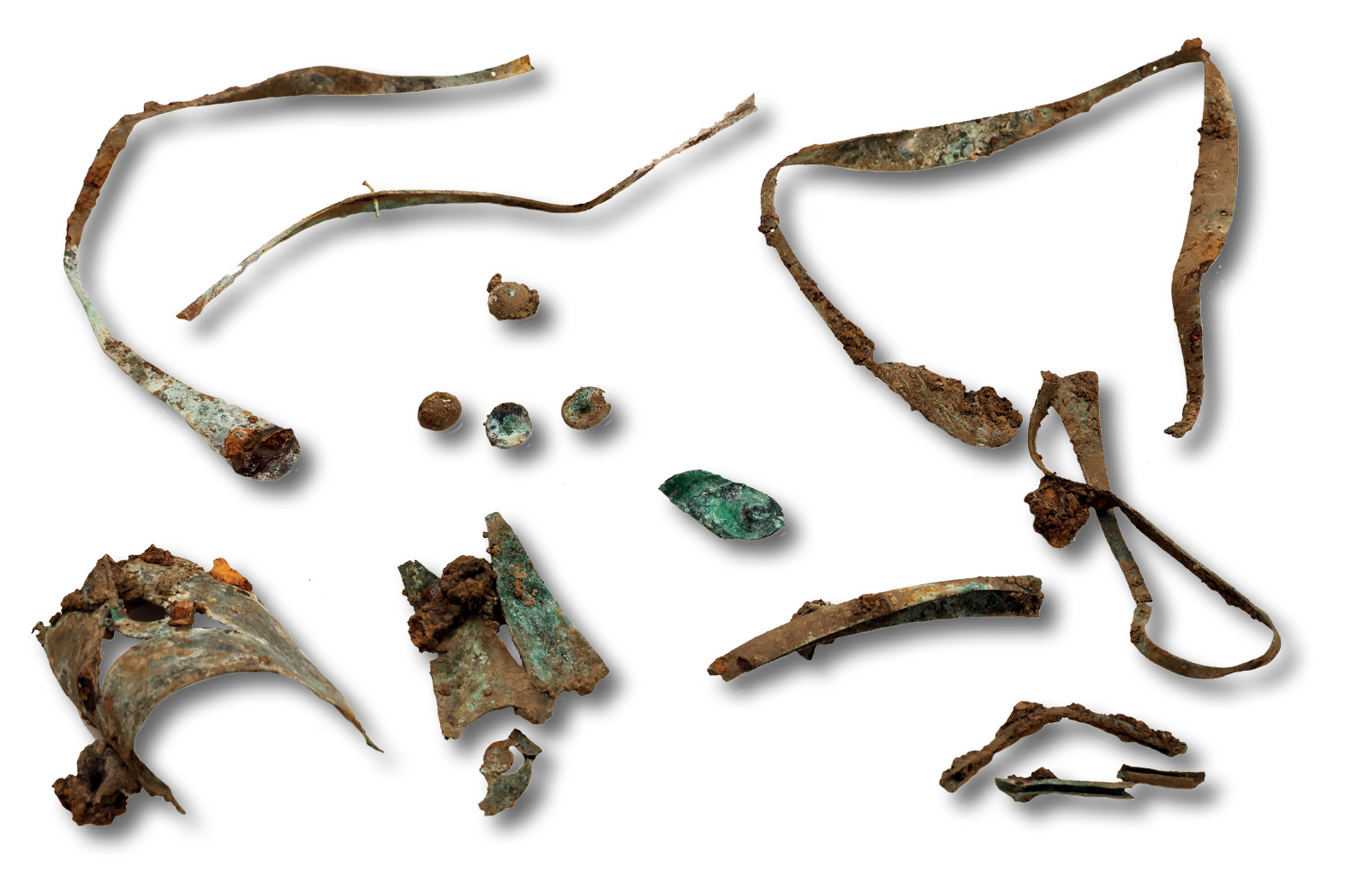
Whether these were nimble chariots or more cumbersome carts, the Melsonby vehicles appear to have been designed to impress. Some of the other components identified by the team are purely decorative in function, including pieces of copper-alloy tubing that may have adorned wooden poles, gleaming as they caught the sunlight; ornate finials shaped like flowers with ‘golden’ copper-alloy petals and ‘silver’ centres formed from the iron pins holding them in place; and a strip of intricate openwork that would have fitted over a yoke. This last object includes rectangular slots to accommodate terret rings, or rein guides: each yoke would have had five such objects arranged along its length, through which reins were fed to prevent them from tangling. Terret rings themselves were also present in large numbers within the hoard, adorned with pieces of red Mediterranean coral, and often bigger than is typical for the period.
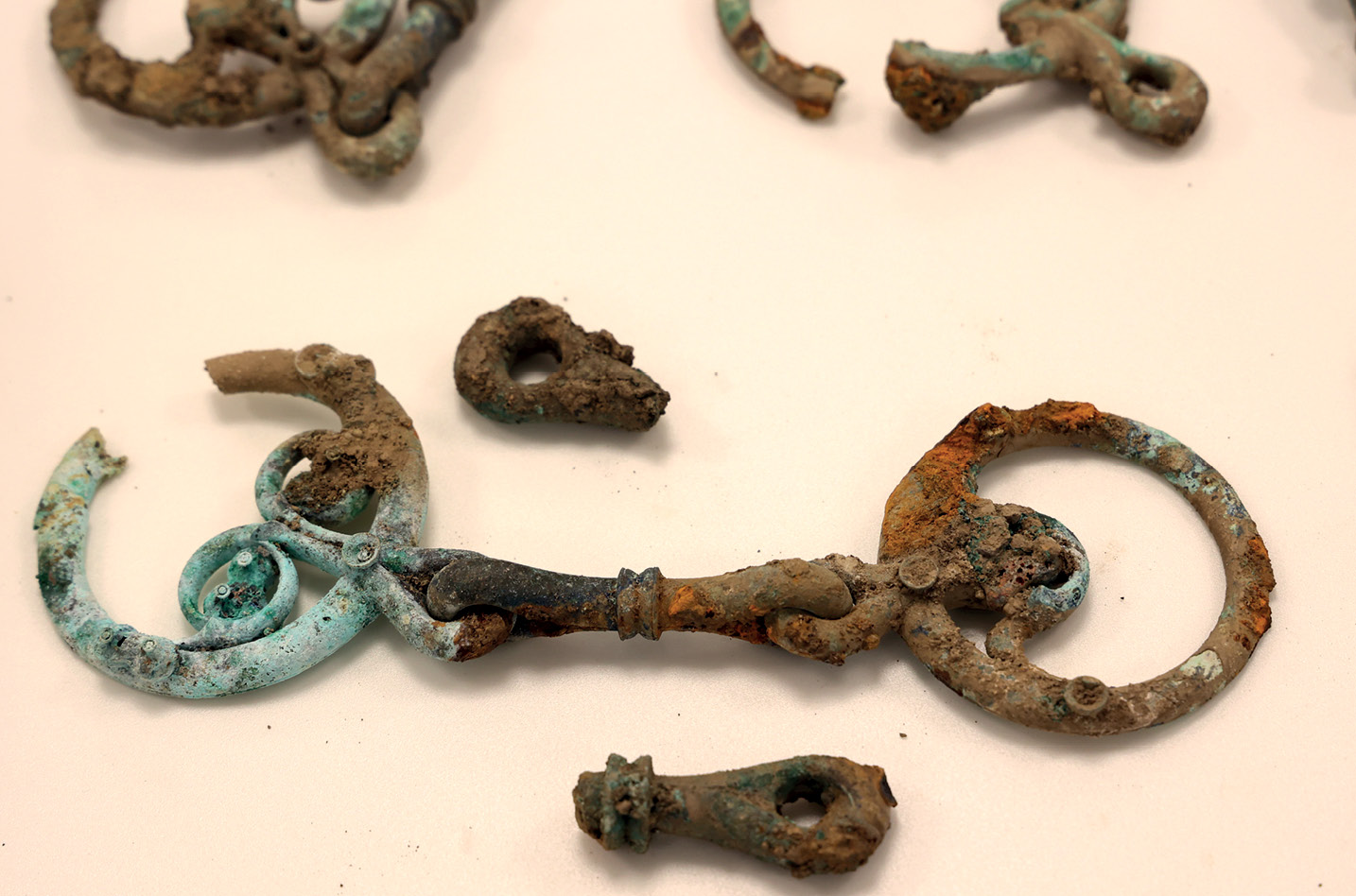
As for the ponies which once pulled these vehicles, they, too, would have been a striking sight. The Trench 1 assemblage includes harness fittings for at least 14 animals, as well as bridle bits which look remarkably like modern snaffles, their design unchanged over 2,000 years. While the passage of time has dulled the lustre of the metalwork, this was clearly gorgeous gear, decorated with large pieces of red coral, blue glass, and yellow and red enamel. A number of strap unions – used in place of buckles to connect strips of leather – are also present, again decorated with red coral and swirling motifs typical of the La Tène-style artwork of late 1st millennium Europe. Speaking to CA at the media event, Sophia highlighted that these objects were larger than usual as well – making them even showier, given the relatively small size of the animals they would have adorned.
Elite artefacts
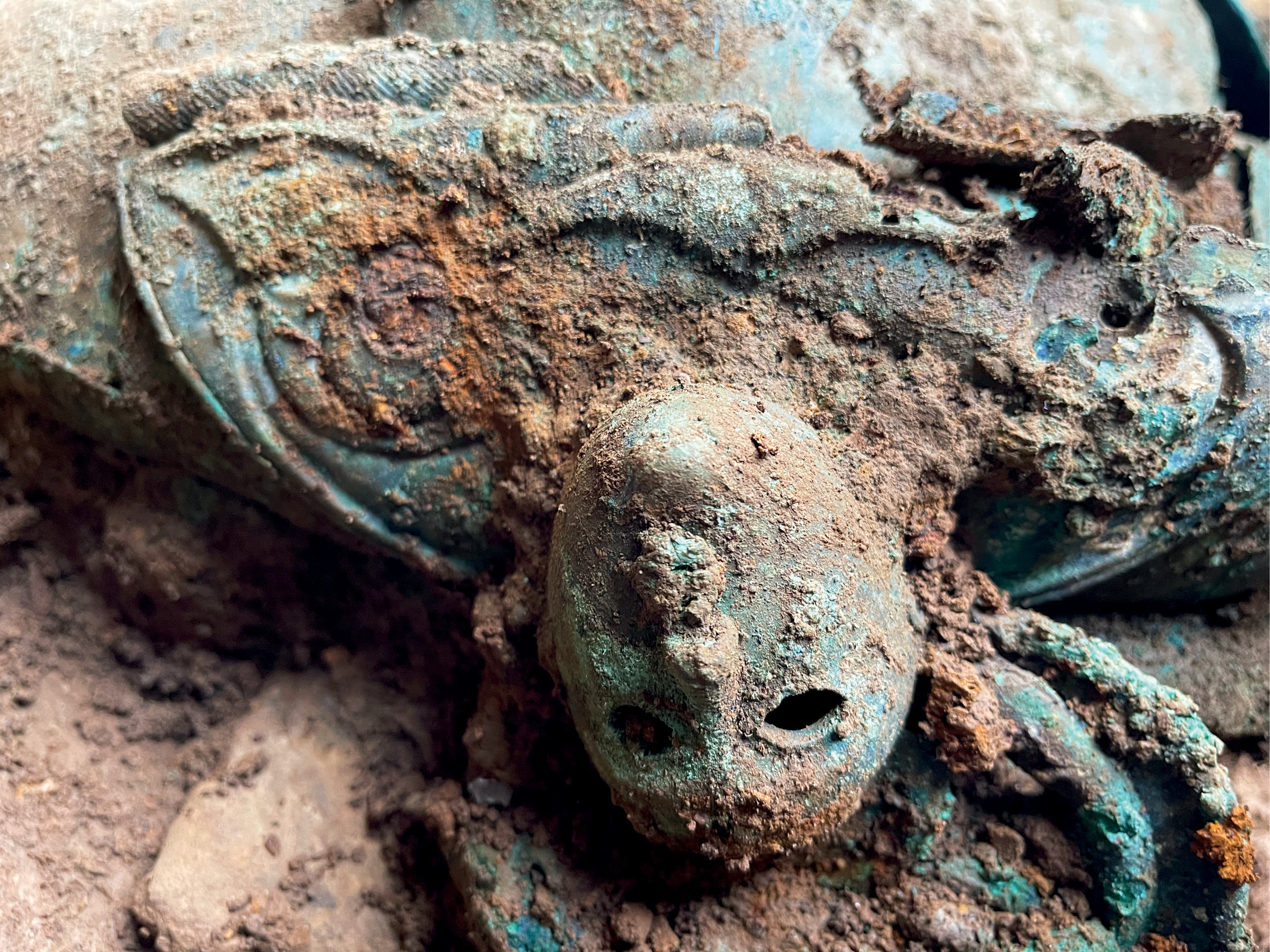
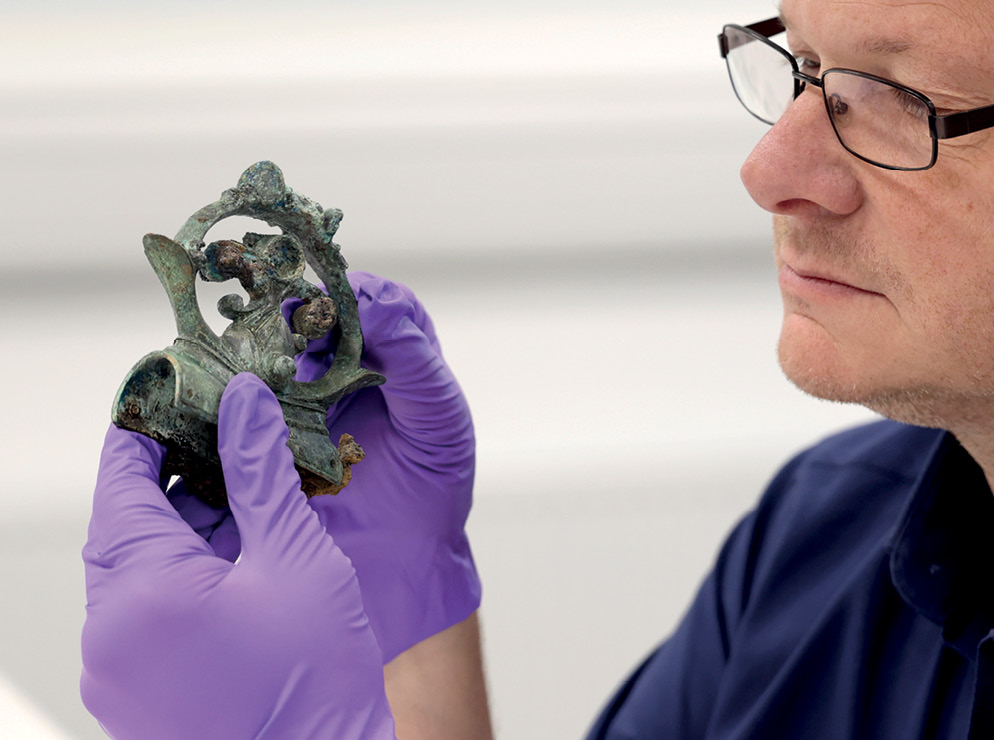
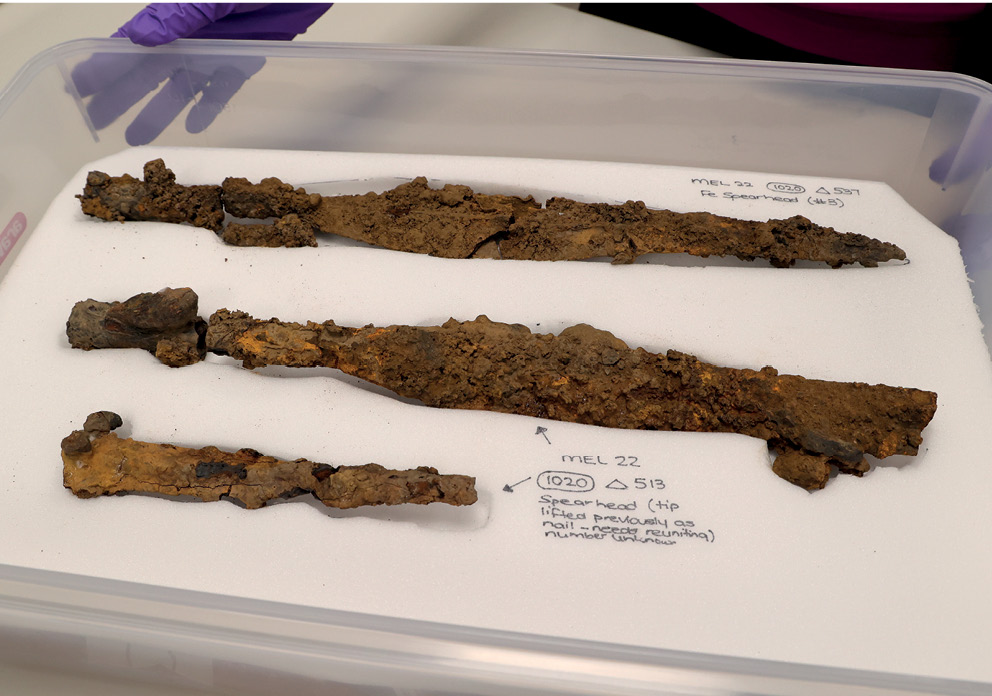
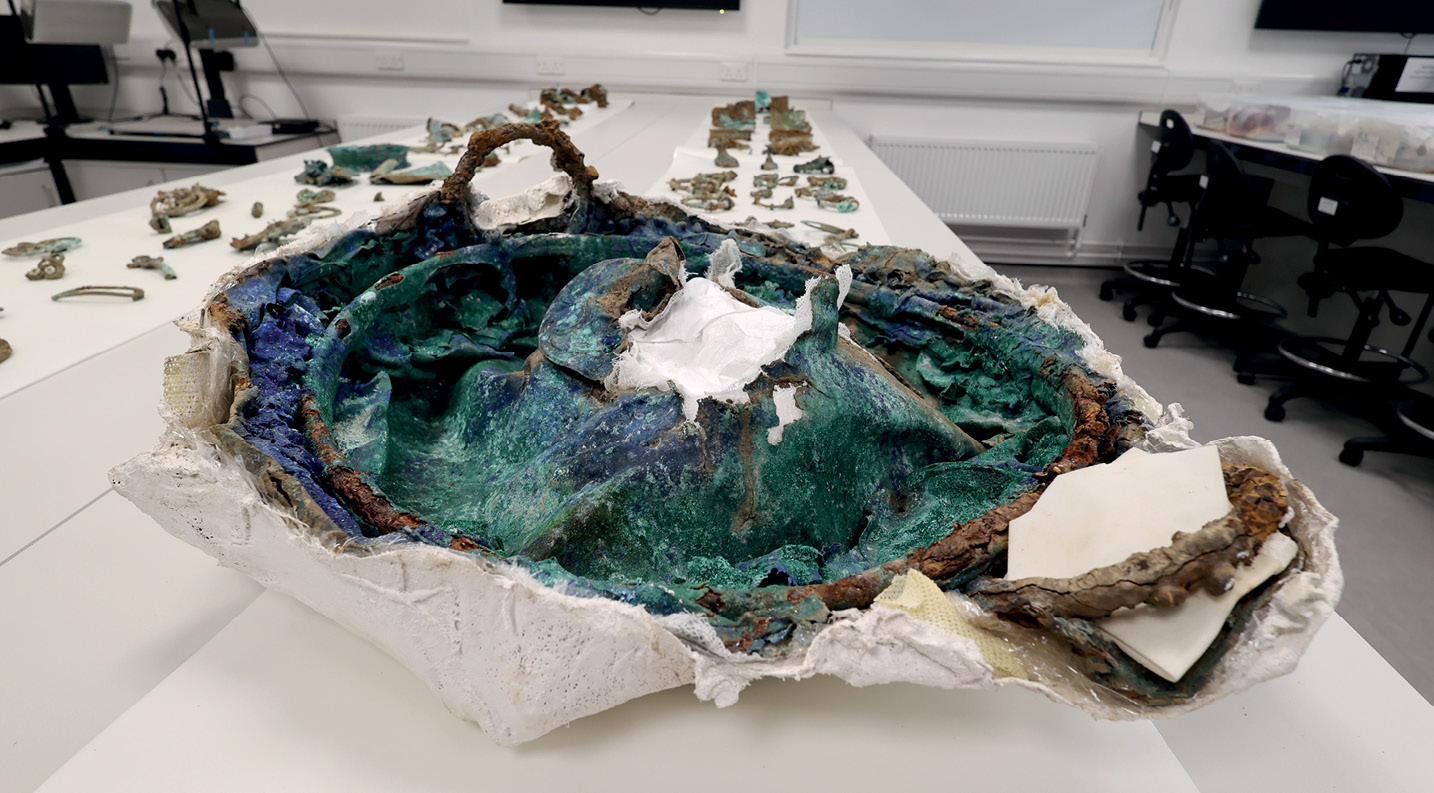
With its emphasis on horse gear and chariot parts, it is tempting to compare the hoard to the Iron Age assemblage recovered from Llyn Cerrig Bach in Anglesey (CA 273), although the Welsh lake finds are thought to have been deposited over a much longer period, whereas the two deposits from Melsonby have been interpreted as a single event. The Melsonby artefacts are not exclusively equine in theme, however: the Trench 1 finds also include more martial items, such as the boss and spine of a shield, and three socketed iron spearheads whose blades are so long that they have been interpreted as ‘parade’ items rather than functional weapons. Other signs of status include a large iron mirror with a looped forged handle, and two metal vessels which hint at far-reaching trade connections, and the staging of lavish feasts. One of these is a large cauldron that still had intact lugs or handles from which it would have been suspended over a fire. Delicate images of fish swim around its interior – an unusual motif, Sophia noted, and particularly interesting because isotope analysis of contemporary human remains appears to indicate that fish was not a major part of people’s diet at this time. Curling La Tène-style motifs place the cauldron squarely within the artistic repertoire of Iron Age Europe, while the other (smaller, lidded) vessel is more typical of Mediterranean designs. It is reminiscent of an Etruscan lebes, a kind of bowl used for mixing wine and water, the team note – and, with its ornate decoration featuring coral studs and copper-alloy masks of human faces, it would have been a striking addition to any feasting table.


What about the ‘Block’ from Trench 2? Its contents are less accessible but interpretation has been aided by incredibly clear CT scans from µ-VIS, University of Southampton; images which revealed that it, too, includes bridle bits, nave bands, spearheads, and linchpins – as well as more enigmatic items including a charmingly characterful little boar whose snout can be seen peeking out of the mass of metal. Given the shape of this assemblage, it is thought that the Trench 2 objects may have been gathered in a sack or bundled in cloth before they were buried. Tantalisingly, tiny traces of this textile have been identified on the surface of some of the outer items.
Contextual clues
The Melsonby finds point to the presence of a very wealthy individual or community, able not only to amass such quantities of high-status metalwork, but also to dispose of it in this way. We do not have to look far to find other hints of elite activity: Melsonby lies just half a mile from Stanwick, one of the largest prehistoric strongholds in Europe, whose mighty ramparts enclose an area of 270ha (667 acres) and in places still stand up to 8m (26ft) high. This site is thought to have been the tribal capital of the Iron Age Brigantes people, whose queen, Cartimandua, is described by Tacitus in his accounts of Rome’s campaigns against Britain. She was as powerful a figure as her contemporary, Boudica of the Iceni, but is rather less celebrated in our national story because she stands (according to Roman historians, at least) not as a freedom fighter but a collaborator, notoriously betraying Caratacus, king of the Catuvellauni and resistance leader, to the Romans, and later seeking imperial protection after her husband, Venutius, rebelled.
When Mortimer Wheeler excavated at Stanwick in the 1950s, he associated its imposing defences with Venutius’ opposition to the imperial army, and placed its construction in the mid-1st century AD. Subsequent investigations in the 1980s and 1990s have cast doubt on this narrative, however, as Colin Haselgrove notes in CA 119, highlighting that excavated artefacts indicate that the site enjoyed rather friendlier relations with Rome. Returning to the site in CA 325, Colin also describes Bayesian analysis of radiocarbon dates indicating that the site cannot, in fact, have been founded by Venutius, as the structural sequence reveals that activity at the site began a good century before his uprising, in c.70-80 BC.

Moreover, when the site did eventually come into contact with the Roman world, it appears to have flourished through these imperial encounters. Excavated evidence indicates that the stronghold gained its stone-faced ramparts in the mid-1st century AD, while this early contact period also saw a flood of imported goods from across the Empire. Rather than being a place of resistance, it is more likely that Stanwick grew into a royal power centre that blossomed after the Brigantes were established as a client kingdom loyal to Rome. Perhaps its impressive earthworks – which show no sign of having ever come under attack – were never intended to be defensive, but were instead a very visible symbol of the site’s status.

Another significant site in the immediate area is Scotch Corner, which lies just three miles from Melsonby, where the A1 meets the A66. There, excavations have uncovered the remains of an Iron Age settlement whose population clearly included specialist metal-workers who left behind telling traces of their trade (CA 365). As well as tools and pieces of crucibles, the site has produced more than 1,300 fragments of ceramic trays – known as pellet-mould trays – that are associated with Late Iron Age coin production. Representing the fourth-largest assemblage of such objects in Britain, and the first to be found north of the Humber, these were clearly used to create high-value products, as chemical analysis has revealed traces of gold, silver, and copper on their surfaces. Could a similar community have produced some of the ornate objects later buried at Melsonby?

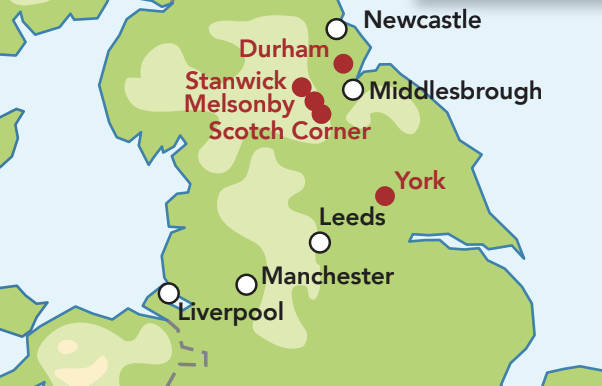
Scotch Corner, too, was transformed by contact with Rome in the 1st century, developing from a fairly dispersed, unenclosed settlement into a major trading centre which enjoyed access to exotic goods including wine, amphorae of fish-based products and olive oil, and decorated Samian tablewares. Within this context, it is not surprising that Melsonby – which lies squarely between Stanwick and Scotch Corner – should also show signs of high-status activity during this same period. In fact, the hoard discovered by Peter Heads is not the first time that elaborate metalwork has emerged from the landscape around the village. A cache of around 140 metal items, again dominated by ornate horse gear, is known to have been discovered nearby in 1843. Although that assemblage (which is now in the collections of the British Museum) is known as the Stanwick Hoard, it was actually found at Melsonby and may even have come from the same field as the ditch deposits, Tom said.
Searching for meaning
With such illustrious neighbours as Stanwick and Scotch Corner, it is not difficult to imagine how the Melsonby hoard came to be assembled – but why was so much valuable material consigned to the earth? Telling clues can be gleaned from some of the Trench 1 finds, which appear to have been deliberately damaged and put out of use. Some of the iron tyres had been forcibly bent, while the cauldron had been turned upside down and a large stone used to smash the bottom out of it. Other items had areas of melting or other signs of being exposed to fire. Might this represent a form of ‘ritual killing’, a practice which extends back into the Bronze Age and is often seen in hoards of that earlier period? If so, why were the items being purposefully destroyed? Was this a display of conspicuous consumption, or an extravagant votive offering hoping to secure a particularly big favour from the gods?

Alternatively, could these have been the grave goods of a particularly high-status individual? No human remains were identified in either trench, something that is unlikely to be a quirk of survival: two tiny fragments of animal bone (one decorated with incised crosses, circles, and dots, and possibly representing part of a handle or a decorative inlay) were found in Trench 1, indicating that the local soil conditions did not prevent the preservation of organic materials. The fact that some of the artefacts have been burnt might also hint at a funerary function. No evidence of charring or in situ burning was seen in either trench, but it is possible that at least some of these items may have been placed on a pyre in another location, before being brought to this spot for burial.
Was this a display of conspicuous consumption, or an extravagant votive offering hoping to secure a particularly big favour from the gods?
For now, the motivation behind the objects’ disposal remains obscure – but this unique collection has much to tell us about the experiences of the people who inhabited this region during the Iron Age. Despite the prominence of Stanwick, and the important insights that previous excavations have provided, studies of this period have long been dominated by data from the south of England. The Melsonby Hoard offers important new insights to help rebalance this picture, eloquently testifying that northern communities were just as complex, sophisticated, and well-connected as their southern contemporaries, with trade links stretching across Europe. The coral adorning so many pieces of horse gear within the assemblage would have been brought from the Mediterranean, and the mixing bowl and the possible presence of four-wheeled wagons also hint at Continental influences. As research continues, and with further analysis of the artefacts’ materials, and comparisons with other collections in Britain and Continental Europe, it will be interesting to see how far some of the hoard’s objects have travelled, and if any were locally made.
As well as this wider view, the Melsonby Hoard’s regional resonance has sparked determined efforts to keep and display the collection close to where it was found. The Yorkshire Museum, which is located just 50 miles from Melsonby, has launched a fundraising campaign to acquire the artefacts, and to support conservation of their fragile materials. For more information, see http://www.crowdfunder.co.uk/p/save-the-melsonby-hoard.
Source:
• Professor Tom Moore is Head of the Department of Archaeology at Durham University.
• Dr Emily Williams is Associate Professor of Archaeological Conservation at Durham University.
• Dr Sophia Adams is Curator of First Millennium European and Roman Conquest Period Collections at the British Museum.
• Dr Keith Emerick is Inspector of Ancient Monuments for the North East and Yorkshire at Historic England.
Further information:
• Finders of potential Treasure are legally obliged to report their discoveries; to read about the Treasure process in England and Wales, see http://www.finds.org.uk/treasure. For Northern Ireland, see http://www.communities-ni.gov.uk/articles/advice-finders-treasure-northern-ireland. Scotland is covered by the Treasure Trove Unit: http://www.treasuretrovescotland.co.uk.
• For more information about the Melsonby Hoard, see http://www.durham.ac.uk/departments/academic/archaeology/melsonby-hoard.
All images: Durham University, unless otherwise stated