
Subscribe now for full access and no adverts
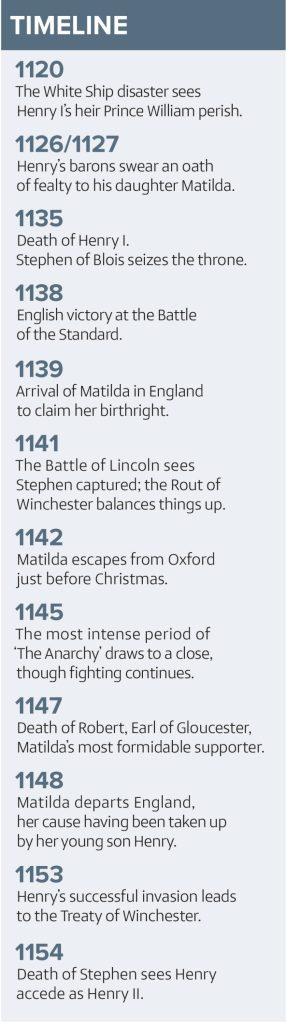
Civil conflict has often erupted in England, with the Wars of the Roses (1455-1485) and the British Civil Wars (also known as the Wars of the Three Kingdoms, 1639-1653) being perhaps the most infamous examples. There were also two Barons’ Wars in the 13th century – yet before all of these came ‘The Anarchy’ in the mid-12th century, when ‘Christ and his saints slept’.
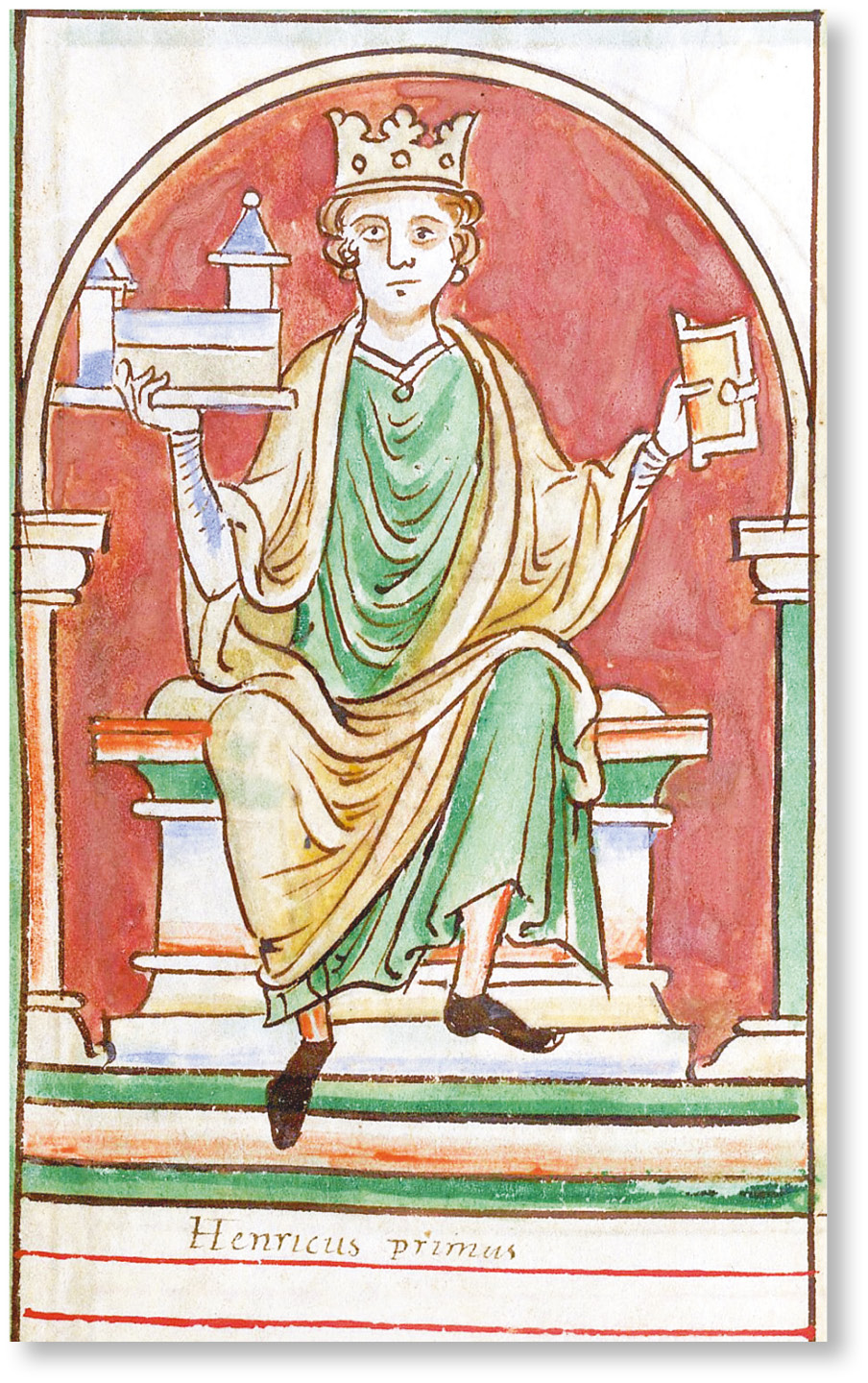
The genesis came on 25 November 1120, when Henry I’s only legitimate son, Prince William, was drowned and his vessel lost in the Channel in the ‘White Ship disaster’. Henry’s hopes now rested on his only daughter Matilda (1102-1167), known as ‘Empress Maud’ following her marriage to the Holy Roman Emperor in 1114. After the Emperor’s death in 1125, Henry made his barons swear over the winter of 1126/1127 to receive the widowed Matilda as Lady of England. Henry’s nephew Stephen of Blois and Matilda’s half-brother Earl Robert of Gloucester vied to be the first lay baron, after David of Scotland, to swear allegiance – though just over a decade later they’d be enemies. In 1128, Matilda married again – to Geoffrey Plantagenet, son of the Count of Anjou, to whom she bore the future Henry II (1133-1189), the first Plantagenet/ Angevin monarch.
Henry’s wishes were not to be granted. Instead, his death on 1 December 1135 (allegedly after eating a ‘surfeit of lampreys’) sparked a succession crisis. This saw his sister Adela’s son, the aforementioned Stephen of Blois, seizing the throne, becoming king by Christmas, and reigning from 1135 to 1154. Matilda would now have to wrest the crown from him.
Sadly for Stephen, he proved a weak leader. As contemporary chronicler Gervase of Canterbury put it: ‘It was the King’s custom to start many endeavours with vigour, but to bring few to a praiseworthy end’. Meanwhile, another threat was emerging in the background in the form of Matilda’s son and heir. Young Henry was just two in 1135 – but when his mother finally conceded her English ambitions in 1148 and returned to Normandy, he was something else: a bold warrior of 14 or 15 wanting revenge.


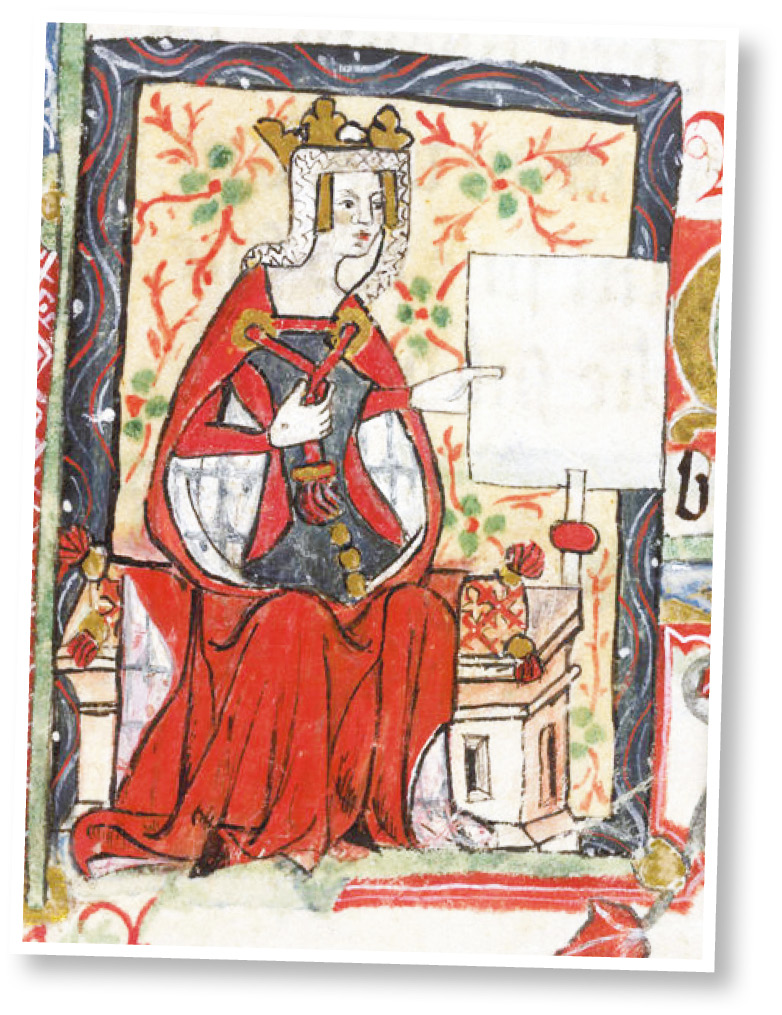
Stephen (c.1097-1154) – the third son of Stephen, Count of Blois, and Adela, the daughter of the Conqueror – had been sent to the court of his uncle, Henry I, in 1114, and received the countship of Mortain (Normandy), also acquiring Boulogne by marriage and two children, Eustace and William. Henry’s favourite nephew turned out to be the viper in the nest, however. When Henry settled the Crown on Matilda, Stephen swore the oath of fealty along with everyone else. But on the king’s death in December 1135, Stephen dashed from Normandy, and was received enthusiastically. Supported by the Church and Norman nobles who disliked Geoffrey’s Angevin connections, he was crowned just three weeks after Henry’s demise. Stephen’s accession provided Matilda’s maternal uncle – the Scottish king, David I – with a pretext for invading northern England, where he occupied Carlisle, Wark, Alnwick, Norham, and Newcastle. Stephen arrived up north at the beginning of February, but his concessions in subsequent negotiations were perceived as too generous and lacking resolve.
Early in 1136, English leaders rallied around Stephen – with even hesitant backers, Robert of Gloucester included, apparently won over. A second Scottish invasion followed in 1137, then a truce, while in England, Stephen felt secure enough to cross to Normandy and impose his will there. Anticipating Matilda’s stubbornness, he began to strengthen his position, including recruiting Flemish mercenaries, but still his rule was proving ineffective, and he was showing early signs of trickiness, unreliability, and misjudgement, alienating even his own supporters by bestowing favours on some of his great lords.
Someone Stephen should have been able to count on was his younger brother Henry of Blois (c.1096-1171), who was appointed Bishop of Winchester by Henry I in 1129 and later made papal legate by Stephen, ruling the English Church as the pope’s rep from 1139 to 1143. Stephen largely depended on him for the Church’s aid early on – but Henry’s support was equivocal, perhaps because he was denied the Archbishopric of Canterbury. More consistent support came from Stephen’s wife, a different Matilda, Countess of Boulogne.
The Battle of the Standard
January 1138 saw another Scottish invasion. Stephen headed north again, intending to ravage the Scottish Lowlands as a punitive warning – but his army disintegrated through poor administration and betrayal, enabling David to seize the initiative: while the Scottish king’s army advanced on Newcastle, another force commanded by his nephew William defeated an English force at Clitheroe. Stephen’s first truly powerful opponent, however, was Robert, Earl of Gloucester (d. 1147) – an illegitimate son of Henry I, and therefore Matilda’s half-brother, who rebelled in 1138, becoming her principal supporter. In the summer of 1138, the English baron Eustace fitz John, Constable of Chester, defected to David, taking with him his castles of Alnwick and Malton.
Henry’s death sparked a succession crisis.
Shortly after this windfall, David invaded the north again, ostensibly in support of Matilda, although England’s chaos was his opportunity to annex Northumberland. This time, the Scottish offensive was greater, bolstered with reinforcements – but David made a tactical error in allowing his Galloway troops to plunder, uniting northern barons to stop these repeated incursions. David was defeated on Cowton Moor, three miles north of the Yorkshire town of Northallerton, at the Battle of the Standard (22 August 1138). Stephen, engaged down south and distracted by Gloucester’s revolt in Bristol, had no obvious commander to defend his northern kingdom, but was saved by the unlikely figure of Thurstan, Archbishop of York, who raised an army, with priests serving as recruiting officers and troops gathered around banners of saints (hence the battle’s name), before heading north to Thirsk. While the overconfident Scots rejected negotiations, the English advanced on Northallerton, led by Ralph, Bishop of Orkney, a substitute religious talisman, effective commander Walter Espec of Helmsley, Gilbert de Lacy, and William le Gros.
The English occupied the southern of two hillocks 600 yards apart to the right of the Darlington road, the precious standards atop a carriage on the summit, with troops deployed to defend them in three groups: a front rank of dismounted men-at-arms and archers; a solid mass of knights, who fought on foot, around the standards; and shire-levies positioned to the rear and to the flanks, with a small number of mounted men guarding the horses. The Scots had David and his son Prince Henry nominally commanding an army that just outnumbered the English, the Scots on the northern hillock, men-at-arms and archers in the van, and poorly equipped Gallovidians and Highlanders rearwards. These Galloway men took umbrage and insisted on being in the forefront – hubris they’d regret. David unwisely acceded, so was handicapped with a lightly armoured mob to the fore. Troops from Strathclyde and the eastern Lowlands were on the right under Prince Henry, who also commanded mounted knights. The left was mostly West Highlanders, with men from Moray and the East Highlands forming a small reserve.

The battle lasted around two hours, with the leading Scots from Galloway falling to English arrows, but the Scots nevertheless charging with sufficient gusto to get in among the English front-line. The English depth prevented a breakthrough, and the Gallovidians were gradually repulsed. Henry’s horsemen broke through in a fierce assault, getting in the English baggage train, but then found themselves surrounded, the prince just escaping and making his way to Carlisle with the king. The Scottish infantry was unable to support this sudden success, however, as the English closed ranks, presenting a solid wall of shields. The battle became a rout, with retreating Scots reputedly slaughtered in their hundreds (some say thousands). Though defeat saw a Scottish withdrawal, David still advanced his frontier, the Scots’ roaming through the northern counties a major humiliation for Stephen.
To make matters worse, Stephen also alienated the clergy by quarrelling with the powerful figure of the justiciar Bishop Roger of Salisbury (d. 1139). The realm now fell into a state of anarchy as barons burned and plundered freely.
The Battle of Lincoln
Matilda and Geoffrey resolved to dismember Stephen’s domains, the empress invading England while Geoffrey assaulted Normandy. Matilda failed; Geoffrey succeeded. The rightful queen arrived in September 1139, landing at Arundel, greeted by malcontent barons, with Robert of Gloucester prominent. Initially, she waged war successfully and soon controlled most of the west, which became her powerbase, with Bristol her half-brother’s HQ. Stephen, meanwhile, banged up the Bishop of Salisbury and his relations, dismantling their castles: out with the old, in with the new. The consequence, however, was alienating the Church and its leaders, among them his most ardent followers.
In addition to Gloucester, Matilda had Ranulf de Gernon, 4th Earl of Chester (1099-1153), infuriated at Stephen’s Scottish concessions, along with assorted Angevins and turncoats and Stephen’s brother, the Bishop of Winchester. Ranulf grabbed Lincoln Castle, leaving the town’s citizens appealing to the king, who arrived outside Lincoln on 6 January 1141. Although the king responded quickly, he couldn’t prevent Ranulf retiring to Chester to raise troops, or stop him urging Gloucester, his father-in-law, to help. Their combined might arrived outside Lincoln on 1 February, Ranulf’s contribution being his Cheshire tenants and Welsh mercenaries. Their immediate dilemma was fording the waterways of the Fossdyke and River Witham, which blocked their advance to both castle and Stephen’s besieging army. It’s likely they pushed west, storming a lightly guarded ford on the Fossdyke. Once across, the rebels deployed.
There was evidently disagreement on Stephen’s side. Some urged a garrisoning of the city and withdrawal to regroup, others pushed for battle. Stephen chose battle and deployed from the city’s West Gate on the slope down to the Fossdyke, forming in three divisions: his mounted troops either side, infantry to the centre. On the right were followers of the earls Waleran of Meulan, William de Warenne, Simon of Senlis, Gilbert of Hertford, Alan of Richmond and Hugh Bigod, Earl of Norfolk. Stephen’s left was led by William of Aumale and William of Ypres, Stephen’s mercenary captain, who had Flemish and Breton troops. The rebels also deployed in three divisions, with disinherited nobles on the left, Ranulf’s dismounted knights and infantry levies in the centre, and Gloucester’s cavalry on the right. Lightly armed Welsh were in front.
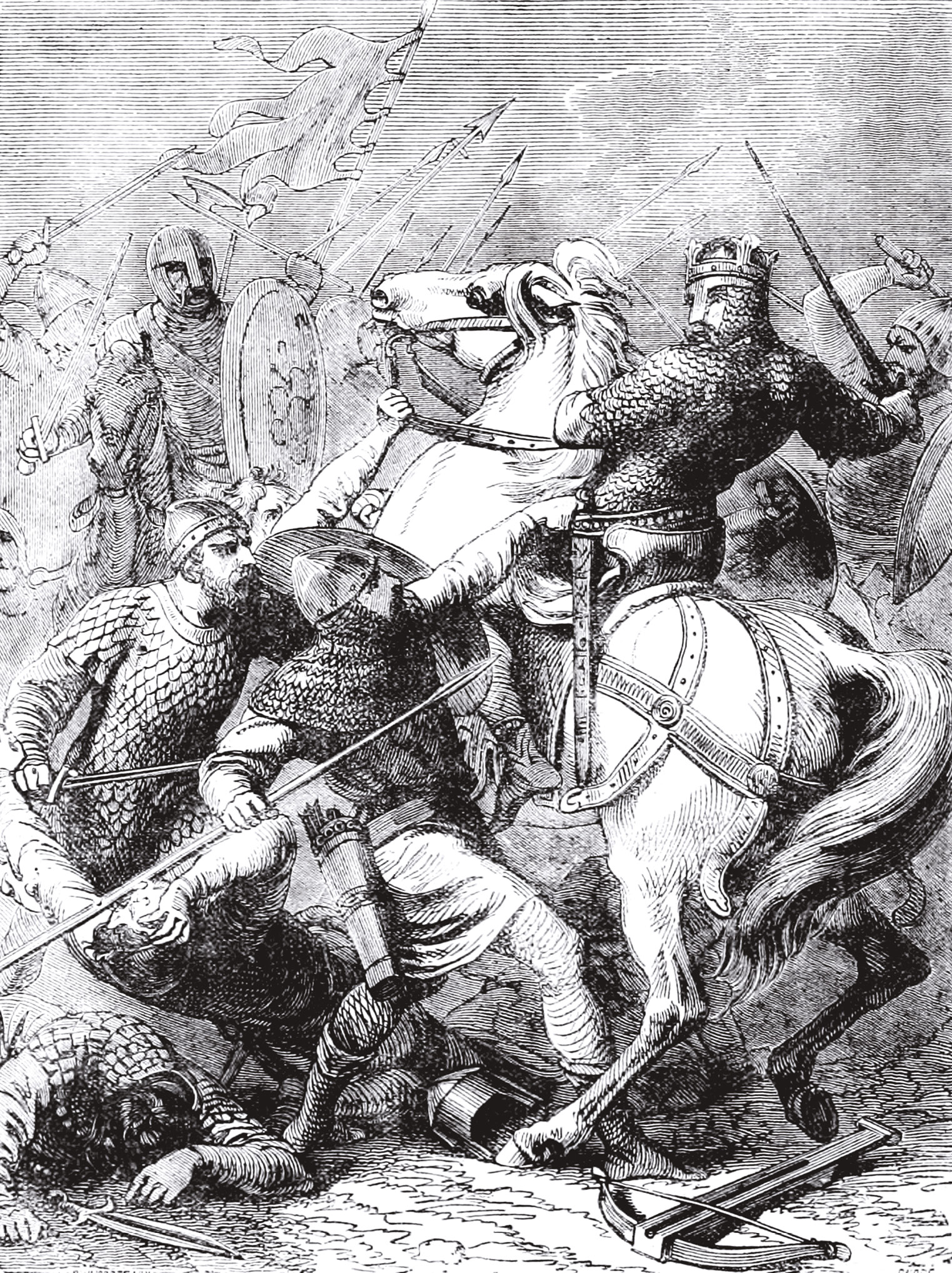
The rebels advanced first, intent on closing, their determination leading to the royal right quitting the field hastily. The royal left, however, showed resolve, a spirited charge by William of Aumale and his Ypres namesake trampling the Welsh and smashing into Gloucester’s cavalry. With the outcome uncertain, the rebel centre prevailed, the infantry pushing on and throwing back the remaining royal cavalry. The royal centre was left isolated, facing the enemy host. Surrounded, the king and his men-at-arms fought manfully, with Stephen in hand-to-hand combat, fighting with sword, then axe, until felled by a stone and captured by William de Cahaignes. Lincoln was a comprehensive defeat for Stephen and worse for the citizens, slaughtered by rebels whose blood was up. A prisoner, Stephen headed to Bristol, Matilda’s coronation now surely a formality.

Matilda was indeed acknowledged as queen, while her adversary was held prisoner for several months. It seemed her cause must prevail – with Henry, Bishop of Winchester, declaring God’s judgement on his wayward brother, and with the clergy having first dibs on consecrating a new ruler, namely Matilda. Matilda herself, however, showed the same self-destructiveness as plagued Stephen’s reign, her harshness and avarice soon offending most Englishmen who knew her. An empress first, her haughtiness also offended. Instead of exercising tact in her moment of triumph, she marched intimidatingly on London, slapping a tax on the city. She argued with Stephen’s brother, too, who backtracked on God’s judgement. Stephen’s queen was not idle either, gathering an army in readiness.
Londoners revolted, so Matilda headed to Winchester, partly for refuge but also to get the bishop back onside via the blunt instrument of attacking his palace, Wolvesey Castle, in a city backing Stephen. The Rout of Winchester (14 September 1141) saw Matilda’s forces defeated by a larger relief army gathered by the other Matilda, which was able to cut their communications. It was now a double siege, with the city suffering most. The bishop’s men chucked incendiary ‘firebrands’ from the castle to harass the empress’s troops, but only succeeded in setting fire to parts of the city. Robert of Gloucester resolved to break out, and get his half-sister to western safety. But though the empress herself escaped, not everyone was lucky: Gloucester himself was captured, his loss fatal to the empress’s cause, with Angevin hopes resting on him maintaining the fight. With Stephen imprisoned, the reins of government were taken up by his queen, who proved a better bet than the empress. Showing all the personality and skill during this period that Henry’s Matilda lacked, it was her determination that helped win back Stephen’s crown.
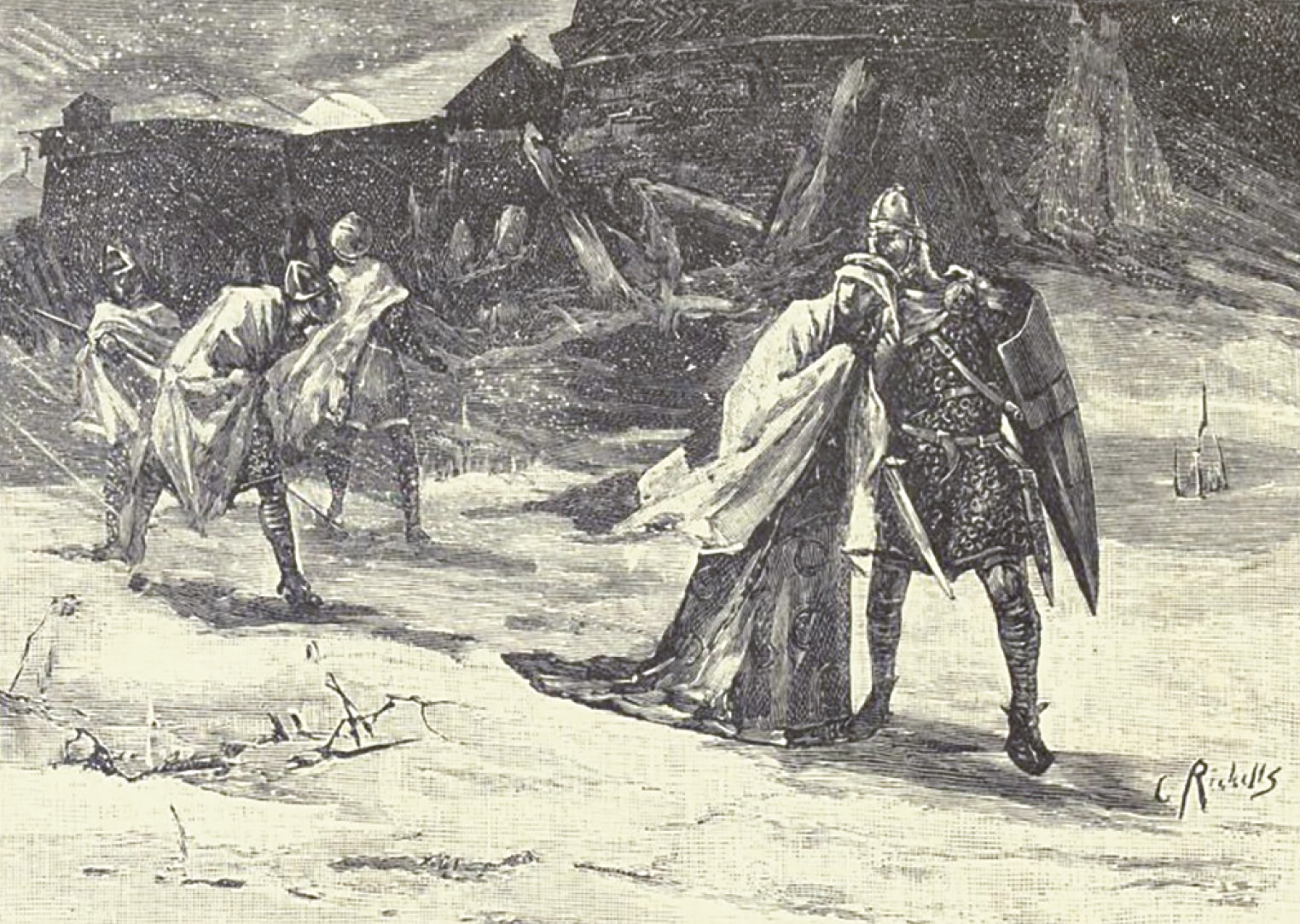
In November 1141, Stephen was exchanged for Gloucester, with Empress Matilda in control of the west – and rather more than she’d held previously. She also held Oxford as an outlier, a fortress covering approaches to Bristol and Gloucester, which remained her HQ. Come 1142, Stephen was again ascendant, while Matilda’s cause weakened. With the king free, Matilda’s hopes had gone, although she still mustered enough strength to stop Stephen claiming victory. As winter 1142 loomed, Stephen hatched a plan to take both Oxford and Matilda, almost succeeding. It was just before Christmas when Matilda averted disaster by escaping the castle at night, with just three knights for company and dressed in camouflage white. Struggling six miles on foot, the little party reached Wallingford amid snow and ice, before she again attained her western sanctuary. Here she stayed, her power decreasing, for five years, although she remained safe from further abduction attempts. The true period of ‘The Anarchy’ lasted only until 1145. Until then, towns and countryside burned, castles were erected unlawfully, churches converted to fortresses, and local vendettas pursued. The war never covered the whole country, however, and it gradually abated, the period of bitterest feud not as lengthy as some chroniclers attest.
Matilda departs, Henry arrives
Fighting occurred sporadically during the later 1140s, although this became less intense as the decade passed. In fact, lack of warfare became normalised, although disorder remained possible. In 1147, Robert of Gloucester died – Matilda’s most formidable ally gone. Her son, Henry, now 14, made his first attempt on the throne in the same year. Early in 1148, Matilda departed for Normandy, ending her almost ten-year campaign, and easing the period of ‘The Anarchy’, even if it didn’t end it. Henry had another pop in 1149; two years later, when he was 18, his father handed him the Normandy powerbase, his mother’s heritage, and within another year he’d also become Count of Anjou, following his father’s death. Young Henry’s wealth and power increased further in 1152, when he married Eleanor of Aquitaine, the divorced wife of Louis VII, adding Poitou and Guienne to his dominions. Stephen must have known trouble was coming.
Matilda’s cause revived in January 1153, when Henry crossed to England in far greater strength than in 1149. Stephen resisted stubbornly, and hatched plans to secure the succession on his elder son Eustace IV, Count of Boulogne, by crowning him in his lifetime. The Church thought otherwise, however, and refused to perform the coronation ceremony. Crucial was Theobald of Bec, Archbishop of Canterbury (c.1090-1161), appointed by Stephen in 1138, and, although seemingly loyal from 1141, now setting himself against his king’s plans. Theobald was more concerned for England’s peace, and it was largely due to him that the Church opposed Stephen’s scheme, the Pope formally forbidding Eustace’s coronation in 1152. Stephen, though, was accepted as de facto king. The Church’s counterplot bore fruit in August 1153, when Eustace perished of unknown causes, which prompted it to up its diplomatic offensive. The king’s brother Henry and Theobald resolved to bring Stephen and young Henry together, winning over those leaders who wished to see the fighting over – with the young Duke of Normandy having pull over any, like the Earl of Chester, holding Duchy lands.
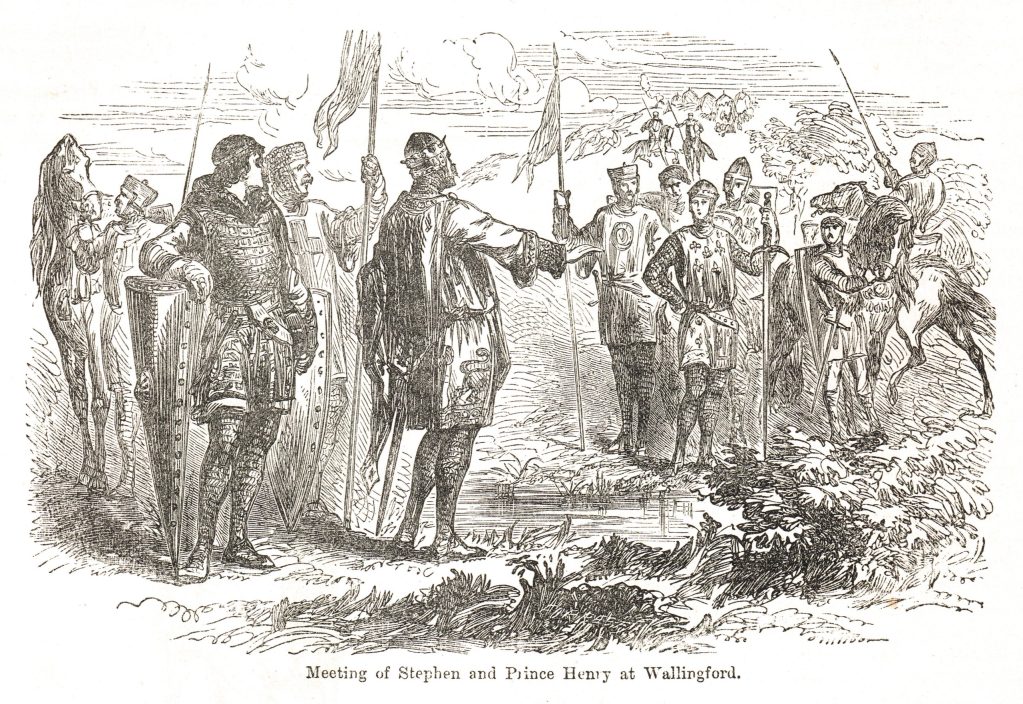
Henry finally forced Stephen to acknowledge him as his successor later that year, when the Treaty of Winchester (sometimes dubbed the Treaty of Wallingford) ended hostilities. Agreed at Winchester on 6 November 1153, and ratified at Westminster in December, it achieved for Henry what had eluded his mother. It stipulated Stephen would reign until death but be succeeded by Matilda’s son. Stephen’s remaining son, William, Earl of Surrey, was compensated with his baronies. Luckily for a war-weary country, he made no attempt to overthrow the settlement. Stephen, meanwhile, began razing adulterine castles erected in defiance of royal authority. (These were unlicensed private castles erected during Stephen’s reign, enabling resident barons to prey on the surrounding country in defiance of both Stephen and Matilda.)
Stephen himself died on 25 October 1154. Henry II was crowned and set about urgent reform, confirming his grandfather Henry I’s laws, re-establishing the Exchequer, banishing foreign mercenaries, recovering royal estates, and continuing to demolish hundreds of adulterine castles. He reigned for 34 years, until his death in 1189.
Stephen Roberts is a historian who has written many times for MHM, including cover stories on Peter the Great, the Thirty Years War, and the Battle of Aboukir Bay.
In the next issue of MHM: The First Barons’ War: Stephen Roberts analyses the landmark 1215-1217 struggle between King John and his barons, after he threatened to renege on Magna Carta.
All images: Wikimedia Commons, unless otherwise stated