Subscribe now for full access and no adverts
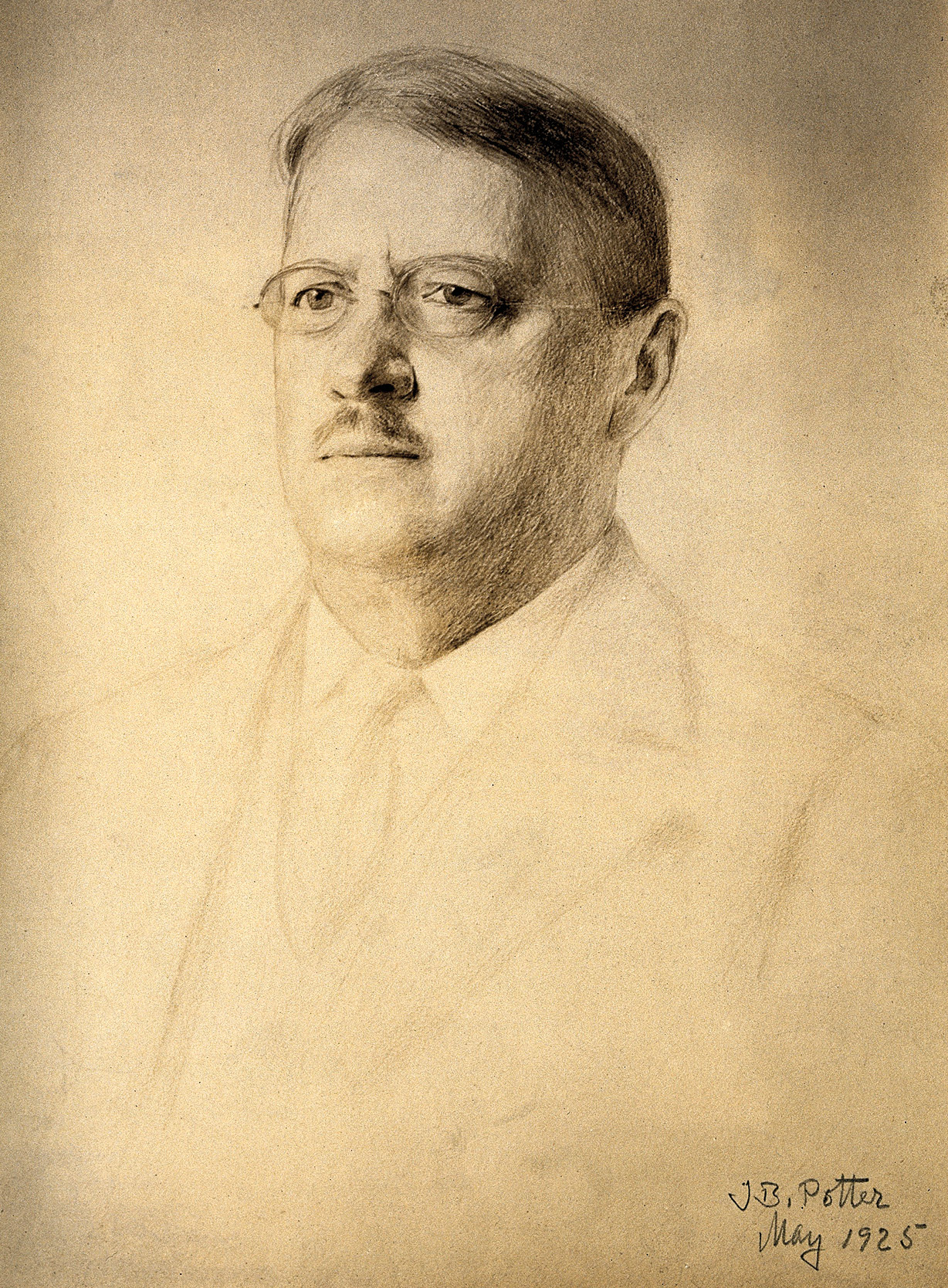
The American archaeologist George Andrew Reisner (1867-1942) represents one of the true greats from the so-called ‘Golden Age’ of Egyptology. Indeed, he remains, as Sir Alan H Gardiner described him over 80 years ago, ‘one of the greatest and most successful excavators Egypt has ever known’. By the end of his career, George Reisner had excavated 23 sites in both Egypt and northern Sudan, as a result making some famous and spectacular discoveries. He also carried out excavations at the ancient Levantine site of Sebastia – biblical Samaria.
Founding father
Reisner is rightly renowned, too, as a pioneering archaeologist and one of the ‘founding fathers’ of modern archaeology not just in Egypt, but around the world. He developed a systematic, scientific approach to the excavation of archaeological sites focused on the advancement of knowledge, rather than ‘treasure hunting’, earning him the sobriquet ‘the American Petrie’. However, his approach to archaeological fieldwork surpassed that of his English counterpart, involving photography at every stage of an excavation (45,000 plate-glass negatives survive from Reisner’s excavations), the production of thousands of accurate archaeological drawings (including the earliest use of section drawings in Egyptology), and the keeping of voluminous dig diaries and object registers.
Unusually for the time, some of the latter were written in Arabic by Reisner’s Egyptian foremen, and Reisner was popular with his Egyptian workers, since he treated them well. As a result, they gave him the affectionate nicknames ‘the Doctor’ and ‘Papa George’.

Early career
After graduating from Harvard University in Cambridge, Massachusetts, in 1893, with a PhD in Semitics (he originally attended the university to study law), Reisner was awarded a postdoctoral research grant from Harvard and travelled to Germany to study cuneiform texts in the Staatliche Museen in Berlin. While there, he also studied Egyptology under the prominent German Egyptologists Adolf Erman, Kurt Sethe, and Heinrich Schäfer, and in 1895 was appointed as an assistant in Egyptology at the museum. A year later, Reisner returned to Harvard to lecture in Semitics, and, in 1897, set off for Cairo with his wife Mary, having been invited by the German Egyptologist Ludwig Borchardt (best known for his discovery of the famous Nefertiti bust at Amarna, which he is alleged to have smuggled out of Egypt).
Reisner was to be part of an international team charged with compiling a catalogue of material in the Egyptian Museum, Cairo (the Catalogue général des antiquités égyptiennes du Musée du Caire, which records amulets, boats, and canopic jars).
In 1899, Reisner was granted an opportunity that would prove seminal in his career, setting him on the path to becoming one of the most notable figures in the history of Egyptian archaeology, when he was appointed director of the Hearst Egyptian Expedition of the University of California. The expedition was funded by the millionaire philanthropist Phoebe Apperson Hearst (mother of the American newspaper magnate William Randolph Hearst).
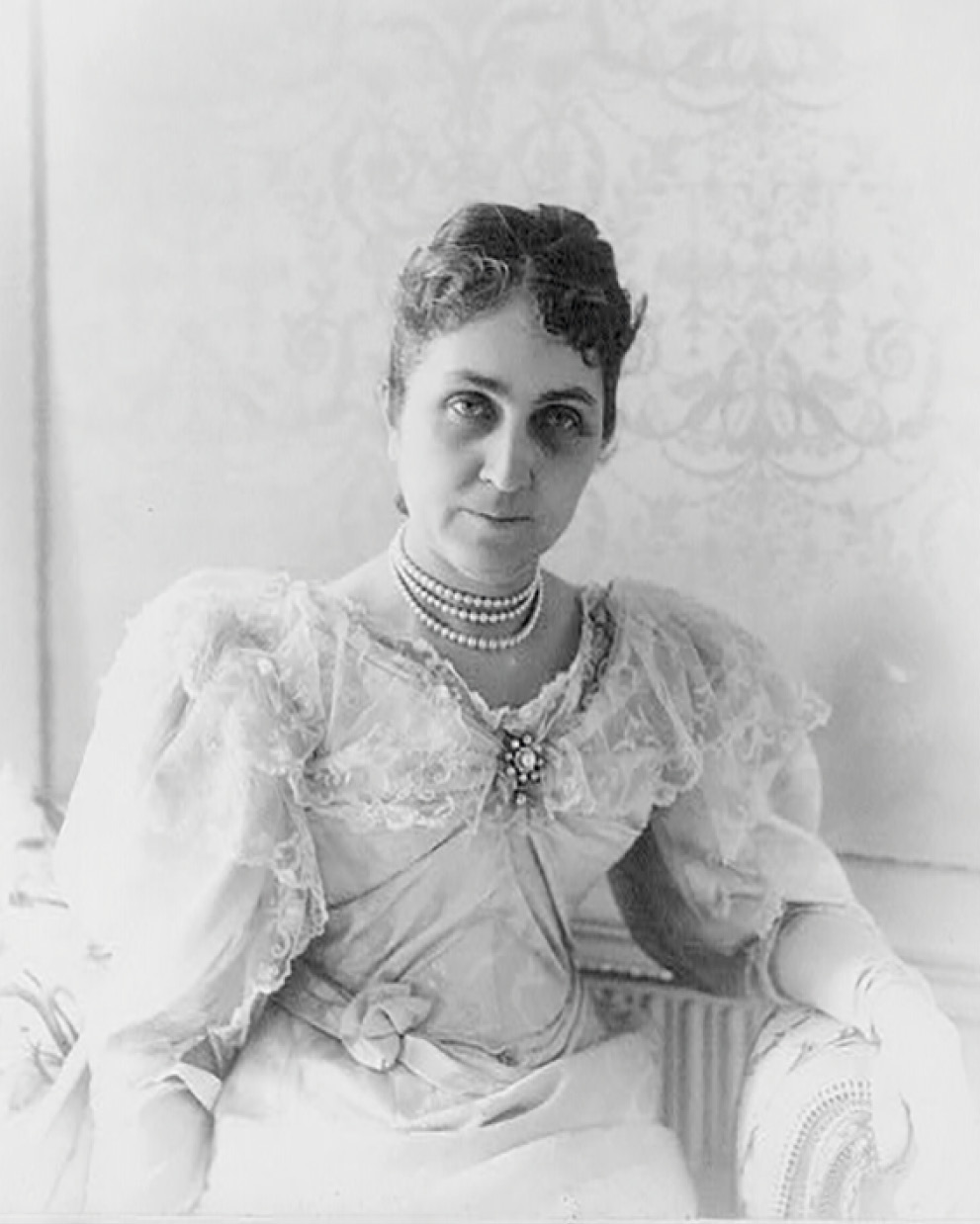
Having visited Egypt in the same year, she decided to throw her financial weight behind an archaeological mission to the country, with an eye firmly fixed on adding to the collections of the University of California, and the creation of a new museum in San Francisco. She also provided funds for archaeological missions in North America and Peru. In 1905, due to financial difficulties, Phoebe Hearst had to withdraw Reisner’s funding, but he subsequently created and, for the rest of his career, was funded by the Harvard University–Boston Museum of Fine Arts Expedition to Egypt; he was appointed curator of Egyptian art at the museum in 1910.
Deir el-Ballas and Naga ed-Deir
Having little real experience in the field, Reisner had to learn ‘on the job’. He tells us that:
The first work [Reisner was assisted by his compatriot, the Egyptologist Albert Lythgoe] was done about 400 miles south of Cairo, in the desert east of the ancient Coptos. Here flint-working camps of the prehistoric period and subsequent quarries of Ptolemaic and Roman times were explored.
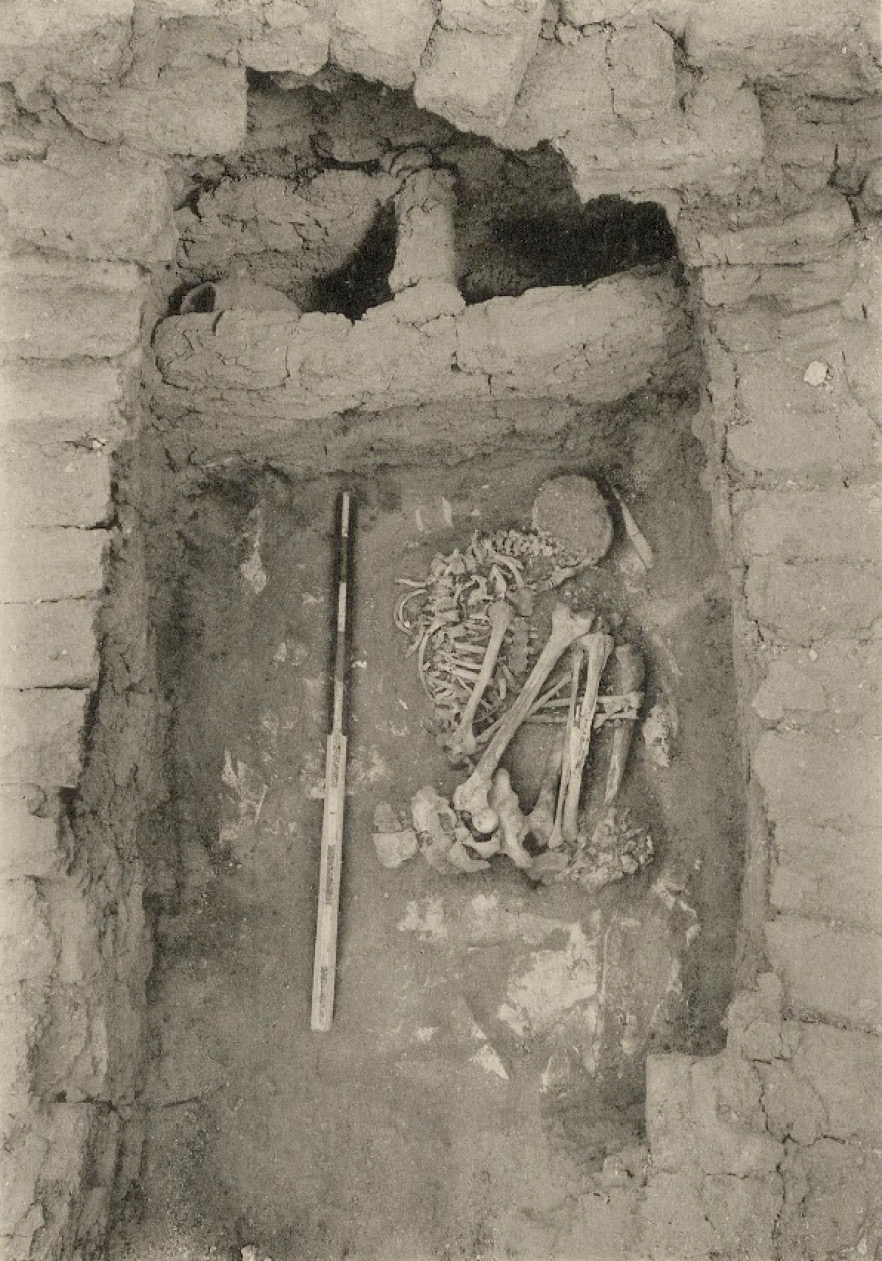
In 1900, he turned his attention to the site of Deir el-Ballas, a short-lived but substantial town site that lies about 30 miles north of Luxor on the West Bank of the Nile, and which seems to have originally been used as military base in the Seventeenth Dynasty by Kamose and Ahmose I for campaigns against the Hyksos. Reisner excavated two cemeteries dating to the late Second Intermediate Period and early New Kingdom, as well as several houses and two large, mud-brick buildings that he christened the ‘North Palace’ and ‘South Palace’. However, later excavations conducted at Deir el-Ballas suggest that only the North Palace was a royal residence, and that the smaller South Palace was more likely a lookout post, built to keep watch over the Nile and the southern approach to the settlement.

In February 1901, after investigating the Predynastic cemetery of el-Ahaiwah, on the East Bank of the Nile not far north of Abydos, Reisner began excavating the nearby site of Naga ed-Deir with the aid of Arthur Mace (Flinders Petrie’s cousin and one of the archaeologists who worked with Howard Carter on the investigation of Tutankhamun’s tomb).


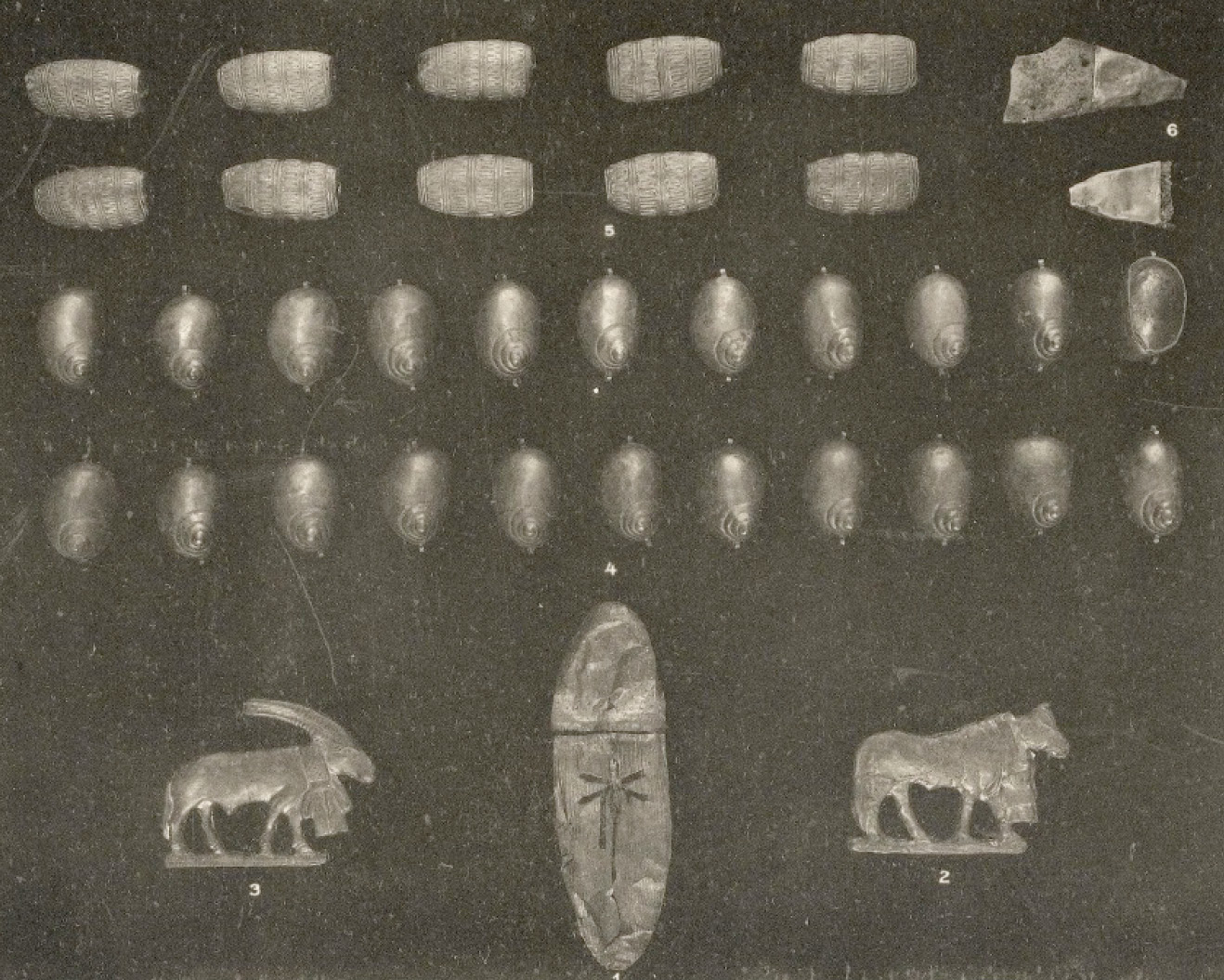
The extensive necropolis comprised a series of cemeteries containing graves and tombs ranging in date from the Predynastic to Coptic eras. It is thought that Naga ed-Deir could possibly be the burial ground of the ‘lost city’ of Thinis, the first capital of Early Dynastic Egypt; this city has never been located, but may well have been near the modern village of Girga. Included among the numerous artefacts that Reisner and his team unearthed at Naga ed-Deir were a superbly preserved Predynastic pit-grave burial, many pottery and stone vessels, wooden Old Kingdom coffins (some still bearing traces of paint), and stelae associated with local officials and priests, as well as Coptic textiles such as funerary wrappings and tunics (unfortunately long since lost). One of the most significant finds was a rare ‘Letter to the Dead’ written on papyrus (typically, these are petitions from the living to the deceased asking for aid), discovered in the courtyard of an Old Kingdom mastaba belonging to an individual named Meru. Another notable discovery was a collection of fine jewellery that was found in situ on the body of an individual buried in an intact Early Dynastic tomb. A sheet-gold circlet was still in place on the head of the deceased, who also wore a necklace featuring sheet-gold beads shaped like shells, gold bracelets, and sheet-gold amulets depicting a bull, beetle, and oryx.
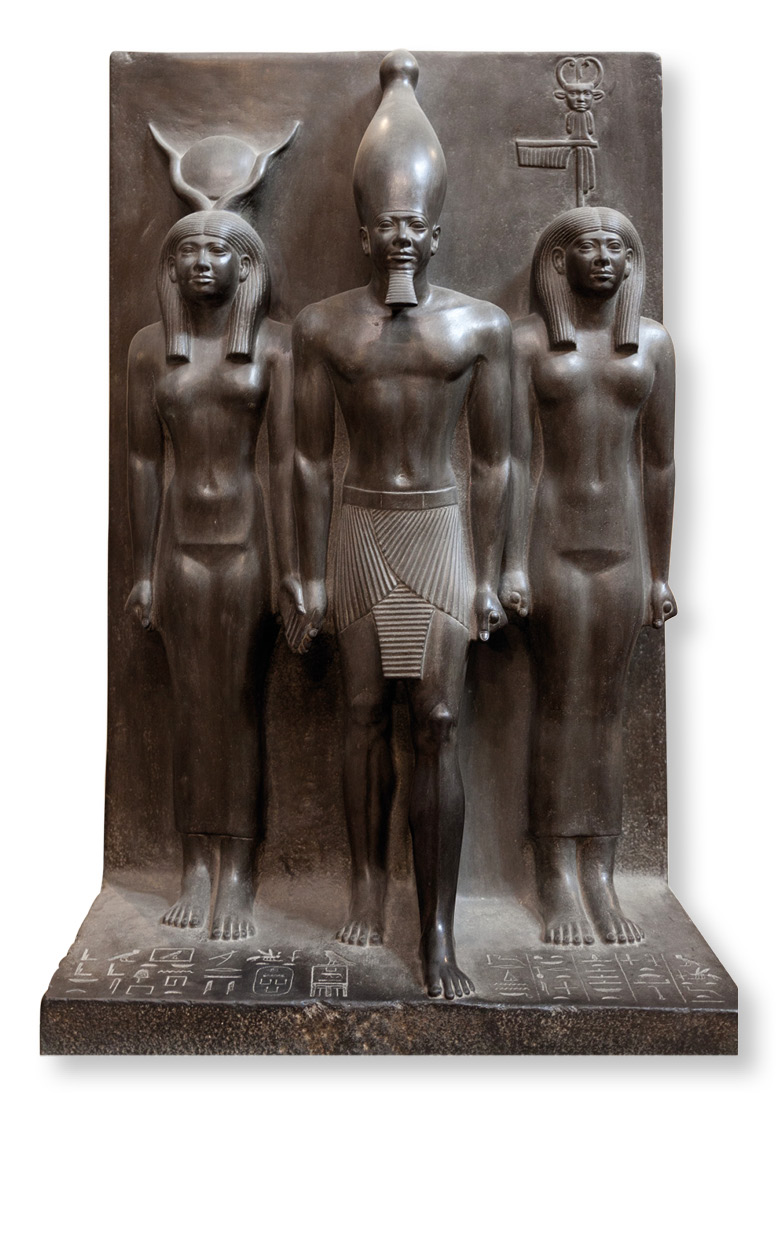
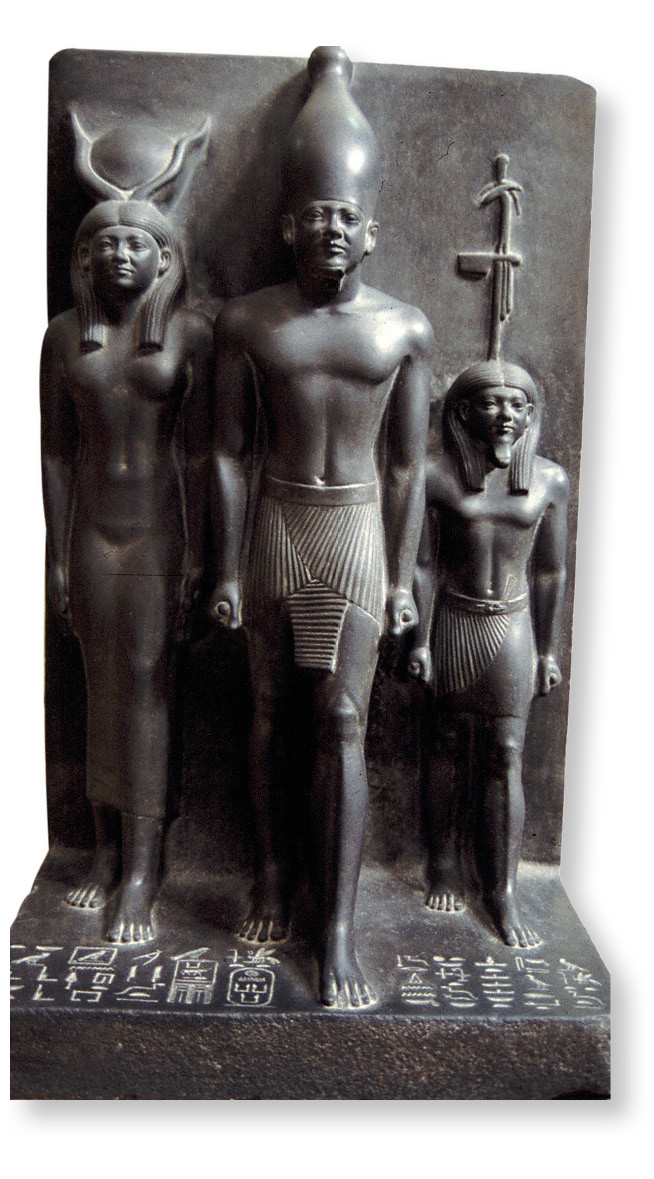
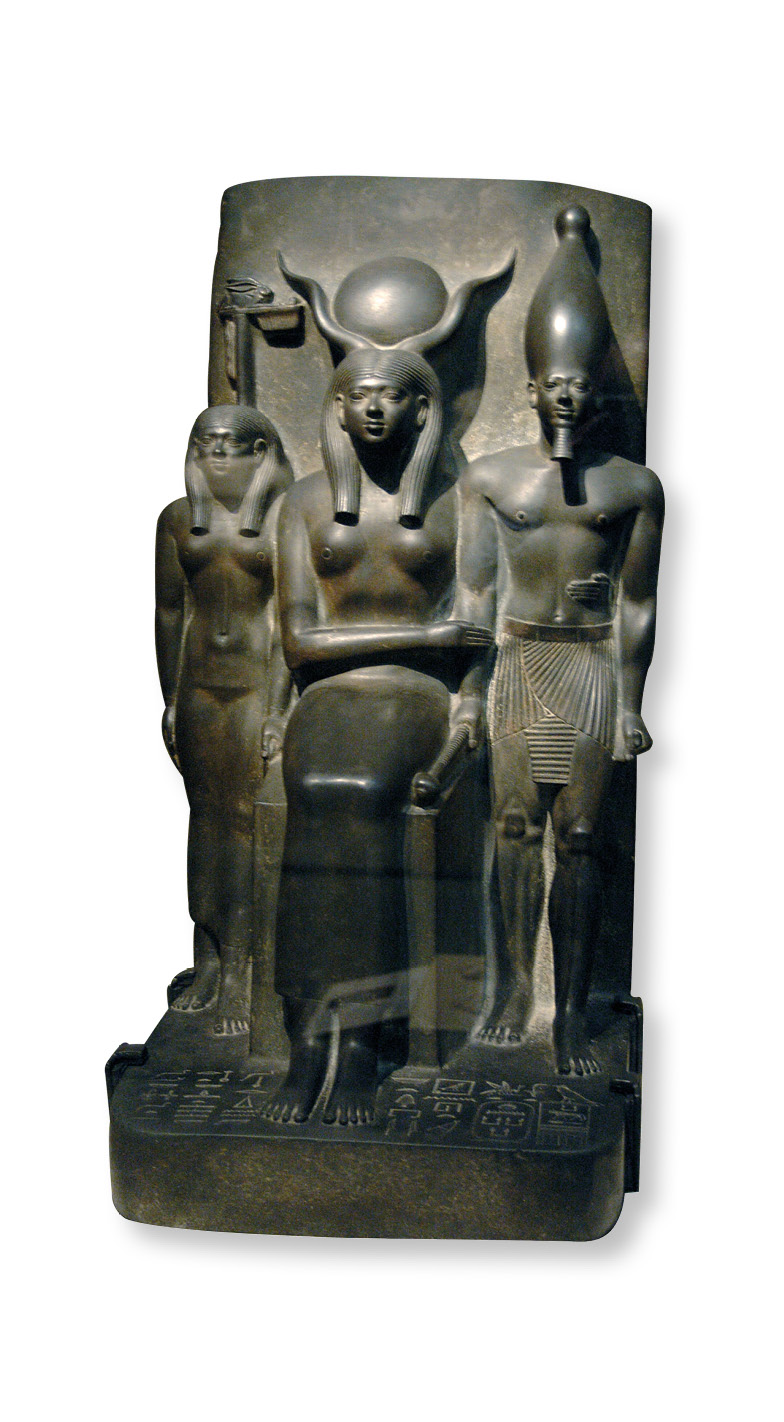
Top, above, below & far below: Four triad statues of Menkaura with Hathor and a female personification of the nomes Hu (Diospolis Parva), Waset (Thebes), Saka (Cynopolis), and Khemenu (Hermopolis Magna). Images: Chipdawes, public domain via Wikicommons (top); Robert B Partridge (RBP; above, below & far below)

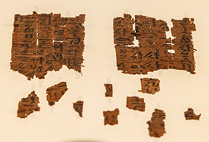
The Hearst Medical Papyrus
Mention should be made of the important ‘Hearst Medical Papyrus’, which was found inside an ancient Egyptian pot by an Egyptian fellah (farmer) while he was digging sebakh from one of Reisner’s excavation dumps at Deir el-Ballas. The papyrus was later presented to Reisner by the farmer to show his gratitude for being allowed to dig in the excavation dumps. Because it is so well preserved, some experts have questioned its authenticity, although it is generally regarded by scholars as genuine and, as Reisner noted,
The roll had not been opened since antiquity as was manifest in the set of turns, the fine dust, and the casts of insects… The man attached no value to the papyrus… and he gratefully accepted the price given him without any attempt at bargaining.
Only 13 medical papyri survive from ancient Egypt, and these represent the oldest known medical texts in the world. They provide us with invaluable information about the medical practices of the ancient Egyptians and their knowledge of the human body.
Discoveries at Giza
In 1902, just three years or so after beginning his work as a field archaeologist in Egypt, Reisner was offered the most exciting opportunity of his career: a concession to dig in the Old Kingdom cemeteries surrounding the great pyramids on the Giza Plateau.
Over the next 35 years, Reisner directed the longest-running series of excavations ever to have been conducted at Giza, spending a large part of his life living at ‘Harvard Camp’, a collection of mud-brick buildings behind the pyramids. Reisner’s wife and daughter (both called Mary) lived at the camp with him, and accompanied him on many of his digs. Without doubt, the outstanding discoveries from Reisner’s Giza excavations are: first, the cache of remarkable Fourth Dynasty statues found in the Valley Temple of Menkaura’s pyramid complex; and, second, the Tomb of Queen Hetepheres I.
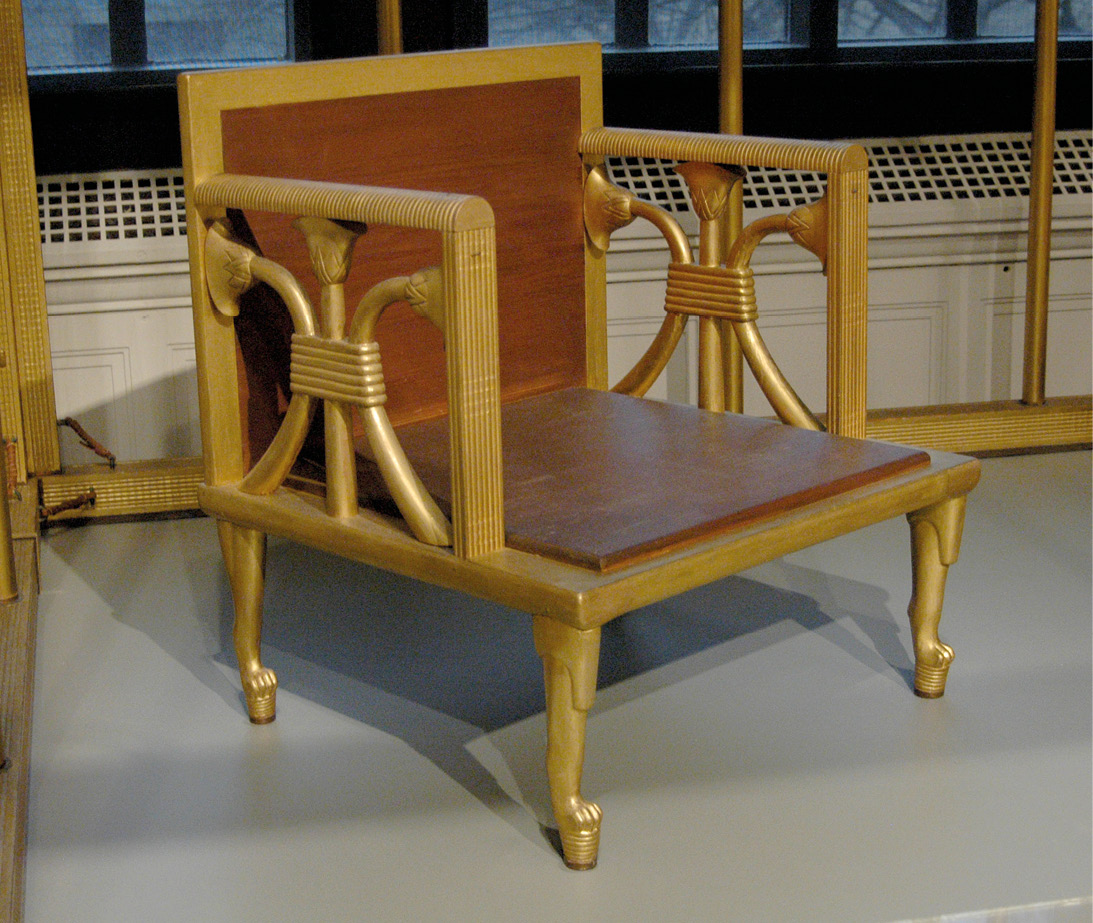
A reconstruction of the chair of Hetepheres I in the Boston Museum of Art. Image: RPB
The Menkaura triads
Five group statues or ‘triads’ were found in the Valley Temple in July 1908: four intact and in a superb state of preservation, the other fragmentary. The complete triads are rightly considered to be masterworks of ancient Egyptian sculpture (and, indeed, ancient sculpture in general). They are made of dark, perfectly polished greywacke, and depict the king with Hathor and a female personification of a nome (different in each case).
Both the lady and the goddess wear long, body- hugging dresses. In three of the statues, the king stands between Hathor and the personification of the nome, while the fourth depicts Hathor seated in the middle. Menkaura either holds the hand of Hathor, or is embraced by the goddess and the nome personification; and, on all the triads, he wears the white crown of Upper Egypt, and the pleated royal kilt or shendyt.
The Menkaura dyad
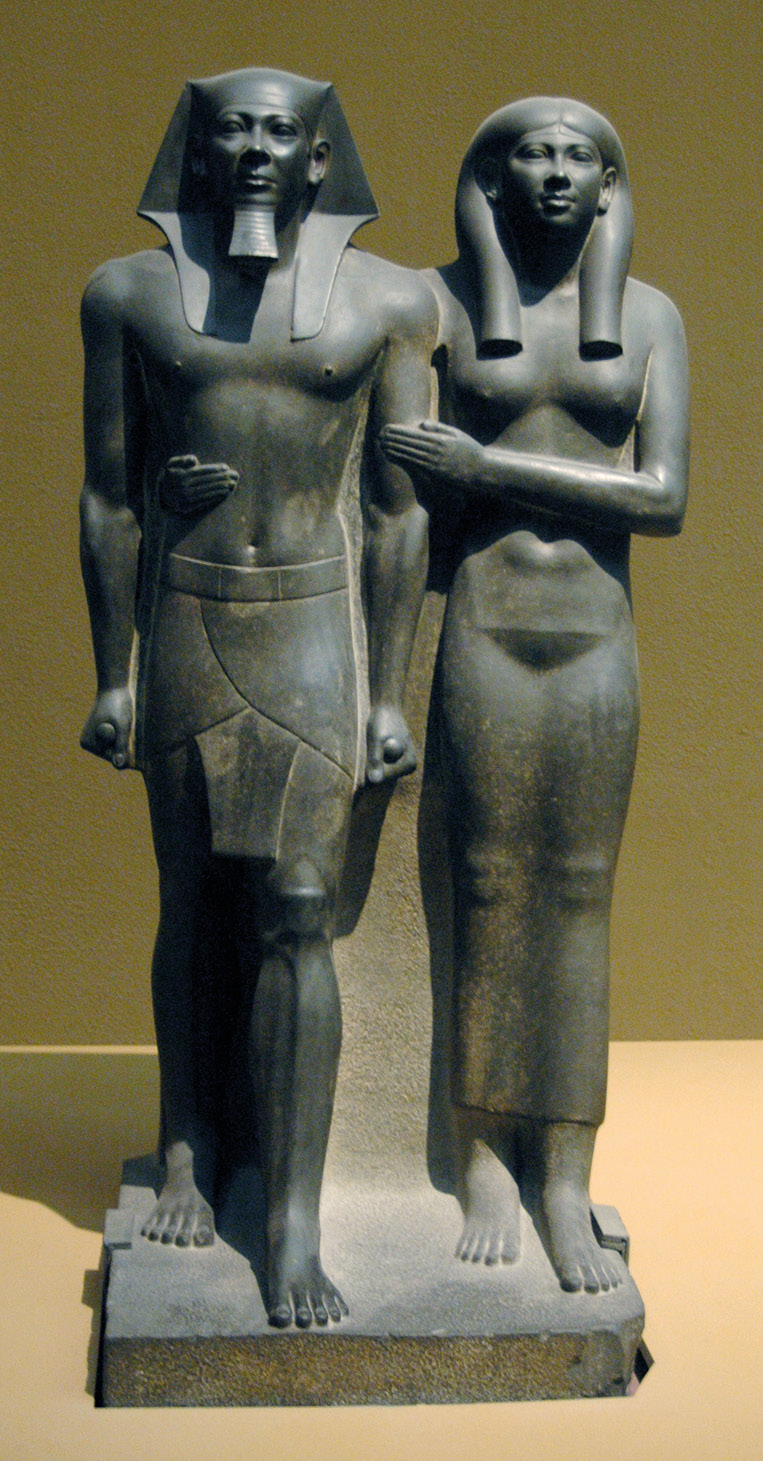
On 18 January 1910, Reisner was unexpectedly rewarded with the discovery of another beautiful and masterfully sculpted group statue, in almost pristine condition. It was discovered in the so-called ‘Thieves’ Hole’ at Menkaura’s Valley Temple. Reisner recounted the moment of discovery in his dig diary:
In the evening, just before work stopped, a small boy… appeared suddenly at my side and said ‘come’. In the lower part of this hole the head female of a statue (life size) of bluish slate had just come into view in the sand. It was too late to clear it. But immediately afterwards a block of dirt fell away and showed a male head on the right – a pair statue of king and queen.
This pair statue or ‘dyad’ is unique. It shows Menkaura and a female figure who has not been positively identified, although she quite possibly represents the king’s principal wife Khamerernebty II, or alternatively the king’s mother Khamerernebty I. Some scholars have suggested she could be a representation of a goddess. Whoever this mystery woman is, her right hand grips Menkaura just above his waist, while her left rests on his left upper arm. In contrast to the triad statues, the king is shown wearing the nemes headdress, although it lacks the uraeus. A very unusual aspect of the statue is that the king is depicted with his head turned slightly to the right, while the ‘queen’ looks almost – but not quite – forward.
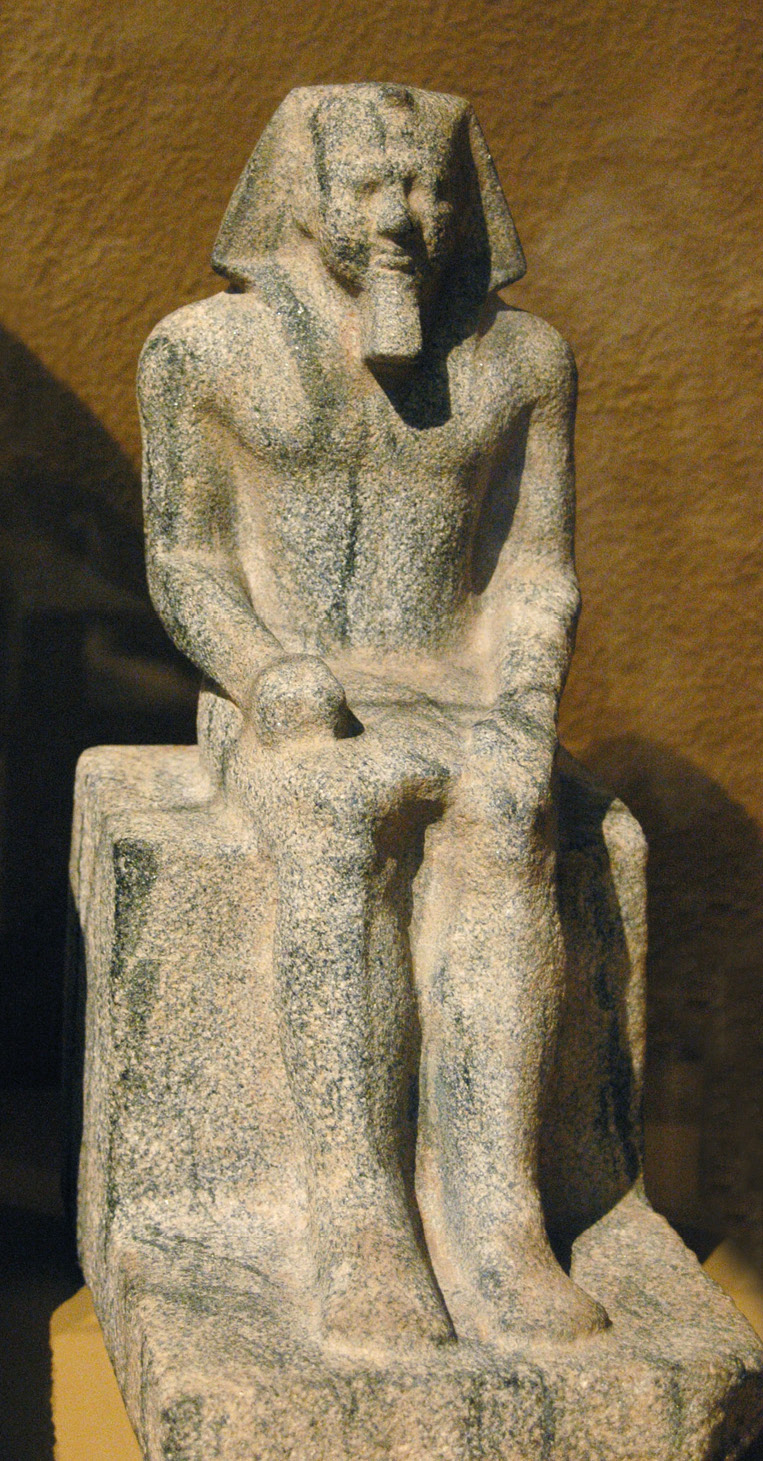
Reisner also discovered a sculptor’s workshop associated with Menkaura’s Valley Temple, recovering 14 unfinished limestone statuettes of the king in the traditional seated pose. Presumably, it was in this workshop that the wonderful triad and dyad statues of Menkaura were produced.
The Tomb of Queen Hetepheres
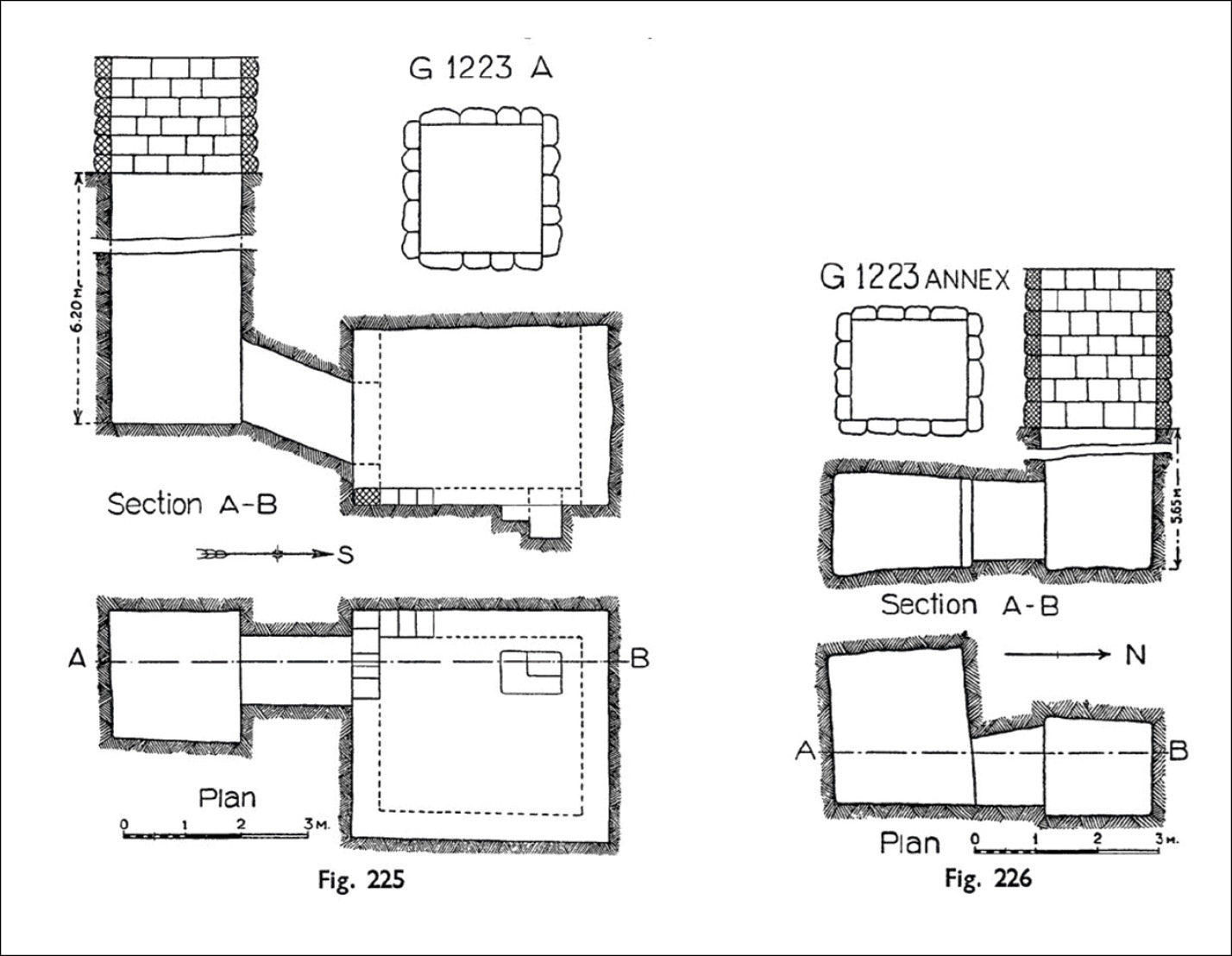
The Tomb of Hetepheres I is widely regarded as one of the most significant discoveries from ancient Egypt. It was discovered in 1925 by accident by Reisner’s photographer Mohammedani Ibrahim, when one of the legs of his camera tripod dislodged a piece of plaster covering the entrance to a 30m-deep shaft. This shaft led to a burial chamber that was packed with grave goods. An inlaid inscription found on a carrying-chair identified this shaft-tomb as the final resting place of the queen, who was the wife of Snefru and mother of Khufu, famed builder of the Great Pyramid. It was largely excavated by one of Reisner’s chief assistants, the American archaeologist Dows Dunham, who had to work in temperatures of up to 30°C, in a restricted space that allowed room for only two excavators. Apparently, a large chunk of the chamber roof fell on his head, but fortunately he was wearing a pith helmet at the time.
In addition to the carrying-chair, various other pieces of wooden funerary furniture (badly decayed but later painstakingly reconstructed) were found in the burial chamber. These had been covered with gold leaf, and included armchairs, various chests and boxes, and a bed and bedchamber (a large, open, square frame on which curtains would have been hung). The boxes and chests contained linen, stone and pottery vessels, elegant gold and silver dishes, a set of unique silver bracelets (see AE 139), calcite ointment jars, and a wooden headrest covered in gold and silver. The queen’s alabaster canopic chest was found as well, hidden in a sealed niche. Parts of the queen’s preserved viscera were found in its four compartments, still floating in a solution of natron and water.
There was obviously great anticipation on the part of Reisner and his team, as to the contents of the queen’s stone sarcophagus, which was also found in the burial chamber. Unfortunately, it was found to be empty, leading Reisner to remark wittily: ‘Gentlemen, I regret Queen Hetepheres is not receiving. Mrs Reisner will serve refreshments at the camp.’ What happened to the queen’s mummy remains an Egyptological mystery that will probably never be solved, although it is more likely than not that it was destroyed in antiquity.
Nubian discoveries
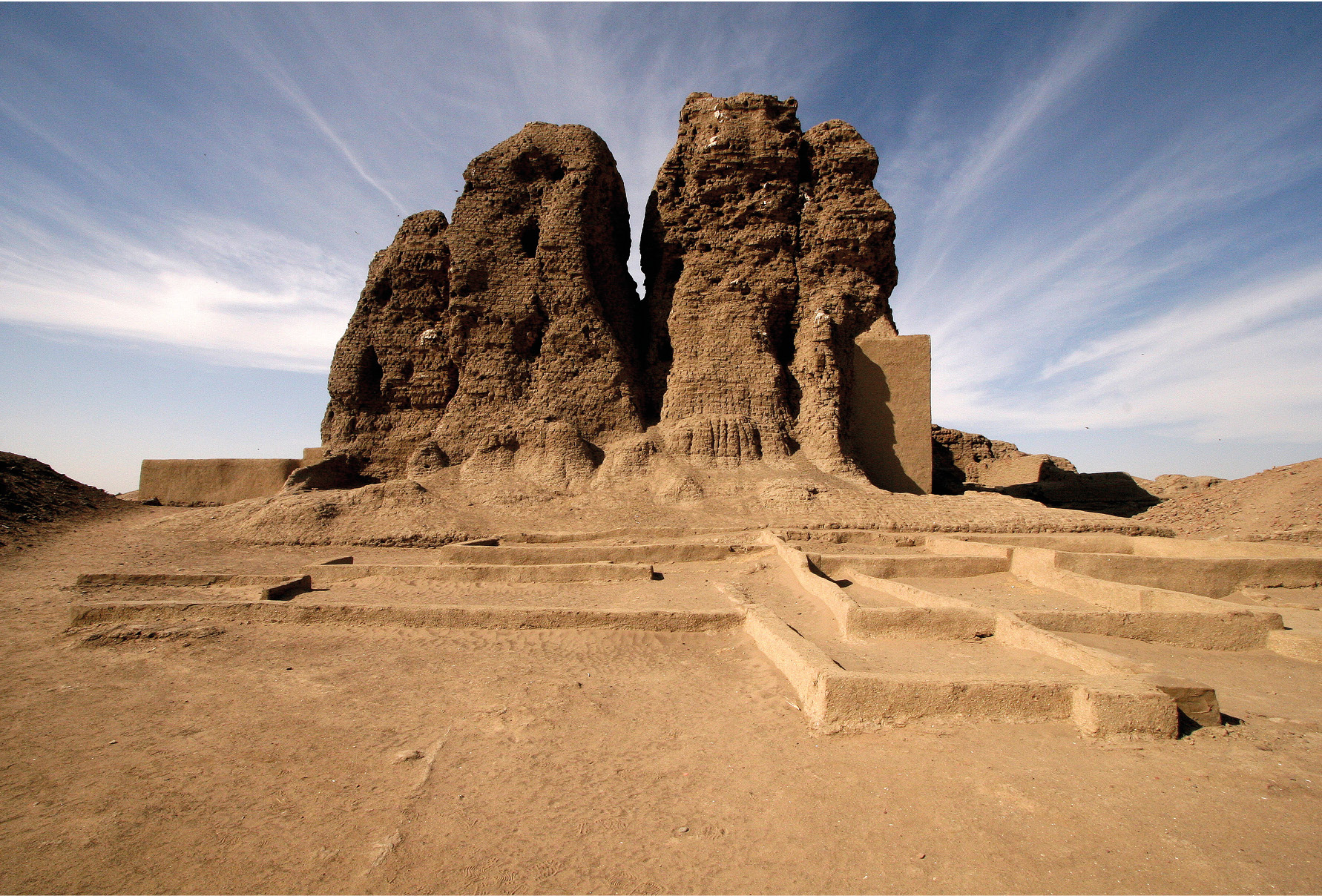
George Reisner’s archaeological exploration of Nubian sites in northern Sudan began in 1913, at the early 2nd millennium BC town-site of Kerma, capital of the Kushite Kingdom during the Egyptian Old and Middle Kingdoms. Here, he excavated a royal cemetery where Kushite rulers had been buried under huge burial mounds, and in the process discovered the skeletal remains of hundreds of individuals who must have been ritually killed to accompany their kings to his afterlife. Whether they went willingly to their deaths, or had no choice in the matter, is unclear, although the latter seems more likely.
After completing his investigation of Kerma in 1916, Reisner conducted excavations at the ancient temples (built by both the Kushites and the ancient Egyptians) and the distinctive pyramids of the Kushite kings and queens that lie below the striking mesa known as Gebel Barkal (‘pure mountain’).
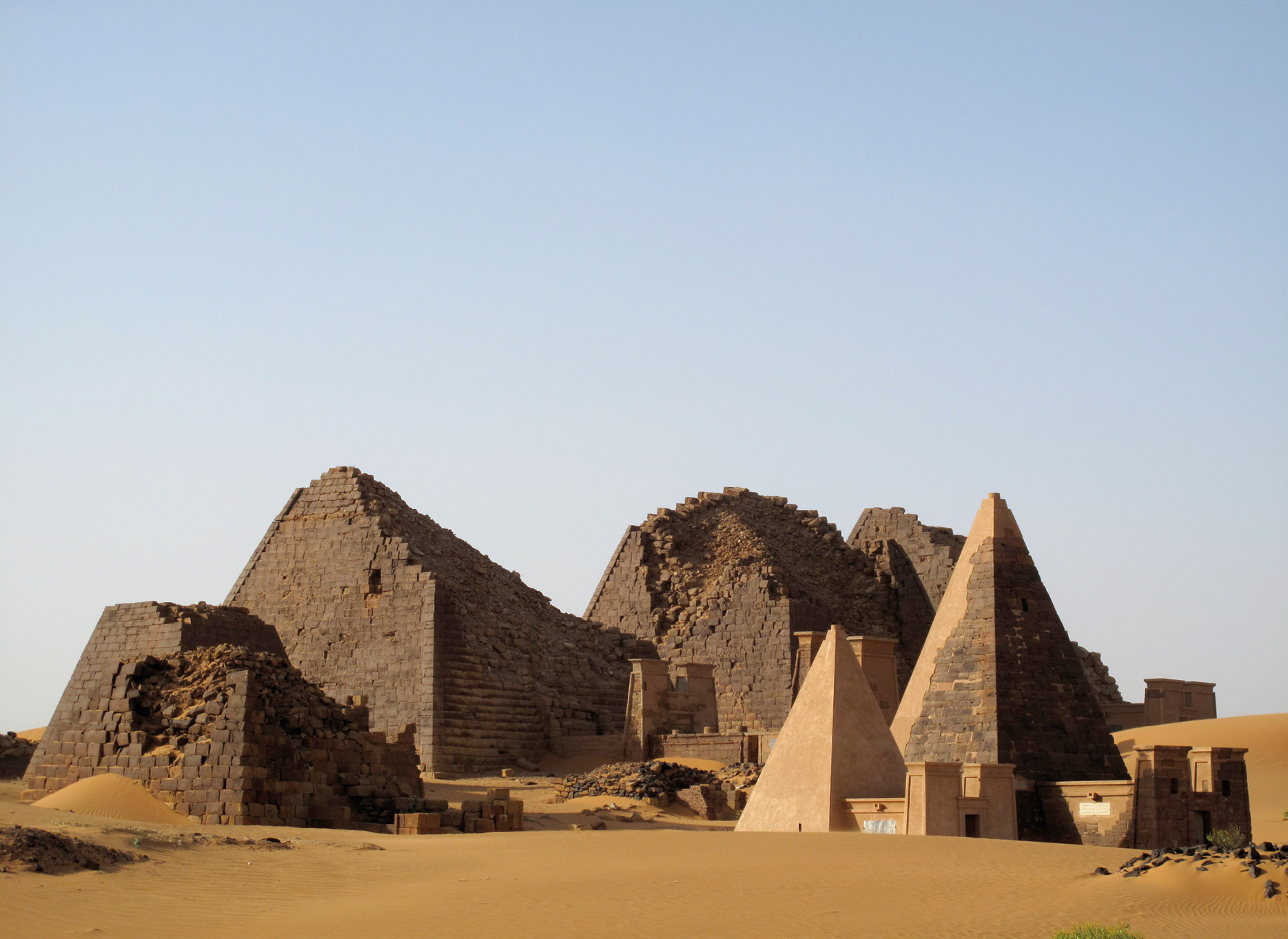
He then investigated further Kushite royal cemeteries: at Meroë (type site of the Meroitic Period, c.300 BC-AD 350, and capital of the Kingdom of Kush until its collapse in the 4th century AD); at Nuri (where the Twenty-fifth Dynasty pharaoh Taharqo was buried); and at El-Kurru (burial place of Tantamani, last pharaoh of the Kushite Dynasty). After this, Reisner investigated the impressive mud-brick fortresses of the Middle Kingdom that were constructed around the Semna Gorge to guard Egypt’s southern border with Nubia.
The final years
In 1939, Reisner returned briefly to America to receive an honorary degree from Harvard University, but sadly by this time he had lost his sight due to cataracts. After spending a month in Boston, he returned to Egypt, but suffered a series of strokes, and spent the last year of his life bedridden at Harvard Camp. Here, on 6 June 1942, with Egypt embroiled in the Second World War and Rommel’s forces not far away, he died peacefully in his sleep, and was subsequently buried in the American Cemetery in Cairo. Egyptian archaeology had lost one of its greatest figures. Reisner made an enormous contribution to our understanding of the ancient civilisations of both Egypt and Nubia. Furthermore, many of the sites that he discovered are still being investigated by archaeologists today. Although using equipment that is far more sophisticated, these teams are following a scientific approach to excavation that is in no small part influenced by this great American archaeologist.
Julian Heath is a writer and artist who taught Archaeological Illustration at the University of Liverpool. He is the author of Before the Pharaohs: Exploring the Archaeology of Stone Age Egypt and a regular contributor to AE, with articles on prehistoric rock art (AE 127) and Neolithic settlements of the Western Desert (AE 135).
Further Reading:
P Der Manuelian (2023) Walking Among Pharaohs: George Reisner and the Dawn of Modern Egyptology (Oxford: Oxford University Press).
Also see Harvard University’s excellent Digital Giza website (http://giza.fas.harvard.edu) for more fascinating information and images relating to George Reisner’s work at Giza.
You can find out more about the restoration of Hetepheres’ furniture in the next issue of AE magazine.