Subscribe now for full access and no adverts
Around 30 years ago, we were actively researching antler and bone objects, and waste from their production, from early medieval sites in England and Ireland when we had a serendipitous meeting at Ipswich railway station with Keith Wade, at that time the Suffolk County Archaeologist. This encounter spurred us to include material from that town in our studies – working alongside Shona Hatton, who was busily cataloguing it, and quickly coming to appreciate the importance of this assemblage. It was the start of a long voyage of discovery, with minimal funding but great enthusiasm to investigate it all.
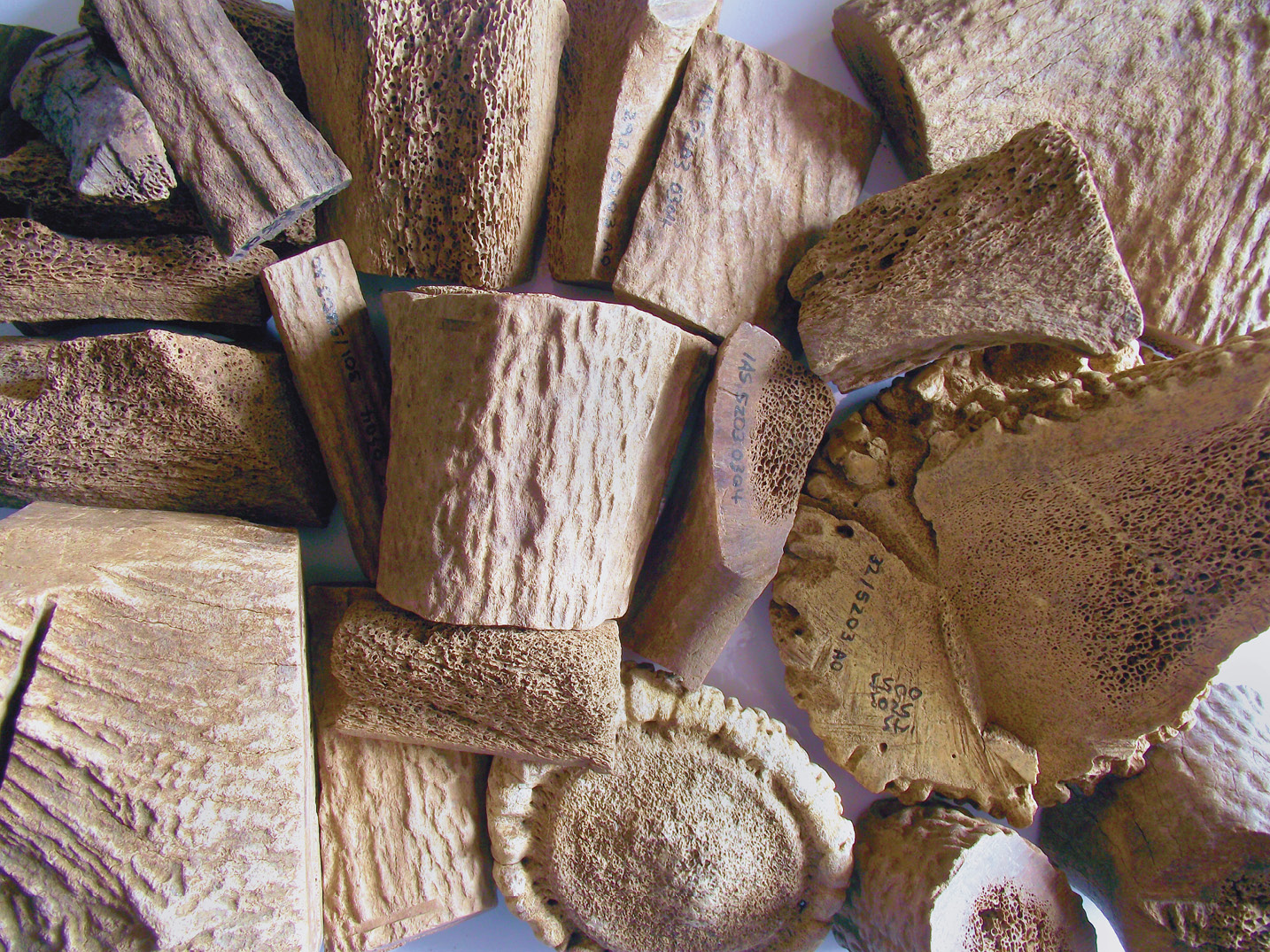
Our survey encompassed antler- and bone-working evidence emanating from 20 years of excavation in Ipswich, carried out by Suffolk County Council Archaeological Service between 1974 and 1994. In total, we examined 1,341 antler and bone artefacts, and 2,400 waste fragments, which have allowed us to analyse the distribution and evolution of this craft over time. The Ipswich archaeologists had provided us with a significant dating framework for each of the sites that the material came from, based on ceramics (including the well-known Ipswich ware) and coins, and we found that this framework corresponded with our typological dating of the objects that we were studying. This gave us confidence that we had a rare opportunity to explore the spatial and chronological development of an early medieval industry in a single settlement.
The smaller sites provided interesting objects, but comparatively little in the way of waste materials. Several of the larger sites, however, allowed us to compare and contrast activity occurring in the south of the settlement, near the waterfront at Greyfriars Road, with two sites at the Buttermarket in the centre of the town. Relating waste materials directly to specific properties was always going to be difficult, given the ‘lunar’ nature of the sites, with centuries of intercutting features obliterating parts of the earlier landscapes. In some areas, earlier features had been entirely removed – but we could trace the development of the craft in the two locations named above, over the course of five centuries. If we could not see the structures, we could at least see where the waste materials were being dumped.
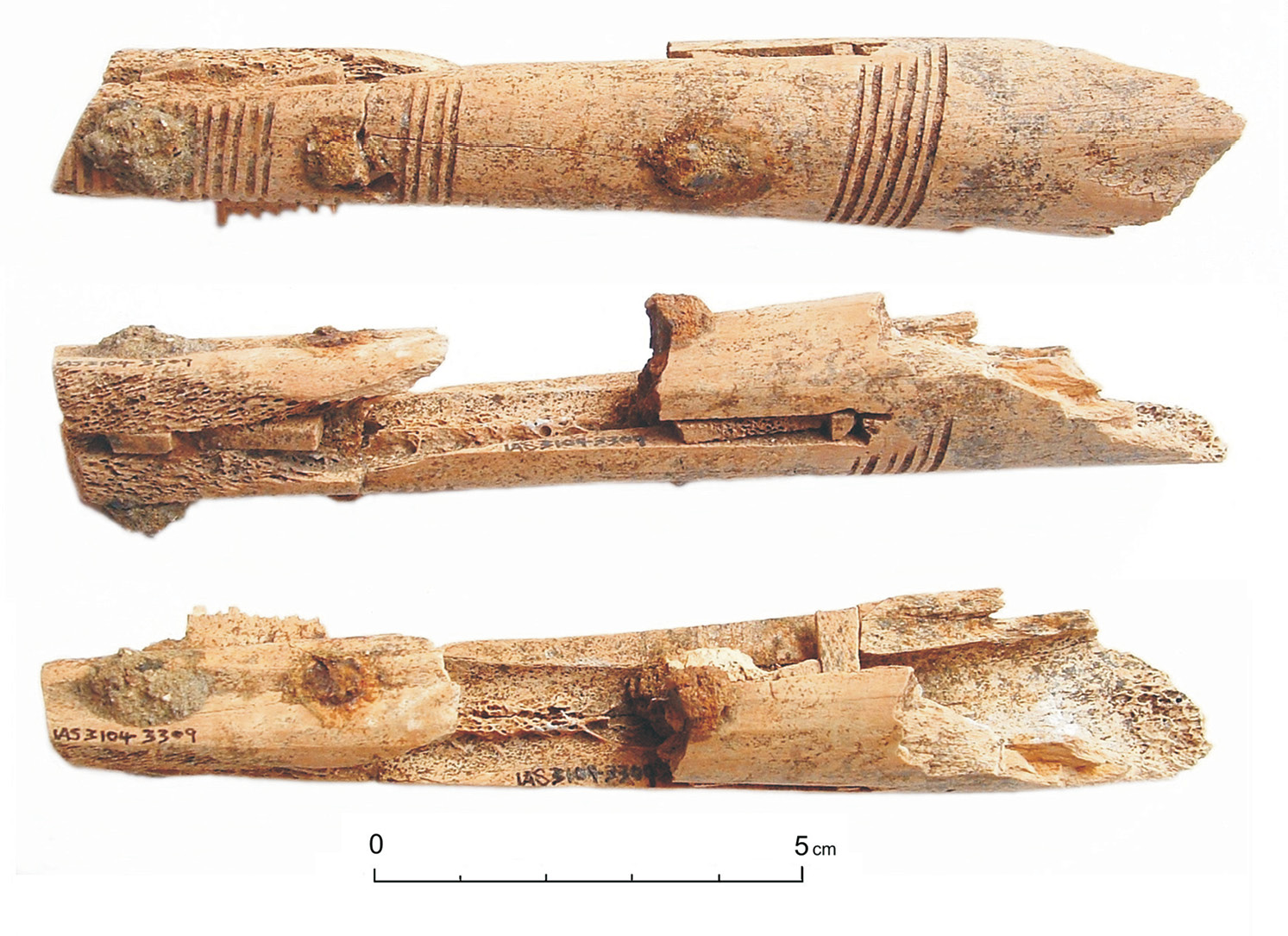
What, then, can we say about Ipswich’s antler- and bone-working industry? Following our analysis, we can now say that the origins of the craft were closely tied in with the emergence of the settlement itself, in the early part of the 7th century. Early antler-working was identified at Greyfriars Road in particular, focused from the outset on combs and textile-making equipment. Manufacturing at this time was on a small scale, representing basic household production intended to provide a local population with the tools and possessions that they required. In this respect, the pattern in Ipswich was simply echoing the situation that had prevailed in the local region from the 5th century onwards – but things were about to change.
As the settlement expanded rapidly in the later 7th century, so too did the craft itself, with at least one new workshop emerging in the Buttermarket area. The waste material from this location and from Greyfriars Road were noticeably different. The craft workers at Greyfriars Road had concentrated almost exclusively on red-deer antler as their raw material, and they appear to have focused on comb manufacture, although they were also producing weaving equipment made of bone. Combs were entirely of antler until around AD 720, when handled combs made from bone were manufactured at the Buttermarket. Thereafter, handled combs continued to be made at the Buttermarket, but they were never produced at Greyfriars Road. One thing that the workshops in both parts of the town had in common, however, was they each made only limited use of whalebone as a source material – probably opportunistically whenever it became available, and most likely sourced from stranded (rather than hunted) mammals.

The good, the bad, and the ugly
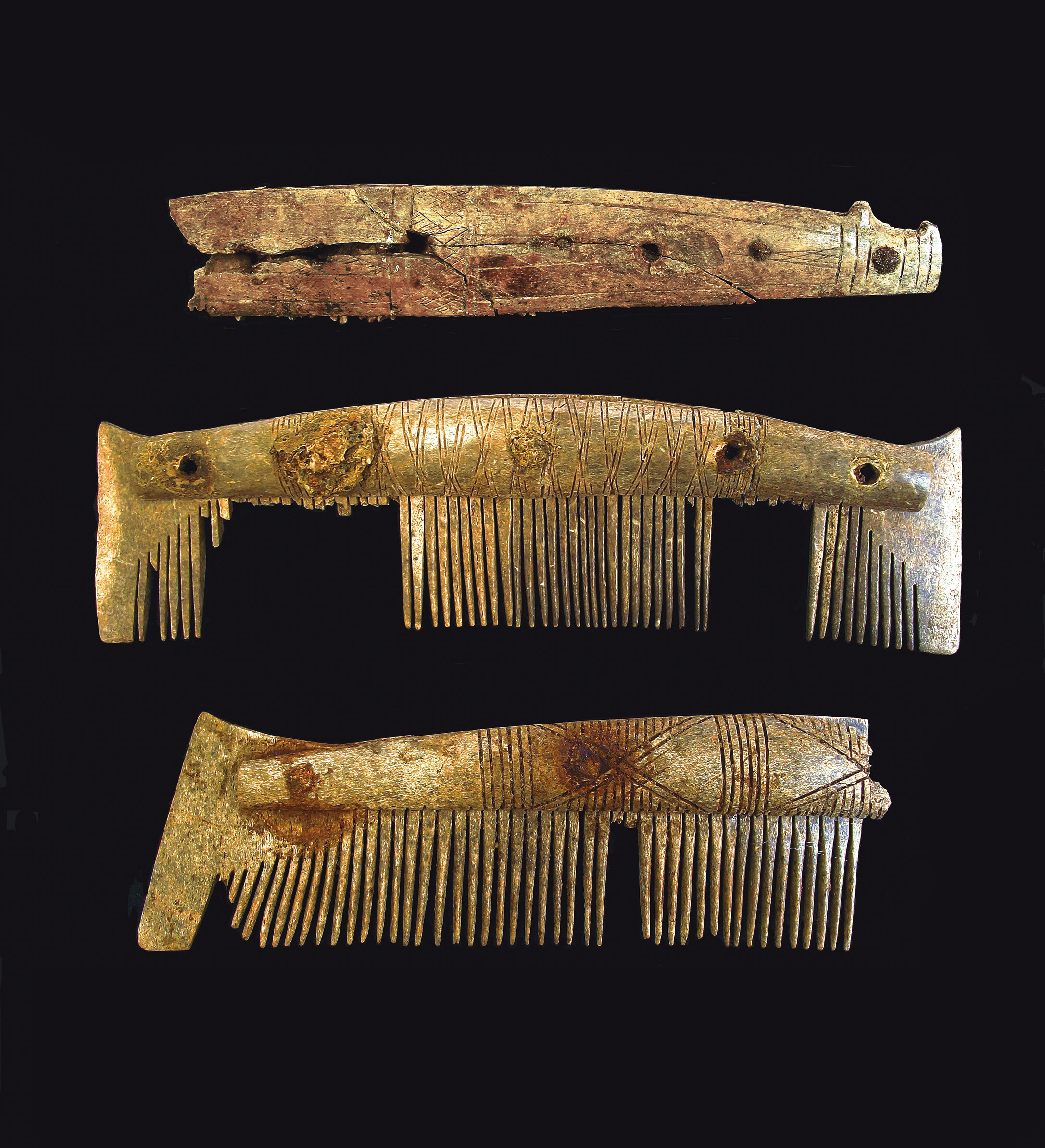
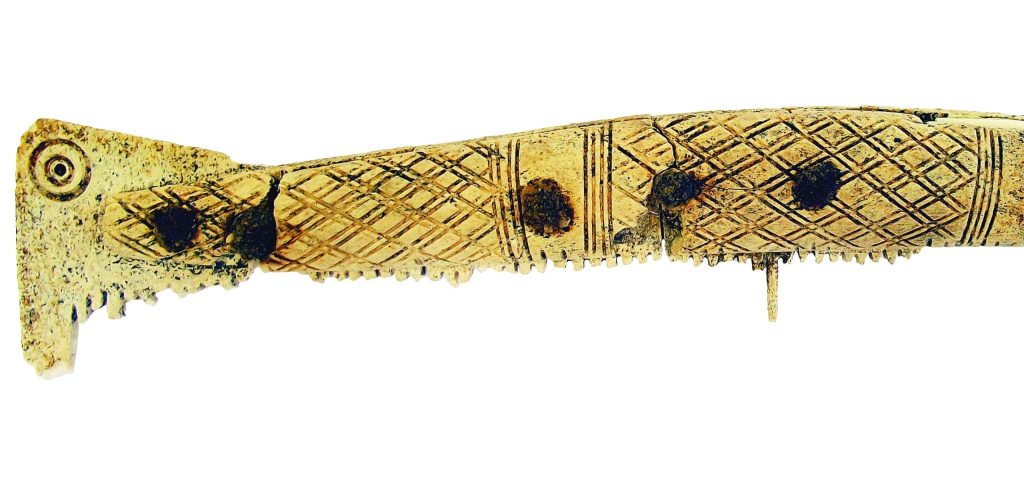
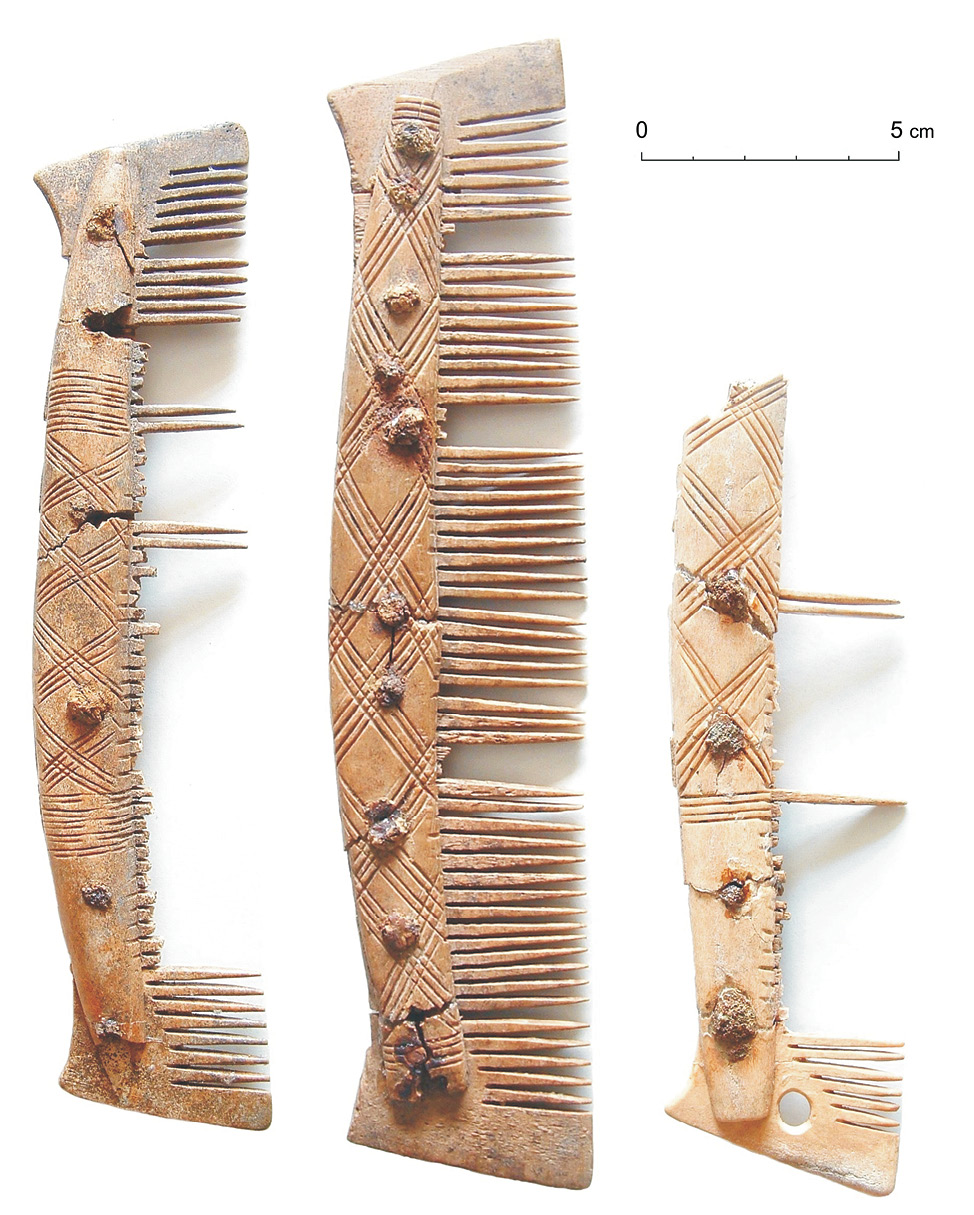
From such small-scale origins, the craft flourished and developed in Ipswich, which clearly hosted some truly skilled craftspeople with distinctive styles of their own. Somewhat surprisingly, some of the most elaborate combs of the 8th and 9th centuries to be found in England were produced in these workshops, and a specific type of single-sided composite comb could be localised to the settlement and to the Buttermarket area in particular, where it is likely that they were manufactured. Not all creations were so impressive, however. Some of the handled combs that were crafted from bone on the same site are best described as ‘rudimentary’. Ipswich, in common with contemporary sites, provides an intriguing contrast in comb design between the good, the bad, and the ugly. While sites like Hamwic (Saxon Southampton) show an increased level of standardisation in comb design that can be tied in to the adoption of new materials across the 8th century, at Ipswich the comb-makers appear to have revelled in their craft, producing a signature form of comb. This was characterised in part by the intricacy of its riveting patterns, and it was decorated with lattice patterning set at the ends of the connecting plates, and sometimes at the centre as well.
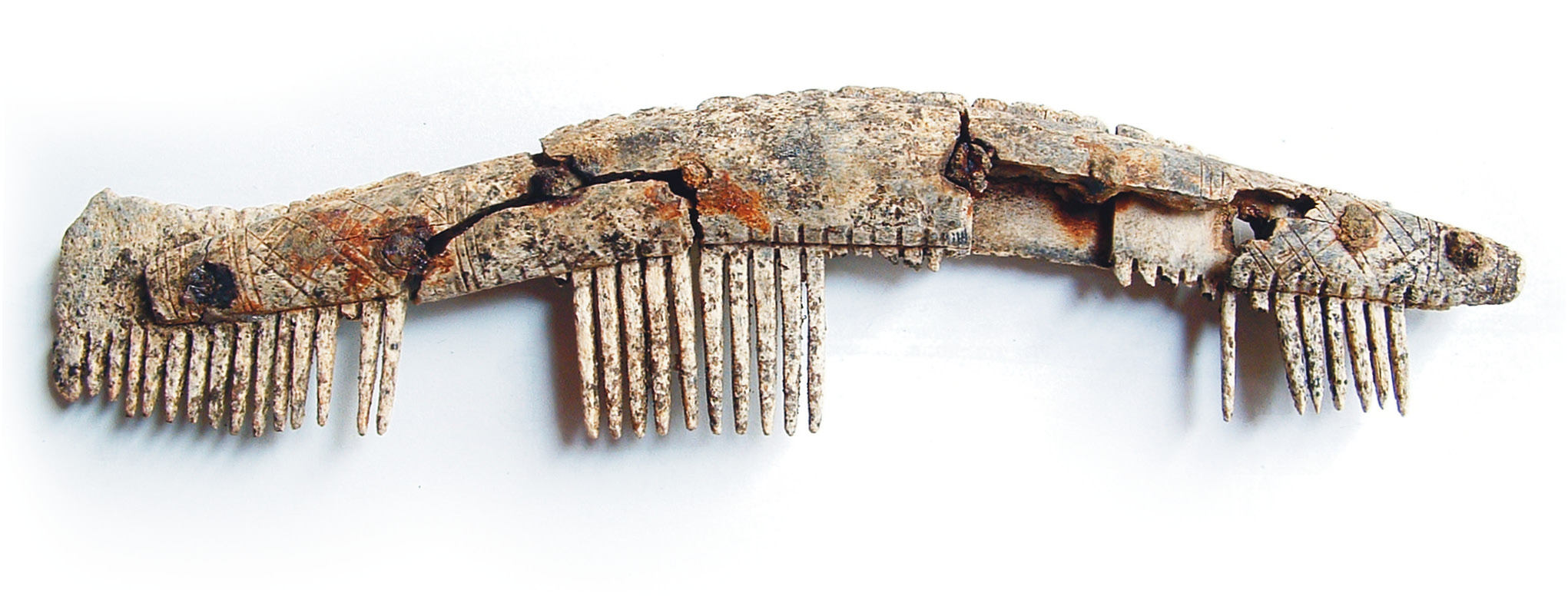
This type of single-sided composite comb (above) is specific to the Buttermarket area and was probably made there. Ipswich comb-makers were also capable of making much more elaborate implements, however, such as this example with intricate patterns of rivets and lattice decorations (below).
Careful examination of the combs, and other implements including pegs, pins, and weaving equipment, suggests that at this time Ipswich’s closest links with the Continent lay within Holland, and particularly with Dorestad and nearby sites that occupy the northern shores of the Rhine. It has long been suggested that Ipswich ware ceramics owe their origins to the activities of Frisians, possibly working in the town around the late 7th century. The assemblage of worked antler and bone objects indicates that it was the sites at the mouth of the Rhine that were the most important for Ipswich and East Anglia at this time, while the strong influences on the ceramics may have come from sites located further to the north, beyond the Rhine.
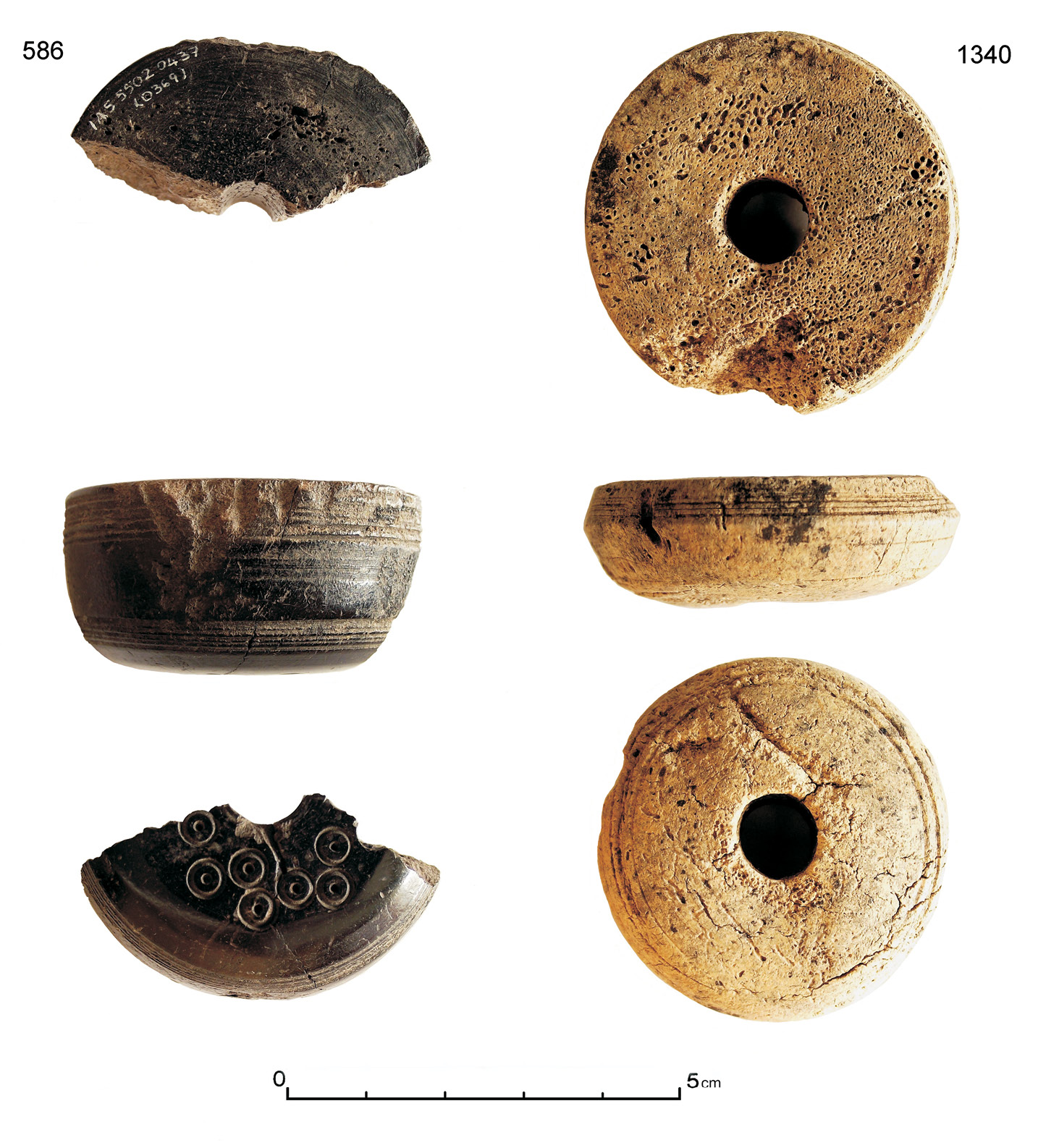
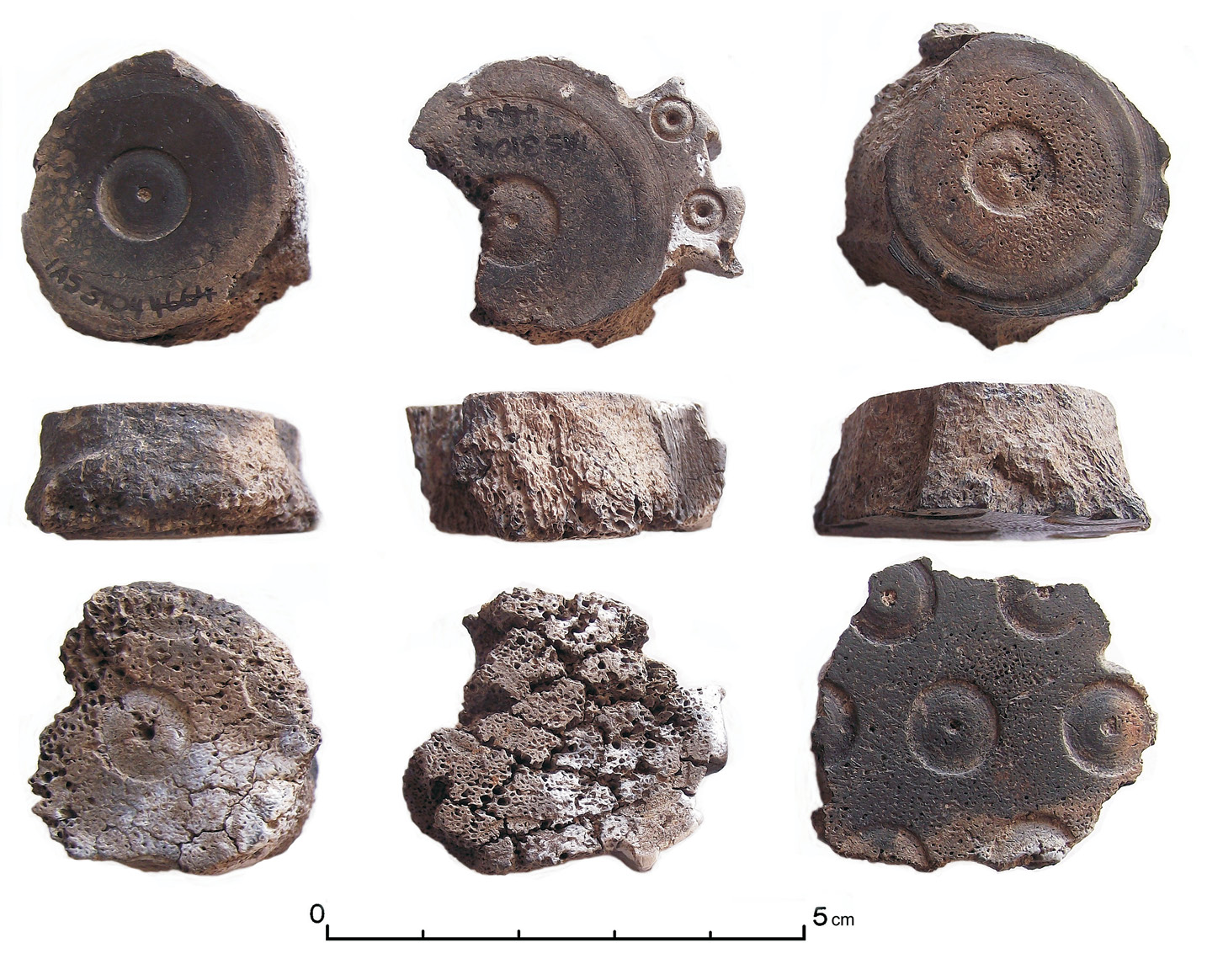
Around a third of the textile manufacturing equipment can be placed in this period, and it includes spindle whorls of antler and bone, pin-beaters, needles, and awls. While the majority of combs were made of antler, most of the weaving equipment was fashioned from bone. This does not mean that separate workshops were involved, or that textile-workers made all of their own equipment, however. The presence of unfinished examples of needles and pin-beaters indicates that these objects were made by the same craft workers who created the combs, and who were adept at working with both antler and bone, particularly at the Buttermarket. Indeed, one of the features of the Ipswich workshops, seen also at Hamwic and Lundenwic (London), is the extent to which they adapted to the availability of new raw materials, including bone and horn. Textile manufacture has been seen as an activity carried out mainly in the countryside, rather than within the wic settlements of Ipswich, Hamwic, Lundenwic, and Eoforwic (York), but the quantity of implements from Ipswich goes some way towards redressing the balance of production towards including more urban environments too.
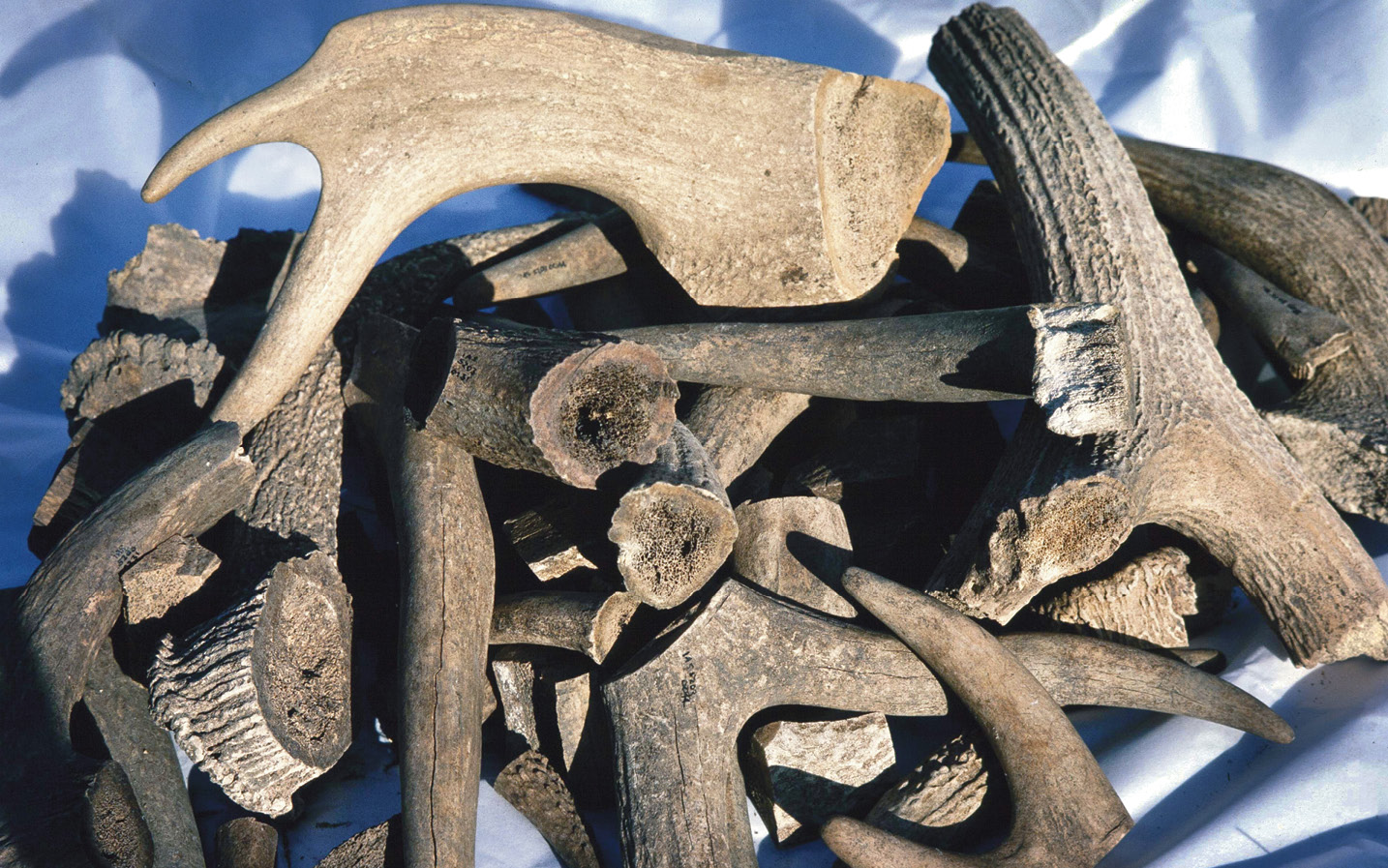
By the 9th century, storm clouds were gathering, and the wic experiment was coming to an end. Lundenwic and Eoforwic were in decline, and so too was Hamwic, although somewhat later in date. Around AD 825, a large ditch was dug across the main site at Greyfriars Road, possibly for defensive purposes; the land that lay beyond this new boundary appears to have been given up at this time. At some point around AD 850-870, a large consignment of red-deer antler was dumped into the ditch, and the Greyfriars Road workshop went out of operation for at least the next 50 years. The Great Viking Army had entered East Anglia, and we now know that Ipswich was one of their destinations.
Scandinavian evidence
Ipswich has not hitherto been known as a settlement visited and/or occupied by Vikings (surviving written sources make more mention of nearby Thetford), but a surprising and beautiful assemblage of Scandinavian combs dating from the late 9th to early 10th century has emerged from five sites within the settlement. These finds are both extraordinary and unexpected, and they directly reflect the presence of Scandinavians in the town. It is a little simplistic to say that a comb represents a person, but there is no doubt that they are artefacts that embody the essence of an individual, in the way that they were used and maintained. Signs of prolonged wear on them indicate that a comb was kept for the best part of a lifetime. The 13 combs were all made in Scandinavia, and indicate close links in particular with the settlement at Hedeby (in what today is Denmark). Nor is it just the combs that ably demonstrate a Norse connection. Scandinavian items from Ipswich extend to a clamp, a set of cordage toggles, and a so-called ‘duck-headed’ pin. Cordage toggles were typically made of wood, but these unusual examples were crafted from antler. Such items were placed at the looped ends of cordage and enabled ropes to be moved easily, and to be joined together. They were a staple component of Viking Age ships, and it is extraordinary to find a set in Ipswich.
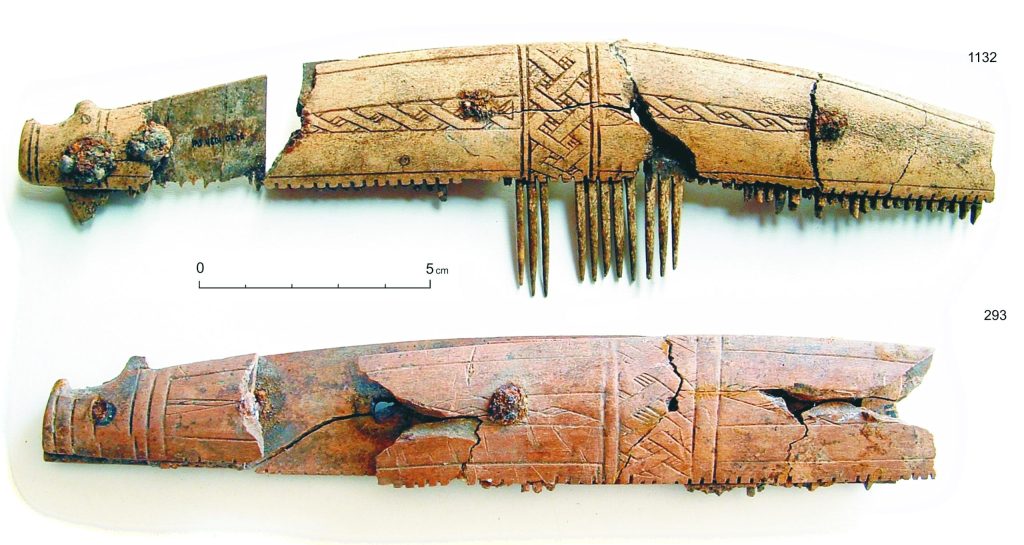
Above & below: Scandinavian-made combs and a set of cordage toggles offered surprising insights into a Viking presence.

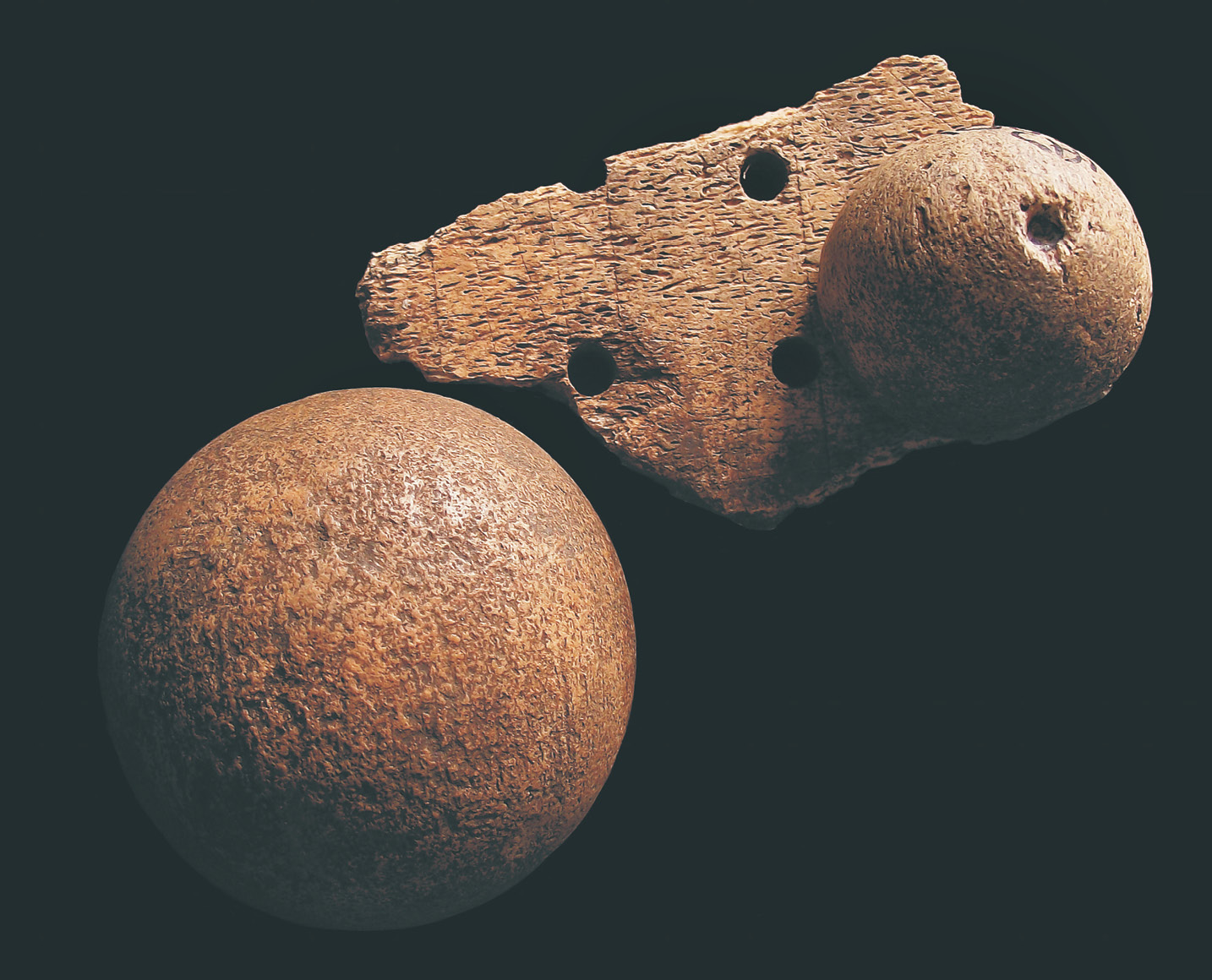
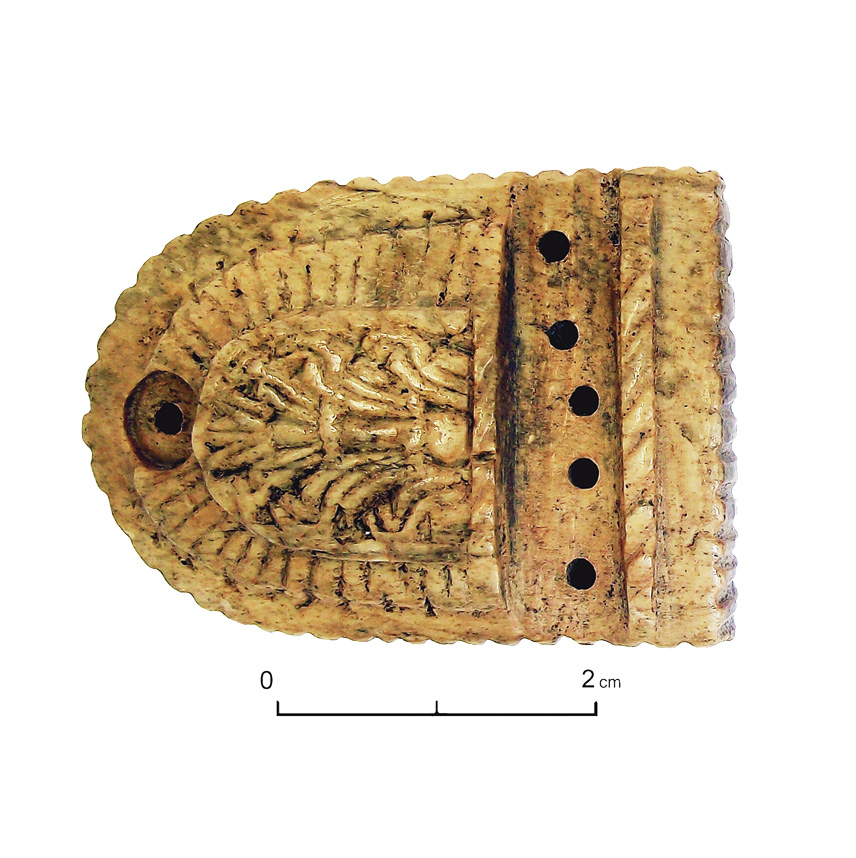
We can also see echoes of Viking influence in the distinctive changes to Ipswich’s gaming pieces, which began to follow early Scandinavian designs and were now made of whalebone. Meanwhile, part of a gaming board, made from whalebone, too, and found on Foundation Street, reflects another intriguing and understated component of this period. The board is pierced by a series of perforations intended to retain composite gaming pieces that include pegs extending below their bases. Boards of this type are well-known in Ireland but are rarely seen elsewhere in northern Europe at this time: they are essentially a Western Insular form. Alongside a strap-end embellished with a triquetra motif, the gaming board suggests some form of contact with Viking Age Ireland, and with Dublin in particular, where similar boards and the requisite gaming pieces have been found. There is an Irish component to some of the material culture from York as well, and Irish combs have been found at Hedeby, showing that they were closely following in the pathways of Scandinavians at this time. In the 8th and 9th centuries, whalebone was used for combs and caskets, but from this point onwards its principal use lay with gaming equipment, and although there is a whalebone float from Ipswich, its use in comb-making had, by this point in the settlement’s story, ceased.
All of these objects bear witness to the presence of Scandinavians within the settlement, and their influence on the Ipswich workshops, and on comb design in particular, was dramatic. While the manufacture of antler objects at Greyfriars Road ceased in the late 9th century, at the Buttermarket it continued and embraced the new inhabitants and their choices of objects and raw materials. The Scandinavian-influenced combs from the Buttermarket lack a little of the flair and ingenuity of their Ipswich predecessors, and were initially produced in forms that are echoed across the northern world in the first half of the 10th century. By c.AD 950, however, the craft workers of Ipswich were producing combs that once again had a distinctive, if subtle, local twist to them. The workshop was probably still based in the same area of the settlement (once established, workshops tended to stay where they were), and continued to produce objects for local and regional dissemination, adapting textile implements to the introduction of the vertical two-beam loom. This loom came to England from the Continent in the 8th century, and was taken up with some enthusiasm in East Anglia, supplanting the earlier warp-weighted loom. From the mid-10th century onwards, there appears to be an intensification of textile manufacture, with greater quantities of spindle whorls and pin-beaters present, possibly reflecting the emergence of local and regional markets.
Later activity
From the 10th century onwards, Ipswich acted more as a regional centre than an international marketplace, but links with the Continent were not entirely forgotten. The so-called ‘Winchester’ style of 10th-century art has been shown to be an erroneous title for a repertoire that was equally prevalent across East Anglia, and Ipswich provides a small contribution to this group in the form of two antler strap-ends, elaborately decorated with acanthus patterning. Equally impressive is part of a set of discoidal gaming pieces with characteristic serrated edges – a design that is known from just one other site in England but was more common in what is today France and Germany – which reflects a movement away from the Scandinavian game of tæfl and towards a new interest in tabula, the ancestor of backgammon. Boardgames were an elite and intellectual pastime, even before the advent of chess, and the Ipswich assemblage of boards and gaming pieces is small but remarkably varied, covering all of the games known in England at the time, and also showing how they adapted to influences from Scandinavia and the near Continent.
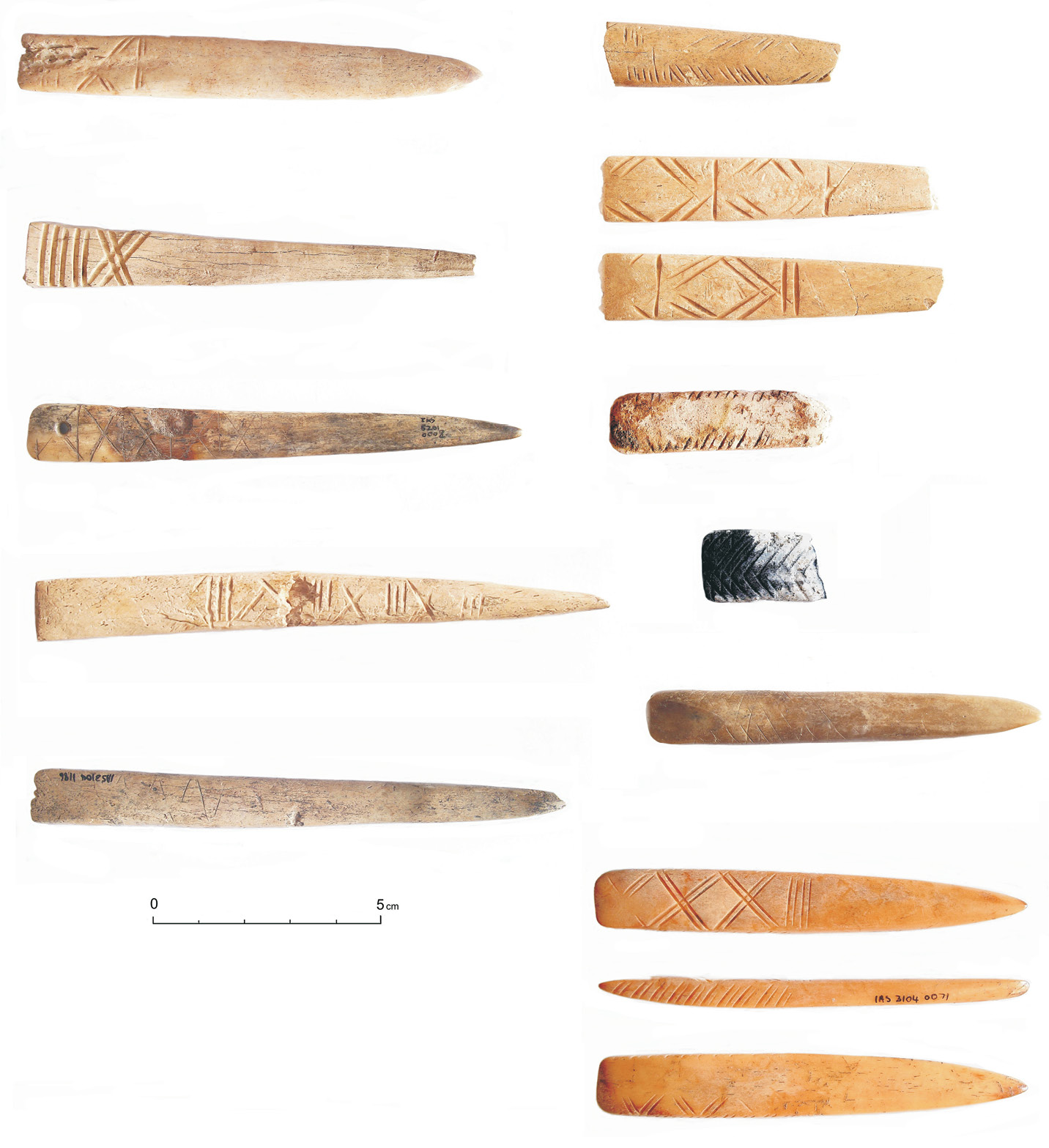
Other 10th-century innovations included the introduction of new types of objects including perforated pig metapodia, which were used as ‘buzz-bones’, wound on cords or leather strips secured through their perforations and released to make whirling noises. Skates also came into widespread use at this time, alongside a range of craft implements of bone and antler, including punches; large, pointed bone implements; brooch moulds; socketed points; and wedges. Some of these would have been used by the antler- and bone-workers themselves, while others were intended for the use of metal- and leatherworkers.
The antler and bone industry continued until the Norman Conquest, but may already have been in decline by the dawn of the 11th century. Elaborate single-sided composite combs of antler were still made at this time, but the simpler, if cruder, handled combs and horn and bone composite combs had become increasingly common. With the advent of the Normans, access to the forests and their supply of red-deer antlers became increasingly constrained, and by the early 13th century (if not before) antler was no longer part of the comb-making craft. The range of objects manufactured in bone also decreased markedly. Meanwhile, the vertical two-beam loom was replaced by the horizontal loom from the 11th century onwards, meaning there was no longer a requirement for pin-beaters. Bone spindle whorls and needles were still produced by the Ipswich workshops, but few other objects were manufactured beyond gaming pieces, which could still be made in antler on occasion. The craft had run its course as the medieval world emerged.
Our research has proved illuminating, but could a volume like this be produced from modern investigations? We were fortunate that all of the excavations we examined were undertaken by a single group: with commercial archaeologists now competing for work in the town it is much harder to synthesise their various findings into a single monograph. The story of Ipswich may become a more fragmented narrative in the future – but we hope we have shown that the town’s archives are a rich source of material with a huge potential. There is still much more to learn about this important Suffolk settlement.
Further reading:
Ian Riddler, Nicola Trzaska-Nartowski, and Shona Hatton (2023) An Early Medieval Craft: antler and bone working from Ipswich excavations, 1974-1994 (East Anglian Archaeology monograph 181, ISBN 978-0956874771, £45).
The authors note that ‘the monograph is dedicated to our colleagues in the Ukraine, whose lives were changed forever at the time that our work was coming to fruition, and who have helped us in our understanding of material culture. It is a small tribute to them all at a time of great hardship.’
All photos: Ian Riddler / Suffolk County Council, unless otherwise stated