Secrets of the Dorset marsh: Excavating Bronze Age remains and one of Britain’s oldest wooden tools

Over the last two years, excavations on marshland near Poole Harbour have revealed evidence of unusual seasonal activity dating to the Bronze Age – including one of the oldest and most complete wooden tools ever found in Britain. Carly Hilts spoke to Greg Chuter and Ed Treasure to find out more.
Start
This article is from Current Archaeology issue 417


Subscribe now for full access and no adverts

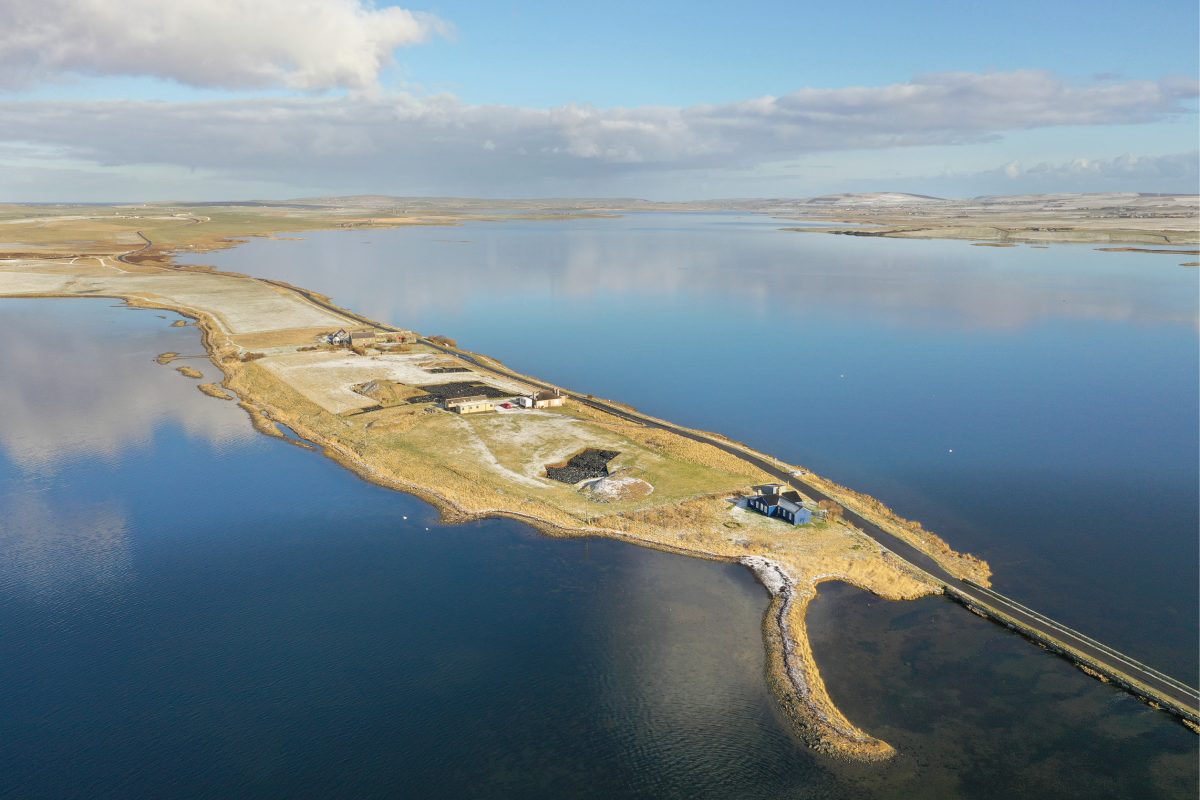
After the end of the last Ice Age, the landscape around what today is Poole Harbour in Dorset underwent a series of gradual but dramatic transformations. Birch woodland was slowly replaced first by pine and then broadleaf trees, within which areas of peat- and reed- marsh began to grow. The low sandy islands and ridges of glacial gravels in this watery environment offered oases of dry land that soon attracted the attention of prehistoric communities living nearby. During the Bronze Age, the wetland was visited and revisited over many generations, with groups travelling from nearby settlements to harvest reeds and rushes, dig peat, and turn out cattle to pasture during dryer months. These communities have long since vanished from view, but archaeological excavations have brought traces of their activities – including an extremely rare wooden find – to light once more.

This work has taken place because the environment around Poole Harbour continues to be affected by the changing climate. Rising sea levels are threatening important local bird habitats, and to mitigate these losses, a partnership between Kier, the Environment Agency, the RSPB, and Natural England is working to adapt 150ha (370 acres) at the Moors at Arne into a diverse wetlands habitat. As part of this initiative, Wessex Archaeology have carried out extensive investigations across the site in order to identify and uncover any underlying remains.

A project to transform peat marsh into new wildlife habitat has uncovered a wealth of Bronze Age remains near Poole.

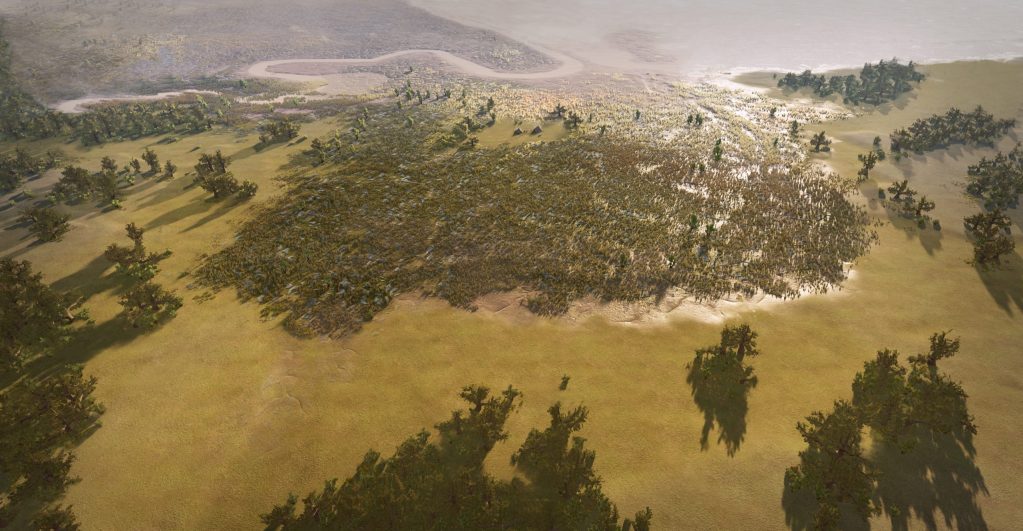
Their explorations began with geophysical surveys to identify areas of archaeological potential, as well as borehole surveys that have produced a wealth of environmental evidence, allowing the team to reconstruct how the local landscape evolved over time, both physically and in terms of vegetation. As well as the transformations described at the start of this article, this analysis has revealed that, by c.600 BC, changes in climate had created even larger areas of reed marsh, and by the start of the Roman period the remaining woodlands had either been cleared or completely died back, producing a landscape similar to that which we see today.

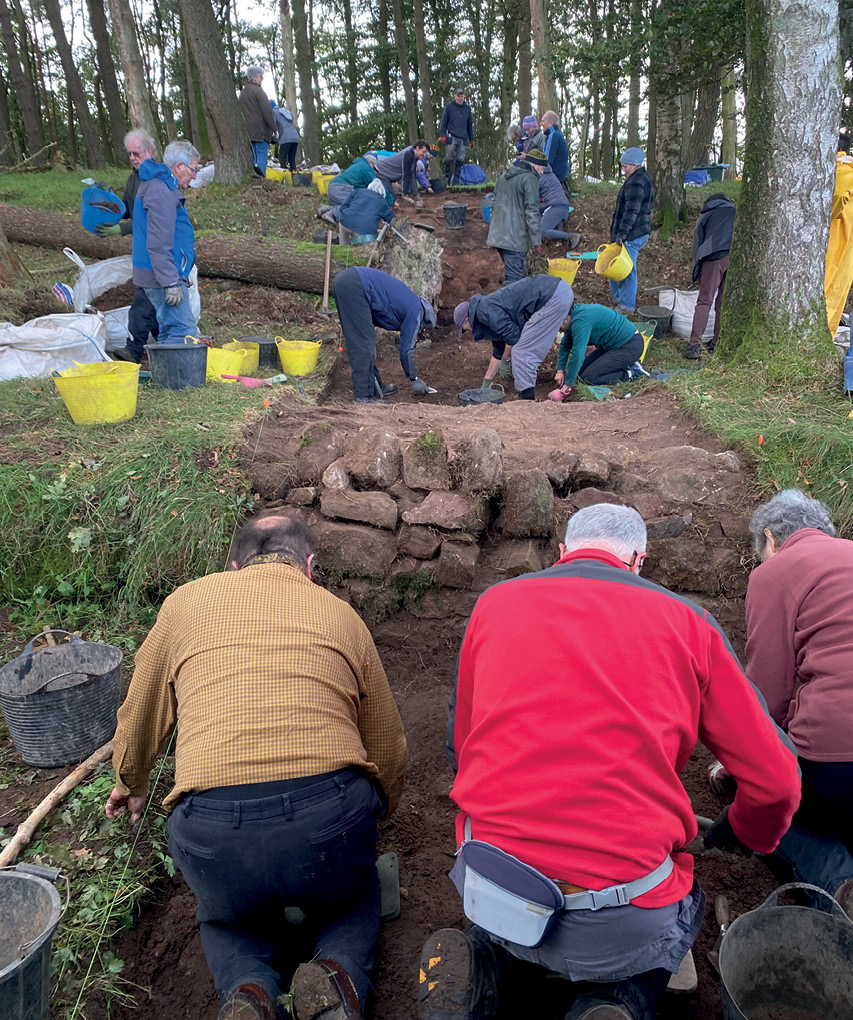
Over the last two summers, Wessex Archaeology have carried out open-area excavations on the site, targeting areas of archaeological interest in advance of the creation of the Moors at Arne scheme. These have identified three main areas of human activity: one is very recent, represented by a series of drainage ditches dug around 200 years ago; one is a sandy island preserving interesting evidence of Roman industrial activity, which we will describe in more detail in a future feature; and the third, dating to the Bronze Age, will form the focus of this article.
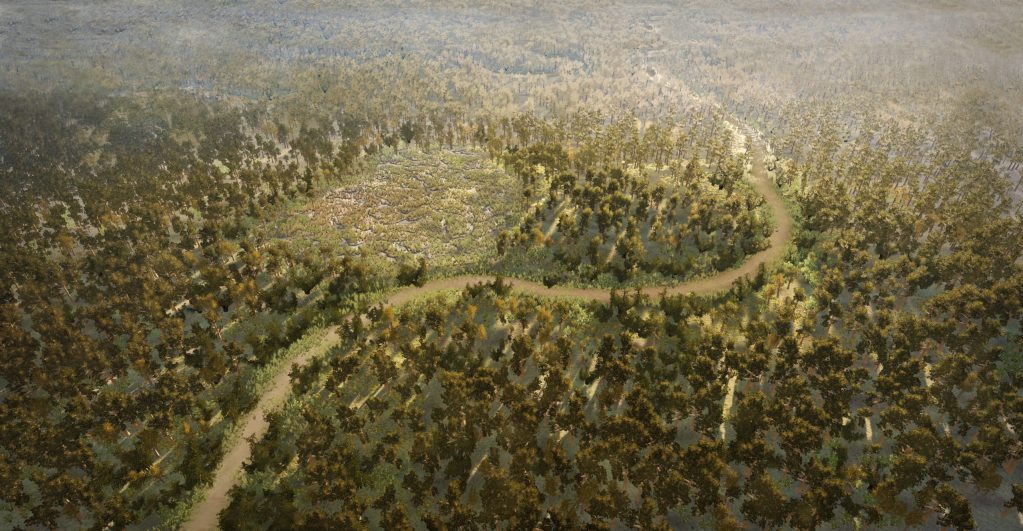
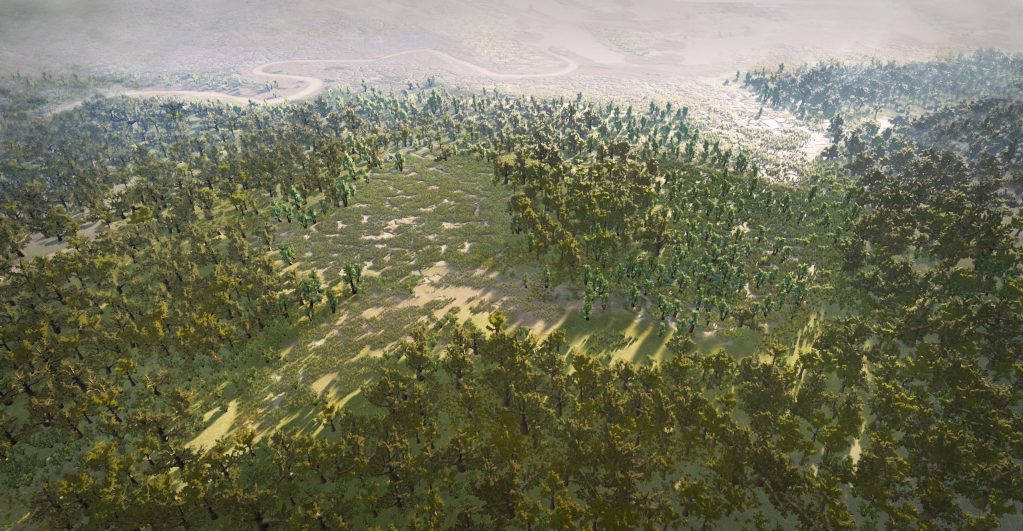
Borehole surveys, radiocarbon dating, and analysis of plant fossils has allowed Wessex Archaeology to trace how the landscape at the Moors at Arne evolved over time – reflected in these reconstructions depicting the excavated area in the Mesolithic (top), Neolithic (middle), and Iron Age (bottom).

Rings on the ridge

In the western and central portion of the site was a low ridge rising about 0.5m-1m above the surrounding marshland. Its sandy make-up was a boon for the excavation team – any archaeology in this area was easy to spot, standing out starkly, black on white, but the geology also drained well, making it not-too challenging to dig, even in wet conditions. This latter quality appears to have appealed to Bronze Age visitors, too, who left behind more than 80 ring gullies of various sizes and shapes on this relatively high, dry land.

These ditches were found clustered on two areas of the ridge; they are mostly circular in shape, though some are rectilinear and one is oval in form. Bronze Age ring ditches are often associated with roundhouses, but only one of the Moors at Arne examples contained post-holes and a porch to indicate that it might have been a dwelling. Most of the other circular gullies had no entrance at all, but instead formed complete rings roughly 3-4m in diameter. What were they for? It is possible that they were nothing to do with structures, but had been created to protect gathered resources or to help keep them dry. You might imagine harvested reeds collected in a heap like a haystack, with a drip gully dug around it to keep encroaching waters away from the valued materials.

Such efforts would have been invaluable to local communities: during the Bronze Age, the site would have flooded each winter and dried out in the summer. It was not a place suited to permanent settlement, but would have represented a rich repository of resources that could be visited seasonally. It is this kind of periodic activity that is thought to be reflected in the excavated remains: you can see people returning to the site again and again, re-cutting the ditches on the same spot, perhaps to replace constructions that had been destroyed during winter storms. As for where these groups were coming from, there is plentiful evidence of more fixed occupation in the immediate area beyond the marshes, including signs of settlement on the other side of the river, and Bronze Age burial mounds on the surrounding heathland.

The remains of a rare Bronze Age wooden spade, here pictured in situ, are carefully exposed by the excavation team.

Discarded in a ditch?

One of the most tangible traces of these Bronze Age visitors, and their relationship with the challengingly waterlogged landscape, emerged at the beginning of this year’s digging season – during excavation of the very last ring ditch to be investigated during that phase of work. It was a wooden spade, carved from a single piece of oak.

Wessex Archaeology had come close to excavating this part of the site last year, but had to pause their efforts when it was discovered that an otter had set up home on the ridge, meaning that an exclusion zone had to be established while the animal was in residence. This year, however, the animal had moved on, and the team were able to explore the three remaining ring gullies within this area. The last one of these to be dug produced the spade, which was found lying at the bottom of the circular ditch.

A single sample of wood has been sent for radiocarbon dating, which placed the artefact in the Middle Bronze Age, c.1500-1400 BC. Further scientific dating analysis will be carried out on the object, but, as the spade was found in association with Middle Bronze Age pottery, it is expected to confirm this result – making the spade one of the earliest and most intact wooden tools ever found in Britain. Its blade is slightly lopsided in design, meaning that you only need to use one foot to push it down – a shape reminiscent of later peat-cutting spades. It is possible, however, that this implement was being used to dig the gully in which it was found, before it broke and was discarded.

Carefully lifting the fragile spade from the ditch in which it was found on to a board to be transported to Wessex Archaeology’s laboratory for conservation.

‘I spoke to the archaeologists who had excavated this part of the site, and they said that, while following the ditch round, it initially had a square profile as if dug by a spade,’ said Greg Chuter, a Senior Archaeologist at the Environment Agency, who headed the overall project. ‘After they found the spade, though, the next section of ditch had a different, more U-shaped profile. This could be a coincidence, and more information will hopefully come out during post-excavation analysis, but you can imagine someone digging the ditch, and then their spade broke and they had to finish it off with a different tool.’

The spade would have taken many hours of careful carving to create, and its loss would have been a blow to its Bronze Age owner. While we can never know for certain how the tool came to rest at the bottom of a ditch (it may alternatively have been a deliberate deposit), one possible scenario offers a very relatable glimpse into a few seconds of a long-vanished individual’s life: the heavy work of carving a ditch out of the sandy ridge; a much-needed tool giving way; and the frustrated labourer hurling the now-useless implement into the ground – perhaps accompanied by some choice Bronze Age swearwords.

Trace of spades

Now that the spade has been carefully removed from the ground, as well as the additional dating analysis mentioned above, the implement will be carefully conserved in order to preserve it for further research. It is hoped that finds specialists will be able to contextualise the artefact in the light of similar examples – not that they have many of these to go on. As handy tools with a range of practical uses, Bronze Age spades must have proliferated across settlements of this period. Indeed, Ed Treasure, an Environmental Archaeologist with Wessex Archaeology, who has been working on the Moors at Arne example, attests that spade marks have been found at Bronze Age sites in Cornwall to testify to their use even where the artefacts themselves do not survive. However, only a handful of Bronze Age spades have been discovered to date – and most of these are distinctly different in design to the one discovered by Wessex Archaeology, with longer blades shaped more like leaves or round-tipped oars. This variation might be because they were intended for different purposes, however, as most of the other examples seem to have been associated with mining.

Just two other Bronze Age spades are known in England. The best-known is the ‘Brynlow Shovel’, which is housed in the Manchester Museum. It was found at Alderley Edge, a mineral-rich sandstone outcrop in Cheshire, 15 miles south of Manchester, which has been the focus of mining activity for millennia (CA 238 and CA 315). Historic echoes of this industry can be traced back to the medieval and Roman periods, but the earliest evidence of systematic extraction on the site dates to the Bronze Age. The Brynlow Shovel was discovered by Victorian miners who were digging for copper in 1875, but it later came into the possession of Alan Garner, who would go on to find fame as the author of the Weirdstone of Brisingamen but was then still a schoolboy. The shovel was initially interpreted as Victorian or possibly Tudor, but years later Alan was able to have it radiocarbon dated, revealing that it belonged to the Middle Bronze Age, c.1750 BC (you can read this story in Alan’s own words in CA 137).

Tiny samples of wood have been taken from the spade for radiocarbon dating, and for examination under a microscope to inform the next steps in its conservation.

The other English example resides at the Royal Cornwall Museum in Truro. Like the implement from Alderley Edge, it was a 19th-century find whose true significance was only revealed by radiocarbon dating many years later. Carved from a single piece of wood, it was discovered in the Carnon Valley in mid-Cornwall in 1815. Over two centuries later, radiocarbon dating established its age as c.1200 BC (see CA 414 ‘Museum News’ and http://www.royalcornwallmuseum.org.uk/new-carbon-dating-brings-evidence-of- bronze-age-mining-in-cornwall). It is thought to have been used in Bronze Age tin-mining.

Cleaning the spade as part of the conservation process.

There are also a small number of Bronze Age spades known from Ireland, often again associated with extractive activities: for example, an alder artefact (fragmentary, but with a similarly shaped blade to the Cheshire and Cornish finds described above) was found in the Bronze Age copper mines at Mount Gabriel, Co. Cork, and has been dated to 1700-1500 BC. While research into the Dorset discovery continues, Greg hopes that it can also be scanned to create 3D-printed reconstructions to use in outreach activities associated with the Moors at Arne Coastal Change Project. It seems fitting that the same waterlogged conditions that would have proved so challenging for the area’s Bronze Age communities, and which the spade would have been used to mitigate, are the reason that this rare object has survived more than 3,500 years to be studied today.

With excavations set to return to the site next year, it is hoped that the marshlands will prove to have equally illuminating secrets still to reveal. ‘Archaeologists don’t get to do much work in marshes,’ Greg commented. ‘You don’t build houses there, so there aren’t the same opportunities for development-led excavations. At the moment, this site is really rare, but it is possible that there are lots of similar ones around the coastline – we haven’t found them because we’re not digging there.’

Above & below: Only two other Bronze Age spades are known in Britain: one from Cornwall, and the other (above) from Alderley Edge in Cheshire. These other examples are very different in shape to the Dorset find, however, which has been captured in a 3D model (below). The 3D model can be seen at https://sketchfab.com/3d-models/wooden-spade-from-the-moors-at-arne-bcb15122f0834f49a78a735d0db487ea.

Source: Greg Chuter is a Senior Archaeologist with the Environment Agency. Ed Treasure is an Environmental Archaeologist with Wessex Archaeology.

Further information: To read more about the Moors at Arne Coastal Change Project, see http://www.dorsetcoast.com/project/moors-at-arne-coastal-change-project. Kier is the contractor delivering the project, and initial desktop research was undertaken by the project consultants Atkins.

All images: Wessex Archaeology, unless otherwise stated

By Country

Popular
UKItalyGreeceEgyptTurkeyFrance

Africa
BotswanaEgyptEthiopiaGhanaKenyaLibyaMadagascarMaliMoroccoNamibiaSomaliaSouth AfricaSudanTanzaniaTunisiaZimbabwe

Asia
IranIraqIsraelJapanJavaJordanKazakhstanKodiak IslandKoreaKyrgyzstan
LaosLebanonMalaysiaMongoliaOmanPakistanQatarRussiaPapua New GuineaSaudi ArabiaSingaporeSouth KoreaSumatraSyriaThailandTurkmenistanUAEUzbekistanVanuatuVietnamYemen

Australasia
AustraliaFijiMicronesiaPolynesiaTasmania

Europe
AlbaniaAndorraAustriaBulgariaCroatiaCyprusCzech RepublicDenmarkEnglandEstoniaFinlandFranceGermanyGibraltarGreeceHollandHungaryIcelandIrelandItalyMaltaNorwayPolandPortugalRomaniaScotlandSerbiaSlovakiaSloveniaSpainSwedenSwitzerlandTurkeySicilyUK

South America
ArgentinaBelizeBrazilChileColombiaEaster IslandMexicoPeru

North America
CanadaCaribbeanCarriacouDominican RepublicGreenlandGuatemalaHondurasUSA

Discover more from The Past

Subscribe now to keep reading and get access to the full archive.

Continue reading