

Subscribe now for full access and no adverts
The work of David Roberts is ubiquitous across tourist-visited Egypt, where prints of the Scottish artist’s sketches adorn the walls and breakfast tables of international hotels. Similarly, the shelves in temple gift shops up and down the River Nile buckle under the weight of his book Egypt and Nubia (1842-1849) and its associated ephemera. Yet his paintbrush and pen(cil) – which arguably invite the viewer and reader to conclude that Muslim maladministration was the reason the country regressed from a praiseworthy past into a purported pitiable present – are open to accusations of Islamophobia specifically and abuse of artistic licence more generally.
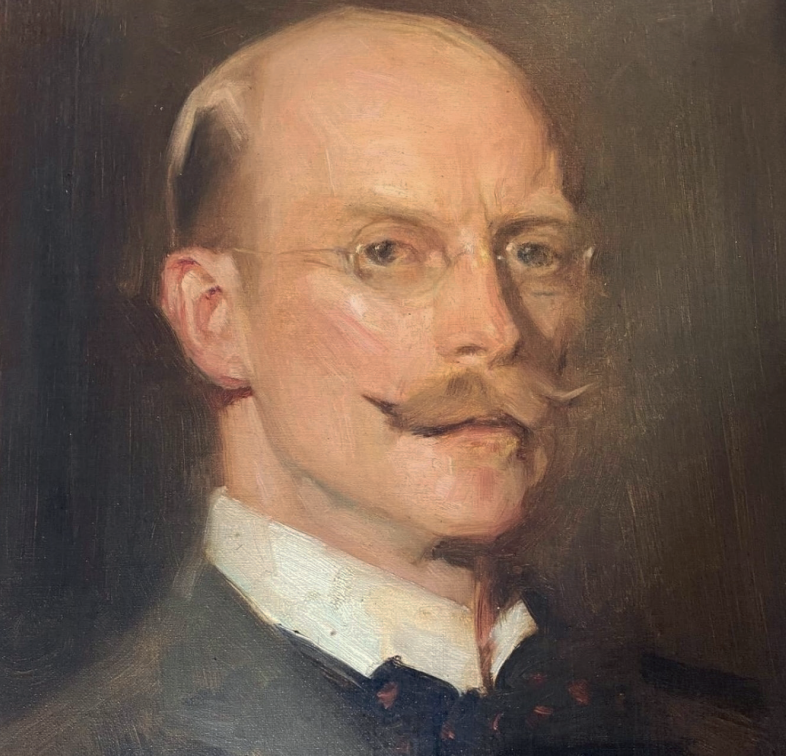
The same cannot be said of Robert Talbot Kelly (1861-1934), however, possibly the best Orientalist artist AE readers have never heard of, despite his watercolours once hanging (alongside those of his disciple Augustus Osborne Lamplough) in Cairo’s legendary Shepheard’s Hotel, and copies of his book selling in the city’s Khan el-Khalili bazaar.
Early Life
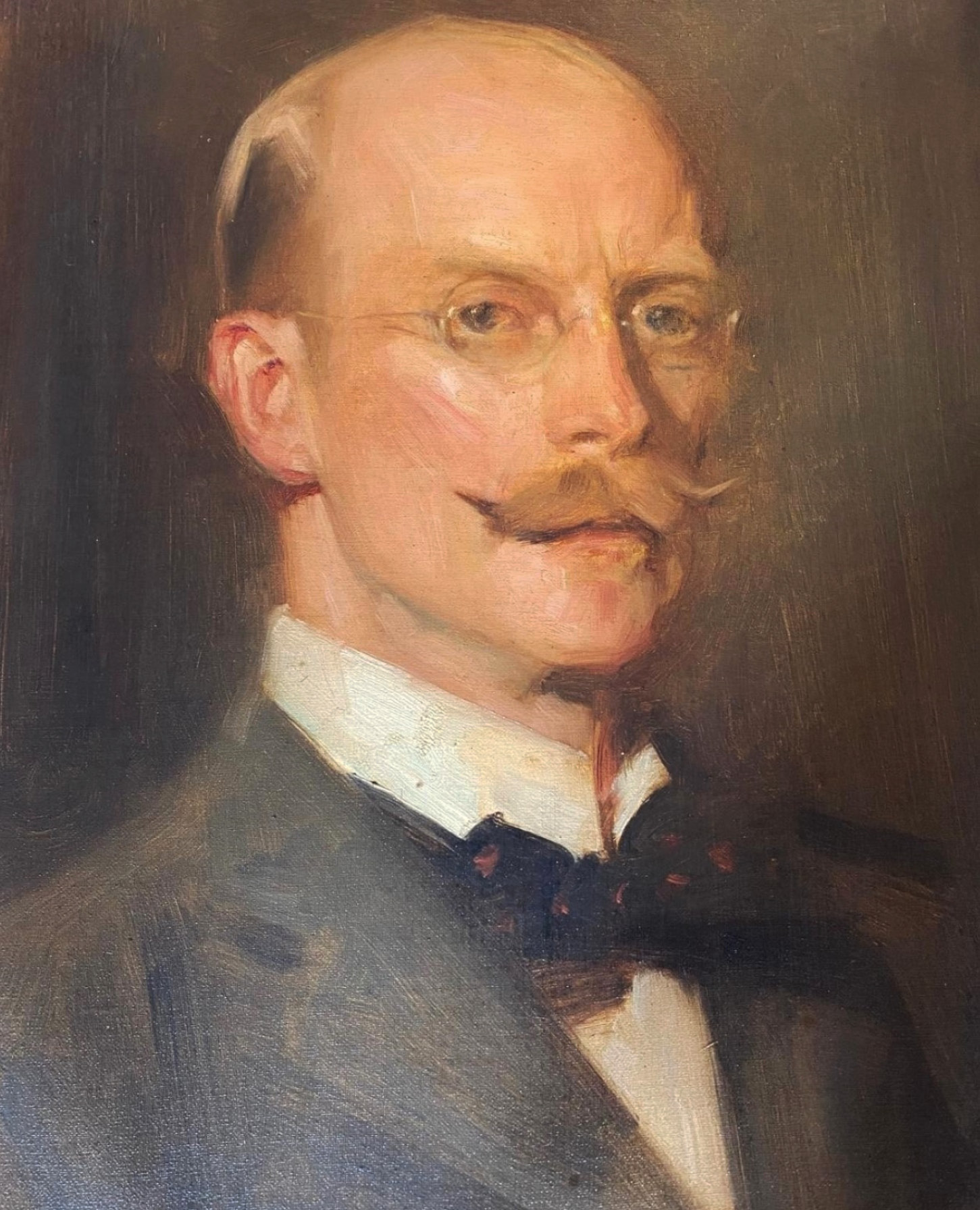
Kelly was born in Birkenhead, Wirral, in January 1861, the fourth of eleven children fathered by Dublin-born artist Robert George Kelly. He was confusingly christened Robert George, but later changed to Robert Talbot Kelly to avoid any confusion with his father.
After school, Talbot Kelly spent six years clerking at a cotton brokerage, but was also tutored in art by his father. He then decided to extend his family’s artistic lineage by journeying abroad, ultimately settling in Cairo. We know the year: 1883. But why Egypt? His father, as far as we can tell, had never travelled to North Africa or the Middle East – a geographical area contemporaries referred to as ‘the Orient’ – preferring instead to paint Scottish landscapes and, somewhat controversially, a scene depicting the Irish Famine.

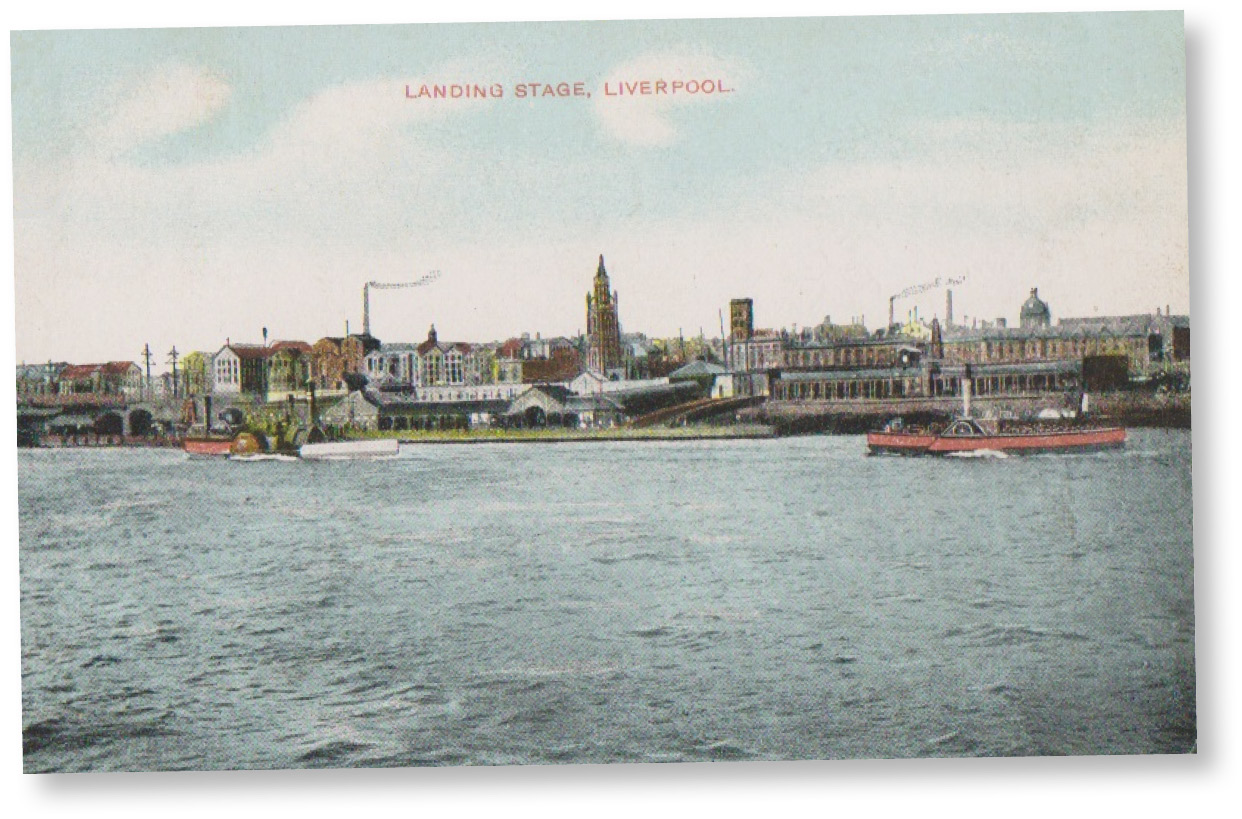
The answer could lie in the Liverpool Museum (now known as the World Museum), which opened in the year of Kelly’s birth. Home to the largest collection of Egyptian antiquities after the British Museum, the museum was a cultural attraction Kelly probably visited. Possibly Kelly was inspired by the collection, not least the impressive collection of mummies on display.
The increase in imported cotton from Egypt ensured that sailings out of Liverpool – an intersection where commerce and culture met – became more regular. The Landing Stage was an embarkation point for Alexandria-bound Egyptologists Amelia Edwards and Flinders Petrie in the 1870s and 1880s respectively. Whether or not he crossed paths with either, the ever- inquisitive Kelly would have been familiar with the ‘Egyptomania’ of the time.
Kelly spent a decade travelling the country, painting and writing about the people and places that inspired him.
Egypt
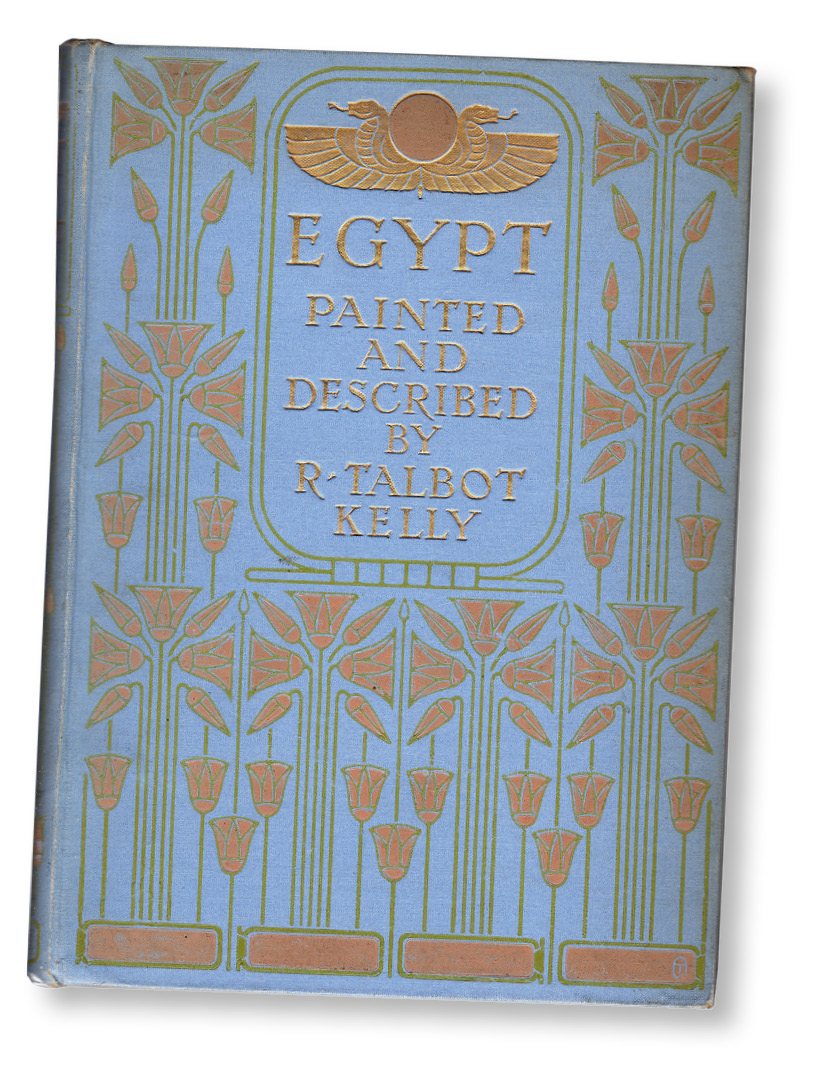
In Cairo, Kelly set up a studio, which he kept until the outbreak of the First World War, and spent a decade travelling the country, painting and writing about the people and places that inspired him. His experiences were recorded in an illustrated book Egypt: Painted and Described which was first published in 1902, and again in 1906. (He produced a similar book covering his travels in Burma, where he had a significant impact on the development of Burmese art.)
Kelly was clearly impressed by ancient Egyptian art. Writing in relation to animals in Egypt: Painted and Described, Kelly lauded the ancient Egyptian artist for seeing ‘nature with a simple truthfulness [that] avoided those errors of anatomy and motion which characterise so much of mediaeval art’. The ‘well-modelled’ figures at Edfu – engaged in hunting for crocodiles and hippopotami – are but one illustration of historical fidelity, with more located at Kom Ombo and Philae, temples where the hieroglyphs are described accordingly as ‘particularly interesting’ and ‘special points of interest which repay study’.
Orientalism
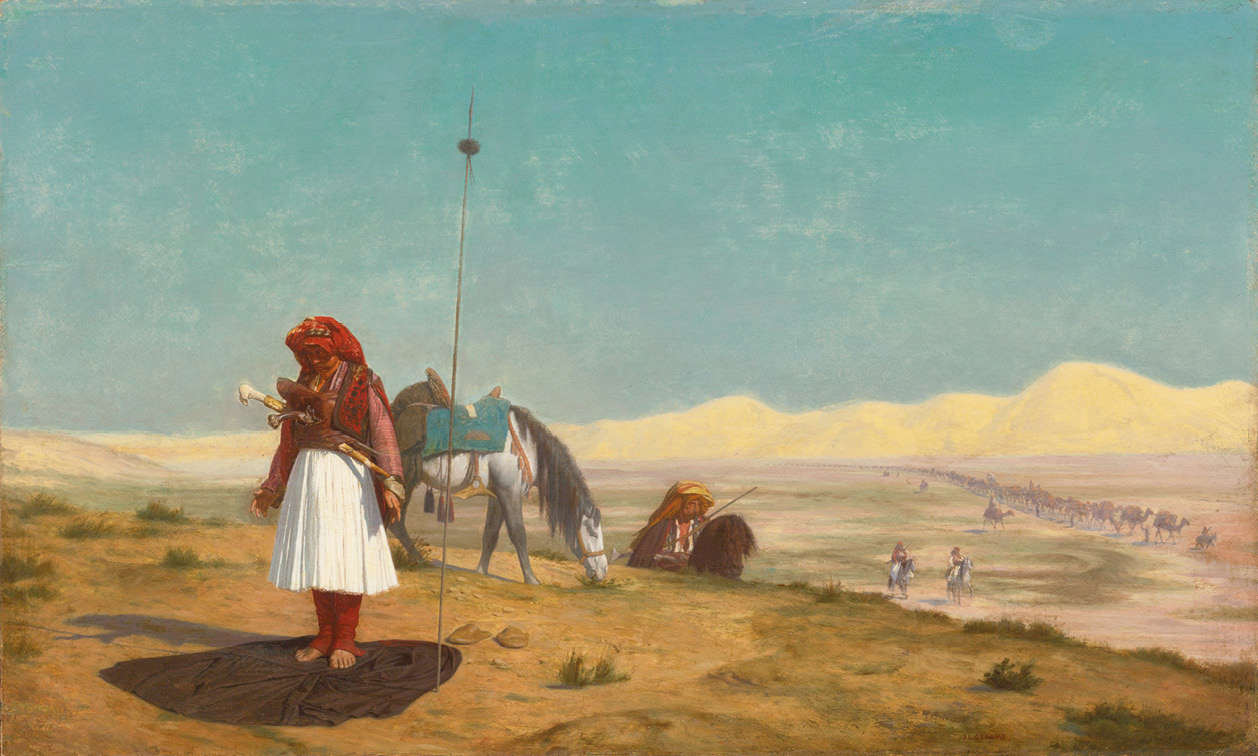
And study his subjects is just what Kelly did, given his fundamental belief that the ‘artist should be truthful in his work’ (italics in the original). Failure to do so could lead to ‘palpable inaccuracies for which there can be little excuse’, the author concluded, after first providing an example of a painting – possibly Prayer in the Desert by Jean-Léon Gérôme – that caused ‘irritation to the Orientalist’ through its ‘depict[ion of] an Arab in the act of prayer… carrying in his belt an armoury of pistols, knives, and swords’, disobeying the Qur’an, which commands Muslims to discard weaponry from their person and position items on the ground facing Mecca.

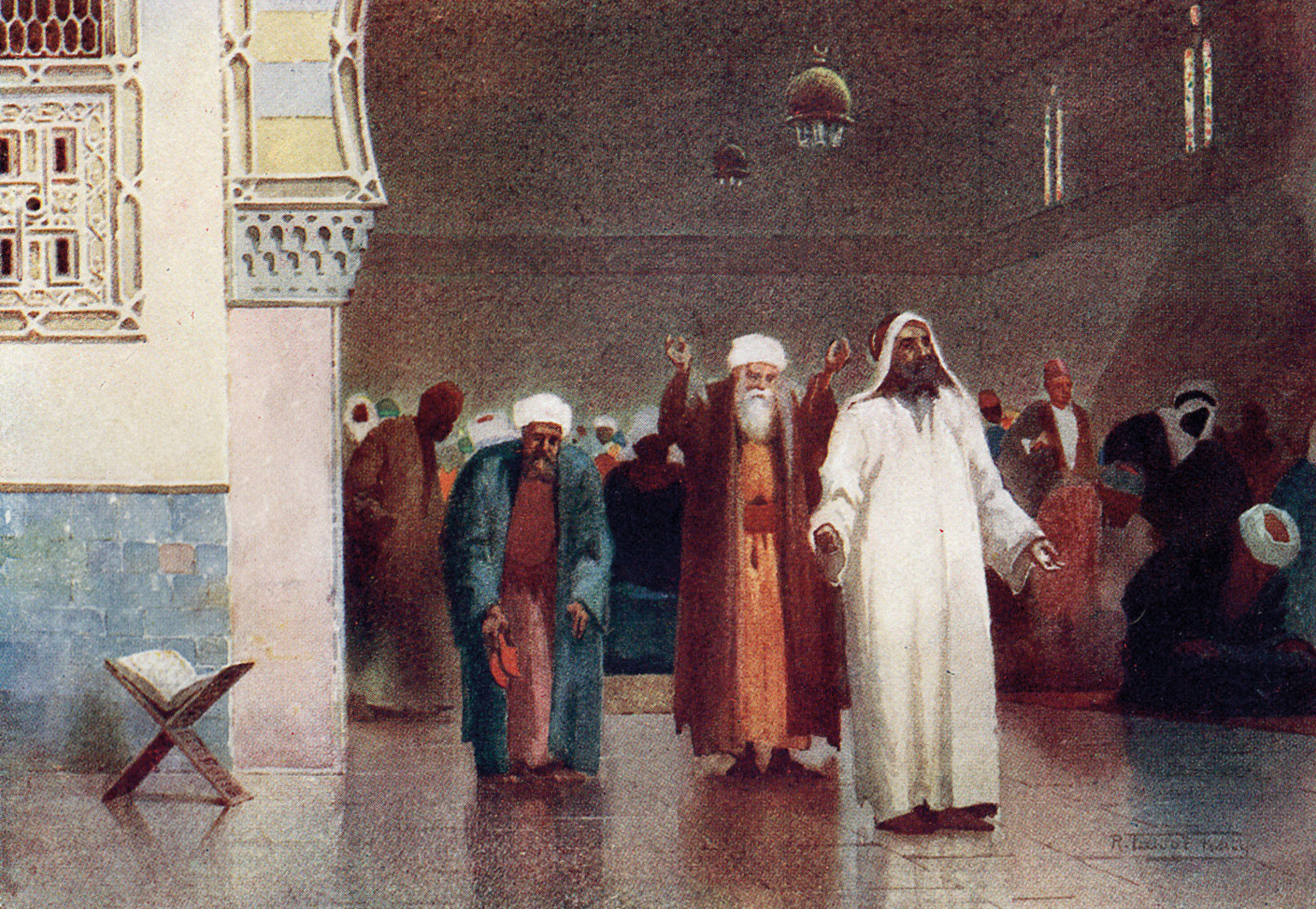
As many AE readers will know, the term ‘Orientalist’ used by Kelly denoted a Western scholar of the Eastern world. However, with the publication of Orientalism in 1978, the literary critic and philosopher Edward Said toxified the term by painting those engaged in such inquiry with a broad brush: ‘[E]very European… was consequently a racist, an imperialist and almost totally ethnocentric’. With her 1983 article ‘The Imaginary Orient’, art historian Linda Nochlin transferred Said’s framework of misrepresentation and power to the study of art history, suggesting that Oriental painting, with its negative stereotypes, reinforced Western civilisation’s perceived authority over other cultures. This sent a shockwave through the art world that continues to reverberate today.
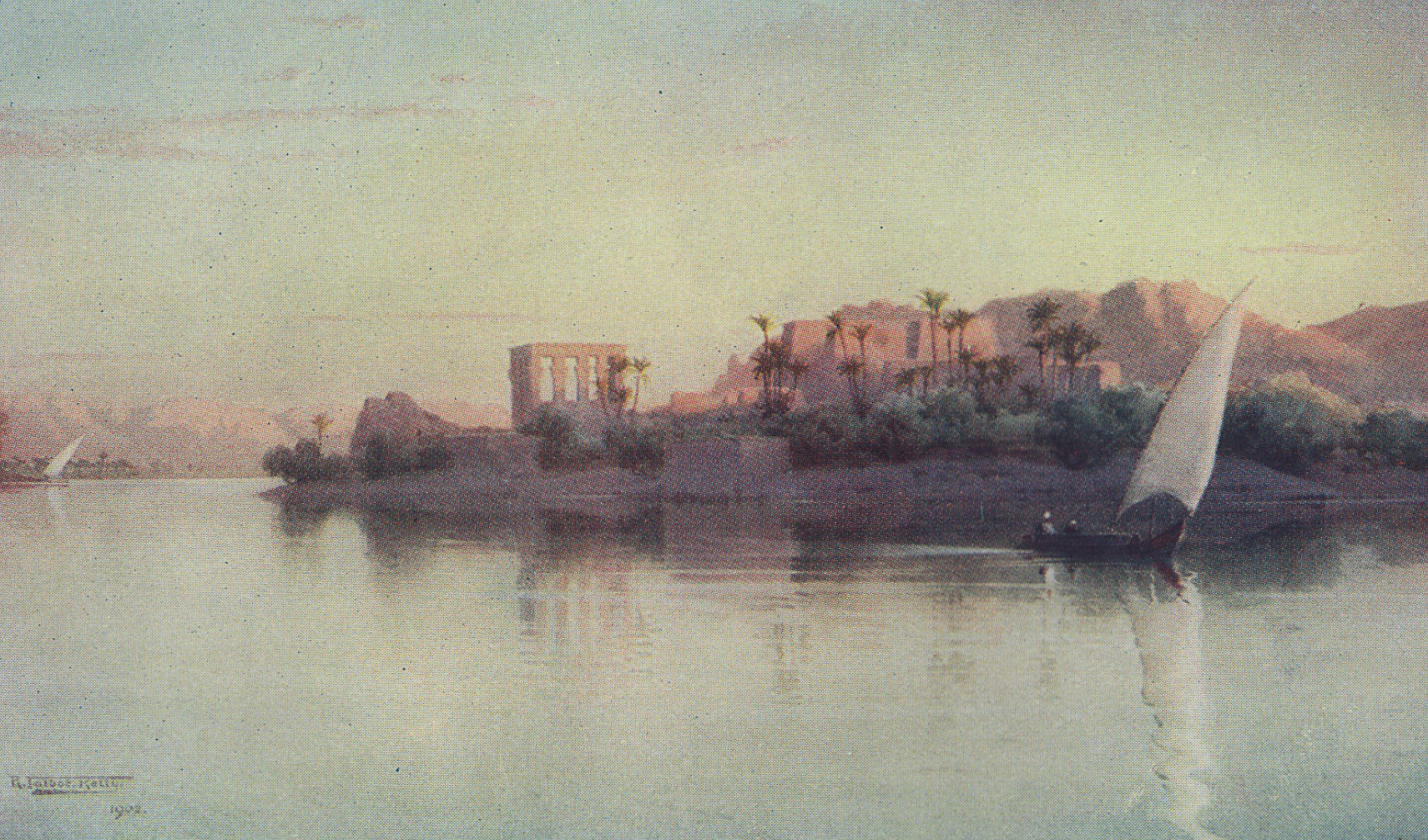


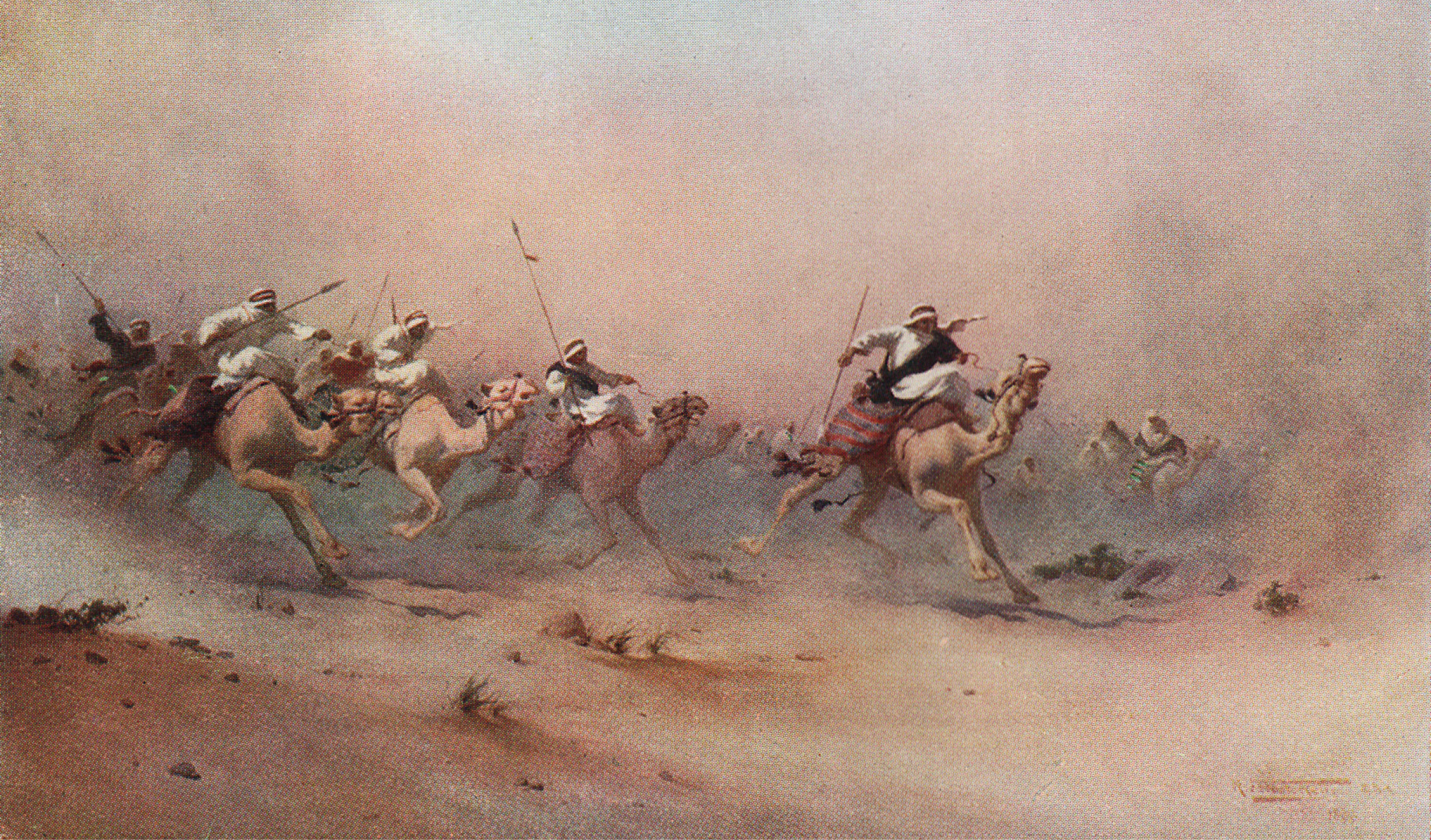
Notwithstanding a resurgence in interest in the genre, most notably from the Islamic world, accomplished pieces remain consigned to the storage rooms of art galleries, such as those at the Williamson in Birkenhead and Liverpool’s Walker Art Gallery, where paintings by Kelly collect dust rather than admirers, irrespective of the fact that he disavowed flagrant fantasies in favour of a markedly truthful form when sensitively depicting contemporary Egyptian life against the backdrop of ancient Egypt. I was reminded of a particular passage in Egypt: Painted and Described that reads as follows: ‘[I]t is not easy to determine wherein lies the power of attraction which Egypt undoubtedly possesses’. Being an Arabic-speaking Islamophile who immersed himself in Bedouin life, Kelly went some way to solving this enigma, courtesy of his artistic and literary output – a feat largely forgotten 90 years on from his passing.
Lee P Ruddin, alumnus of the Universities of London and Cambridge, is a Member of the Royal Historical Society. He has a particular interest in the First World War. His many trips to Egypt over the last two decades and interest in local history inspired him to research the life of fellow Wirralian Robert Talbot Kelly.
Further reading:
• R T Kelly (1906) Egypt Painted and Described (London: A C Black).
• L Thornton (1983) The Orientalists: Painter-Travellers, 1828-1908 (Paris: ACR).
• A Humphreys (2015) Grand Hotels of Egypt in the Golden Age of Travel (Cairo: AUC).
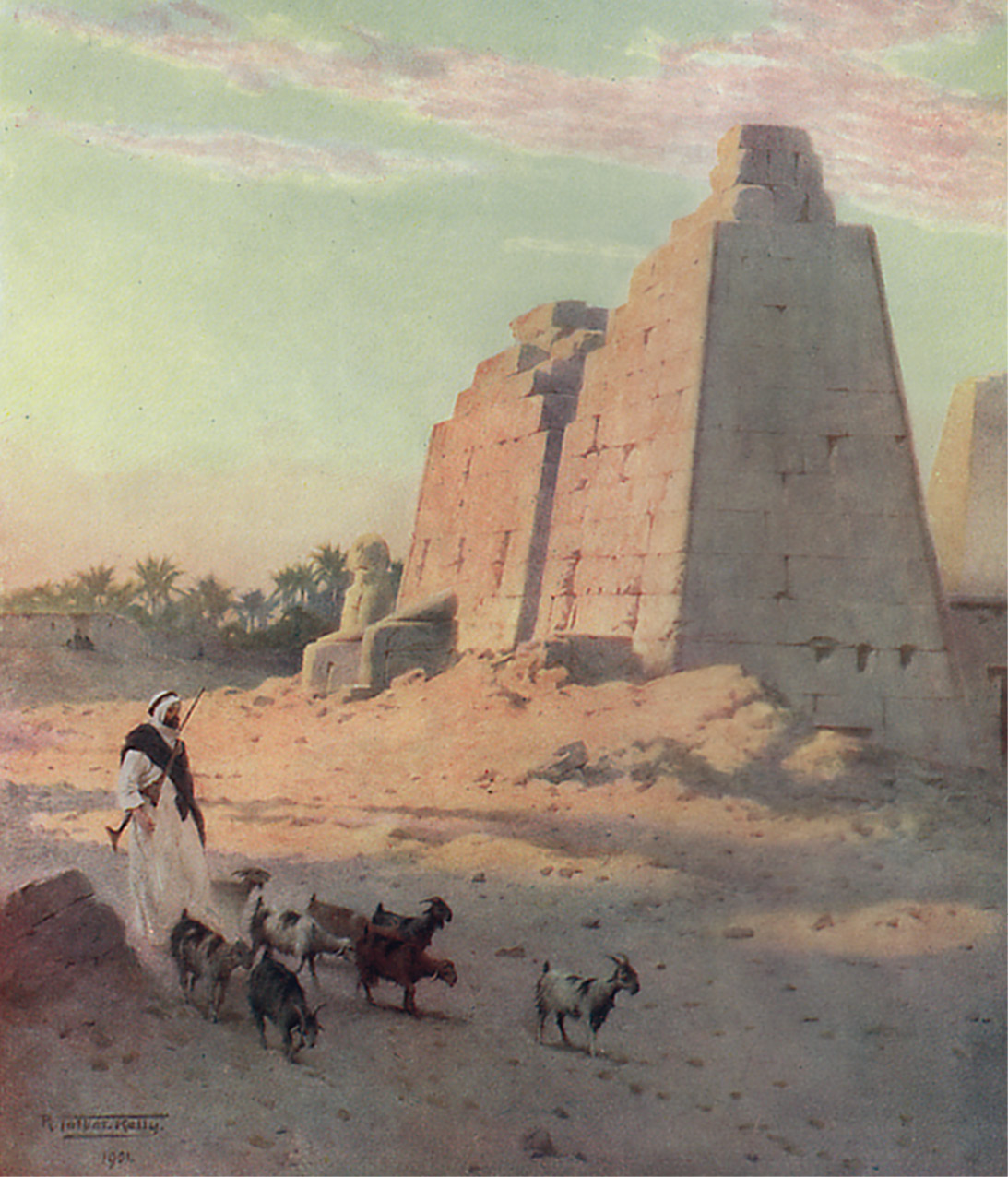

All images: from R T Kelly (1906) Egypt: Painted and Described, unless otherwise stated