Subscribe now for full access and no adverts
6 JUNE 1944: D-DAY
12 JUNE (D+6)
Carentan, a small town on the Cherbourg Peninsula, is captured by American troops. All the Allied bridgeheads in Normandy are now linked up. The following day, British troops attempt to advance through the village of Villers-Bocage but are unsuccessful. The Allies are also taunted by German propaganda leaflets dropped from the air, boasting of the launch of the new V-1 flying bombs against England. Ten days later, on 22 June (D+16), the Soviet Union launches Operation Bagration, the major offensive which devastates the Wehrmacht on the Eastern Front.
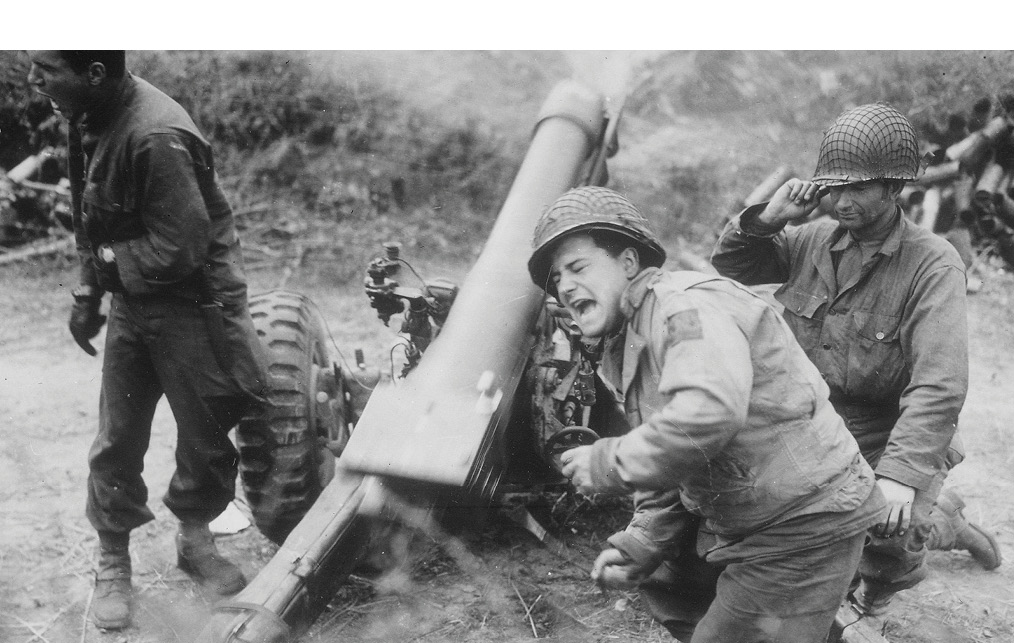
13 JUNE: BATTLE OF VILLERS-BOCAGE
26 JUNE (D+20)
The key port of Cherbourg is captured by the Allies. The German garrison there, having largely destroyed the port facilities, surrenders to American forces who have fought their way up from Utah Beach. At the same time, British and Canadian forces launch Operation Epsom, an attempt to outflank and seize the German-occupied city of Caen. In the previous week, a major storm has slowed the Allied advance, damaging landing craft and ships as well as destroying the American Mulberry A (artificial) harbour at Omaha Beach.
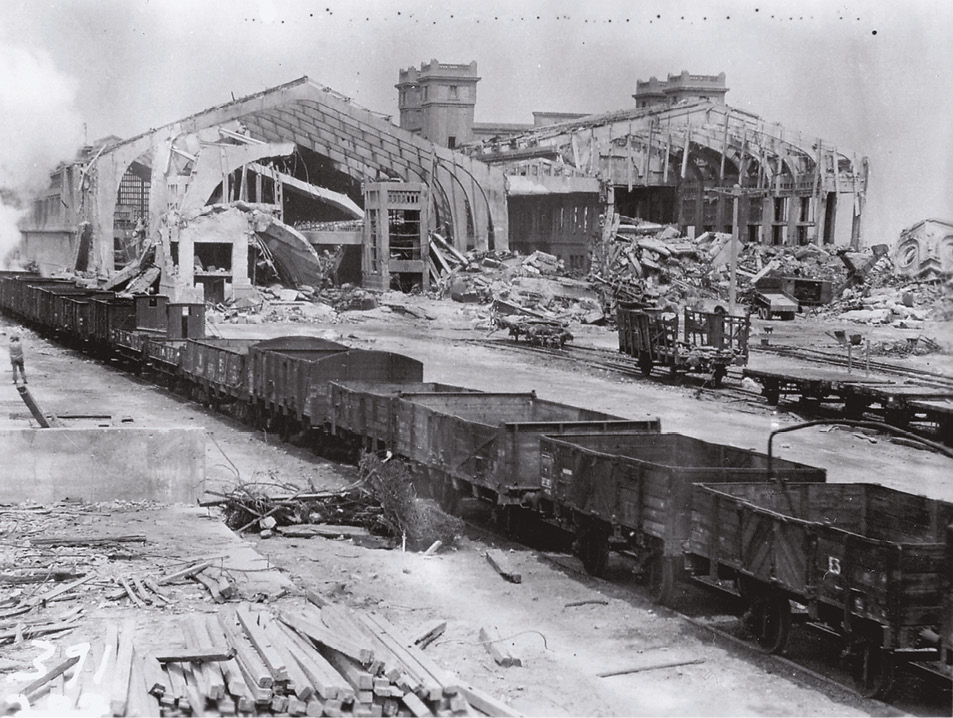
8 JULY (D+32)
Operation Charnwood launched by British and Canadian forces, part of the bitter and long-fought struggle over Caen. An ancient Norman city, it is also the heart of the region’s rail and road network, making its capture a vital strategic goal for the Allies. Further battles around the suburbs, including over Hill 112 and the Odon River, follow in the coming days and weeks, while the city is continuously bombarded from the air by the Allies. Operation Goodwood, launched by the British on 18 July (D+42), pins down the strongest German troops around the Caen area.
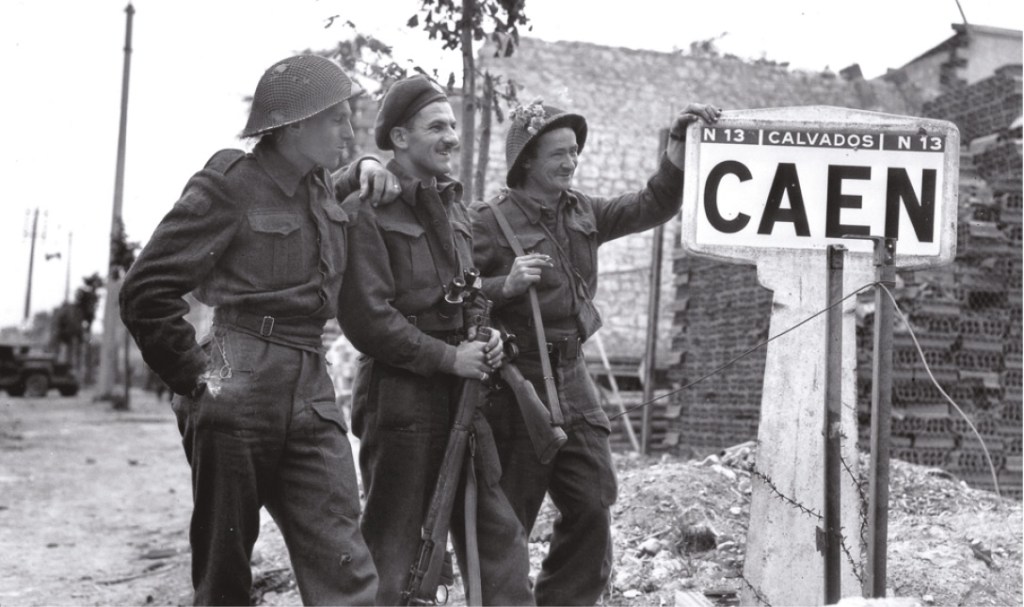
18 JULY: SAINT-LÔ IS CAPTURED BY AMERICANS
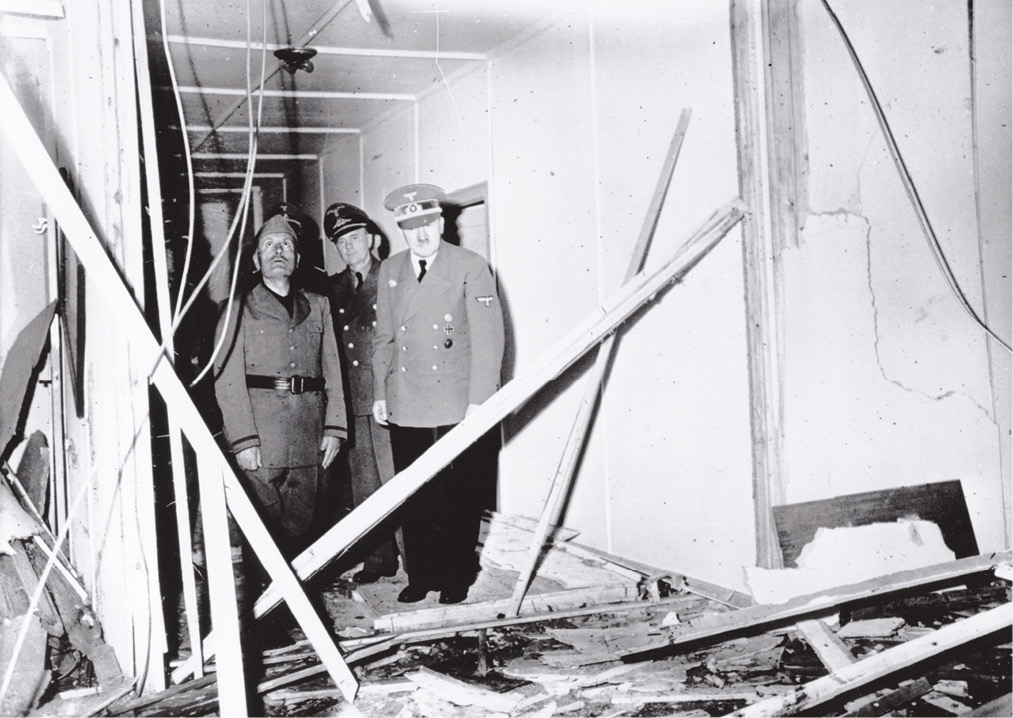
20 JULY (D+44)
Hitler narrowly avoids death in a failed assassination attempt organised by rebellious Wehrmacht officers unhappy at the progress of the war. Field Marshal Erwin Rommel, commander of the German forces in Normandy, who has been badly injured in France just days previously, is implicated in the plot, and is forced to commit suicide later in the year. The first American troops enter Brittany around this time, under the command of General George Patton.
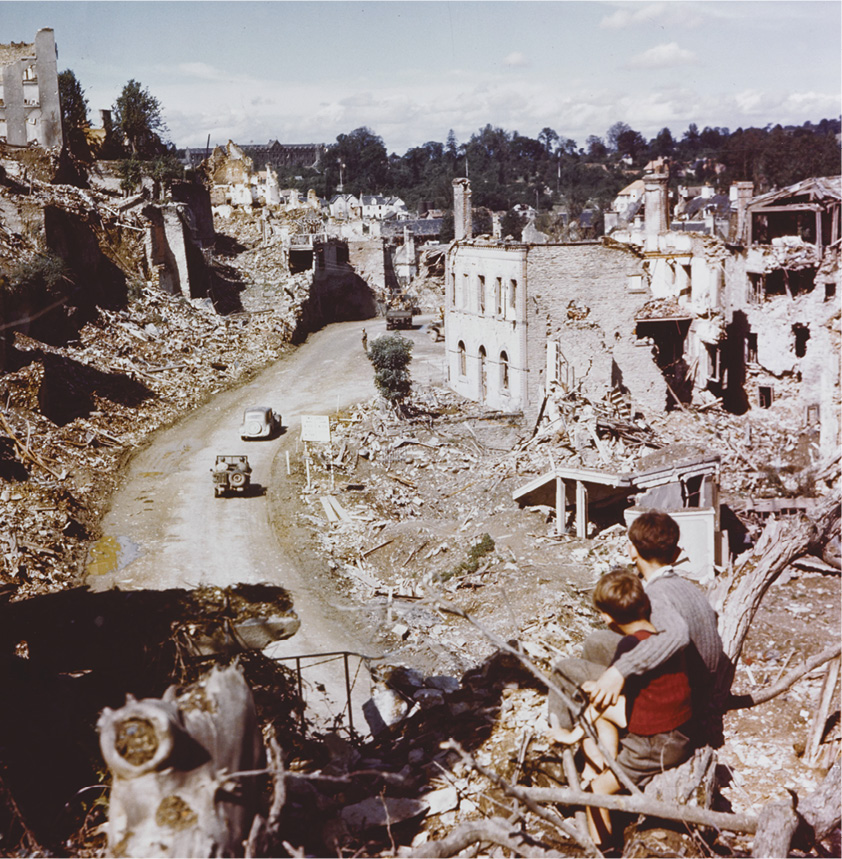
25 JULY (D+49)
Operation Cobra is launched by the US First Army under General Omar Bradley near the town of Saint-Lô (pictured), in an attempt to exploit weakened German lines and break free from the difficult bocage, or hedgerow, country. The operation is completed within a week, although Lieutenant General Lesley McNair, former commander of US Army ground forces, is killed during the assault. He is the highest ranking US army officer to be killed during the war. Operation Bluecoat is launched by the British on 30 July (D+54) in order to contain any possible German counterattack from the East.
6 AUGUST: MONT PINÇON CAPTURED BY BRITISH
7 AUGUST (D+62)
Operation Lüttich, a counterattack by the Wehrmacht, is launched near American positions at Mortain in western Normandy. The codename refers to the German spelling of the Belgian city of Liège, site of the first battle of the First World War, exactly 30 years before. Despite some localised success, the counterattack is a failure, leaving many German forces trapped. Brittany is now wide open for the advance of Patton’s Third Army.
15 AUGUST (D+70)
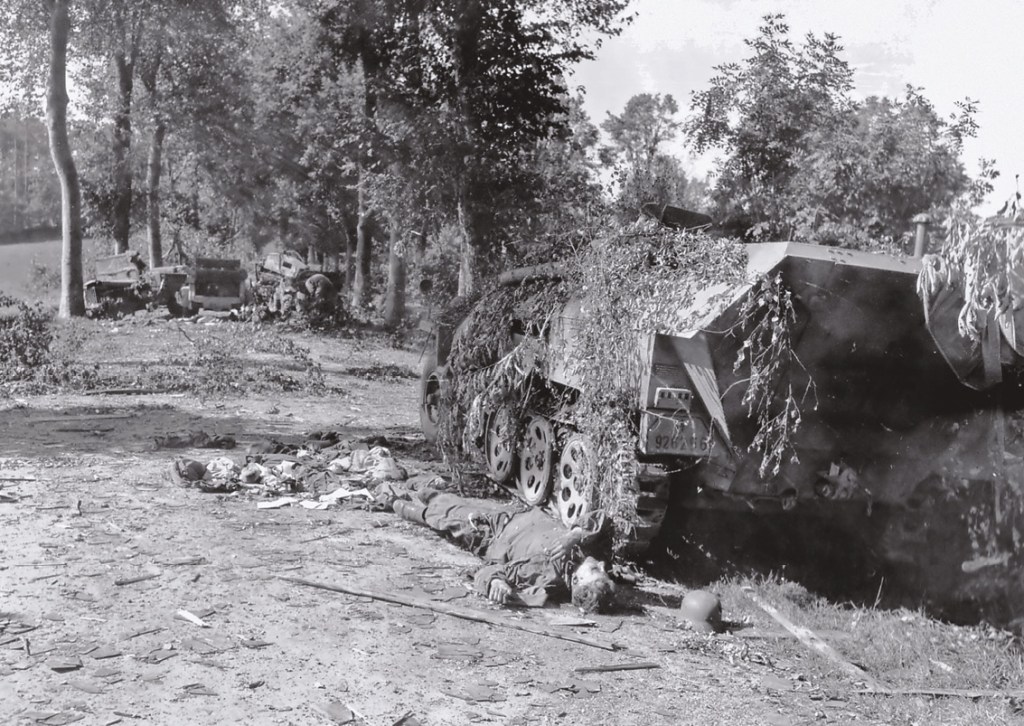
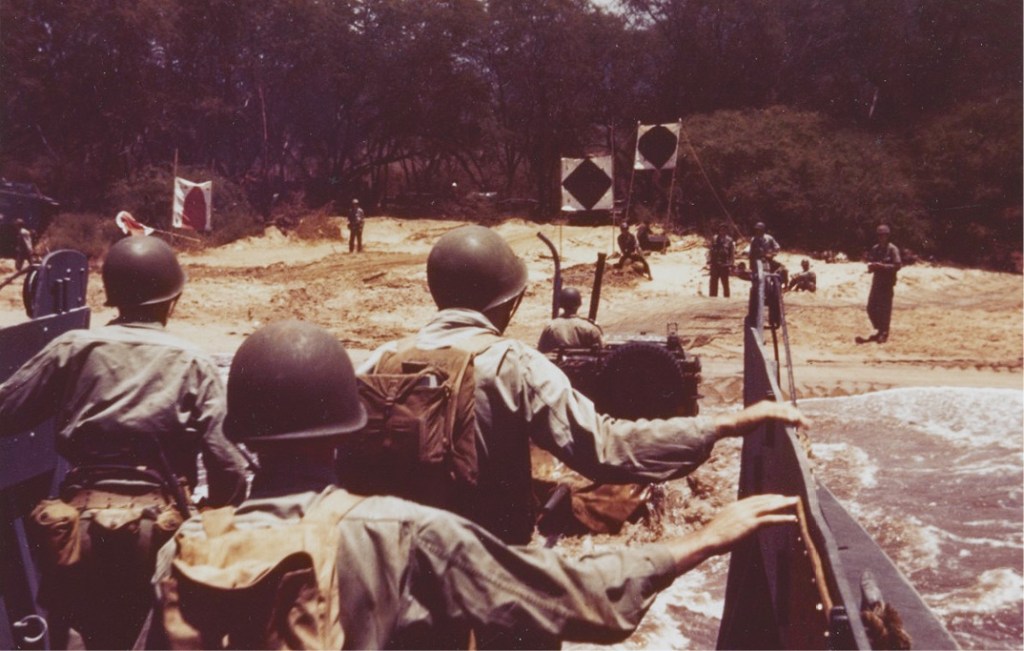
Operation Dragoon, the Allied invasion of southern France, is launched in Provence. It was originally intended to take place concurrently with D-Day. Within 30 days, participating American and French troops have successfully linked up with the Normandy invasion forces. Meanwhile, German Army Group B finds itself encircled in what becomes known as the Falaise Pocket. Many Wehrmacht soldiers struggle to escape via the mouth of this pocket, but by 21 August (D+76) it is sealed by the Allies, trapping around 50,000 men.
23 AUGUST: HITLER ORDERS DESTRUCTION OF PARIS
25 AUGUST (D+80)
Paris is liberated after four years of German occupation. French troops of the 2nd Armoured Division, under American command and with the support of the Resistance, arrive in the French capital the night before, and the city’s liberation is completed the following day. Five days later, the Germans retreat east across the Seine, marking the closure of the Overlord campaign. More than two million Allied soldiers are now on French soil.

Infographics: Calum Henderson