Subscribe now for full access and no adverts
The beginnings of systematic archaeological excavation in the Temple of Hatshepsut at Deir el-Bahri date back to the end of the 19th century. At that time, the work of the Egypt Exploration Fund under the direction of the Swiss Egyptologist Henri Édouard Naville led to the complete exposure of the monument and the disclosure of its architectural plan. Two decades later, Herbert E Winlock from the Metropolitan Museum of Art (New York) conducted a large-scale exploration of the temple’s lower courtyard, its processional avenue and adjacent areas. It might seem that after such extensive work the Temple of Hatshepsut would now be nothing more than an archaeological desert, but recent work by the Polish/Egyptian expedition has proved that the site still holds many secrets.
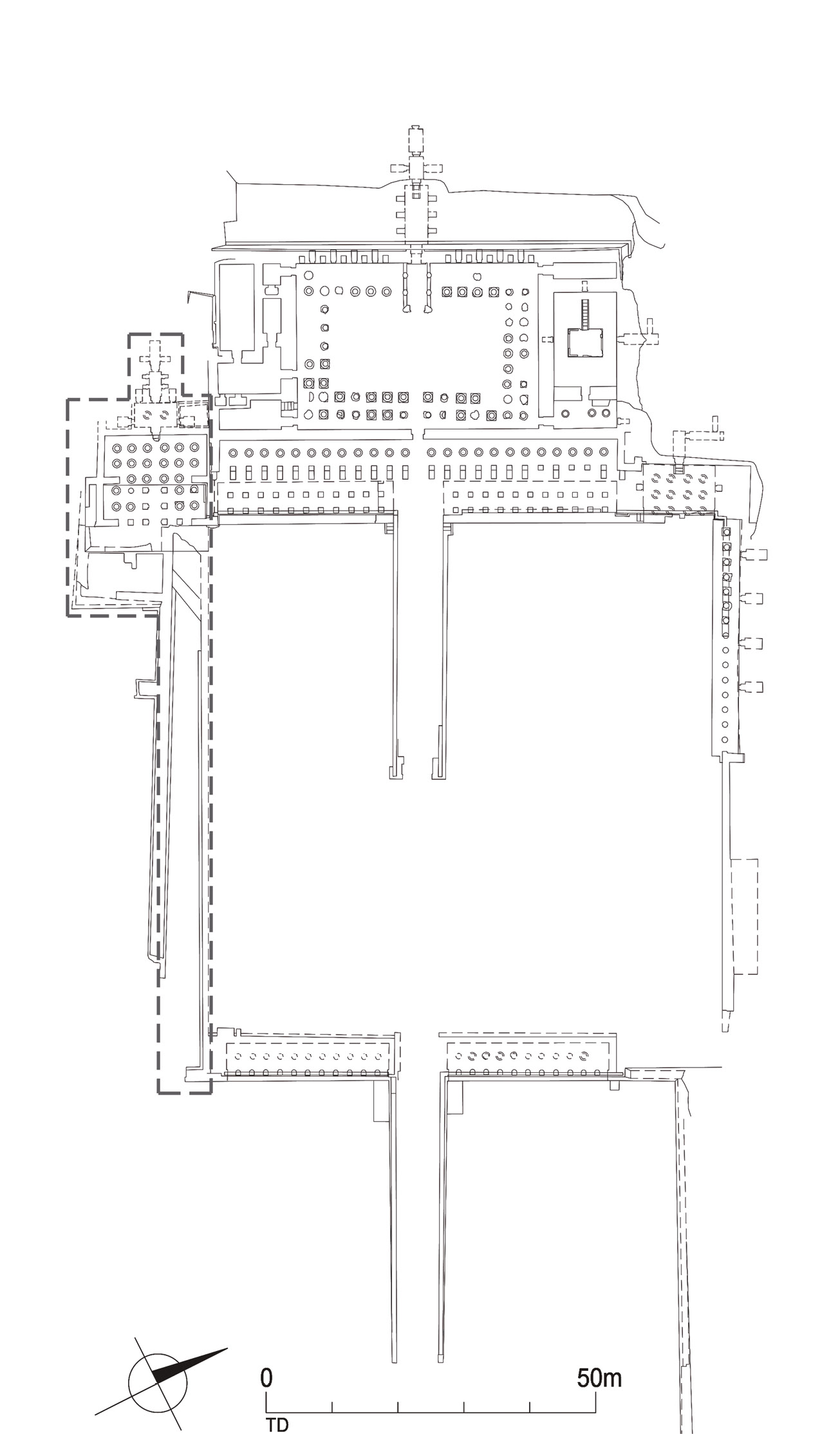
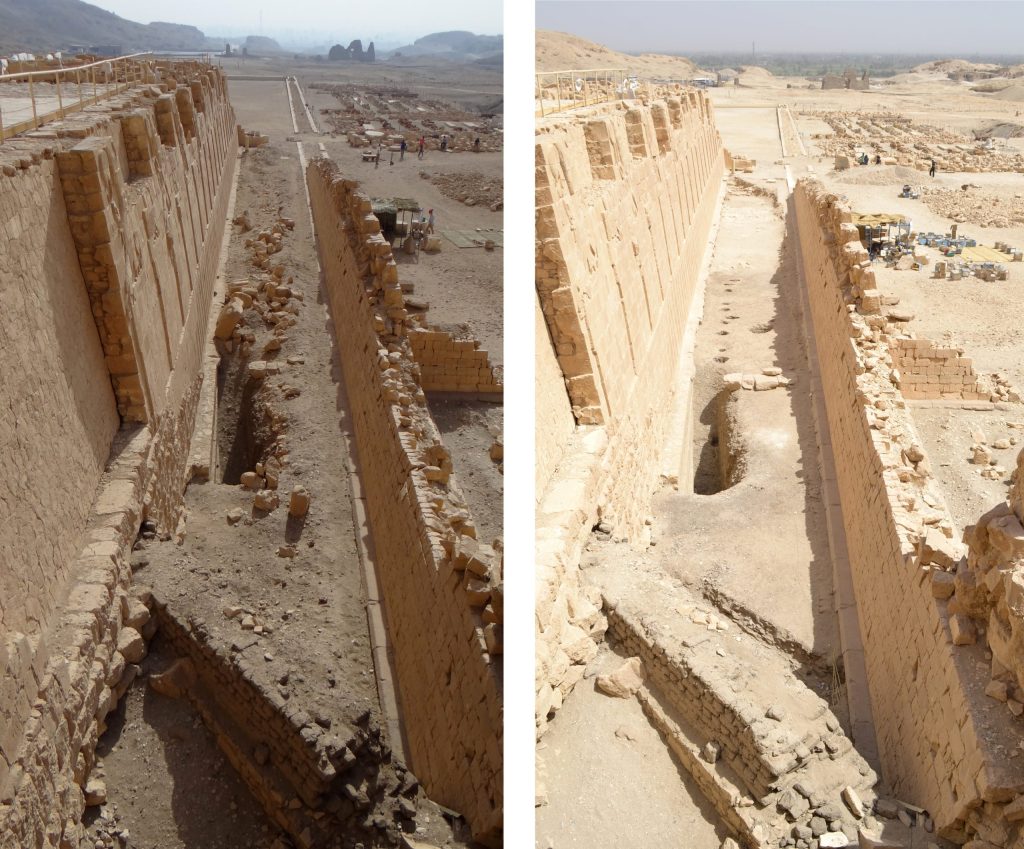
In 2020, a joint expedition from the Egyptian Ministry of Tourism and Antiquities (MoTA) and the Polish Centre of Mediterranean Archaeology at the University of Warsaw (PCMA UW) initiated a new multidisciplinary project in the southern part of the Hatshepsut temple. Its objective is to conduct archaeological and architectural research, restoration, and conservation work, and an epigraphic survey of the Hathor Cult Complex. The Hathor Complex consists of a long, open alley running along the southern edge of the temple’s middle terrace (which is now referred to as the Hathor Path), two hypostyle halls, and a chapel that is partially carved into the rock – all three of which are located at the southern end of the Punt portico.

The Hathor Path
The work of the Polish/Egyptian expedition began with systematic exploration of the Hathor Path, which was divided into 5-metre-long sectors. In these areas were found two foundation deposits from the time of Hatshepsut, known from previous work, but still containing several objects together with many artefacts from other periods. Another of the tasks in the initial stage of the work was the study of the tomb MMA 28, located at the western end of the path, discovered by Naville at the end of the 19th century. When the stone wall sealing the entrance to the tomb was removed, its underground passages were still filled with rubble containing many artefacts.
The presence of this rubble and the large number of finds was surprising, primarily because Naville reported that the tomb has been completely cleared. The fill contained material from various periods: the remains of an original burial dating to the early Middle Kingdom; votive offerings to Hathor and a female intrusive burial from the late Twenty-first Dynasty; and dozens of fragments of decorated limestone and sandstone blocks. Winlock suggested that this tomb was the burial place of a son of Mentuhotep II called Intef, pointing to several pieces of evidence on which he based his hypothesis. Although it is now known that the evidence he cited concerned completely different people, recent study confirms the assumption that this was the resting place of the royal son.
Excavation in the eastern sectors of the Hathor Path also yielded extremely interesting results. Next to the southern retaining wall of the middle terrace of Hatshepsut’s temple, two shaft tombs from the Third Intermediate Period were found (pictured bottom left on p.17). Both shafts had previously been examined by Naville but they still contained numerous artefacts, indicating that they had been used repeatedly at the end of the Twenty-second or the Twenty-third Dynasty by several individuals, possibly members of one family.
Hypostyle halls
One of the greatest challenges of this project was the examination of the hypostyle halls in the southern part of the middle terrace of Hatshepsut’s temple. The columns and pillars were built on an artificial platform enclosed by massive walls made of limestone blocks, the interior of which was filled with rock debris. This meant that any deeper excavations would lead to the collapse of adjacent foundation and floor slabs, threatening to compromise the stability of the surrounding columns, and weaken the entire platform structure. Nevertheless, several small test trenches were opened. Some of these were in places where the original paving had not been preserved, others where new slabs had undoubtedly been used in recent times to reconstruct the original layout.
Recent study suggests that tomb MMA 28 was the burial place of the son of a king, possibly Mentuhotep II.
The aim of this work was to gain a better understanding of the architecture of the hypostyle halls in front of the Hathor chapel, to determine the phases of its construction, and its connection with the middle terrace. In several places, parts of an additional retaining wall have been uncovered. This wall is not visible on the surface and is located directly beneath the step separating the two hypostyle halls. In the northern trenches, the foundation wall of the middle terrace and Punt portico was uncovered. This was not connected in any way to the walls of the hypostyle halls, proving that the latter were added in a subsequent stage of construction.
The Hathor Shrine
The final stage of archaeological work at the Hathor Cult Complex involved conducting similar exploratory investigations in the Hathor Shrine (pictured below) and to determine how the foundations of this part were constructed. Again, the areas where the original floor slabs had not been preserved were selected in the hope that the foundation walls would be exposed.
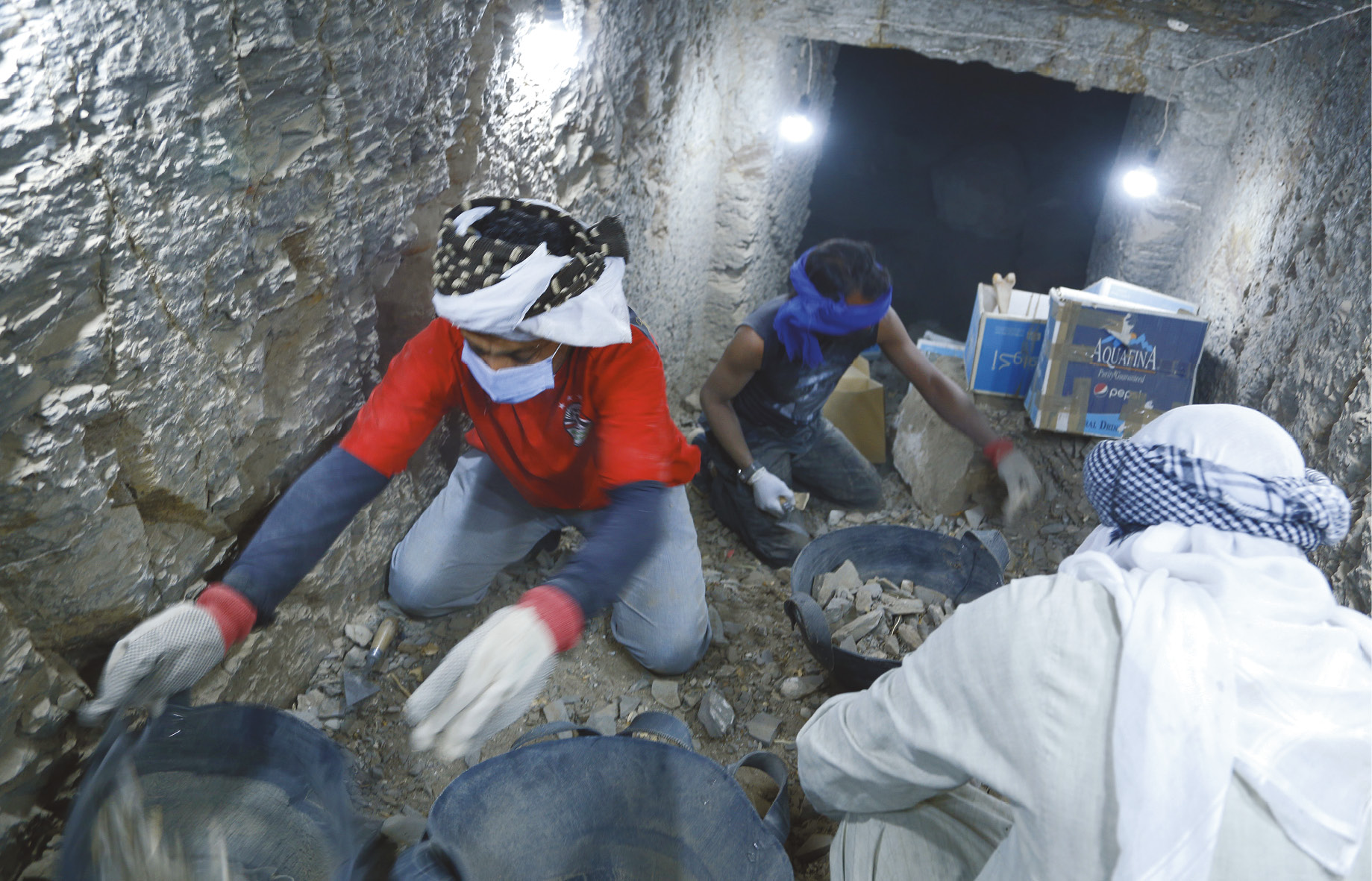
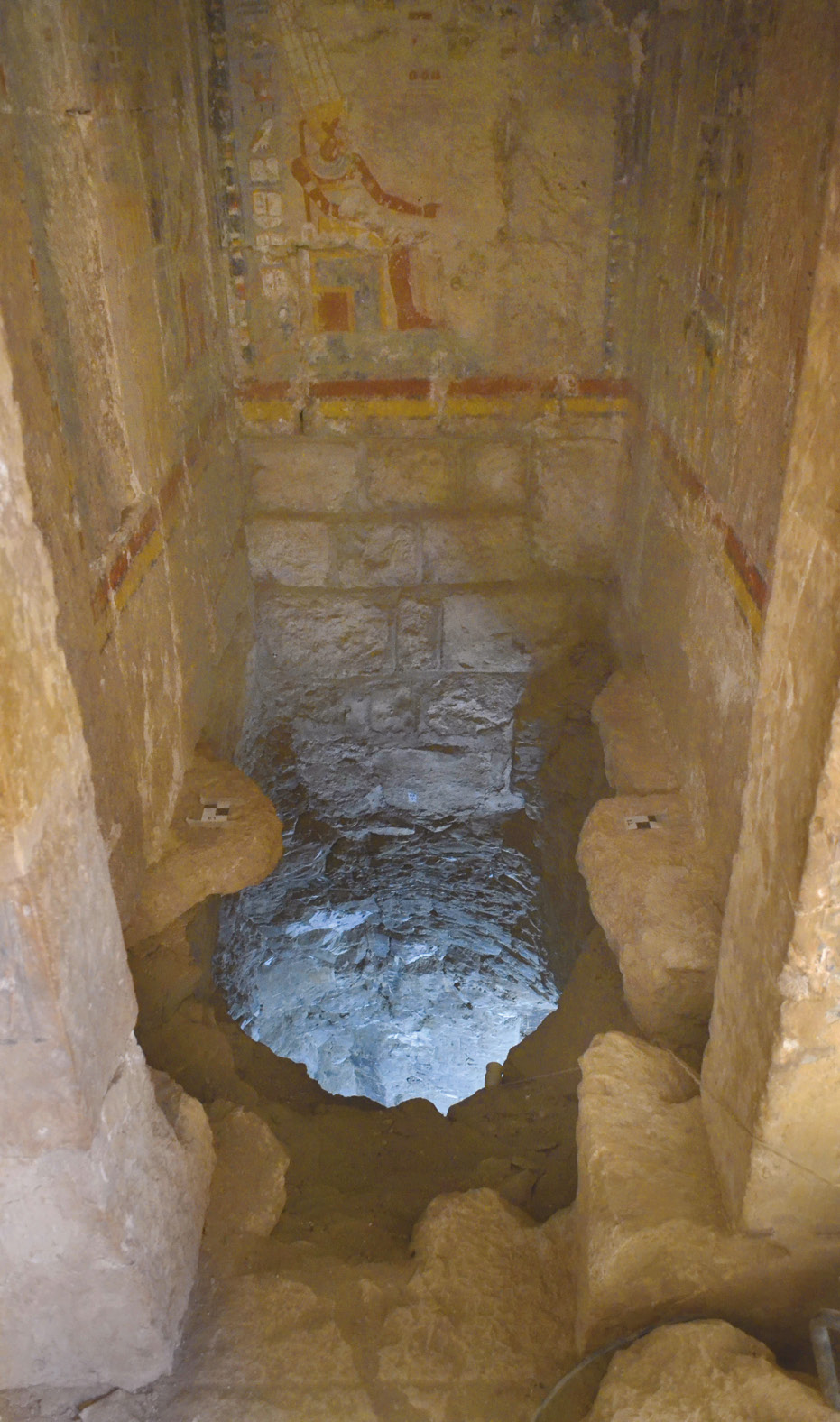
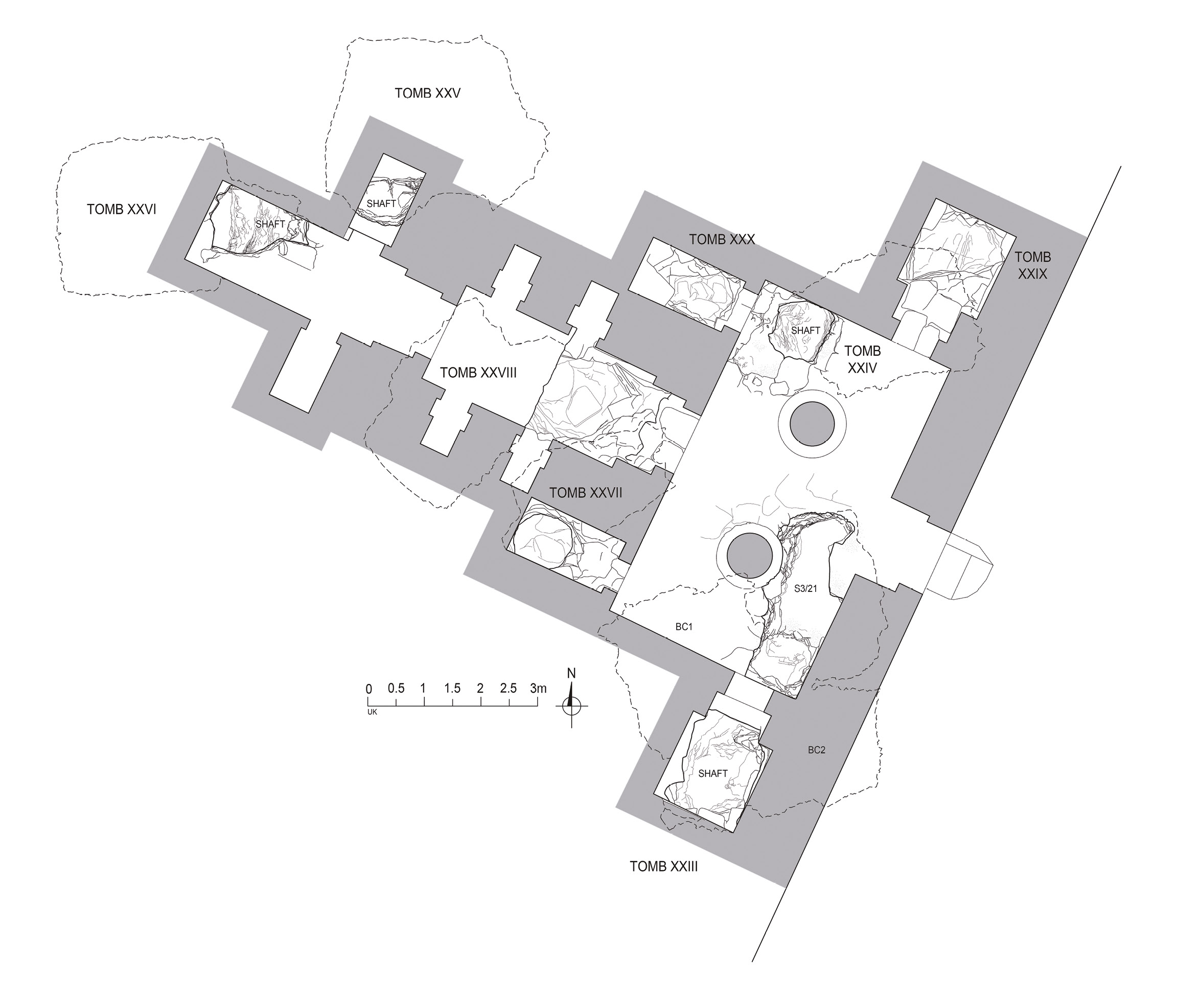
The exploration began in two corners of the vestibule, the first room of the chapel, which has two columns. After removing several layers of fine limestone debris filling the space where the floor slab used to be, it quickly became apparent that there were entrances to underground structures below. The excavation was therefore continued, revealing remains of burials from the Third Intermediate Period. After a few days of exploration, it became clear that these structures were in fact rock-cut tombs quarried out long after the chapel had been abandoned. In subsequent seasons, more places were identified where the original flooring had not been preserved, or had been laid in modern times. As the excavations continued, a total of seven tombs and one unfinished sepulchre were discovered.
Some of the tombs were large enough to accommodate more than one burial, while others showed clear signs of enlargement or the addition of a new room. All represent a similar architectural design – a vertical shaft several metres deep leading to a single, roughly hewn burial chamber at its base.
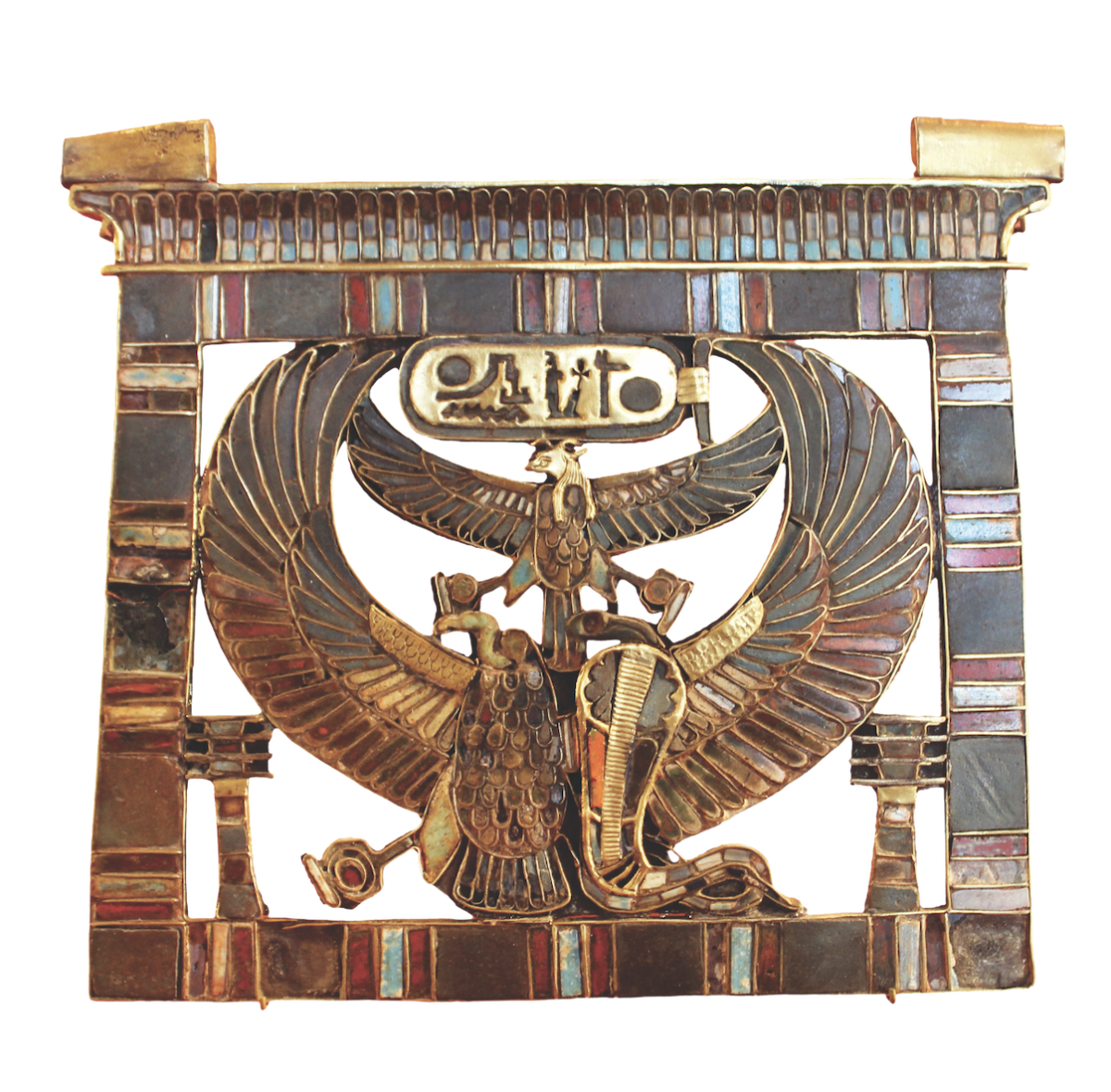
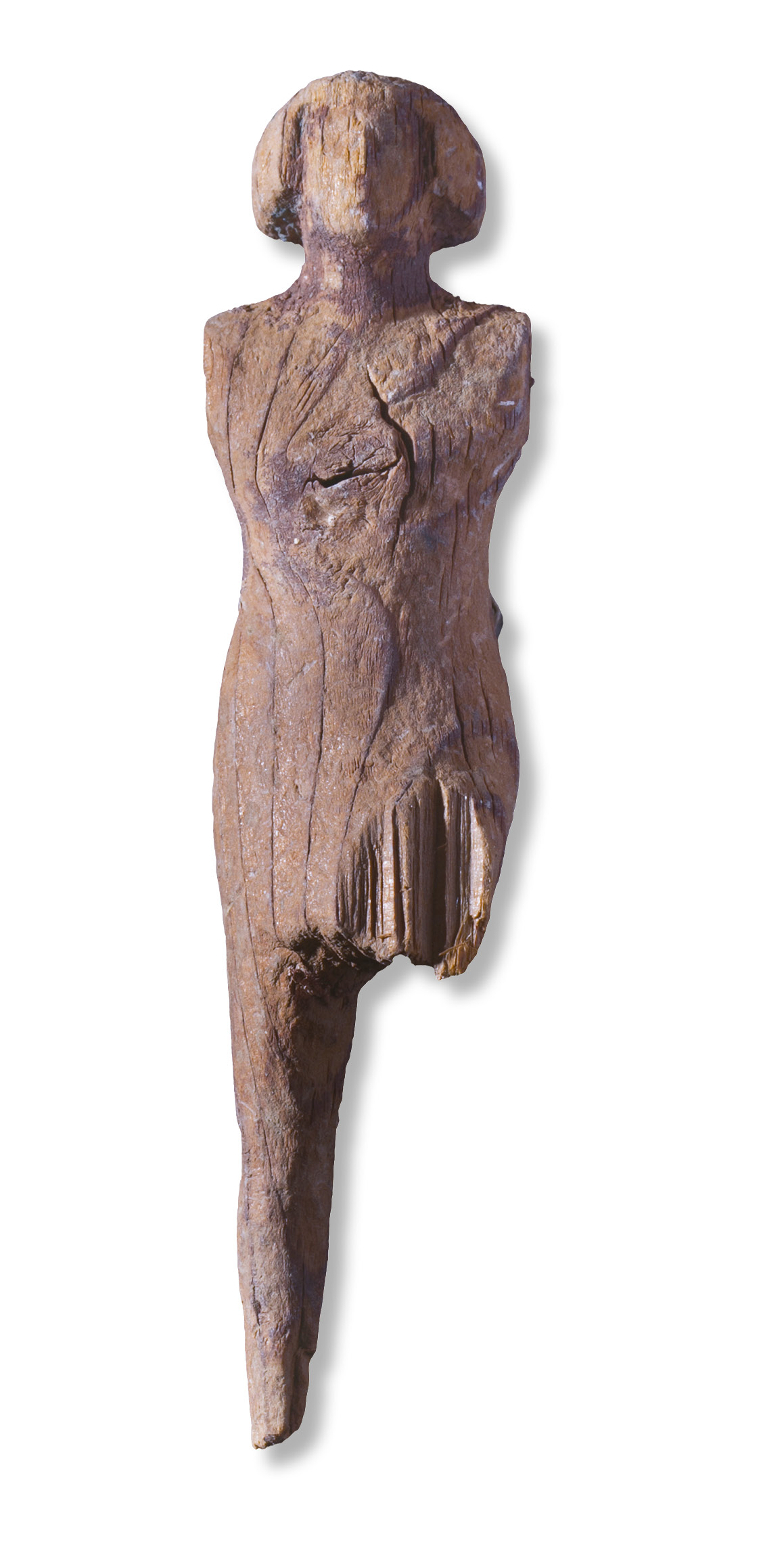
The exploration of these structures has brought to light hundreds of finds, mainly remains of burials from the Third Intermediate Period. These include: human mummies; fragments of decorated coffins and cartonnage mummy cases; faience scarabs and ‘Four Sons of Horus’ amulets; mummy bead nets; wooden figures of deities; faience and clay shabtis; and linen, some pieces inscribed with the names of the deceased, and one with the name of the king. The number of tombs and the wealth of materials indicate that the Hathor Shrine played an important role in the mortuary landscape of Deir el-Bahri during the Third Intermediate Period. It is possible that it was the burial place of members of a single family of priests, as was the case with the Offering Chapel of Hatshepsut on the third terrace. This was proved by research conducted by the Polish/Egyptian expedition in the late 1990s and early 2000s.

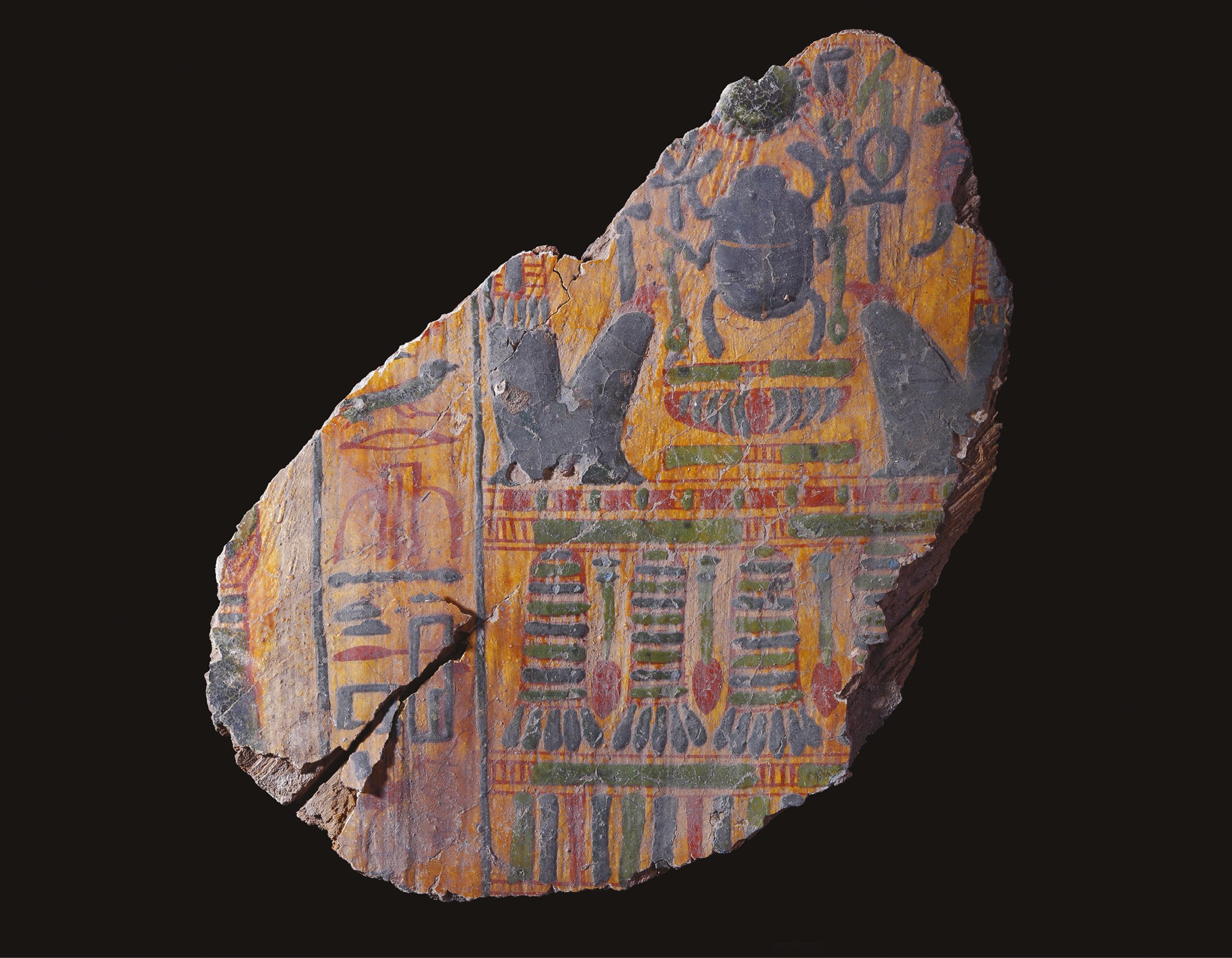
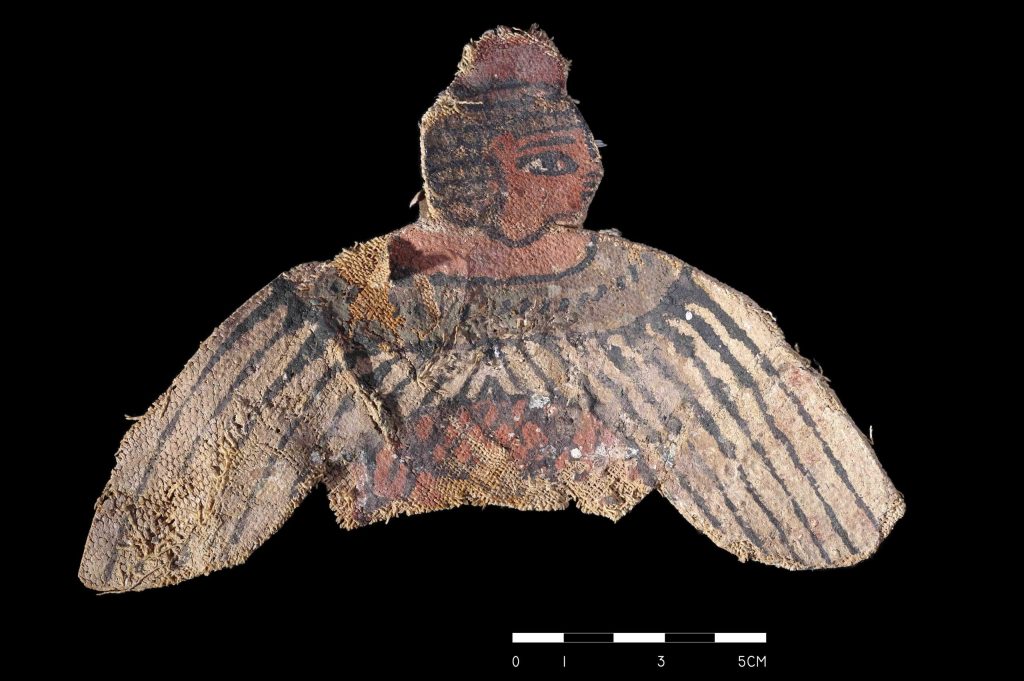
However, the infill of these tombs, which was completely mixed up and did not represent any stratigraphic layout, concealed many other objects. In several tombs, fragments of votive offerings to Hathor from the Eighteenth Dynasty were found. These were originally dedicated to the goddess during the temple’s heyday under Hatshepsut, or shortly after her death. In addition, several Coptic artefacts were found which were associated with the monastery and church that once occupied the temple’s third terrace, as well as numerous articles left behind by early explorers. Some of the most interesting discoveries, however, were the remains of Late Roman burials: hundreds of painted fragments of mummy shrouds and masks (one pictured on p.19); fragments of decorated coffins and numerous pottery sherds; and mummified human remains. The mummies were still covered with small flakes of gold, which was typical of burials from this period. The discovery proves for the first time that Roman burials took place not only in the open courtyards of the royal temples at Deir el-Bahri, but also in their chapels, which completely changes the layout of the Late Roman cemetery.
It is possible that the Hathor Shrine was the burial place of a single family of priests.

Outcome of the project
The results of the Hathor Project’s archaeological work have shown that it is worthwhile to reinvestigate sites that have apparently already been excavated. This is particularly important in cases where the results of previous excavations have never been published, as is the case with the Hathor Cult Complex. The latest work not only allows us to rediscover part of the post-New Kingdom cemetery in this area, but also sheds light on the history of its research. The best examples of this are the discoveries in the Hathor Shrine, which was the subject of interest of a French antiquities dealer and photographer, Victor Gustave Maunier, in the mid-19th century. Maunier never published a report on his work, and his activities are only partly mentioned in later publications. These state that he found nine tombs, which does not correspond to the actual situation. Studies of the discoveries we made are ongoing, so perhaps we will uncover further parts of the ancient history of Hatshepsut’s temple or its early modern exploration.

Acknowledgements: The author wishes to express his gratitude to the staff of the MoTA and colleagues in the Supreme Council of Antiquities (SCA) for their cooperation and continuing support. The work of the Polish/Egyptian expedition to Deir el-Bahri is made possible by the financial support of PCMA UW and our friends and donors.
To find out how you can support the expedition, please visit us on Facebook @Polish-Egyptian Expeditions to Deir el-Bahri or email us at deb.pcma@uw.edu.pl.
Dr Patryk Chudzik is an Assistant Professor at the Polish Centre for Mediterranean Archaeology at the University of Warsaw. He is Director of the Polish/Egyptian archaeological and conservation expedition to Deir el Bahri and co-Director of the Polish Archaeological Expedition to North Asasif.