
Subscribe now for full access and no adverts
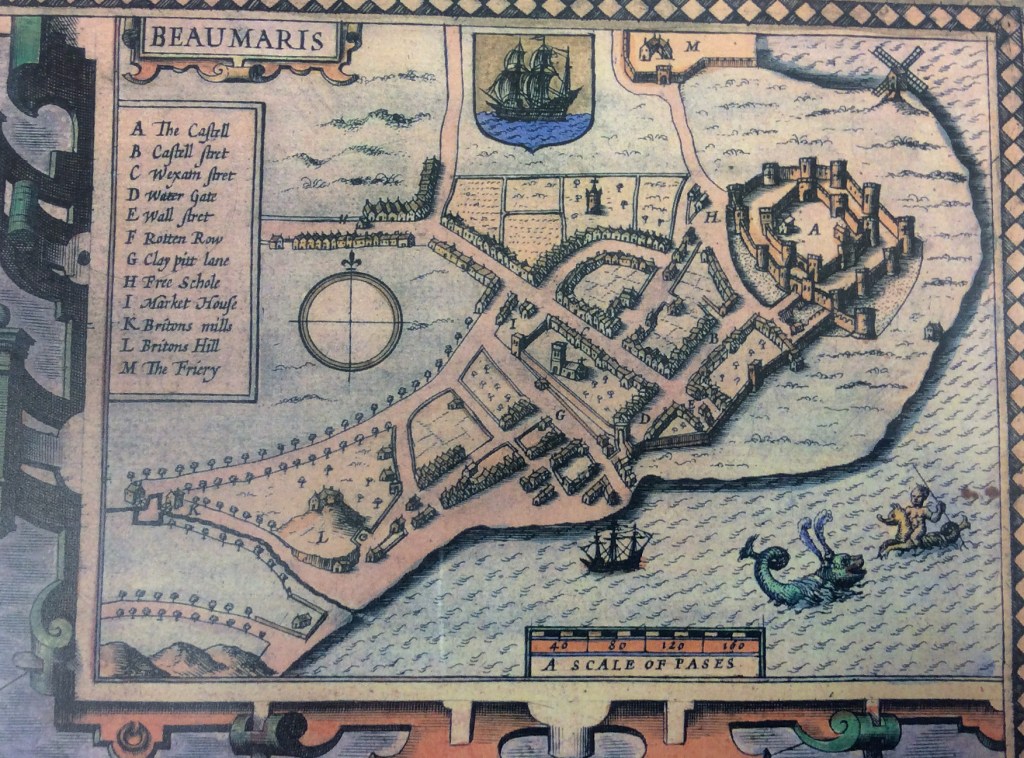
Overlooking the eastern entrance to the Menai Strait, Beaumaris was established by Edward I in the 1290s to help consolidate his campaigns in Wales. The king eagerly promoted his new settlement as Anglesey’s main administrative centre, forcibly relocating the population of the existing port town, Llanfaes, and commissioning an ambitious castle with concentric rings of fortifications befitting its status. Unfortunately, resources ran out before Beaumaris Castle could be completed (today the imposing construction is described by Cadw, the Welsh heritage agency, as ‘the greatest castle never built’), and the town itself was left without any defensive walls.
The decision to leave Beaumaris unenclosed made its residents feel vulnerable to attack, and around 1315 the burgesses are recorded as having petitioned the king (Edward II) for a wall to be built. Their pleas fell on deaf ears, but their fears were ultimately justified when Beaumaris was besieged during the revolt of Owain Glyndwˆr. For two years between 1403 and 1405, the town was held by insurgents, and it was only in the aftermath of this episode, in 1407, that Beaumaris was allocated funding for formal defences: £10 towards the cost of encircling the settlement with a bank and ditch. These efforts proved ineffective against Scots and Welsh rebels, however, and in 1414 a proper town wall was finally erected.
This barrier was determinedly maintained over the following years, when further threats of foreign attacks and piracy made civil defence a priority. Records of the 1530s and 1540s attest to stone being brought from local quarries and from Penmon Priory to strengthen and repair the walls, but in subsequent centuries the expense of this upkeep became a heavy burden for the town. Between the late 17th and early 19th centuries, boatloads of stone and lime are regularly recorded as having to be purchased for repairs – but as housing density increased through the 19th century, priorities shifted to the ever-growing need for space, and the town wall was dismantled piecemeal to make way for new construction.
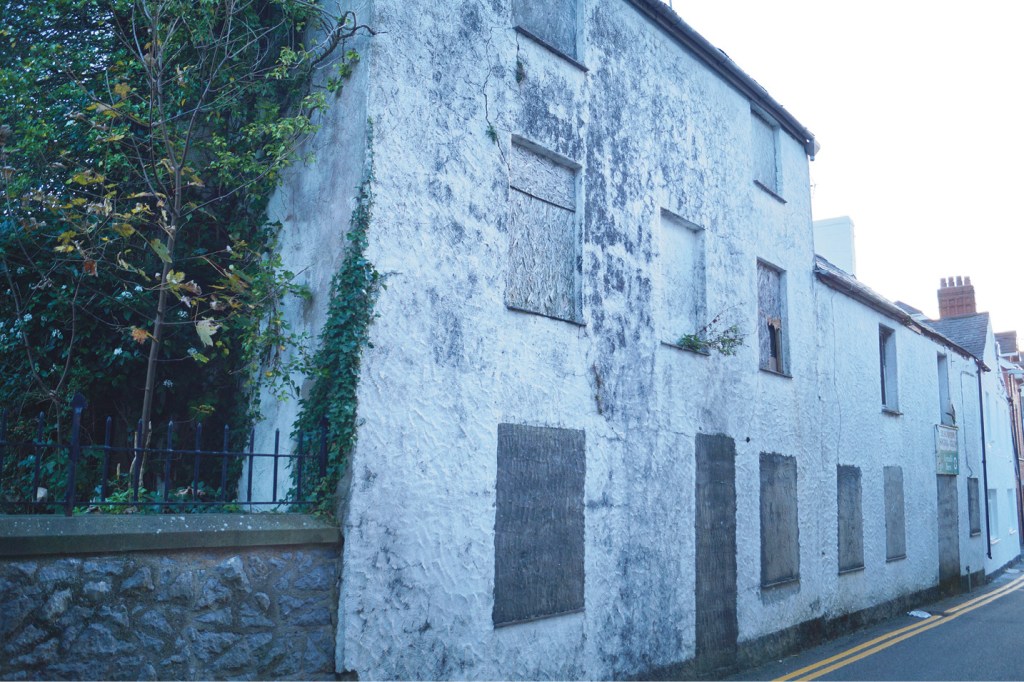
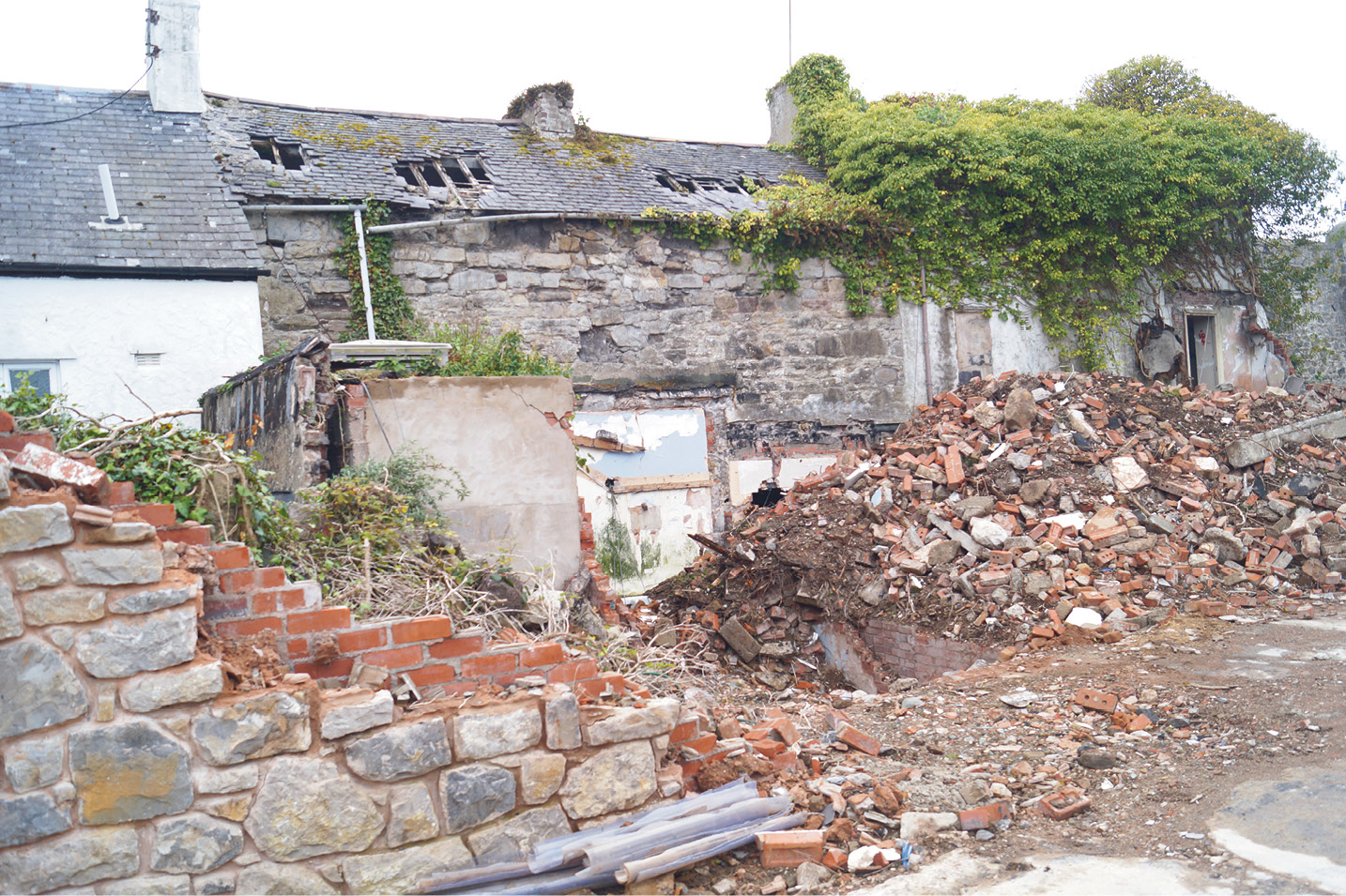
Among these developments was a range of buildings, built between 1800 and 1826, part of which would ultimately become the Steeple Lane Social Club. A contemporary map clearly shows a surviving section of the town wall running along the rear of this property – but in the 1970s an extension to the Social Club was thought to have consigned this fragment of the old defences to history, like so many of its contemporaries. Fast forward to the present, however, when it was the Social Club’s turn to be demolished, and work by C R Archaeology has revealed that all was not lost after all.
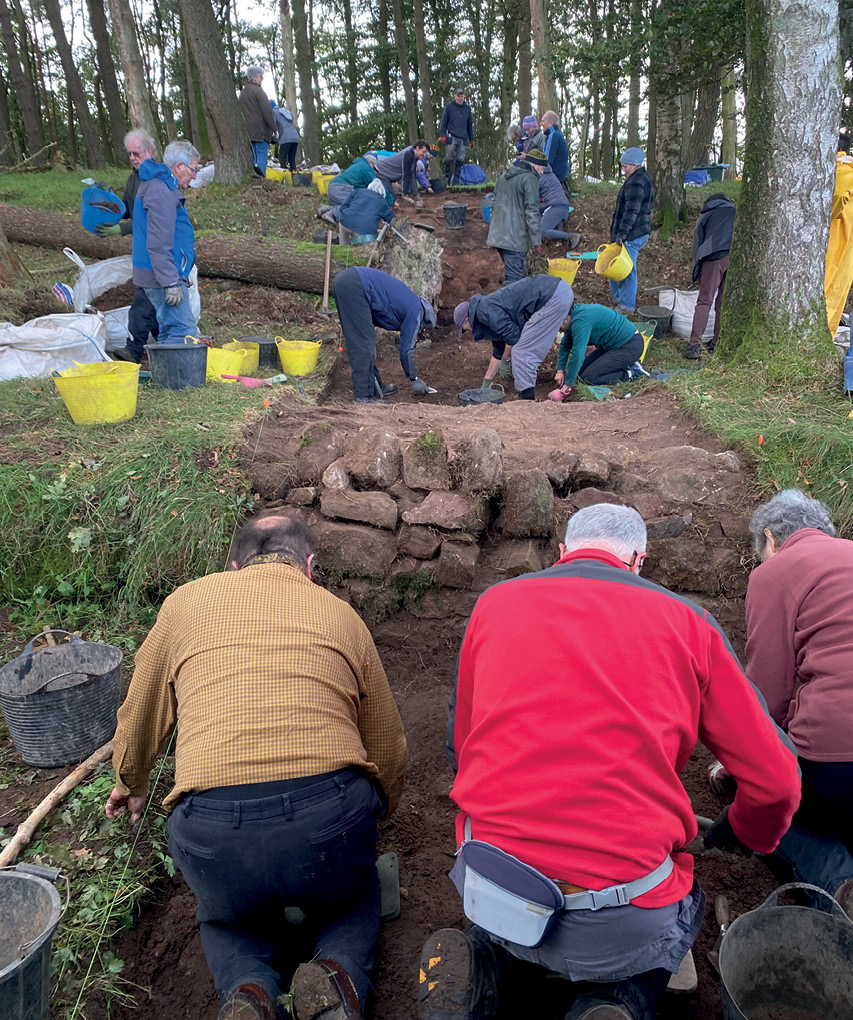
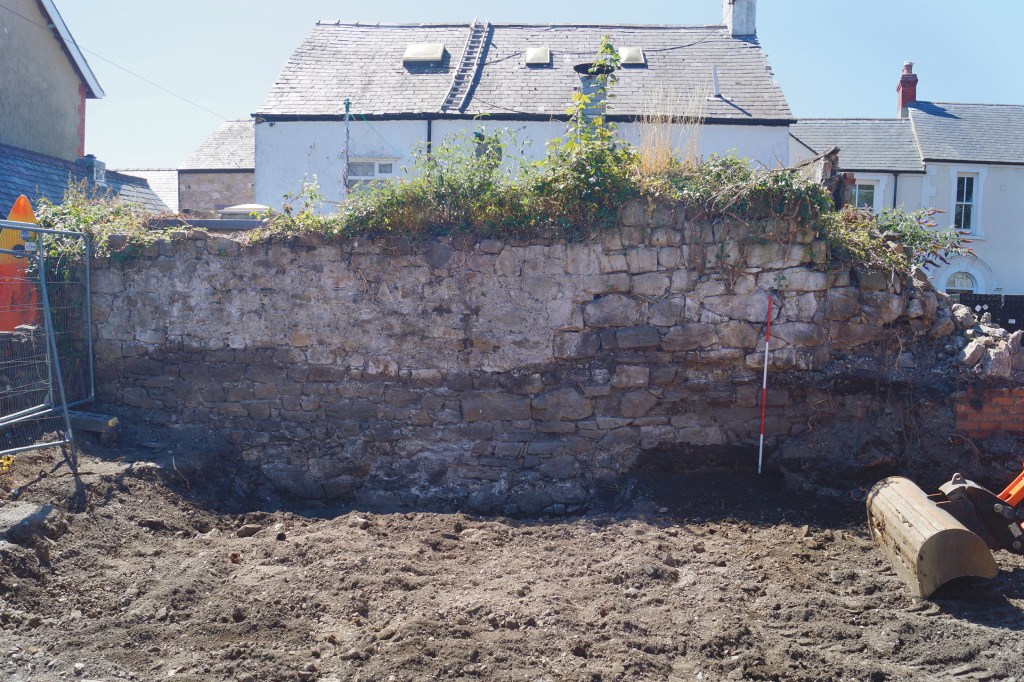
Between 2018 and 2023, we were commissioned by Cyngor Sir Ynys Môn, the Isle of Anglesey County Council, to carry out archaeological works on the Social Club site. As the rear extension from the 1970s was dismantled, we found to our delight that, while the modern building had cut through the line of the old town wall, it had not removed it entirely – instead, two surviving stretches still stood on either side of its footprint. One of these measured a full 9.5m long and, although the 1970s works had damaged its outer surface – removing some of the facing stones and eating into its core, creating a stepped appearance – and although it had also been disturbed by tree roots, we were still able to analyse its make-up in detail. This portion stood up to 4.6m high and measured up to 2.5m thick and, as has been observed at Beaumaris Castle, it was made from a mix of local materials – predominantly limestone, together with some sandstone and schist used for the facing around a rubble core. One area of its face, to the north-east, had also been pointed with a rough lime mortar, perhaps representing a later repair.
Message in a bottle
The base of the wall was recorded approximately 1.3m below the current ground level, and as we excavated deeper in order to locate it, we uncovered an interesting deposit that had banked up against the masonry, and had been sealed by the 1970s construction. Covering an area of around 9.5m by 10.5m, and measuring c.1.3m deep, this mass of soil and silt produced an illuminating array of later 19th- and early 20th- century glass and stoneware soda bottles. It is possible that this deposit was associated with the construction of nearby Margaret Street in the late 1800s, or with the open area being used as a local dump, but it offered interesting insights into the lives (and tastes) of the people who had lived in the wall’s shadow in the late 19th and early 20th centuries. Bottles were found in such numbers as to suggest that they might have come from a grocer or a pub (a number of drinking houses are known to have existed in Beaumaris near to or on Steeple Lane at this time). Some 31 soft-drink bottles were recovered in all, 26 made of glass and five of stoneware, representing six different companies. Strikingly, many of these businesses were based in Liverpool, reflecting the strong shipping connections between these two port towns in the post-medieval period (something that Matthew Jones is currently researching).
One such company was Schofield Bros, whose bottles were the most numerous found on the site, comprising 19 of glass and one stoneware example. The glass bottles – which were found in a single group, perhaps indicating a crate or a box being thrown out at the same time – were a clear light green, and would have held 280ml, approximately half a pint. Their date can be surmised through a bit of detective work: we know that Schofield’s built a new factory on Dalrymple Street in Liverpool in the 1880s, which endured until the mid-1990s. Raised lettering on these bottles, however, gives the company’s address as Wilbraham Street, indicating that they pre-date this relocation. Adding to this picture, there is evidence that the bottles had used a particular kind of cork stopper with a wire swing-top lid, a style that came into use in the 1860s.
The stoneware bottle, which would have held ginger beer, is thought to be of a similar date: its body is marked with an oval stamp attesting that it was made by ‘Midland Pottery Co., Melling’, a company that was established in 1872. Two more stoneware bottles, thought to date from 1850 to 1920, were stamped with the name ‘Tamplin’ – another Liverpool company, though we could not find many details about it. The Pier Mineral Water Company, meanwhile, was responsible for the presence of another green glass bottle – this one a distinctive Codd-neck design, with the marble that would have sealed it still intact – dated to 1866-1913, while three bottles made of blue-green glass are marked ‘W Perkins’ and date to the later 19th century.
Moving outside Liverpool, there was a green bottle that had once been used by Jewsbury and Brown, a pharmaceutical chemist and soft-drink manufacturer that was established in Manchester in 1826 and was bought out by Schweppes in 1964. Helpfully, the bottle had been designed to take a crown cap, allowing it to be dated to 1890-1920. The final drinks bottles comprised two stoneware ginger-beer bottles, which were unbranded but had a Liverpool maker’s mark, and a worn blue-green torpedo bottle from Ruthin Soda Water Co. – a firm which only operated under that name between 1857 and 1900.

Aside from drinks bottles, the refuse deposit produced two square green glass medicine bottles, one of which was labelled ‘STOWERS FRUIT ESSENCES’ and ‘LIVERPOOL’ in raised letters, and the other marked as containing ‘J.C ENO’S EFFERVESCING FRUIT SALT’. Finally, we recovered a single jam jar decorated with vertical ribbed lines making a panel design. The key to its date came from text on its base: ‘NOT GENUINE UNLESS BEARING Wm P HARTLEYS LABEL’. Hartley’s grocery began selling branded preserves in 1874, and the jar must have been produced before the company was incorporated (in 1884), when it became William Hartley and Sons Ltd.
Close to the glass bottle dump, one more find of commercial interest was a metal promotional sign for Sunlight Soap. This brand’s production began in 1885 in Warrington, moving to the Wirral in 1888 with the construction of the Port Sunlight factory and town. The £1,000 guarantee featured in this particular advertisement had been created in conjunction with this expansion, beginning in the 1890s but periodically repeated as late as 1910 and possibly the 1940s.

Lost ditch attempt
On the north-western part of the site, we documented a second portion of town wall – part of the same stretch mentioned above, which had been cut by the 1970s extension. It rose dramatically towards the local church. Then, along the Steeple Lane frontage, we uncovered the remains of an even earlier defensive feature: the town ditch.
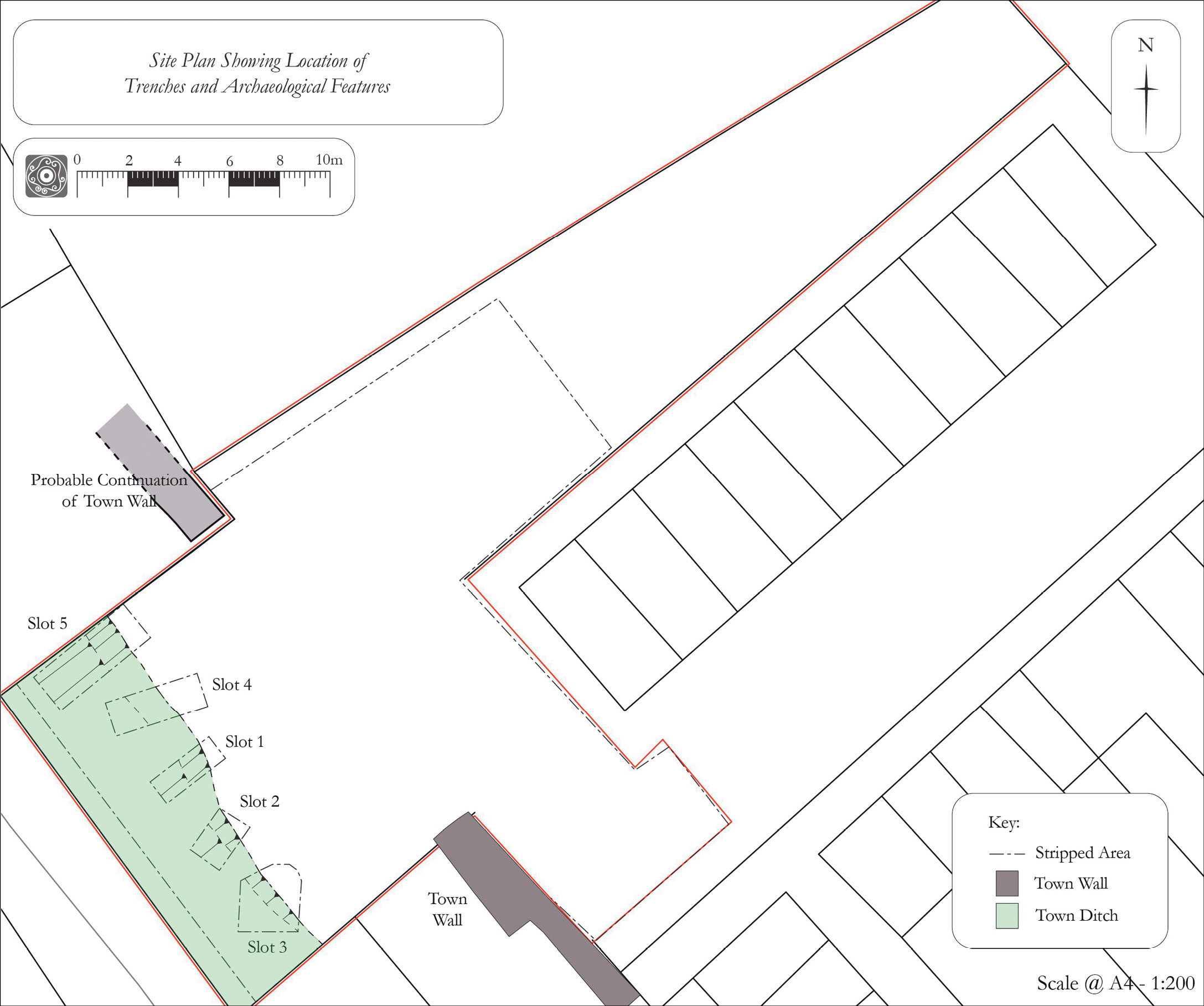
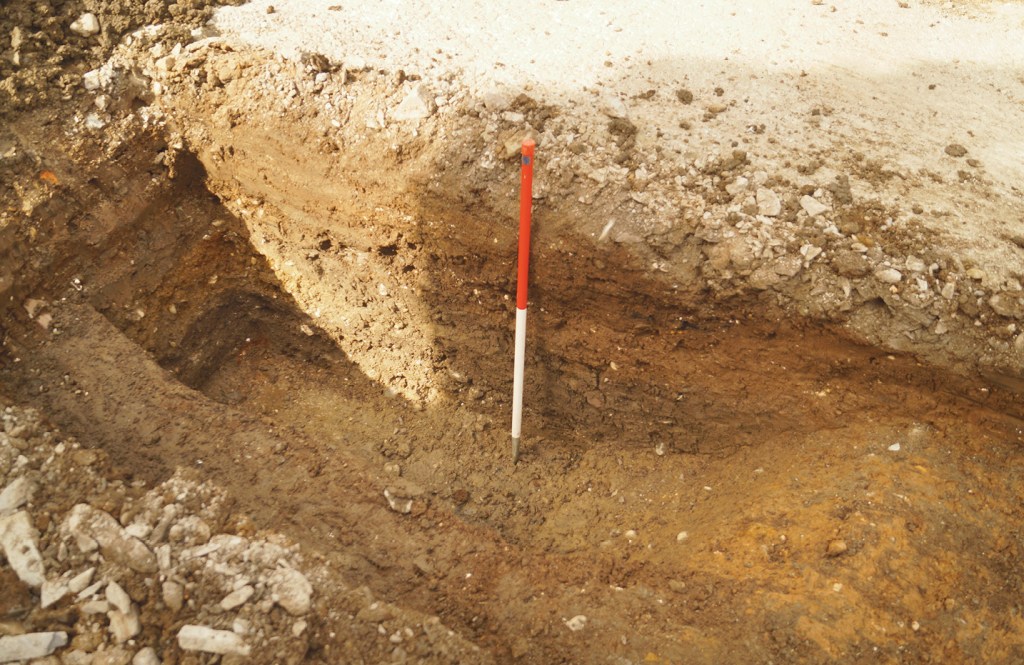
Originally created in the early 15th century, the ditched defences measured approximately 550m in length and enclosed roughly the same area as the town walls. We know from contemporary documents that the line was recut at around the time that the wall was built, and at least once more after c.1600, but its status in later years is uncertain. Nevertheless, we thought it likely that we would encounter its remains during our works and, sure enough, the ditch was discovered about 1m below the current street level, running approximately 16m along the full length of the Steeple Lane frontage. Its width continued beyond the edge of our trench, but it was at least 1.5m deep.
We put in five slots to explore its line in more detail, and these revealed traces of at least two recuts (the latest containing material from the 17th to 18th century) as well as an illuminating array of artefacts spanning the 13th to the late 18th centuries. This diverse assemblage reflects the repeated recutting of the original medieval ditch, as well as nearby activity and refuse prior to the construction of the Steeple Lane houses in c.1800.
Together with a single sherd of 14th-/15th-century pottery, the medieval material included ten fragments of decorated tile, ranging in date from the 13th to 15th centuries. As they were found in a mixed deposit with much later (17th-/18th-century) pottery, it is clear that they have been redeposited but, given the site’s proximity to St Mary’s Church, this building would seem their most likely source. The church was founded in 1330 and has undergone at least three phases of remodelling, with later additions dating to the 15th, 16th, and early 19th centuries. Its floor was replaced with slate slabs in the late 18th or 19th centuries, and it seems likely that waste materials from these works could have found their way into the ditch over time.
The majority of the material recovered from the town ditch, though, was of post-medieval date, spanning a relatively narrow range of AD 1600-1800. This included 64 pottery sherds, predominantly from jars or jugs, and wherever these were found, we also recovered animal bone and mollusc shells, indicating that this was domestic rubbish from neighbouring households.

Analysing animals
The animal remains were analysed by Dr Hannah Russ (archaeology.biz), and proved to be from a wide range of mammals, birds, and marine molluscs. From these, we can tell that the local community were enjoying a fairly typical diet for post-medieval British towns, with domestic animals including cows, pigs, and sheep/goat, as well as wild species like roe deer. Many of these preserved chop and fine-cut marks, reflecting that these were butchered food waste. The deer would probably have been hunted from wild populations, as managed deer parks had mostly fallen out of use by the 17th century, and these more usually contained red and fallow deer rather than roe. It is suggested that the native roe deer had become extinct in Wales by the beginning of the 19th century, but it is now returning.
Birds, meanwhile, were represented by domestic chickens, as well as wild species including geese. These were of the genus Branta, which in Britain would mean barnacle, brent, or Canada geese – most likely the last, as Beaumaris lies outside the known winter visiting locations for the barnacle goose (though this may not have been the case in the past) and brent geese are winter visitors, whereas Canada geese are considered a resident species. Interestingly, there were two fragments of swan wing-bone. They could also not be identified at species level, but three possible candidates include Bewick’s, whooper, and mute swan, and only the last of these is a resident species, with the other two being winter visitors. If the bones were from a mute swan, this species had a special status in England and Wales from at least the 13th century, regarded as the property of the Crown. Ownership was strictly regulated, and (legal) consumption was restricted to those of the highest status, making its remains an unusual component of an everyday urban rubbish heap.
More typical (unsurprisingly, given the coastal location of Beaumaris) was the presence of oyster and clam shells, some showing edge damage consistent with shucking. Edible oysters represent the most frequently recovered marine shellfish species on archaeological sites in Britain from the Roman period onwards, but in the 17th-18th century they were considered a luxury food, only becoming an accessibly cheap dish in the mid-19th century (though, of course, greater availability at coastal sites might override this pattern).
Interestingly, there were a number of animal remains recovered from the ditch-fill that probably do not represent food waste: at least six dogs and a cat. Two of the dogs were very large in size, while the other four were more ‘fox-sized’. Varying rates of bone fusion suggest that some were over 18 months old at the time of death, while at least one was younger, aged under 15 months. Were these animals pets? Companion animals were formally recognised in law during the late 16th to 17th century, after they were classed as private property. However, there were also populations of dogs and cats in urban areas that were not owned, and caused problems – an alternative interpretation for the Beaumaris finds is that they could have been strays who had been destroyed and their remains disposed of.

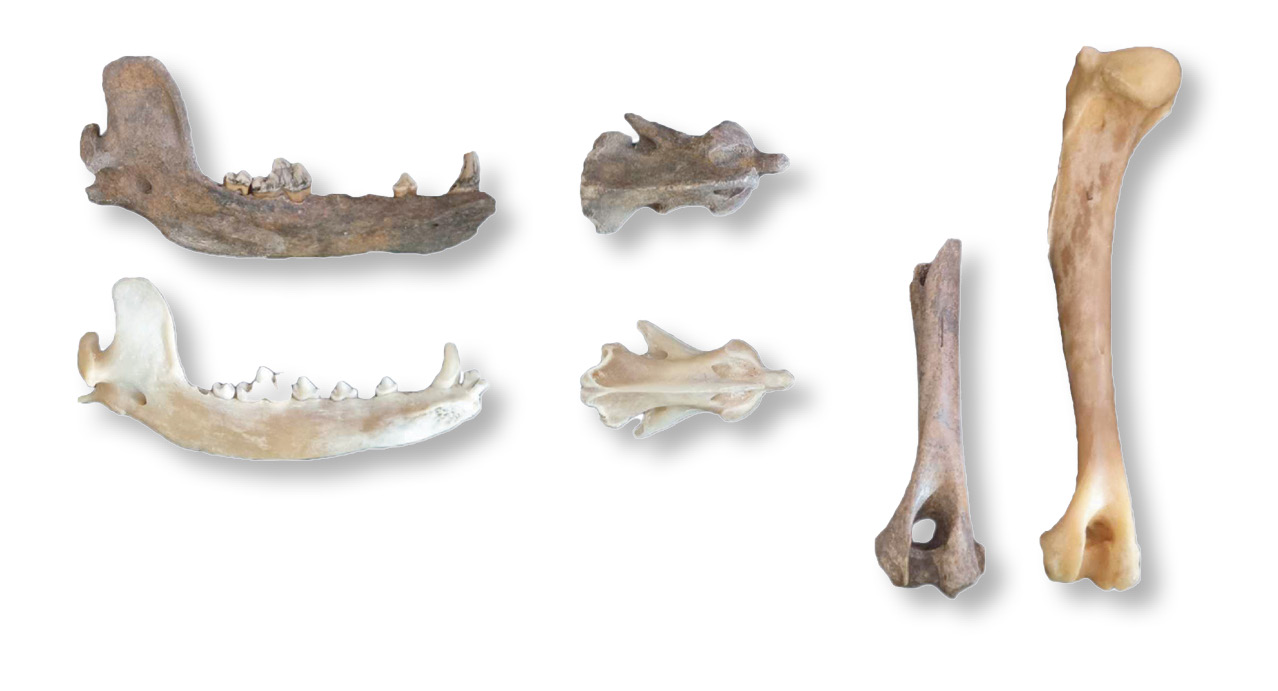
There is a third option, however: although there was no visible evidence for butchery or skinning on the bones, it is possible that the animals had been used in the local tanning industry. Historical records attest to tanning taking place in this area of Beaumaris from at least the 18th century, and in 1848 a letter to the North Wales Chronicle complained about the use of open drains in the town, including the old ditch being repurposed as a drain for a tannery. Could the dog and cat remains have been used in light leather-working associated with shoe- and glove-making?
Finds like these shine a vivid light on everyday life in Beaumaris over a long period of time, allowing us to imagine the shifting patterns of occupation and industry that took place beside the old urban defences. As for the defences themselves, the elements uncovered during our work are features of national significance, and their rediscovery will allow for them to be properly protected in the future. The town wall had been designated a Scheduled Monument, but after it was (erroneously, we now know) thought to have been destroyed in the 1970s, this status was removed. Following our recording of the wall, the section was made safe and will be re-Scheduled, ensuring that this section of the defences, at least, will endure for future research.
Acknowledgements:
The Beaumaris Town Wall excavation involved numerous parties, and we wish to acknowledge the key roles played by the following individuals and organisations. The animal-bone assemblage was assessed by Dr Hannah Russ, director of archaeology.biz. The project was undertaken as part of the planning process, following advice by Gwynedd Archaeological Planning Service, who monitored the work on behalf of Isle of Anglesey County Council. As the remains were identified as being of national importance, Cadw were invited to consider the structure for statutory designation. Other extant parts of the town wall are already afforded statutory protection as Scheduled Monuments, and Cadw engaged with the project throughout to ensure best practice. We would also like to thank on-site contractors Gareth Morris Construction Ltd for their professionalism and assistance during the site works. Finally, a massive thank you to all the staff and volunteers at Anglesey Archives, Oriel Môn, Gwynedd Archives, Storiel Bangor, and Bangor University Archives, all of which hold material relevant to the compilation of the site history, and all of which we visited while researching the site.
All Images: courtesy of C R Archaeology