
Subscribe now for full access and no adverts
The Rhine has been a great barrier through history. The mighty river became the eastern border of the Roman empire, and no emperor after Caesar tried to permanently conquer the lands beyond it. It was the boundary between Roman ‘civilisation’ and the ‘barbarians’. In countless wars since, it has been an obstacle that only the most successful generals have been able to cross in anger – such as Marshal Blücher, who built an early pontoon-style bridge in 1813 and succeeded in carrying the war against Napoleon into France itself.
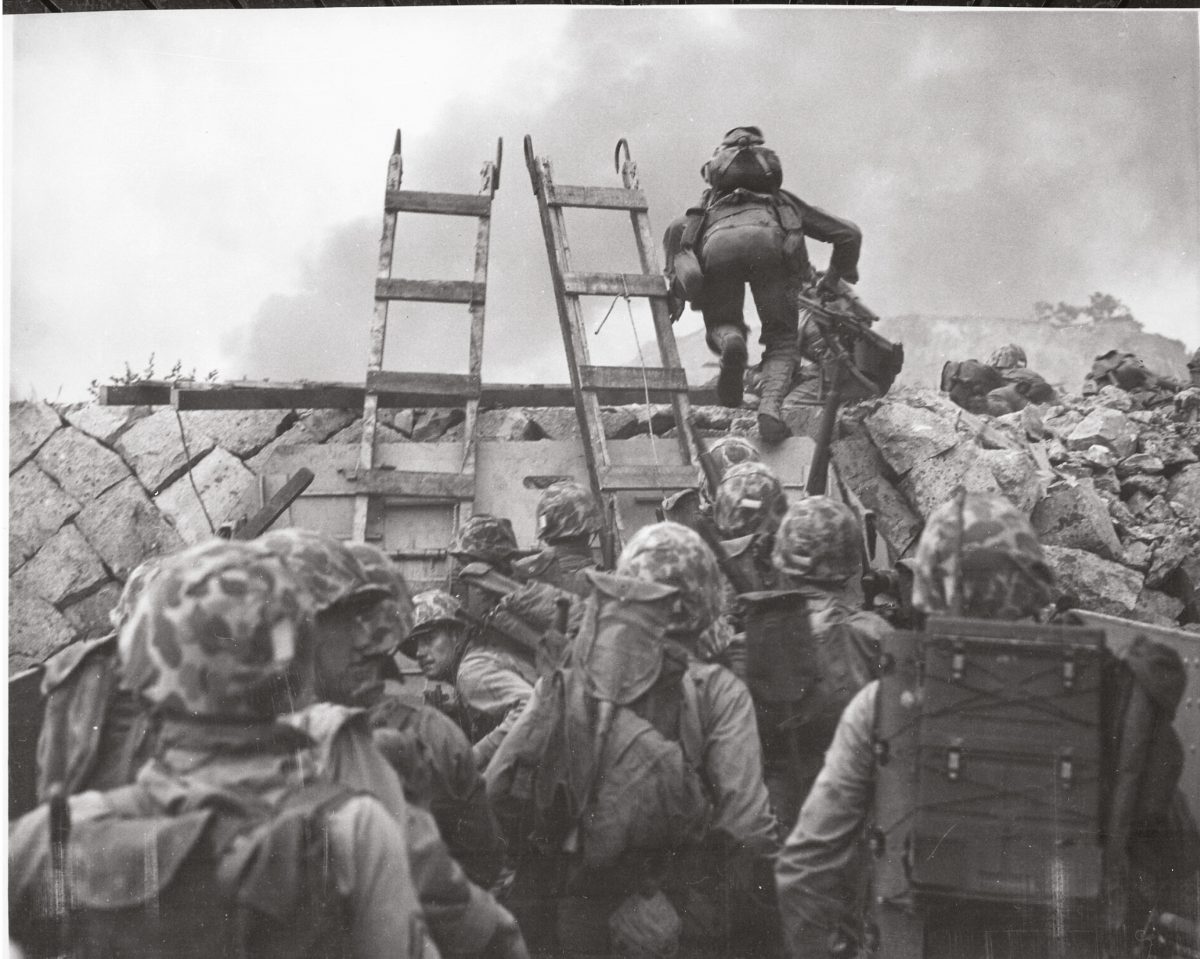
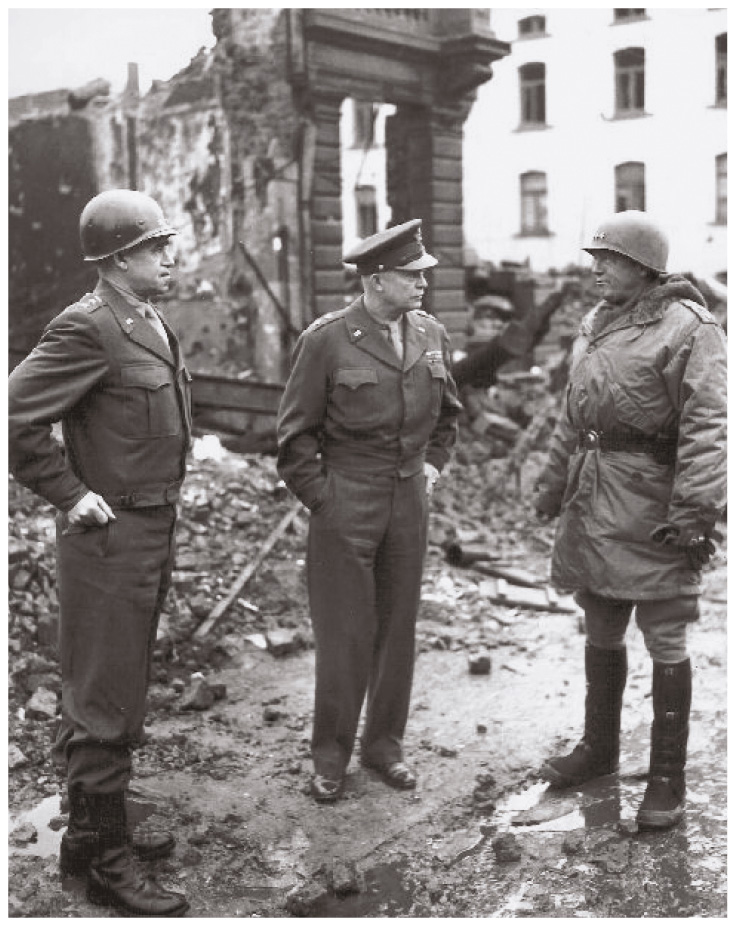
And so, at the beginning of 1945, Supreme Commander General Dwight D Eisenhower was naturally daunted by the prospect of having to cross the Rhine. He wrote of it as a ‘formidable military obstacle’. It was wide, deeply embanked and fast-flowing with wild currents. He described trying to cross it as more like ‘assaulting a beach’ than traversing a river. General George C Marshall, the Chief of Staff in Washington, later wrote: ‘I dreaded… the advance to the Rhine more than any other operation during the war.’
Formidable strength
To the Germans, the Rhine was a vital line of resistance, a border in the German national psyche that had to be defended to save the Fatherland. And, of course, the Allies knew that the Germans had explosives planted on most of the bridges across the Rhine, which they would blow up in advance of the arrival of Allied troops.
But when it came to it, in March 1945, crossing the Rhine was not the great obstacle that Eisenhower, Marshall, and many of their men feared. Why was that? What did the Allies have in 1945 that so many armies before them had lacked?
First, of course, there was a huge imbalance in manpower and resources. At the beginning of 1945, Eisenhower had command of seven Allied armies, a total of four million men and women. In Hitler’s headquarters, meanwhile, they counted 79 divisions available to defend the west. But many of these existed on paper only, and the vast majority were seriously understrength. In terms of numbers, the Allies had an overwhelming majority.
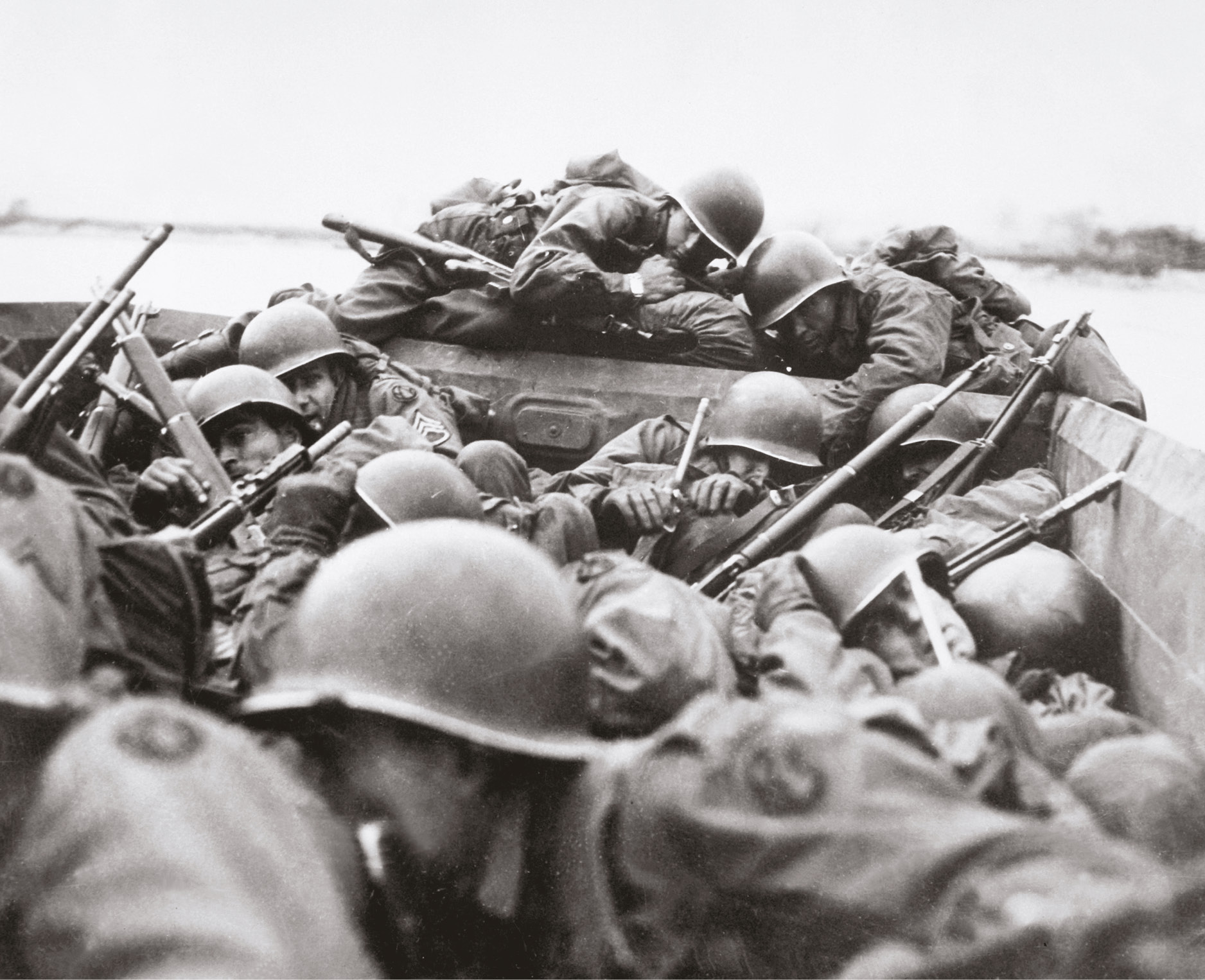
Second, the Allies had the vehicles and equipment to assist a wide river crossing. Landing craft used in the previous year were transported towards the front. Special trailers were constructed to carry large vessels across the roads of Europe: Landing Craft Mechanised (LCMs) that could transport light tanks, and Landing Craft, Vehicle, Personnel (LCVPs) to transport men.

Various amphibians were also prepared for use. Six-wheel-drive DUKWs, effectively landing craft that could drive up on to the beach and carry supplies on the roads leading away from the landing area, were drawn up in readiness. Tracked amphibious vehicles (LVTs) came into their own crossing the Rhine, too, especially the US-made Buffalo. This was armed with its own turret-firing Browning machine-guns and could carry a cargo of up to 24 men or 9,000lbs of supplies in the relative safety of an armoured wagon. Such vehicles and vessels proved of immense assistance in crossing the Rhine.
Engineers in the British, Canadian, and US armies were by this point adept at rapidly constructing pontoon bridges, even across fast-flowing rivers. These were made up effectively of a series of shallow floats, on top of which was laid a continuous track to enable vehicles and pedestrians to cross the river. They would take less than a day to construct; one was built in seven hours. They came in a variety of sizes and strengths, but some could support armoured vehicles up to 35 tons in weight. Such pontoons were designed for short-term use as an emergency measure to get troops and supplies across the river. However, so strong were some of these ‘temporary’ structures that they survived for many years after the war – and one pontoon, near Rees in the north, was still in daily use as a river crossing in the 1950s.
Third, the Allies had complete air supremacy. By 1945, the Luftwaffe were only a shadow of what they had been. Although jet-powered aircraft such as the Messerschmitt Me 262 and the Heinkel He 162 still posed a threat, this was mostly directed at the Allied bombers that kept up a relentless bombing offensive against the Fatherland – the USAAF by day and the RAF by night. On the other hand, Allied fighter bombers like the British Hawker Typhoon and the American Republic P-47 Thunderbolt could be called in for ground attack to provide support to combat troops. They could carry 500lb bombs or high-velocity rockets that were capable of taking out enemy armoured vehicles, trucks or artillery pieces. With virtually nothing to oppose them, they added formidable strength and agility to the Allied arsenal.
Finally, the Allied armies had a lot of luck. That always helps.
So, how did events unfold in early 1945?

To the last man
Eisenhower’s planned advance into Germany had been delayed by the Battle of the Bulge (see MHM 143, December 2024/January 2025), and the need to reinforce a weakened line and destroy this last German offensive. But, as the battle was turned in January 1945, Eisenhower’s strategy was to continue to advance on a broad 450-mile front and systematically to defeat German forces to the west of the Rhine. The Germans had lost men and resources, especially armour, they could not replace in the Bulge, while Eisenhower had the men to maintain an advance from the Vosges mountains in the south to the River Waal in the north.
Fighting now for the first time on German soil, Hitler insisted that every inch had to be defended to the last man and the last bullet. Fighting was particularly intense in the north, where Montgomery’s 21st Army Group was advancing towards the Ruhr industrial centre. But, counterintuitively, Hitler ordered troops instead to cross the Rhine to defend the western Rhineland. It would turn out to be a catastrophic error.
Then in the east, on 12 January, the Soviet Red Army launched its huge assault of 150 divisions along the Vistula in central Poland. This began the final stage of the vast Soviet advance into eastern Germany and towards the Oder river, east of Berlin.
Eisenhower began his assault by ordering General Devers’ Sixth Army Group to capture the Colmar Pocket in the south. This large area lay to the south of Strasbourg, in Alsace, and the German defenders there had fought hard through the final weeks of 1944. The assault, led by French and American troops, was launched on 29 January. Fighting was heavy, through thick snow in mountainous unpaved roads that soon turned into mud. In one action, a young second lieutenant remained behind after his tank commander had been killed, and used his field telephone to call in artillery fire on the approaching Germans. His name was Audie Murphy and he won a Congressional Medal of Honor for his action, which he later wrote up in a memoir entitled To Hell and Back. In 1955, this was turned into a film of the same name, starring Murphy himself.
On 8 February, the Colmar Pocket finally collapsed and the German survivors retreated across the Rhine, before blowing the bridges behind them. The Germans had suffered 23,000 casualties, including 17,000 prisoners captured. The first nail had been struck into the coffin of the German army to the west of the Rhine.
The next blow came further north, delivered by General Crerar’s First Canadian Army. In early February, they began an advance through the Reichswald, a densely forested area. Once again, thick mud permeated everything – with movement at one point becoming so difficult that there was a ten-mile traffic jam of supply vehicles. Fortunately, the Luftwaffe never spotted it. Despite all this, German forces were quickly pushed back and most managed to escape across the Rhine.
On 23 February, General Bradley’s 12th Army Group began its drive to the Rhine in the centre of the long front. As part of this, General Patton led his Third Army in a characteristically rapid advance eastwards. Bradley was anxious to avoid major fights to seize the big cities, and as a result radioed Patton to say: ‘Bypass Trier’. Patton replied: ‘Have already taken Trier. Should I give it back?’.
Further north, General Hodges’ First Army raced towards Cologne expecting a major battle to seize it, despite the fact that his forces outnumbered the enemy 10:1. The old Nazi Gauleiter for the city, Josef Grohé, demanded that it be contested metre by metre – in unerbittliche Verteidigung (‘unrelenting defence’). Having ordered the military to fight to the finish, however, Grohé fled across the Rhine. The city fell on 5 March almost without a fight.
In the Saar, in Germany’s south-west, the total number of enemy prisoners captured totalled more than 100,000. If nothing else, this illustrated Hitler’s folly in sending men to fight on the west bank of the Rhine. The number available to defend the heart of the Fatherland was now being drastically reduced.
A lucky break
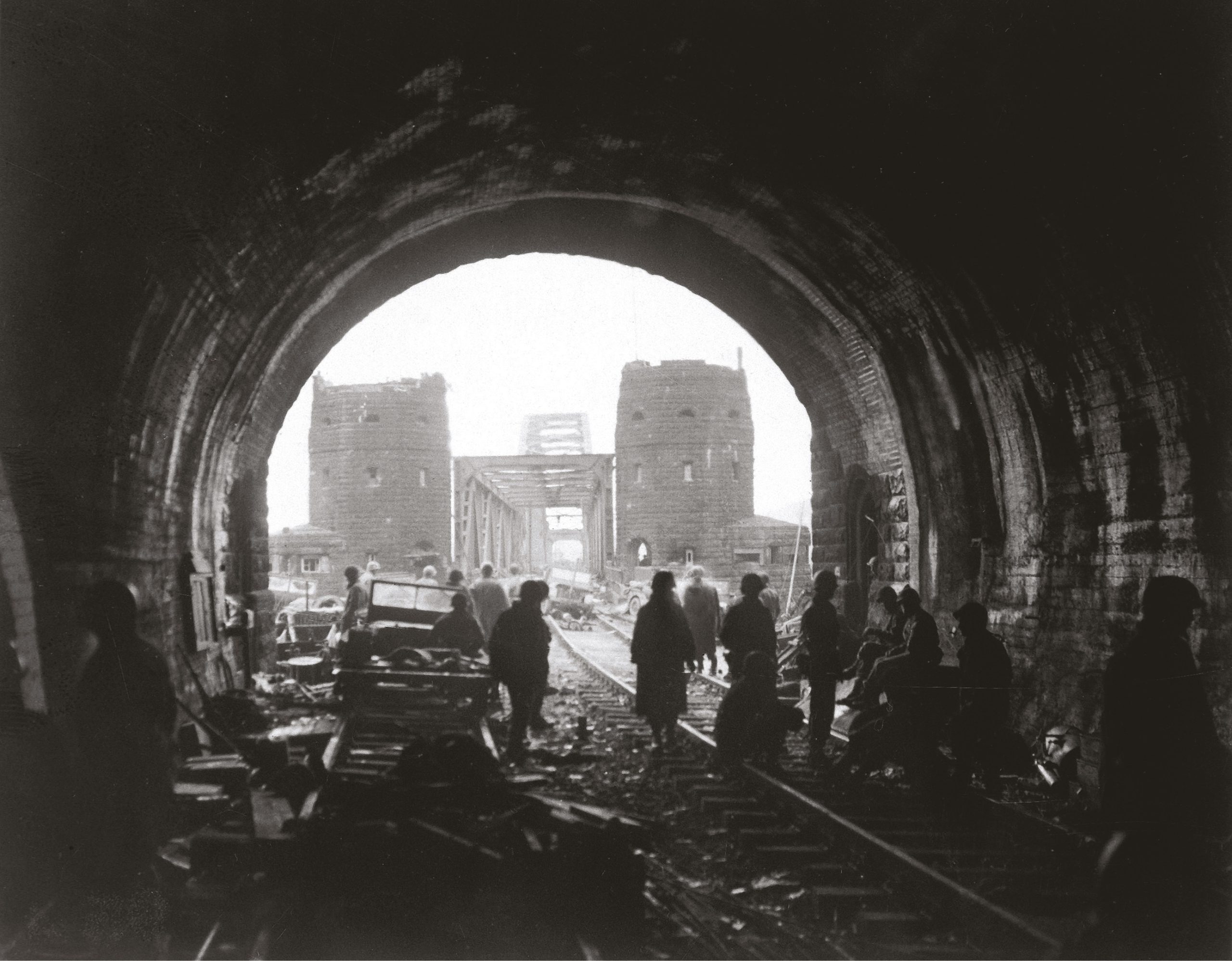
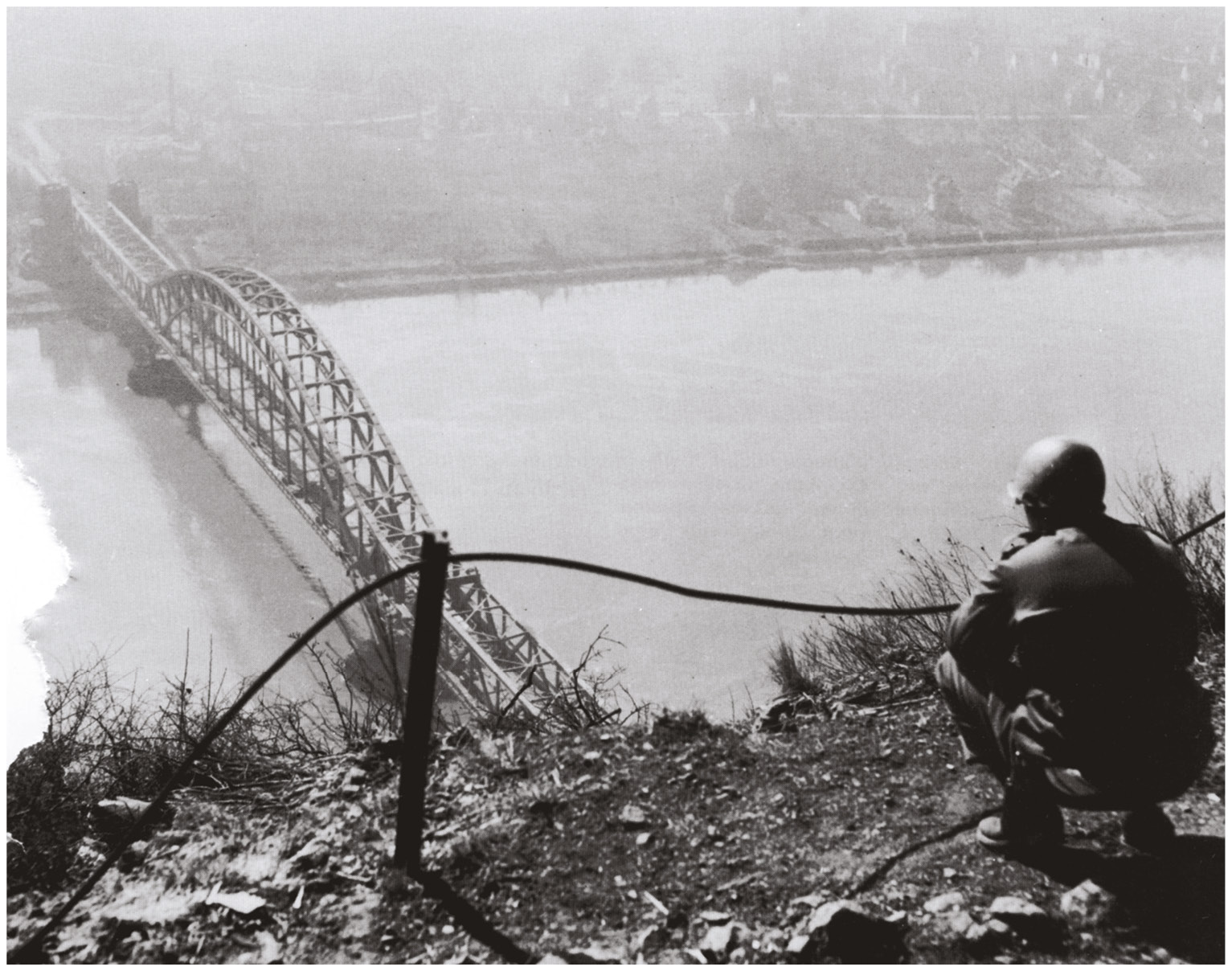
Two days after the capture of Cologne, the Allies enjoyed a remarkable stroke of luck. Late on the morning of 7 March, an advanced Tank Battalion of the 9th Armoured Division reached Remagen, 30 miles further south, where to its surprise it discovered that the Ludendorff railway bridge, although damaged, had not been blown. The German defenders tried to blow it up that afternoon – but still the explosion failed to destroy the bridge. Taking full advantage of this unexpected opportunity, the senior officer present, Brigadier William Hoge, ordered a company of his men to cross the bridge, anticipating a second explosion at any moment. None came. With American soldiers now on the east bank of the Rhine, Hoge ordered his armour to cross.
There was some indecision among senior command as to what to do next. The bridge was not in the right place to lead an assault into the heart of Germany. And Eisenhower’s plan was to rest up when his troops reached the Rhine and to reorder his forces before launching the assault that he hoped would end the war. Later, both Eisenhower and Bradley said they immediately ordered troops to pour across the captured bridge – but in reality there was a delay of a couple of days.
Finally, troops were ordered to cross the Bridge at Remagen and to reinforce a bridgehead on the eastern bank. By 13 March, three infantry divisions and nine artillery battalions had crossed the river. Just as important was the building of two pontoon bridges and a Bailey bridge alongside the Ludendorff railway bridge, to enable more troops and supplies to cross the river. The railway bridge, fatally weakened by explosions and fighting, finally collapsed on 17 March. Twenty-eight engineers working on the bridge at the time were killed, many drowned in the fast-flowing river below. But by this point, using the railway bridge and the supporting pontoons, 125,000 men with tanks and artillery were on the east bank. Without doubt, the capture of the bridge was a huge boost to morale and speeded up the overall crossing of the great Rhine river.
Meanwhile, a furious and paranoid Hitler, suspecting traitors had been at work, ordered a Nazi execution squad to put on trial and execute those who it found responsible for allowing the bridge to be captured. Several had been taken prisoner by the Americans and were safe. Four others were found guilty and were shot.
Operation Varsity
General Patton once again (as during the 1943 invasion of Sicily) felt himself to be in a race with Montgomery and got the first troops of his Third Army across the Rhine at Nierstein, south of Remagen, on the evening of 22 March. Within days, more troops had crossed the river near Koblenz using landing craft and DUKWs that had been brought up for the crossing. Two pontoon bridges went up at Nierstein, and in the next week 60,000 vehicles crossed the river and began to pan out in the advance into Germany. While making the crossing himself, Patton paused mid-river, got out of his jeep, undid his flies and urinated into the Rhine. ‘I’ve been looking forward to this for a long time,’ he told those accompanying him.

Patton had beaten Montgomery across the Rhine by a matter of hours. The major crossing in the north had been long planned by Montgomery’s 21st Army Group. It was the largest single operation since D-Day. On the east bank here, German forces had entrenched in large numbers to protect the Ruhr industrial district. First, on 23 March, came an artillery barrage and heavy bombing raids against the east bank, then a crossing of the river by commandos. On the following day, a huge armada of 1,700 aircraft and more than 1,300 gliders brought in 21,000 British, Canadian, and American paratroopers in the biggest airborne drop of the war, Operation Varsity. They landed to the north and east of the city of Wesel. Their mission was to prevent the Germans mounting a counterattack against the thinly held bridgeheads on the eastern bank.
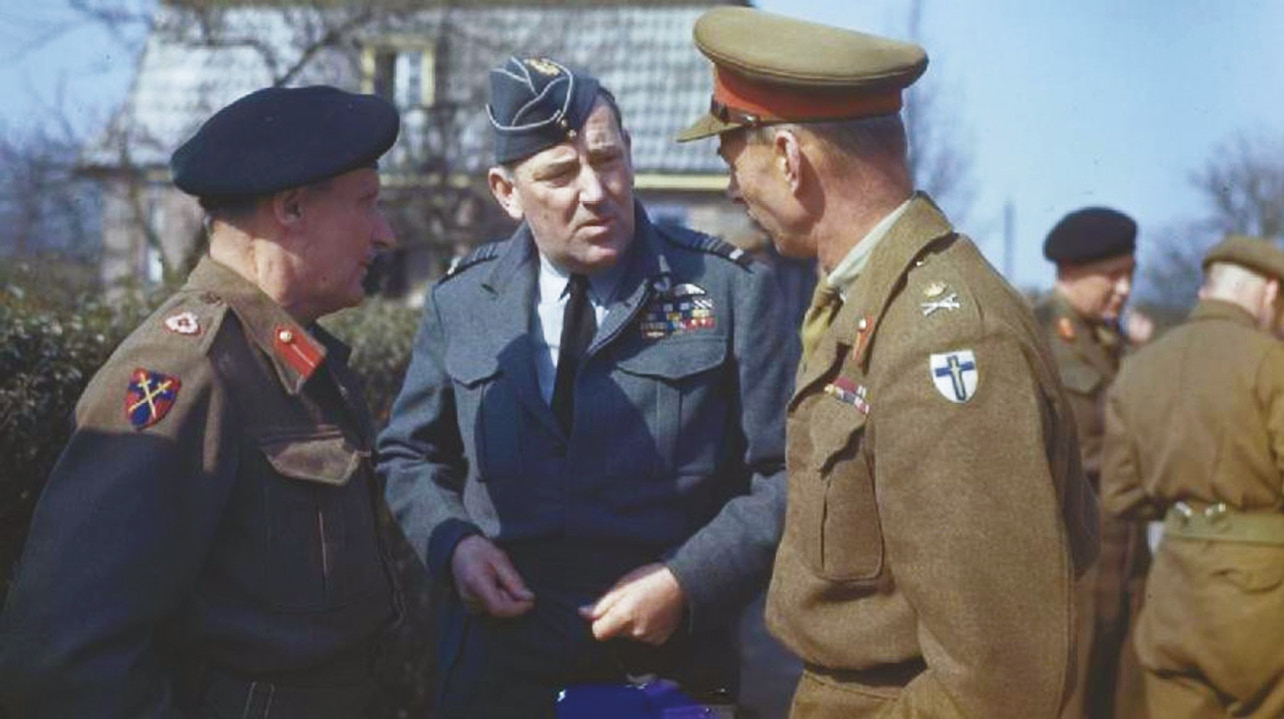
Watching this crossing had been the British prime minister, Winston Churchill, who had asked to come and witness events for himself. He watched the Varsity airdrop and then, in a lull, asked to cross the river. He and the Chief of the Imperial General Staff, Field Marshal Alan Brooke, clambered across the river over a damaged bridge near Wesel. But, after a short while, the east bank came under German artillery and sniper fire. General William Simpson, commander of the US 9th Army, ordered them to depart. Churchill, who was enjoying himself immensely, pulled a face, according to Brooke, like a ‘small boy being called away from his sandcastles on the beach’. Fortunately, both he and Brooke were unharmed by their adventure.
Heavy fighting took place around Wesel, and more than 1,000 paras were killed or wounded, but every German assault was repulsed. Within days the ground forces had met up with the airborne. A bridgehead 20 miles wide and eight miles deep had been established. Monty sent a message to his men wishing them ‘good hunting’ as they pushed ahead into northern Germany.

Final analysis
So, why did the mighty Rhine river not prove to be the obstacle almost everyone expected? In many ways, the reasons are obvious.
The four-million-strong Allied armies were basically unstoppable. They had the right vehicles and equipment needed to cross the river, to build new bridges, and to get men and matériel to the other side rapidly and securely. Their task had been made easier by the vast losses imposed on the Wehrmacht on the west side of the Rhine. In total, 282,000 men had been captured and about 100,000 had been killed or wounded trying to slow the Allied advance to the river. All of these losses could have been avoided if Hitler had not insisted on defending the area, and instead had withdrawn across the Rhine. The defence of the Fatherland now relied on Nazi diehards and the teenage boys and elderly men of the Volkssturm. They still fought with courage and often fanatical determination. But they were no match for the well-equipped, battle-hardened Allied forces.
Once they had crossed the Rhine, nothing could prevent the Allies from storming into the heart of Germany. With the Soviet Red Army also crashing through from the east, the next strategic question was: who would get to Berlin first and have the glory of capturing the capital of the Third Reich?
Taylor Downing’s latest book The Army that Never Was: D-Day and the Great Deception is out now (Icon Books, £25).
In the next issue of MHM: Was Eisenhower right to leave Berlin to the Soviets?
All images: Wikimedia Commons, unless otherwise stated