

Subscribe now for full access and no adverts
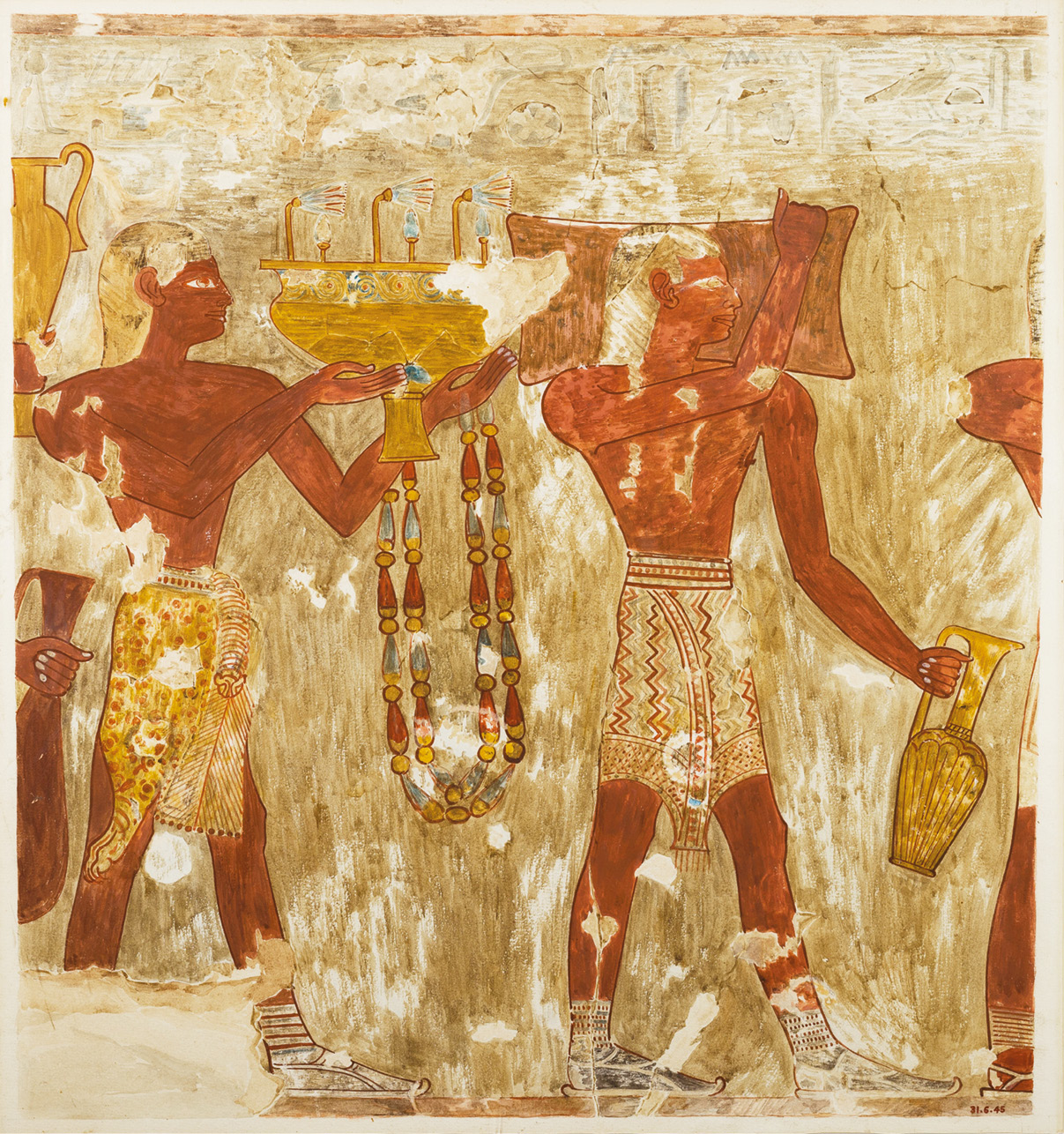
Costumes consisting of kings’ kilts, queens’ garments, gods’ vests, and goddesses’ gowns are recorded in royal and non-royal tomb paintings of the New Kingdom from Thutmose IV to Ramesses XI. I believe these depictions represent real cloth. While examples of patterned fabrics can be seen in the clothing painted in the Aegean frescoes of Thera and Crete, the gift-bearing Minoan Keftiu in a scene from the Tomb of Rekhmira (TT100), and the well-dressed Levantines in the caravan of the Aamu of Shu (seen in the Tomb of Khnumhotep, BH3), such highly coloured garments were reserved in Egypt for royals and the elite.
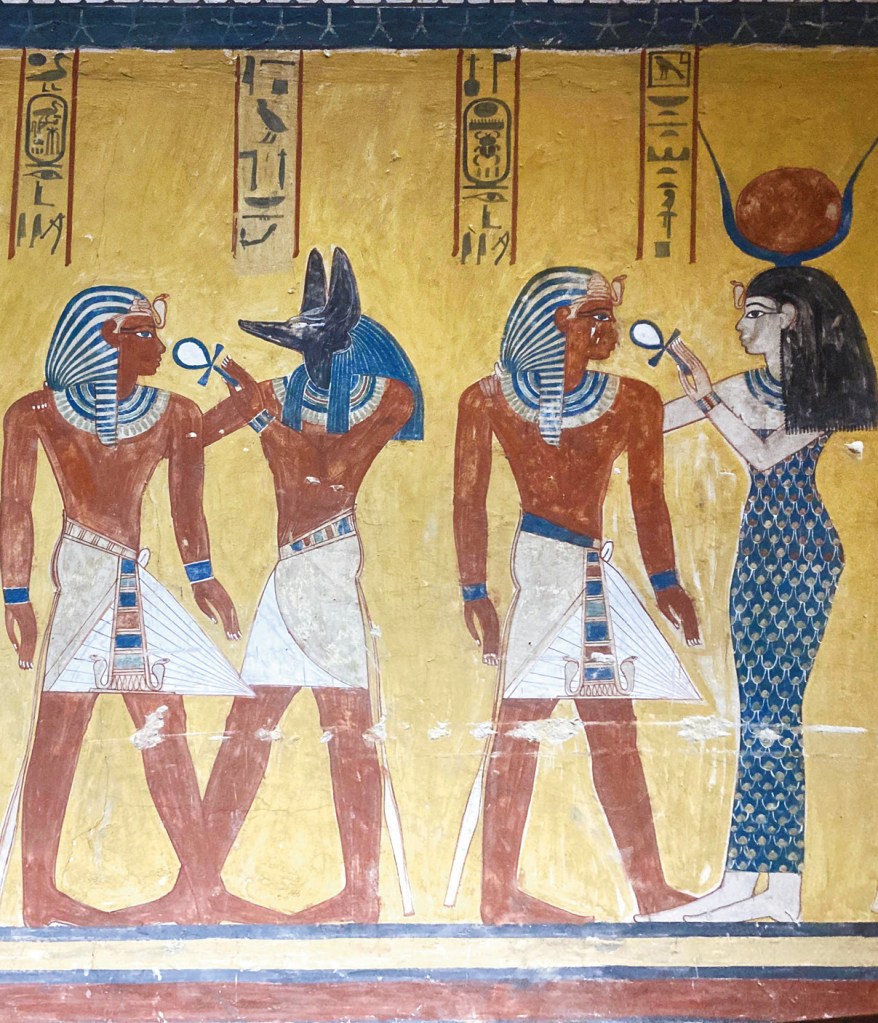
The Tomb of Thutmose IV (KV43)
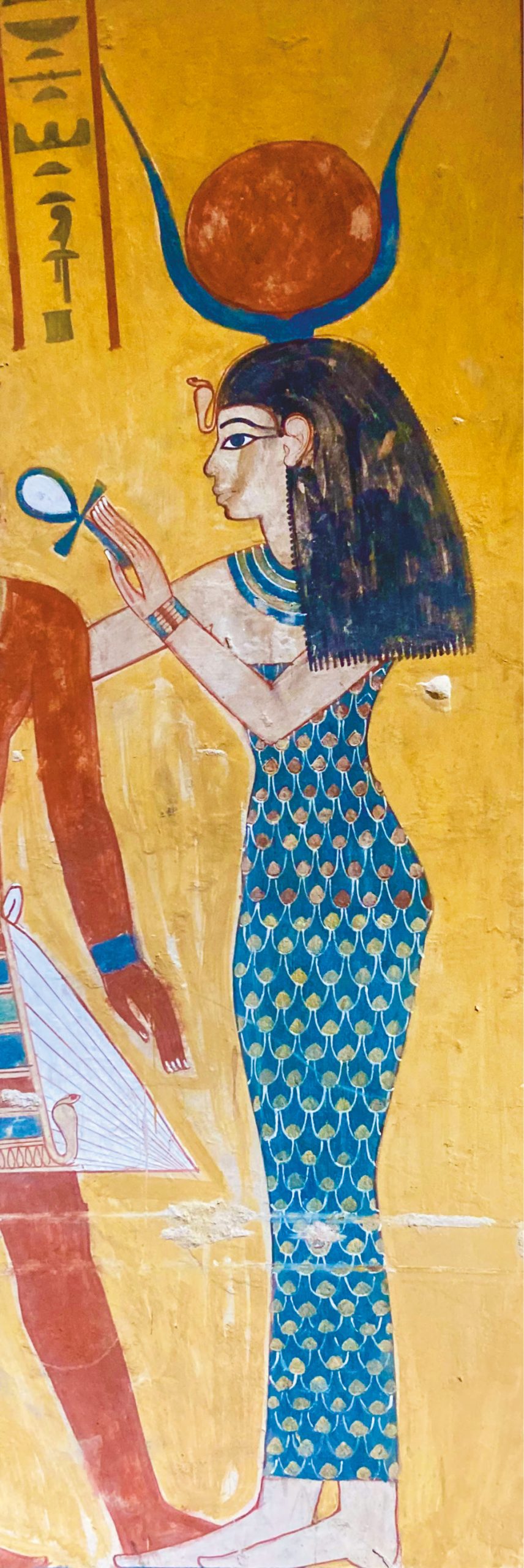
The scenes in one particular tomb inspired me to begin an ‘experimental archaeology’ project to discover, decipher, draft, and weave these patterned fabrics. This was a wall painting in the Tomb of Thutmose IV (KV43) depicting the goddess Hathor wearing blue, red, and gold rishi-patterned gowns. Because of my earlier research on woven Tutankhamun textiles, I was sure that such goddess gowns were depictions of hand-woven patterned fabrics, and not bead-dresses as suggested in the literature. I created a hundred hand-woven samples of the patterns found on the costumes, publishing the research in a series of 15 articles in the Complex Weavers Journal between 2013 and 2025.
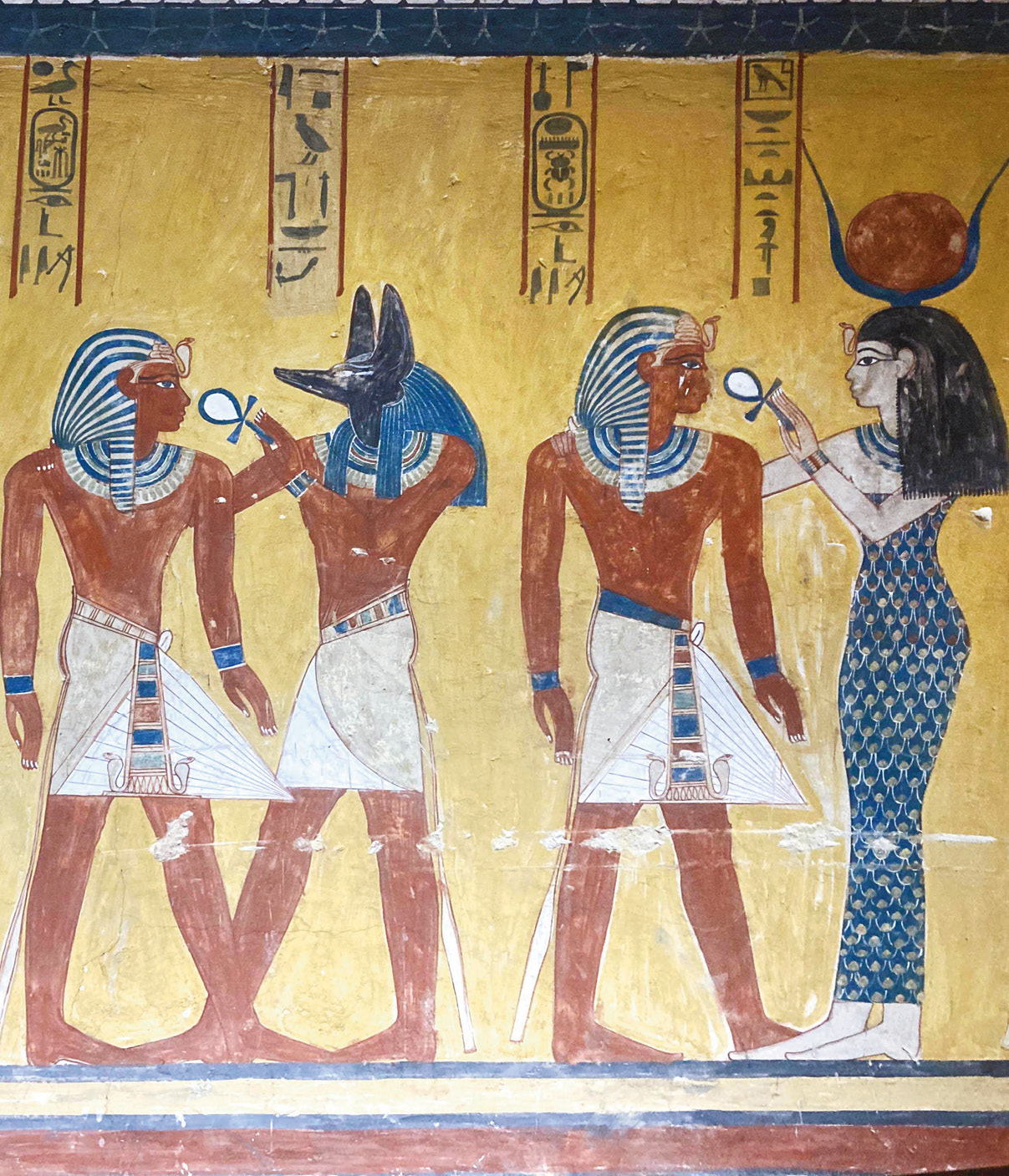
The goddess gowns are impressive, and my interpretation of their fabric designs closely matches the painted patterns. Though I believe the gowns actually worn by the elite were probably shapeless shifts, the sleek sheaths in the artwork fit the canonical female figures. The style of the gown, which was set in the earliest tomb paintings of Thutmose IV (c.1400-1390 BC) and Amenhotep III (c.1390-1352 BC), persisted with few changes – even in the Graeco-Roman temple paintings at Esna and Dendera. A single shoulder strap on the earliest gowns changed to a pair, and much later gowns were strapless. Below the breast and at the hem were narrow or wide patterned bands. Dress fabrics were all-over patterns in a colourful palette. Dressing a goddess in a patterned gown became an enduring part of the iconography, and the fully rendered figures in panoramic scenes, first seen in Thutmose IV’s tomb, set the style of tomb decoration for the pharaohs who followed. The wall paintings and the costumes worn by goddesses, gods, and kings in the tomb of his son Amenhotep III were extraordinary.


The hip patterns… are exactly the same chevron pattern found on Tutankhamun’s Amarna belt.