Subscribe now for full access and no adverts
Having occupied Wales for more than 300 years – since AD 78 – the Roman army was progressively withdrawn from the late 4th century. Roman authorities ceased dispatching coins to Britain to pay the remaining troops early in the AD 400s, and by the end of the first decade of the 5th century, Britain was no longer part of the Roman Empire. However, the end of Roman military control probably had little impact on the majority of people in Wales. Mass-produced pottery and other Romanised goods were no longer available, but in rural communities these had never wholly replaced locally produced artefacts of wood and iron, nor the production of textiles, tools, and querns – all based on the fundamental craft skills of the later prehistoric way of life, dominated by the demands of the agricultural year.
Living conditions might have become just a little easier with the demise of Roman taxation, though, and as the old order faded, new patterns of power were established. Local leaders began to emerge from among army veterans, civic officials, and native power-brokers – anyone with the ambition to seize and hold power. To support their retinues, they no doubt continued to demand a proportion of everyone’s agricultural surplus in return for keeping the peace and providing rough justice.
Much more of an impact is likely to have been felt a century or so later, because of climate change and disease. Britain and Ireland enjoyed a benign climate during the Roman period that was warmer and drier than previously. From AD 536, though, the atmospheric dust from a series of major volcanic eruptions centred on north and central America brought about abrupt and prolonged summer cooling across the northern hemisphere, lasting into the mid-7th century. A cooler and wetter climate increased the chances of crop failure and had an impact on yields. Wetlands became wetter, and uplands were covered in snow for longer, reducing the length of the grazing season for livestock and increasing the demand for winter fodder. The Annales Cambriae (‘Annals of Wales’, which began to be compiled at St Davids in the late 8th century but incorporated earlier material) contain a record of mortalitas in Britain in 537, presumably from famine following severe weather.

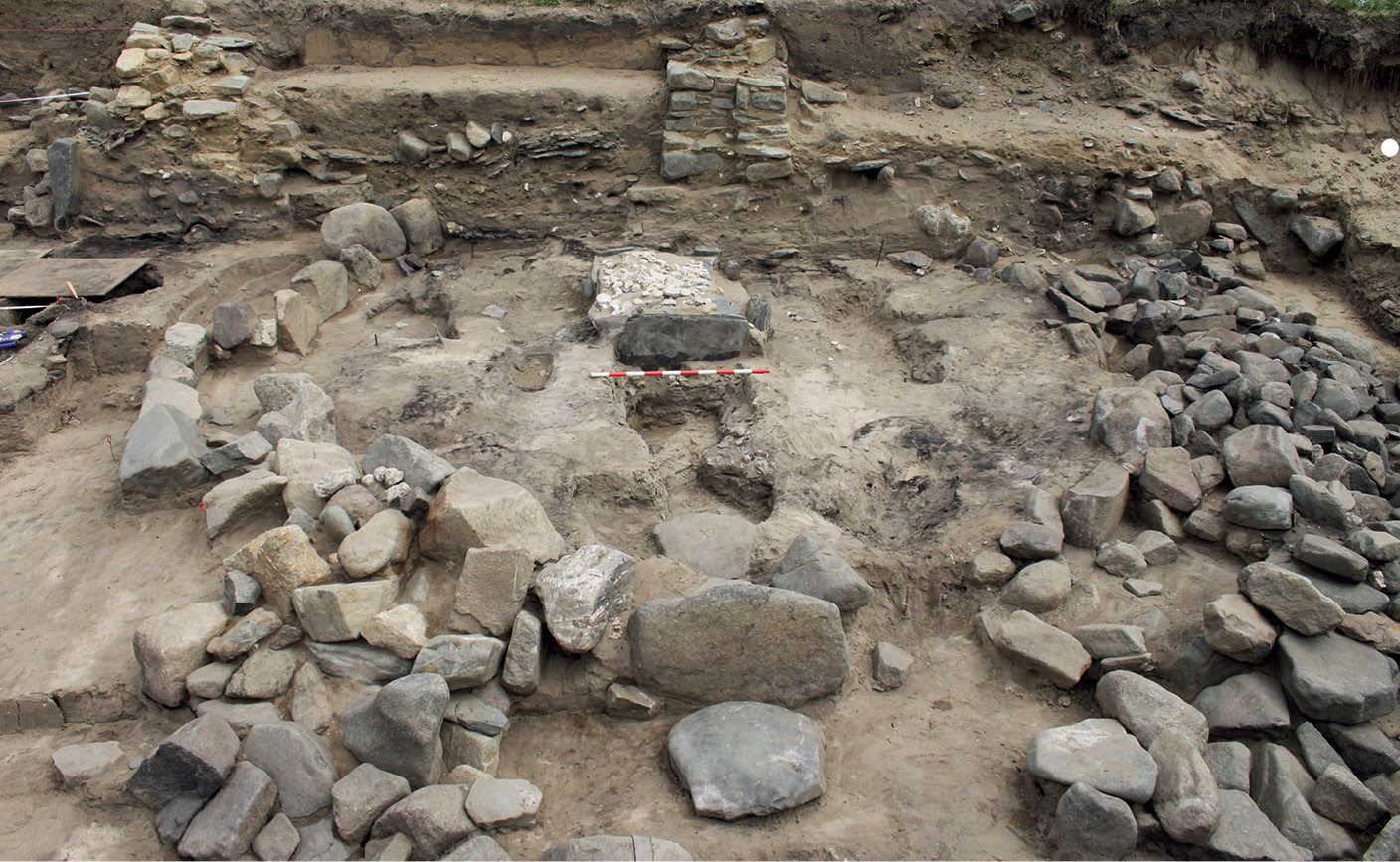
Into this ‘Late Antique Little Ice Age’ came the Justinian bubonic plague in the later 540s, carried by traders travelling along the Atlantic seaways. Called a mortalitas magna in the Annales Cambriae, it was responsible for the death in AD 547 of King Maelgwn of Gwynedd. There were also outbreaks of bubonic plague in England and Ireland in c.664-666 and c.684-687. Bede mentions that the first of these followed a very hot summer. The second tallies with entries in the Annales Cambriae recording ‘a great death in Britain in which Cadwaladr [ruler of Gwynedd] son of Cadwallon dies’ in AD 682.
A contracting population and conflict

Illness and a contraction in the availability of food undoubtedly led to a slow but steady decline in the population of Wales. The Oxford-based ‘People of the British Isles’ study estimates that the population of Britain during the later prehistoric and Roman period was about three million, but that it had fallen to fewer than one million by the end of 5th century, and perhaps half that again in the 6th and 7th centuries. Population decline meant fewer mouths to feed but also fewer people to undertake the relentless tasks necessary for survival. Less time would be left for artistic and craft endeavour, though the rich legacy of tales in the Mabinogi (compiled in the 12th century from much older oral traditions) suggests that storytelling helped people survive the long cold nights of winter.
Gildas, writing in the mid-6th century, describes parts of Wales as being ruled by ‘tyrants’ who exercised power through violence and coercion: among others, he names Maelgwn of Gwynedd, calling him insularis draco (‘dragon of the island [of Anglesey]’), and Guortepir (Vortipor), ‘tyrant of the Demetae’ (the old name for the early medieval kingdom of Dyfed). He chastises them for terrorising and exploiting their own people. Their tactics – cattle-stealing, slave-taking, and the destruction of crops – impacted on farming communities and further compromised food security.
Conflict seems to have been endemic. Chronicles of the period list many raids and battles, noting the mutilation and violent deaths of rulers and their rivals, and the holding of others for ransom. Conflict between the various competing branches of ruling families was also common. For example, a late 6th- or early 7th-century inscribed stone from Llanboidy, Carmarthenshire, records the killing of Mavohenus, son of Lunaris, an individual of sufficient status to be accorded a memorial.
The battle sites recorded in the chronicles are all but impossible to locate on the ground, and ancient human remains rarely survive in the acidic soils of Wales, but the violence of the age can occasionally be glimpsed in the osteological record. Nancy Edwards cites as an example the earthwork that encloses a mass grave at Heronbridge, near Chester, between Watling Street and the River Dee. Radiocarbon-dated to the 6th or early 7th centuries, the individuals buried there died from head wounds, and it has been suggested that they were killed at the Battle of Chester in AD 616 (see CA 202). Routine violence in the later Viking Age is evidenced by six burials thrown into shallow graves in the upper levels of the enclosure ditch at Llanbedrgoch (CA 184 and 276), their hands tied and their heads cut by sword blows.
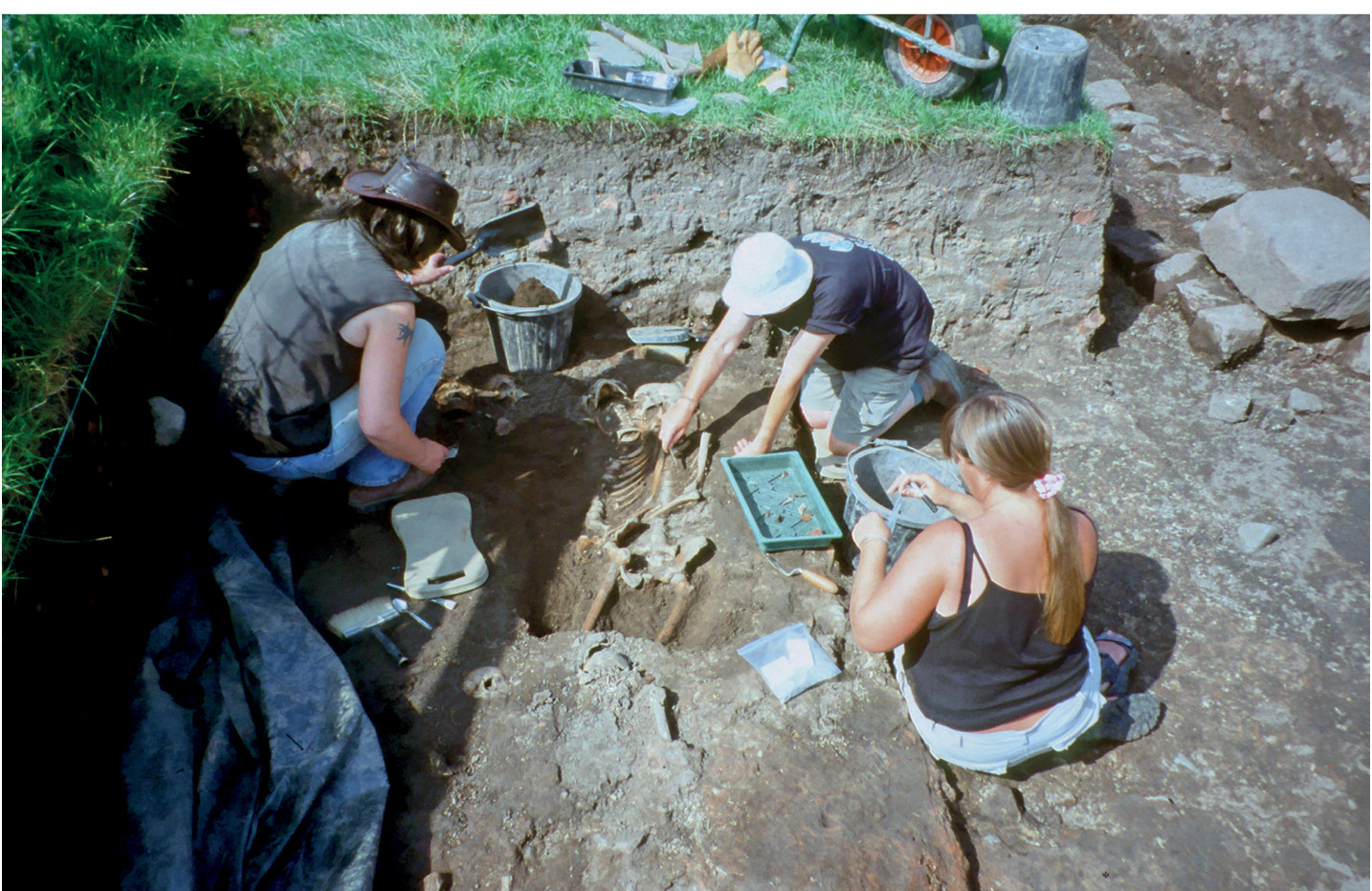
This contrasts markedly with the remains uncovered at Llandough, Glamorgan, where a large cemetery spanning the early medieval period was revealed during the construction of a housing estate close to St Dochdwy’s church (CA 146). Out of some 850 burials, only three showed signs of violence in the form of injuries to the head. In each case, though, their wounds showed signs of healing, demonstrating that these were not the immediate cause of death. Furthermore, overall nutrition appears to have been relatively good: instances of enamel hypoplasia (tooth lines and furrows indicative of malnutrition during the growing years) were not very high, nor were signs of anaemia, scurvy, or rickets. Gout, however – a condition associated with good living – was present in some individuals.
The Llandough cemetery is located 100 metres north of a Roman villa that appears to have been abandoned during the earlier 4th century, but sherds of later 5th- to mid-6th-century amphorae and two fragments of 6th- or 7th-century glass from western Gaul found in the cemetery hint at later activity and wider contacts. A likely scenario is that a monastery was founded there during the later 5th or earlier 6th century on the villa estate, possibly by Dochdwy, to whom the current church (built in 1865) is dedicated. Clergy associated with this foundation are named as witnesses in more than 30 Llandaff charters dating from around the mid-7th century onwards.

Searching for meaning in memorial stones
A monastic lifestyle was undoubtedly attractive in a period of rapid change and uncertainty, offering an alternative to the hardships of agricultural labour or the violence inherent in being part of a warlord’s retinue. In the face of much instability, it is not hard to appreciate the appeal of Christianity, with its comforting messages of a loving God and the prospect of life after death, as well as a highly structured daily life and a yearly round of activities that re-enact the drama-filled Gospel narratives.
But Nancy Edward’s book argues that the continuity of Christianity in Wales (by contrast with its reawakening by the Roman missionary St Augustine in England) was based on more than an understandable desire for relative security: the two lasting impacts from centuries of Roman rule were Christianity and Latin literacy, she says. The idea had become strongly rooted among the emerging elite of the 5th to earlier 7th centuries in Wales that to be Roman was to be Christian.
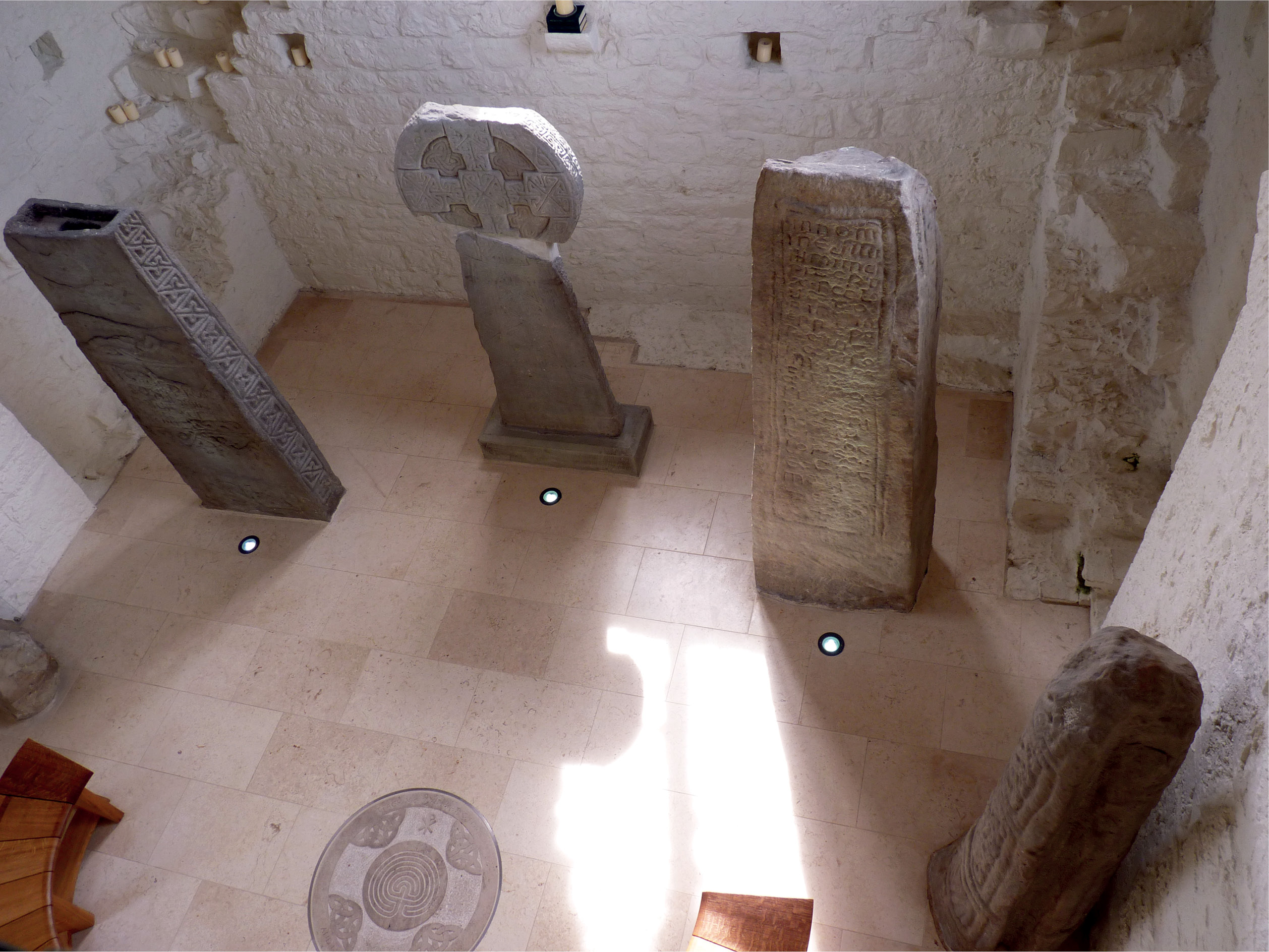
A rich seam of evidence for this is found in the hundreds of surviving early medieval inscribed memorial stones and carved crosses that form the most prolific material evidence we have for this period in Welsh history. Nancy Edwards has made a lifetime’s study of these (published in two of the three volumes of the Corpus of Early Medieval Inscribed Stones and Stone Sculpture in Wales, University of Wales Press, 2007-2013), and new examples come to light from time to time through excavation or the chance discovery of stones reused in the walls or floors of later medieval churches.
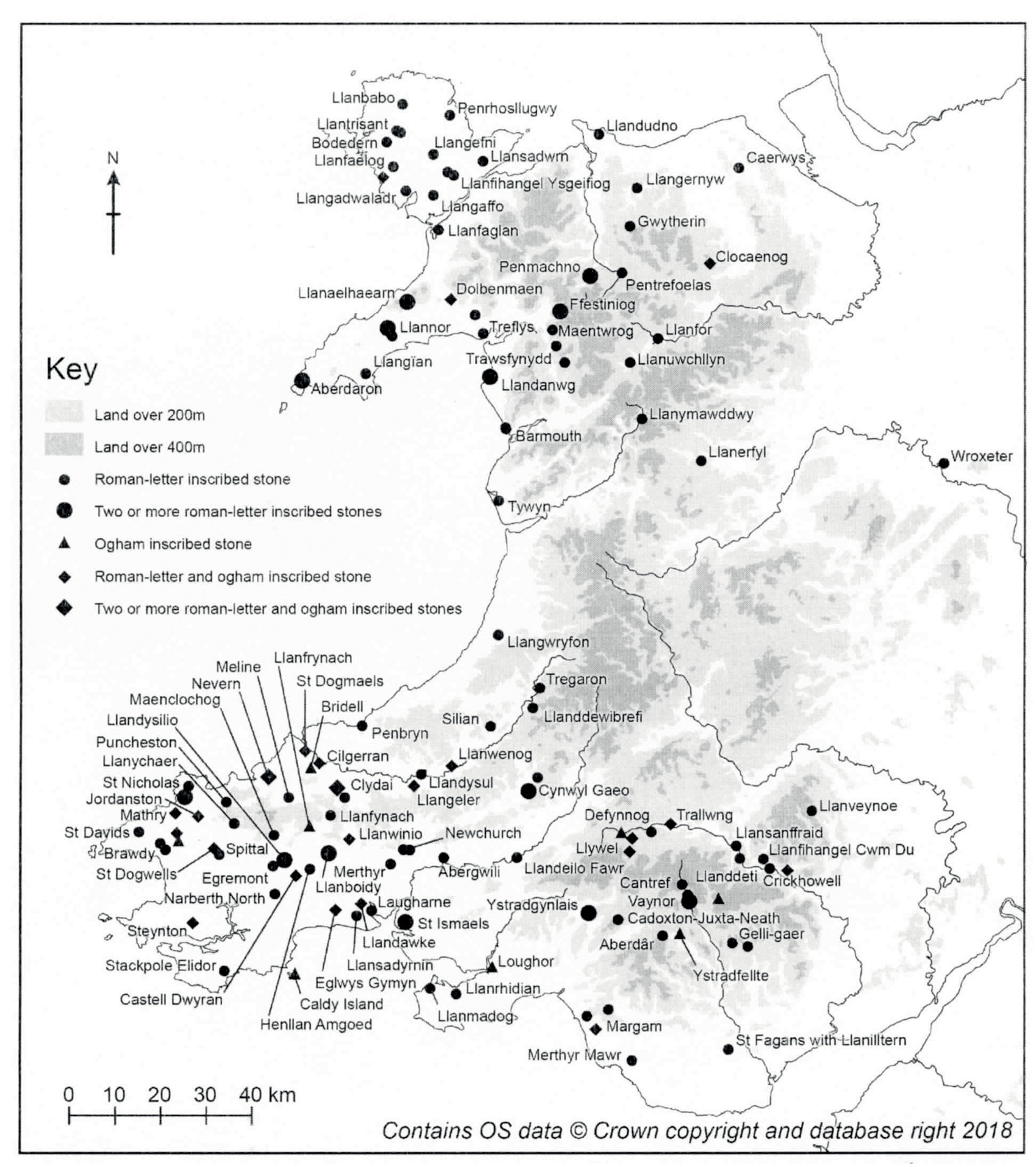
To-date, 151 inscribed stones have been noted in Wales and the borders, dating from the 5th to 7th centuries. In addition, more than 420 carved crosses, slabs, and other stones have been recorded, dating from around the 7th century and beyond. These represent the tip of an iceberg, Nancy argues, because we should assume that monuments, crosses, and grave markers were also carved in wood. If these can be regarded as a proxy for the conversion to, and scale of, Christianity in early medieval Wales, it demonstrates the landscape of Wales was becoming increasingly Christianised by the 7th century.
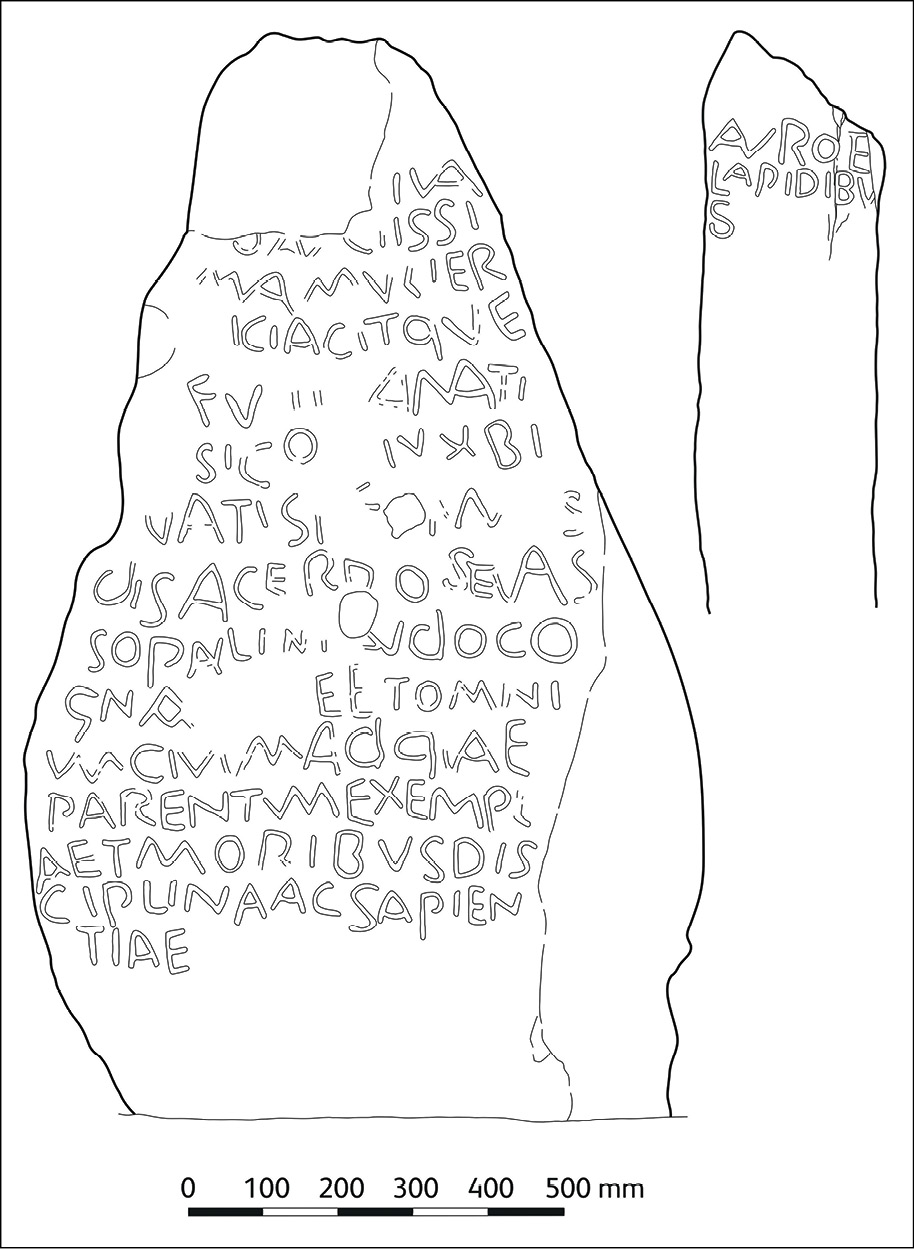
The earliest inscribed stones are a feature of churchyards in Wales, a surprising survival standing alongside what are often much later places of worship that have been rebuilt many times over the last 1,500 years. The inscriptions are mainly carved on natural pillars, slabs, and boulders of local stone, so their appearance reflects the characteristics of the local geology. The inscriptions are punched or incised, usually with a hand-pick and/or chisel, though occasionally they are scratched with a knife. It is possible that they were originally painted to make the letters stand out, in the manner of Roman inscriptions, though no evidence for this has survived.
Most of the inscriptions on these monuments are terse and formulaic. They demonstrate the use of three different languages: Latin, British (which was then evolving into Old Welsh), and Primitive Old Irish (inscribed in ogham characters). Of the 151 monuments currently known from Wales and the borders, 77.4 per cent have inscriptions in the Roman alphabet, 6 per cent use ogham, and 16.6 per cent have both ogham and Roman-letter inscriptions.

There are two main concentrations of memorial stones, each with its own form of words. The Christian formula hic iacit (‘here lies’) is commonly used in the north-west, followed by the name of the deceased. The majority of ogham and bilingual inscriptions have been found in the south-west and in Bannau Brycheiniog (as well as in Devon and Cornwall). These use the formula X fili Y (‘X son of Y’), which is the equivalent of the most common formula found in ogham inscriptions in Ireland (X maqi Y). One bilingual monument from Nevern, Pembrokeshire, uses both formulae: it commemorates Maglicunas maqi Clutar (‘Maglicu son of Clutar’) in ogham and Maglocvn (or Maglocvvi) fili Clvtori (‘Maglacu son of Clutorius’) in Roman letters.
A range of different people are named on these stones: they include Melus (at Llangian on the Llyˆn Peninsula), who might have been the descendant of a military physician based at the fort at Caernarfon, or Figulinus, son of Loculitus (at Llannor), whose name suggests a connection with pottery. There are individuals described as civis, meaning a citizen in the Roman secular sense (specifically ‘a citizen of Gwynedd’, which is one of the first references to the name of this north Wales kingdom), and magistratus, a Roman magistrate or office-holder. Some have British names – for example, King Catamanus (Cadfan in Welsh) at Llangadwaladr, and Gurgnin, Cuuris, and Cini at Llangaffo, Anglesey, or Mavohenus (with a Latin patronym, Lunaris) from Llanboidy, Carmarthenshire.

Involvement of the Irish
The distribution of ogham inscriptions and monuments commemorating individuals with Irish names provides the only contemporary evidence we have of Irish settlement in Wales around the end of the Roman period. Nancy Edwards wonders whether such settlement could have stemmed from Irish recruits in the late Roman army, just as the recruitment of Jutes and Frisians as mercenaries in south-eastern England acted as a catalyst for subsequent settlement by Germanic migrants from the near Continent.
In Wales itself, there is evidence of a possible Irish military presence in the form of an incomplete lead coffin lined with plaster unearthed at Rhuddgaer in south-west Anglesey in the 1870s. The two long sides have reverse inscriptions, both originally reading Camvloris hoi (‘Camuloris here’), with hoi being the equivalent of Primitive Old Irish xoi, found in some ogham inscriptions in Ireland. This Roman form of burial, with an Irish-influenced inscription, hints at an Irish presence in the fort at Caernarfon around the end of the Roman period. Another inscription, from Castell Dwyran, Carmarthenshire, commemorates Voteporix the Protector, thus combining an Irish name with a Roman military title originally used by members of the imperial bodyguard. If the title is regarded as hereditary rather than purely an expression of continuing or adopted Romanitas, it indicates that his forebear had been in the Roman military and might have belonged to a unit accompanying a Roman emperor, usurper, or possibly some other commander.
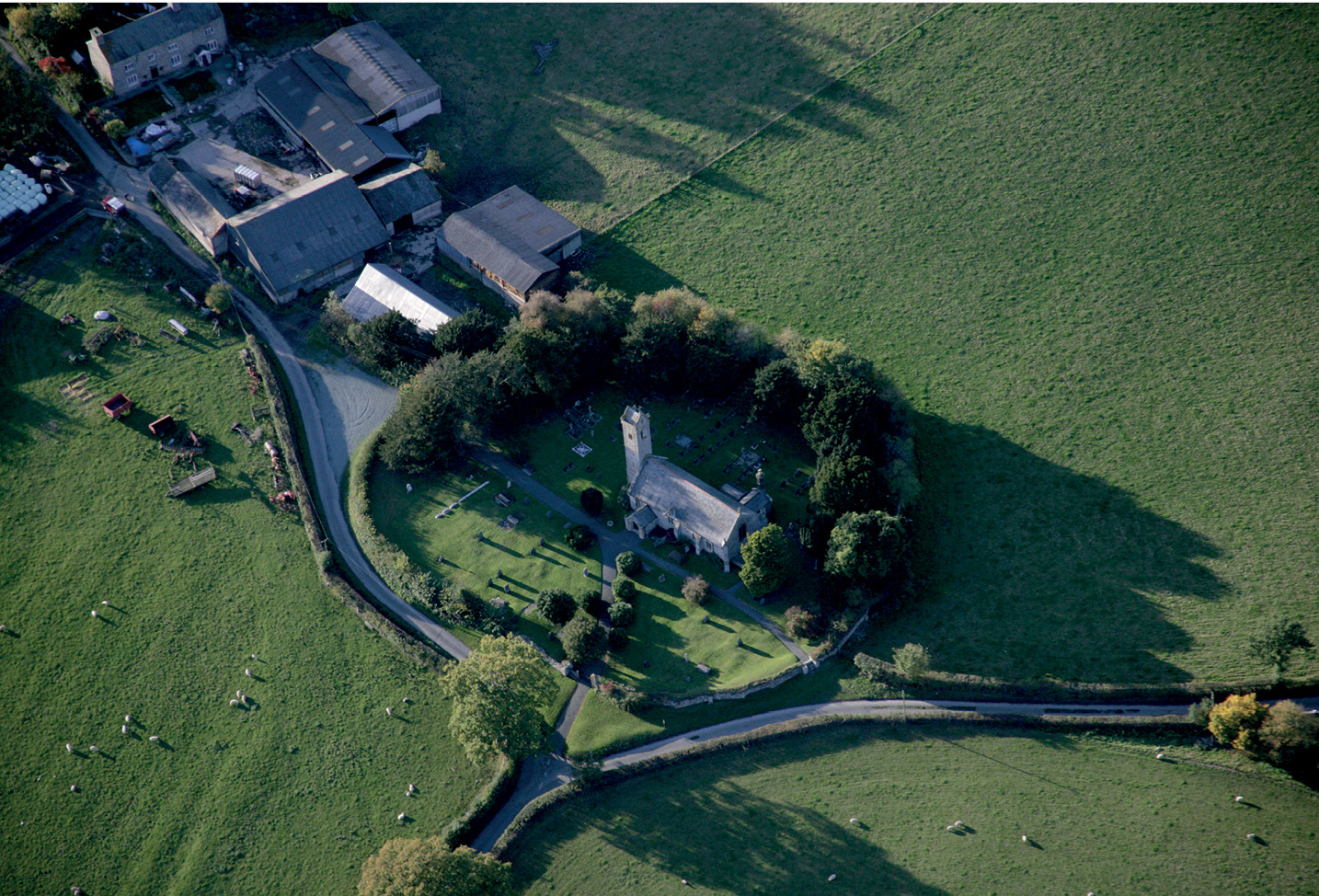
Nancy believes that the actual number of migrants might have been small and that the migration period lasted only until the end of the 6th century, but Irish settlement and integration had a lasting impact in the form of continuing Christian contacts across the Irish Sea. This, in turn, reflects the development of a shared cultural identity during the early medieval period, which arose out of the regular movement of people between Ireland and Wales, as well as with the south-western peninsula of England and beyond to Brittany, Gaul, and Iberia (see CA 385).

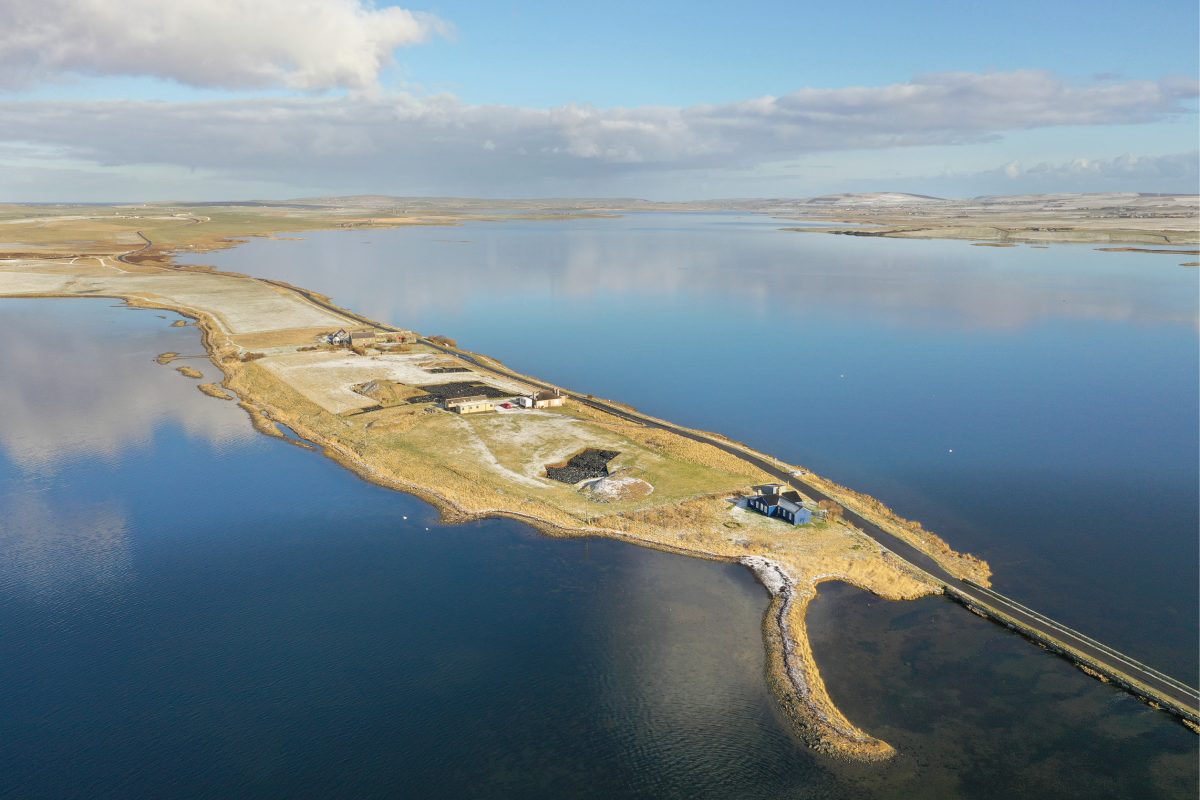
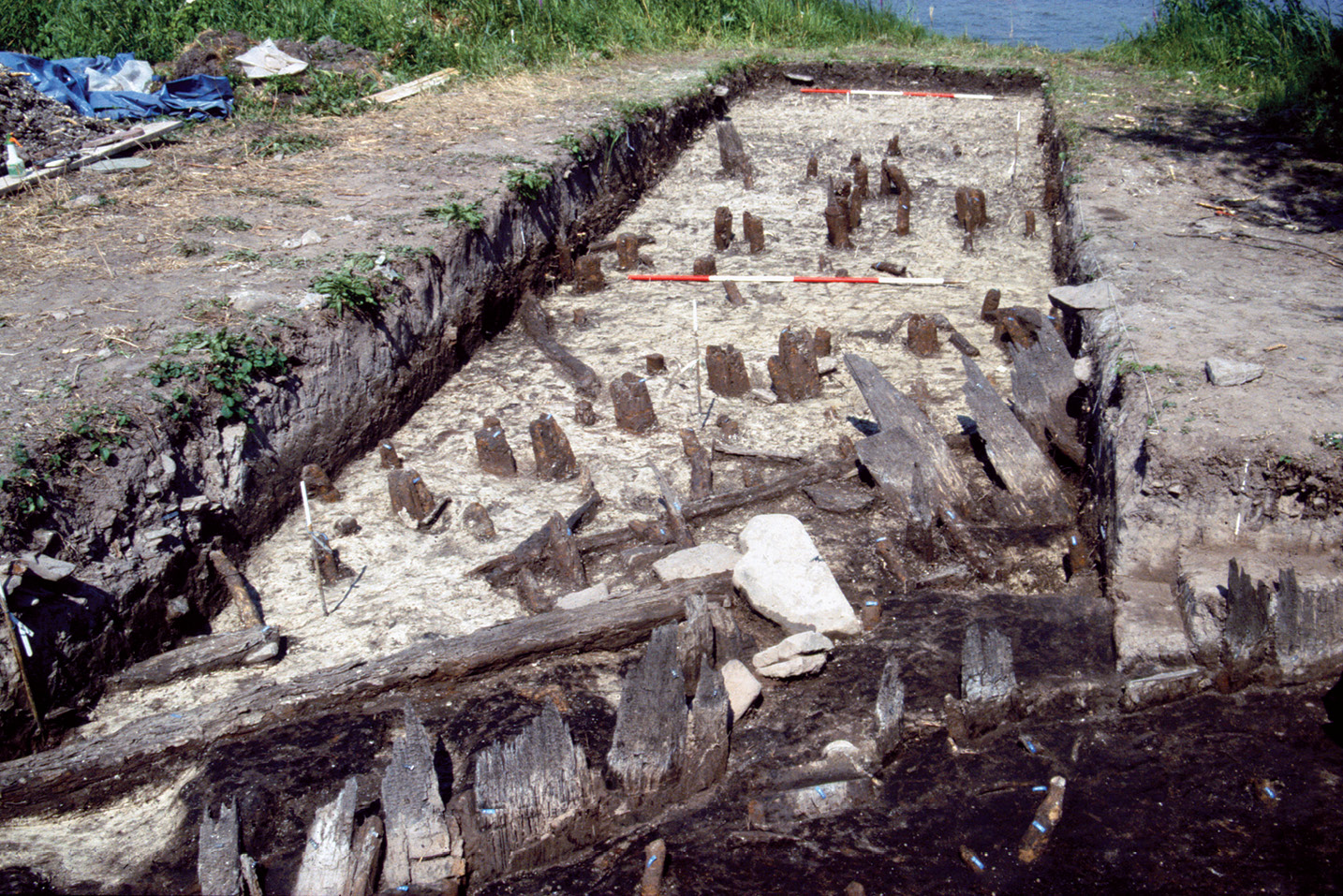
The evidence from inscribed stones and later written sources also suggests that people of Irish descent later became significant rulers. The massive, bilingual inscribed pillar from Clocaenog, Denbighshire, dated to the later 5th or early 6th century, formerly stood in a commanding location on high open moorland with wide views across the Clwydian hills to the east. The inscriptions commemorate Similin(i)us Tovisacos, a man with a Latin name, but Tovisacos is an earlier form of tywysog in Welsh and taoiseach in Irish, meaning ‘leader’. In an area of Wales that became the early medieval kingdom of Dyfed, settlers from modern Co. Waterford and east Co. Cork later achieved political dominance, while people of Irish descent emerged as rulers of the kingdom of Brycheiniog, as evidenced by the Irish-style crannog at Llangorse (see CA 364). This royal site is the only example yet identified in Wales of a type of artificial island more commonly found in Ireland.

Kingdoms and kinship
During the course of the 6th century, ogham inscriptions slowly died out (they ceased to be used altogether around AD 600) but the Irish construction X fili Y continued in Latin alongside the hic iacit formula. An example is the inscribed stone from Margam Mountain, Glamorgan, dated to the second half of the 6th century, which commemorates Bodvocus son of Catotigirnus and great-grandson of Eternalis Vedomavus. This increasing emphasis on the public display of lineage and descent suggests that kinship was of great importance and may have been particularly significant where a claim to authority over the surrounding landscape was involved.
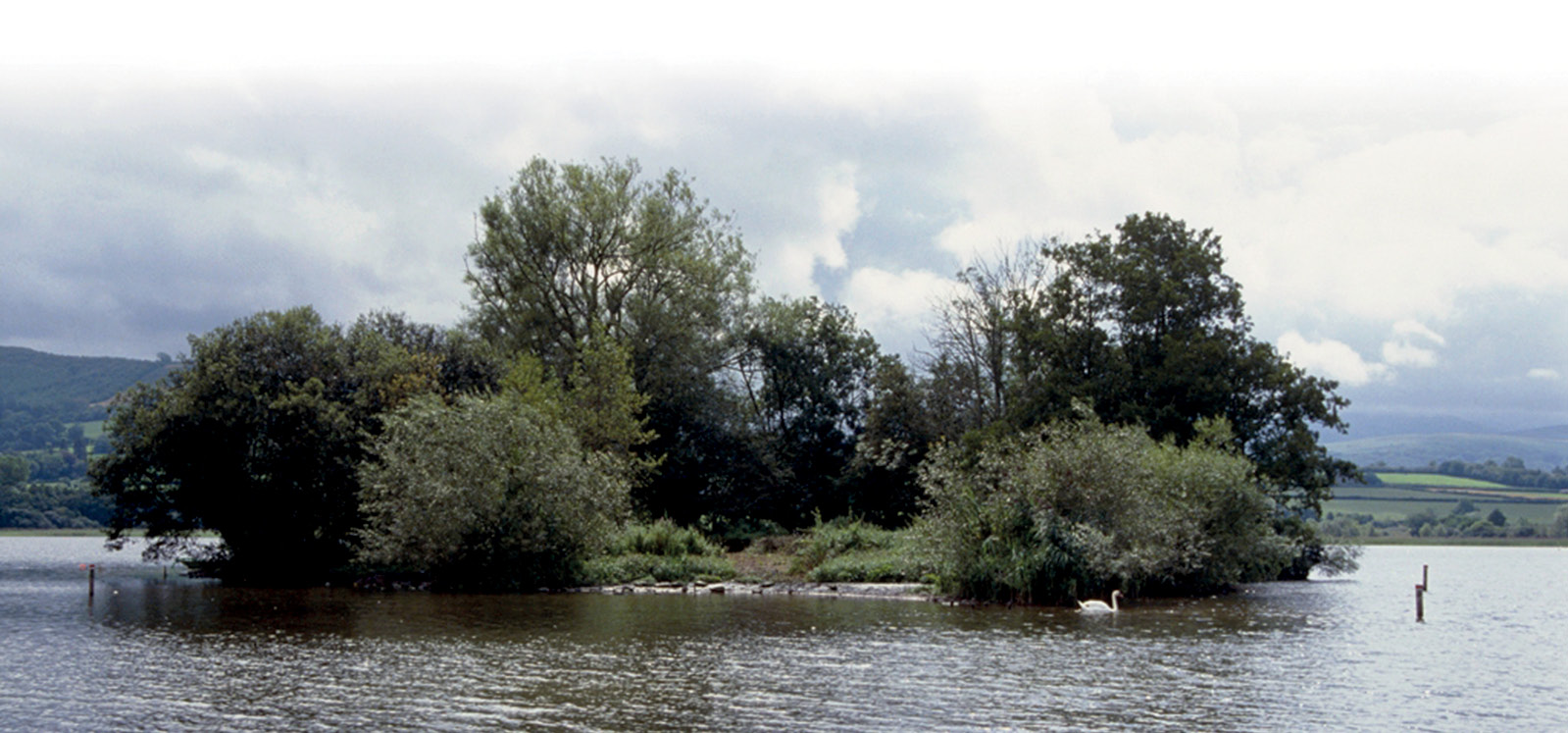
Above & below: The Llangorse crannog is the only example yet identified in Wales of a type of artificial island more commonly found in Ireland. Successive palisade lines are linked to the various extensions to the crannog’s original platform. Photos: Amgueddfa Cymru – National Museum Wales
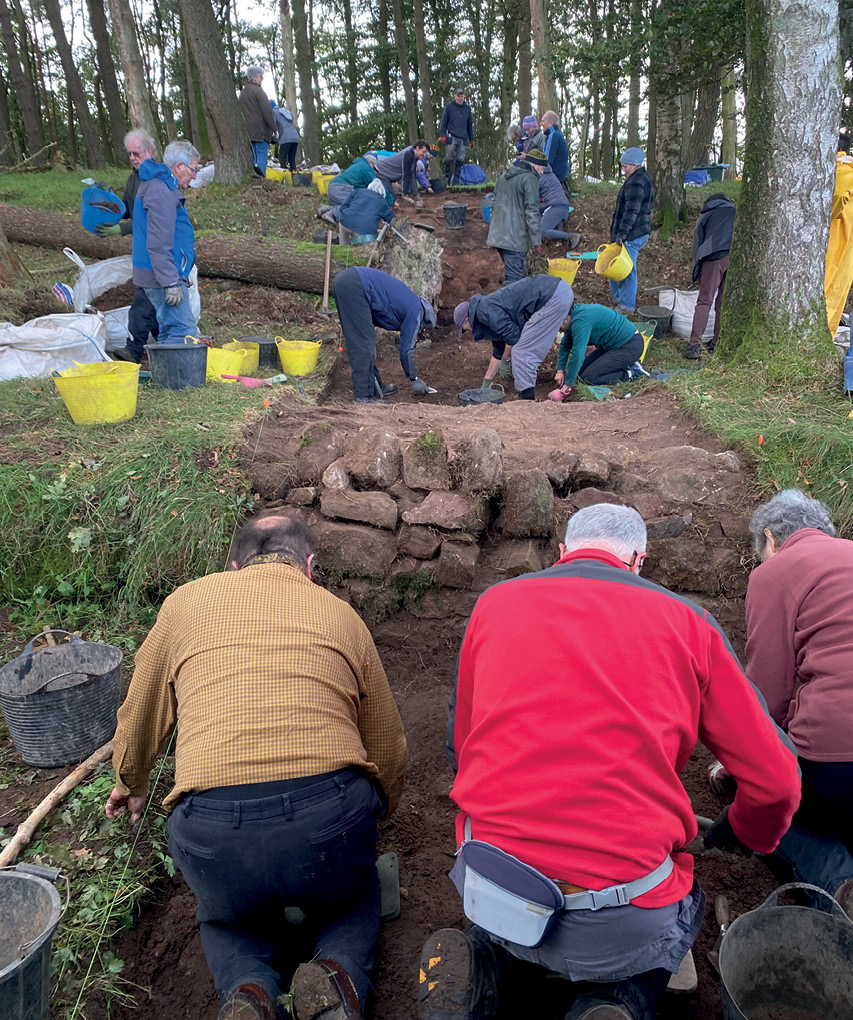
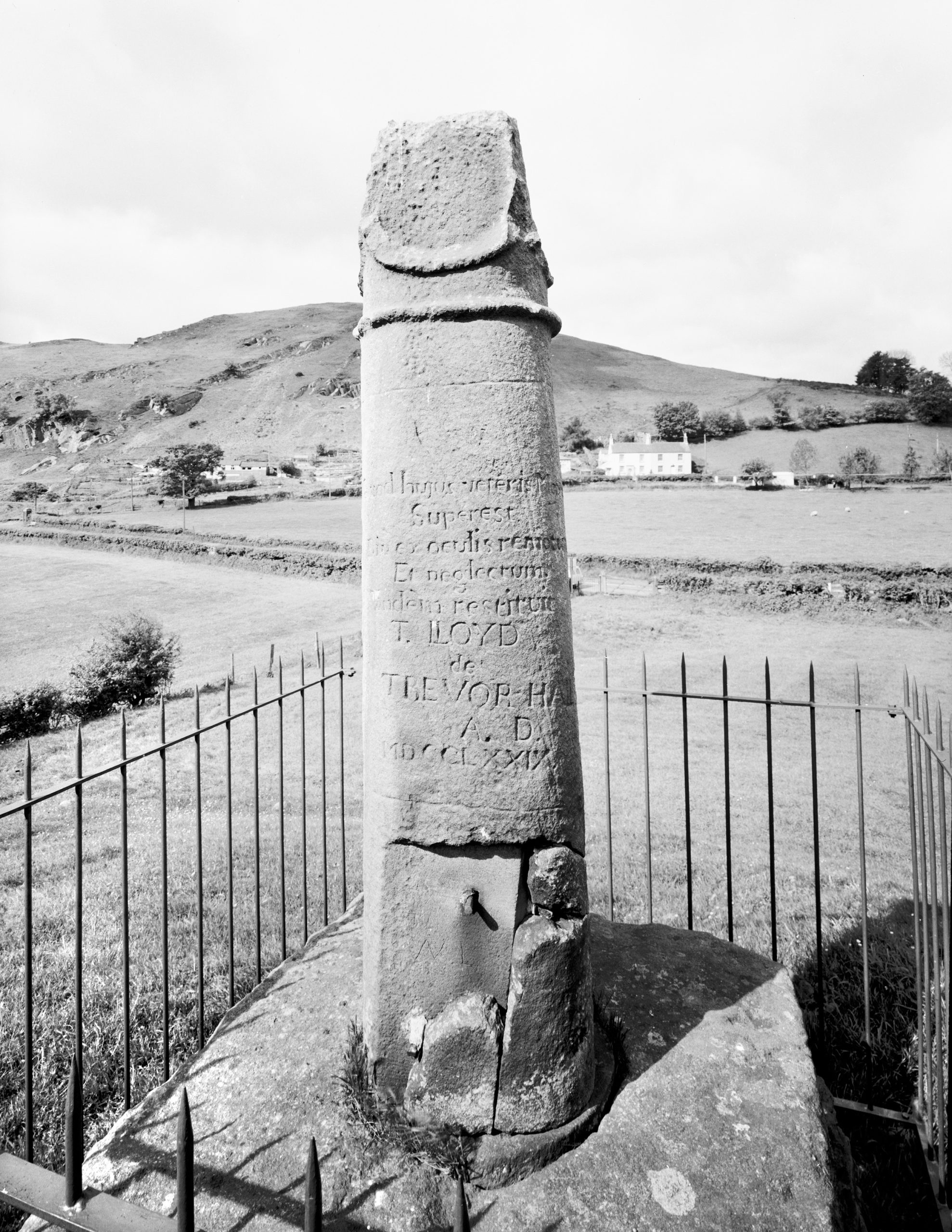
The prime example of these two traits is the Pillar of Eliseg, which Nancy Edwards has excavated and studied in depth. The inscribed pillar is an important piece of royal propaganda that draws a direct link between secular and ecclesiastical authority, and demonstrates the extent to which high-status individuals embedded their identity during the period of kingdom-formation in the idea of continuity between the ancient past, the Roman past, and Christianity.
The monument is sited strategically in the narrow valley of the Nant Eglwyseg on an important land route linking the east–west corridor of the Dee with the Vale of Clwyd and the coastal plain to the north. It stands on top of an impressive, multi-phase early Bronze Age burial cairn, dominating the valley but also making a symbolic connection with the broader mythical and heroic past. The incomplete Latin inscription informs us that the cross was set up at the instigation of Concenn (Cyngen, d. 854), the last early medieval ruler of Powys, to commemorate his great-grandfather, Eliseg, and his military successes against the English. It traces the origins of the kingdom of Powys back to the Roman past, and ends by invoking God’s blessing on Concenn, his household, and the kingdom of Powys in perpetuity.

Charters recording the grant of landed estates to monastic institutions provide further evidence of the support of early medieval rulers for ecclesiastical foundations, which increased their economic wealth and security. In return, the Church encouraged rulers to settle their disputes by peaceful means and atone for violent acts, as well as promoting monastic enclosures as places of sanctuary, and cemeteries as burial places for lay patrons and their families who would thus benefit from prayers said for their souls. Such land grants also served in some measure to protect the property of those who made them, since patronage was a means of control; this later resulted in the development of powerful regional establishments that were, in effect, hereditary family corporations.

The consequent proliferation of Christian sites and the transformation of the Welsh landscape is evident from the 7th century onwards through the erection of cross-carved stones and larger free-standing crosses in churchyards, to mark routeways and landing places, and to appropriate older ritual sites (such as holy wells) for Christian use. The written sources point as well to the sites of major churches as important meeting places and to the role of the Church in dispute-resolution, perhaps because of the presence of relics, on which oaths might be sworn, and of literate clerics who could record what was agreed.
Would anyone in the AD 400s trying to guess the outcome of the end of Roman occupation in Wales have predicted that Christianity would be one of the greatest winners and play such a formative part in the development of a new post-Roman cultural identity? That it did so is paradoxical, because it meant accommodating people whose status depended on acts of warfare and violence directly contrary to Church teaching. But the survival of Christianity in Wales, the marking of church sites and cemeteries, and the claiming of holy springs and wells for the religion, could not have been possible without the support and encouragement of those whom Gildas called tyrants. The Church, claiming to act with divine authority, could bestow a special kind of legitimacy on those temporal rulers, and in encouraging them to atone for their crimes through grants of land and resources, the power of the Church to do its work was greatly enhanced.
Further reading: Nancy Edwards, Life in Early Medieval Wales (Oxford University Press, ISBN 978-0198733218; £100, e-book £54.16).
All images, unless otherwise stated, are reproduced with the permission of Royal Commission on the Ancient and Historical Monuments of Wales (RCAHMW), under delegated authority from The Keeper of Public Records.