

Subscribe now for full access and no adverts
To ancient Egyptians, the notion of ‘identity’ was simply being among the people (remet or remetj) who lived and thrived on Kemet (the land of Egypt). A citizen was expected to adhere to Egyptian customs, cultural norms, and belief systems. To go against such an idea was to break cosmic order (ma’at), which in Egyptian eyes could result in threatening the delicate balance of the universe. Throughout the 3,000 years of ancient Egyptian history, pharaohs lived and ruled through the support of cosmic order and balance. Yet, as always, there are exceptions to the rule, particularly the ‘heretic king’ Akhenaten. On Akhenaten’s accession to power, he altered virtually every Egyptian social norm, and did so according to his self-perceived identity. Akhenaten put his own individuality at the forefront of an entire culture, breaking ma’at and effectively starting a battle between identity and tradition.
Becoming Akhenaten
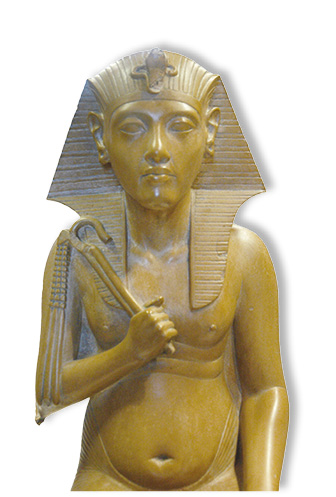
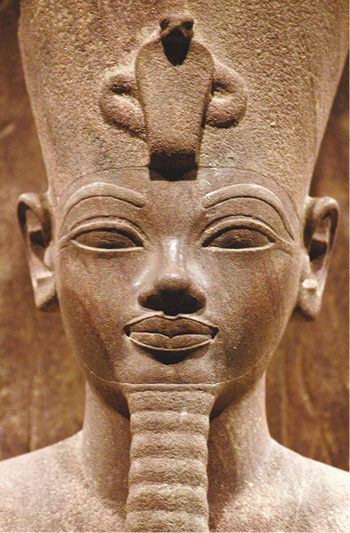
A statuette from the Musée du Louvre depicting Amenhotep IV in a more traditional pharaonic style at the beginning of his reign. Image: RBP
In c.1352 BC, Amenhotep IV came to the throne. The younger son and rightful heir of Amenhotep III, he took over on the death of his father and continued his father’s policies as all pharaohs had done for so many centuries before. Yet, by the fifth year of his reign, he was no longer Amenhotep IV. He had changed his name to Akhenaten, shut down the borders of Egypt to outside contact, closed the temples of Amun in Thebes, established a new capital (Akhet-aten, modern Amarna) in an unpopulated region in the middle of Egypt, and promoted his god, Aten, to the forefront of the religion in a monotheistic fashion, eventually banning the worship of traditional gods like Amun, Osiris, Horus, and others. In other words, Akhenaten systematically dismantled every concept of ma’at known to the ancient Egyptians, thus becoming what historians have since called him – the ‘heretic king’.
Why Akhenaten did this is uncertain. Theories range from an attempt to destroy the growing influence of Amun’s priests, to being a prophet of monotheism who mentored Moses and the rise of Judaism. With regards to the first theory, priests at the Temple of Amun had certainly grown in power, their wealth rivalling that of the pharaoh. As such, Akhenaten could have perceived them as a threat to his authority and seized the temples as a power play. However, that would only explain his shutting down the temples and expelling the priests, not banning the entire worship of all Egyptian gods. The names of Egyptian gods were often scratched out in inscriptions on temple walls, and worship was focused only on Aten.
One god?
Debate continues on whether his religion was a monotheism, monolatry (one god over others that exist but should not be worshipped), or henotheism (one god is favoured above other gods that are still tolerated). Ra seems to have been accepted, but as an aspect of Aten rather than in his original form (and as the word ra means ‘sun’ in the Egyptian language, it would hardly be possible to remove it). Ultimately, there are signs that Aten is meant to be the only one acknowledged or worshipped. In the ‘Great Hymn to the Aten’, believed to have been written by Akhenaten himself, a line states:
You sole god without equal! You have created the earth as you desired, quite alone, with people, cattle, and all creatures…
…
You are unique when you have risen in all your manifestations as the living Aten, who shines and gleams, distances himself and comes near; you create millions of forms from yourself alone.
Aten is repeatedly mentioned as the creator of all things. In one of the tombs in Amarna, inscriptions read ‘there is no other but him’. After Year 5 of Akhenaten’s reign, the plural form, ‘gods’, is never written, and existing inscriptions are found excised.

Still, even if we accept that Atenism was pure monotheism – on which the academic community does not wholly agree – the notion that Akhenaten was a mentor of Moses, or even Moses himself, is far outdated and has no evidence to support it. The connection between the two goes back to Sigmund Freud, who fancied himself an amateur Egyptologist. Modern supporters of the Akhenaten–Moses connection have been dismissed as fringe theorists, with little background in the era in question.
Dazzling sun-disc
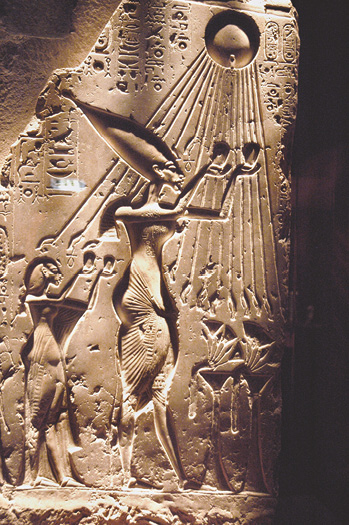
There is, however, a solid argument in the Egyptological community that Akhenaten’s father, Amenhotep III, had already been worshipped as Aten during his own reign, and Akhenaten was only continuing this after his father’s death. As an Egyptian version of the French king Louis XIV, Amenhotep III promoted himself as the ‘Sun-King,’ taking the title ‘the Dazzling Sun-Disc’, ‘sun disc’ being the literal translation of Aten. While the idea of Aten existed as early as the Middle Kingdom, it was always as an aspect of Ra, particularly its most ‘sentient aspect, the sun god’s visible body’. Aten was the disc in the heavens, but Ra was still the god. It was Amenhotep III who seemingly promoted Aten as a distinct, separate figure. That the two were connected is evident from Amenhotep’s jubilee celebrations as king, where his solar divinity was now confirmed, and Aten and Amenhotep ‘were one and the same’.
Thus, the Atenism of Akhenaten was ‘probably the culmination of that deification programme’ that began with his father. The only issue with this argument is that Amenhotep III was considered a ‘good’ pharaoh, whose reign was not excised from history. If the Aten cult had begun with him, he probably would have been subjected to damnatio memoriae as experienced by his successors. Instead, it was Akhenaten who was blamed, and – together with his wife, Nefertiti, and son, Tutankhamun – erased in damnatio memoriae.

An explanation could simply be that Amenhotep III promoted himself as Aten rather than Horus or Ra, and that he was still simply identifying himself with a god as all pharaohs had done previously. At no point did Amenhotep III outlaw the worship of other gods. Akhenaten was the one who removed the other gods in favour of his own. He also disrupted the state by moving its capital, and closing its borders. At a time of possible economic and foreign crisis, Egyptians might have felt panic, since by removing the gods of Egypt, Akhenaten had taken away the very thing the people could turn to in times of need. Royal decrees were sent out, obliging people who bore names compounded with ‘Amun’ to change them, as Akhenaten had done with his own birth name. Here was a systematic purging of the centuries-old state religion of Egypt, while leading the country into a likely recession, all in the name of Akhenaten’s self-perceived identity as Aten’s son.
Aten’s only son
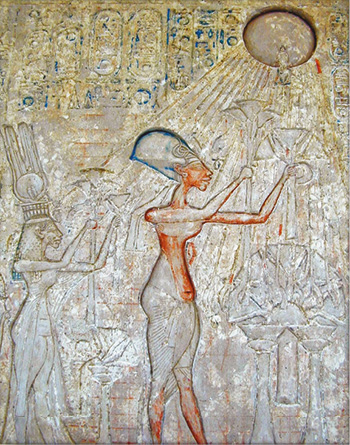
To push the issue further, Akhenaten maintained that only he could speak with his god, and that all other Egyptians had to go through him as an intermediary, rather than the temple priests. Akhenaten was the son of the sun, and ‘Aten tended personally only to the continued existence of the king’. Here it is clear: Akhenaten was meant to be the only child of this new god. Unlike Ra, the father of all Egyptians, Aten evidently ignored everyone else, despite Akhenaten praising him for being the reason for the man’s seed and the child in the woman’s womb. From Akhenaten’s perspective, the Aten creates all life, but only gives notice to the pharaoh. Thus Egyptians could not even pray to this new god that had been imposed on them.
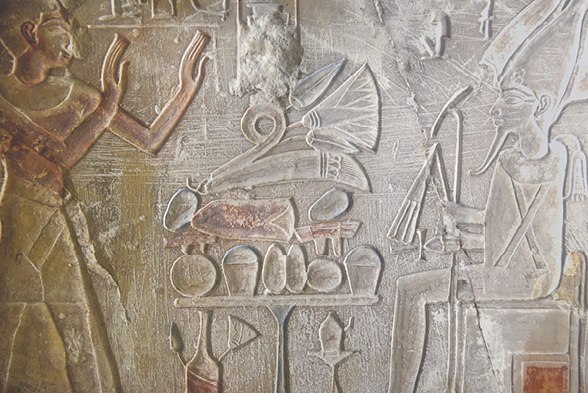
The very nature of cosmic order was understood to be in the hands of the gods, and this was the ultimate sign of disrespect to ma’at. If Egyptians denied these gods, even at the order of the pharaoh, they were surely doomed. Though, even here, confusion emerged, as Akhenaten effectively dissolved the Egyptian notion of the afterlife that people had looked forward to after a lifetime of following ma’at. Instead of the traditional notion of the Duat – the Egyptian underworld – ‘the realm of the dead, as Akhenaten and his intimates saw it, lay in the temple of Aten’. The souls of the deceased celebrated the Aten when he rose during the day, and slept in the temple at night when Aten set. As a result, the concept of the Book of the Dead and the great god Osiris, and the entire concept of the Egyptian cult of the dead, were dissolved. Osiris suffered from this reform to an even greater extent than Amun (whose name actually appeared on a few early monuments of Akhenaten before his banishment). At Akhenaten’s new capital, the title of ‘Osiris,’ to whom all Egyptians identified in the afterlife, had disappeared. No longer was Osiris the judge of the dead; now Akhenaten and Aten judged the fate of the souls of Egypt. Even pharaohs – living gods – had never been so bold as to claim this right. Not only did this fly in the face of ma’at; it was counter to Egyptian cultural identity, and the entire reason for living. One man altered the fate of millions.

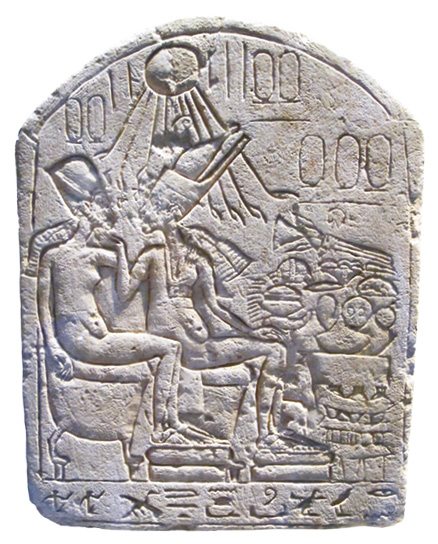
The irony is that Akhenaten claimed that he was a defender of ma’at. One of his many epithets was Ankh-em-Maat, ‘living according to the truth’. In the heretic king’s eyes, he was purifying the state and returning Egypt to first principles: the focus on the here and now. The millennia-old emphasis on death and the afterlife, on Osiris and the world beyond, was finished. Akhenaten claimed a ‘monopoly on truth of which he is the exclusive possessor and guardian’. In his eyes, he saw the direction Egyptians had gone down and sought to correct the error of their ways. To Akhenaten, they had walked the ‘primrose path’ for too long; but in the eyes of the people, this path had worked for 2,000 years. They had been living in accordance with cosmic harmony and, because of this, enjoyed peace, prosperity, and bountiful harvests. Now, at the hands of the heretic king, all of this was threatened because of his radical interpretation of the cosmos. Everyone else in Egypt was expected to adapt their traditional cultural mindset to his view of himself and of the world around him.

An unfinished statuette of Akhenaten kissing one of his daughters – another of the more intimate depictions of the so called ‘heretic king’. It is held by the Egyptian Museum, Cairo. Images: Karl Harris.
A new artistic identity
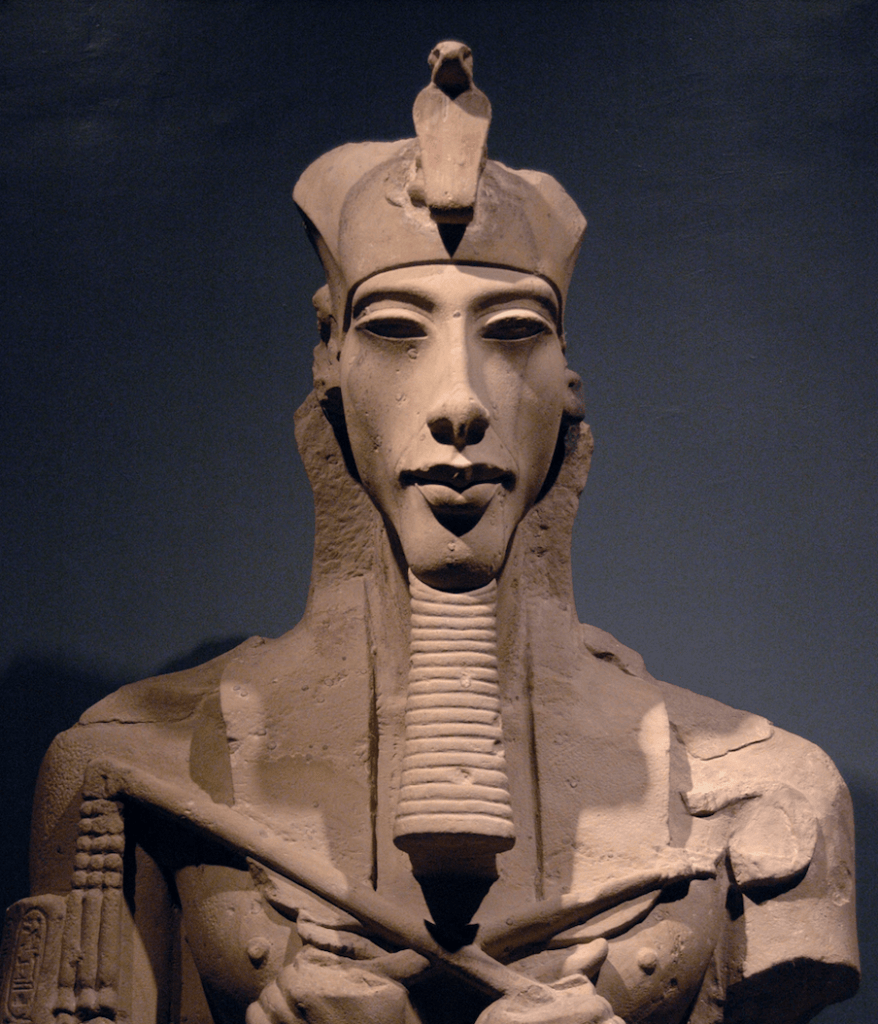
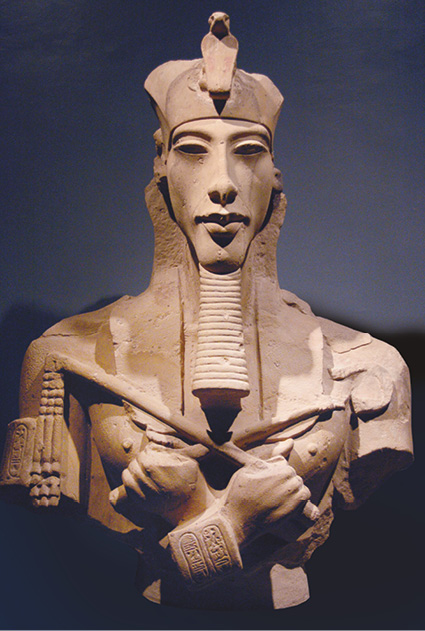
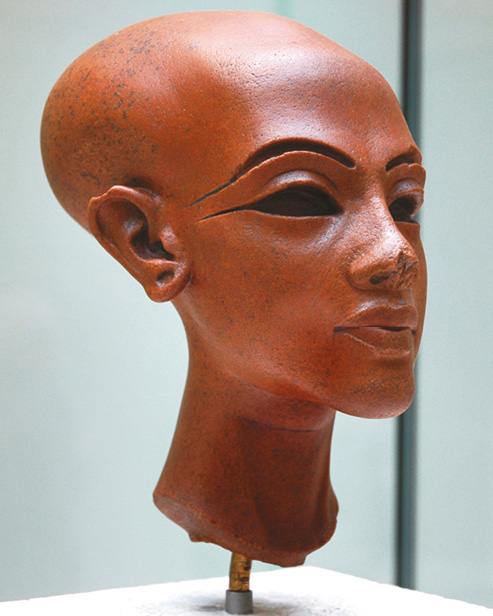
Akhenaten’s attempted destruction of Egypt’s traditional pantheon was only one of his revolutionary changes. His artistic reforms were equally shocking to the conventional system in Egypt. Normally, Egyptians followed a strict ‘canon of proportions’, whereby all figures were expected to conform to a particular representation. It had existed since before the time of Narmer, the first pharaoh of Egypt (c.3100 BC). Pharaohs were depicted as strong and rigid, usually making offerings to the gods, ‘opening’ the Nile for harvest season, and smiting their enemies. Akhenaten, however, chose to represent himself in more intimate scenes, together with his wife and six daughters, and, in some instances, he is shown holding his infant children. This was absolutely alien to traditional Egyptian mindsets. The pharaoh – a masculine, powerful god-like being – did not kiss babies. He crushed skulls and communed with the gods. Yet, according to some psychologists (notably Freud again), this conscious representation fulfilled a sort of ‘feminine wish fantasy’. Akhenaten is often pictured with delicate or feminine features, including thick lips, prominent breasts, and inflated thighs. Some historians believed Akhenaten suffered from Fröhlich’s syndrome, an endocrine disorder that can lead to such physical deformities. However, sufferers are left impotent, an obvious impossibility as Akhenaten had six daughters and at least one son.
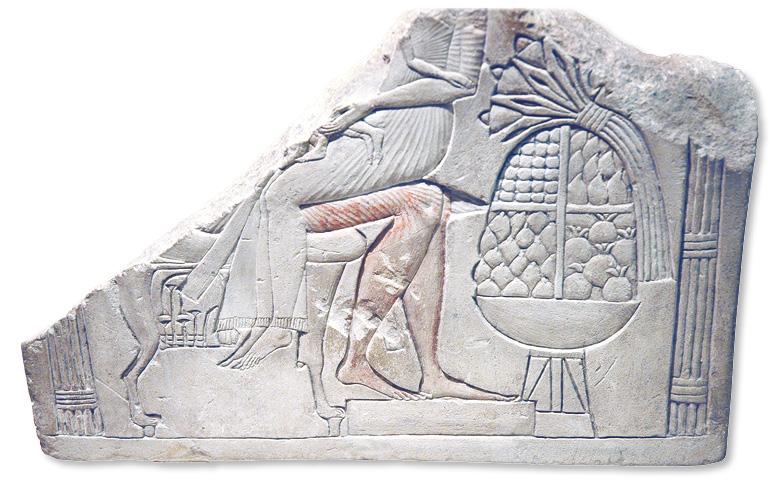
Another theory proposes that the king suffered from another disorder: Marfan syndrome, a genetic disease that leaves the individual with slender bones, long face, wide pelvic girdle, and hypogenitalism. This coincides with artistic representations of the pharaoh, as well as possible deformities in the mummy believed to be that of Akhenaten, found in Tomb 55 of the Valley of the Kings. Originally believed to be a female due to the pelvis, the body is now determined to be undoubtedly male. Another symptom is abnormally shaped corneas that often leave the sufferer with severe vision problems, meaning Akhenaten could have been blind for most of his adult life. The Aten (the visible sun disc) could have been his god of choice because, with poor vision, he may have seen rays of light everywhere before him. Nicholas Reeves thinks much of Akhenaten’s career falls into place with this explanation, as Amarna art shows a high degree of intimacy, emphasising the need for physical touch, and a love for music and poetry that is often associated with the blind.
However, many pathologists believe the mummy only shows slight elongation of the skull but is otherwise normal. It is thus equally possible that Akhenaten did not actually suffer from any genetic abnormality, and simply chose to be portrayed in such a manner. This would certainly go against the tradition of kings in the past, and perhaps reflected the androgynous bisexual nature of the Aten, believed by the pharaoh to be both ‘the father and mother of mankind’. The fact that art depicts the pharaoh as normal and traditional during his early reign strengthens the argument that it was a conscious, deliberate choice, rather than a result of genetic abnormality. Then again, perhaps there was a slight genetic deformity (seen in the skulls of Tutankhamun and the KV55 mummy), and Akhenaten elected to exaggerate these abnormalities to show a more expressive style during his era. Whatever his reasoning, the end result is the same. He broke from the old styles and chose his brand in stark contrast to traditional Egyptian representation.
The battle for identity
James Henry Breasted argued that Akhenaten was the first individual in human history. It makes him a fascinating case study, and his impact on world history has been far-reaching. Yet as the ‘first’ individual in history, it shows he relegated the cultural identity of everyone else in Egypt – every peasant and labourer, craftsman and artisan, merchant and trader, priest and scholar, man, woman, and child – to the background. Their traditions, beliefs, and values meant nothing to him, as his identity and values took centre stage. Freud considered Akhenaten to be a prophet. While he was not accepted as a religious prophet by his people, perhaps he will one day be seen as a prophet of another sort – an identity prophet; a man who sought to define himself in a world where his identity was one defined before he even existed. It is a battle that has raged on for millennia, and a battle that will continue as long as humans are here to rage. There is, to put it in terms Akhenaten would appreciate, nothing new under the sun.
Jason S Whitmarsh is a Professor of Humanities at St Johns River State College in Florida, USA. His graduate work specialised in the Classics, while his current research includes the pyramid builders of the Fourth Dynasty, the Thutmosids in the Eighteenth Dynasty, and Aegean–Egyptian connections.
Further reading
D Redford (1984) Akhenaten: the heretic king (Princeton, NJ: Princeton University Press).
E Hornung (1999) Akhenaten and the Religion of Light  (Ithaca, NY: Cornell University Press).
N Reeves (2001) Akhenaten: Egypt’s false prophet (London: Thames & Hudson).
R W Johnson (1966) ‘Amenhotep III and Amarna: some new considerations’, The Journal of Egyptian Archaeology 82: 65-82.