Subscribe now for full access and no adverts
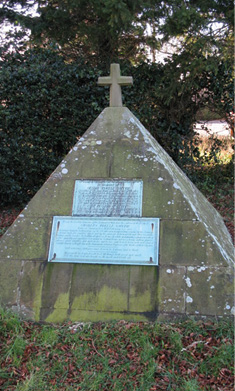
In the village of Sharow near Ripon there lies a small pyramid – the grave, surprisingly, of an Astronomer Royal for Scotland. Charles Piazzi Smyth, FRS, FRSE, FRAS, FRSSA, was born on 3 January 1819 in Naples, where his father was a naval captain and later an admiral. Charles was given the name ‘Piazzi’ because his father had been a friend of Guiseppe Piazzi, who discovered the first dwarf planet, Ceres, in January 1801. Smyth’s father had an observatory from which they viewed Halley’s Comet and the Great Comet of 1843, which was visible in broad daylight.
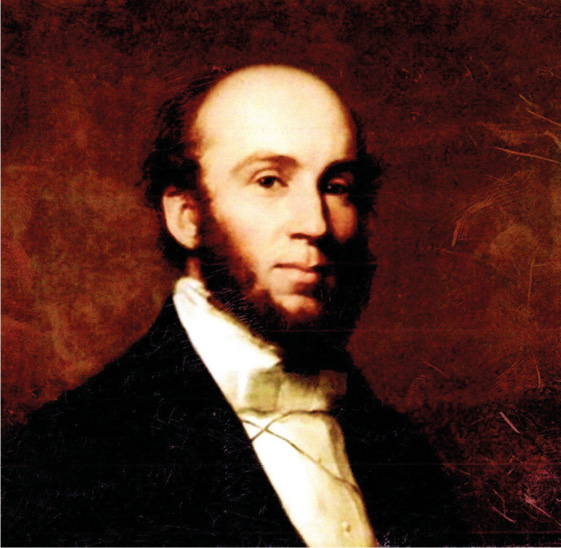
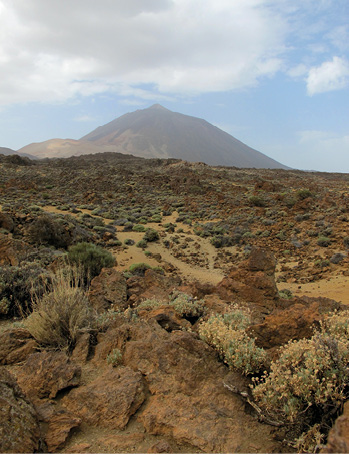
When he was only 16, Charles was sent to South Africa as an assistant at the observatory there. He soon proved his worth, making many drawings and paintings in addition to his observations. At the age of 24, he successfully applied for the position of Astronomer Royal for Scotland, but became disillusioned with the smoky atmosphere, which impeded his view of the heavens. Following suggestions by Sir Isaac Newton (1642-1727), he obtained funds to set up an observatory in the clear air of Mount Teide in Tenerife, the first high-altitude project of its type, and the forerunner of many others. Smyth obtained support from Sir George Airy (1801-1892), the British Astronomer Royal, and Sir William Herschel (1738-1822), the German-born British astronomer and composer. The necessary equipment was transported to Tenerife on the Titania, which was owned by engineer Robert Stephenson (1803-1859), the son of George Stephenson, the ‘father of railways’.

In 1852, he inaugurated the one o’clock dropping of the ball on Nelson’s Monument in Edinburgh, to which in 1861 he added the daily firing of the one o’clock cannon. This enabled mariners on the nearby Firth of Forth to set their chronometers without having to take them to the observatory. His work on the solar spectrum was recognised by the award in 1880 of the Makdougall Brisbane Prize (for the promotion of scientific research). He made observations of double stars and measurements of the infrared radiation of the moon.
Obsession with pyramids
After all this excellent scientific work, Smyth became obsessed with the Great Pyramid of Giza, following the publication of The Great Pyramid: Why Was It Built? And Who Built it? in 1859 – the same year as Darwin’s Origin of Species. The author of the pyramid book was an eccentric publisher by the name of John Taylor (1781-1864; not related to the author of this article). Based on the records of travellers, Taylor believed the builder of the Great Pyramid to have been the biblical Noah.
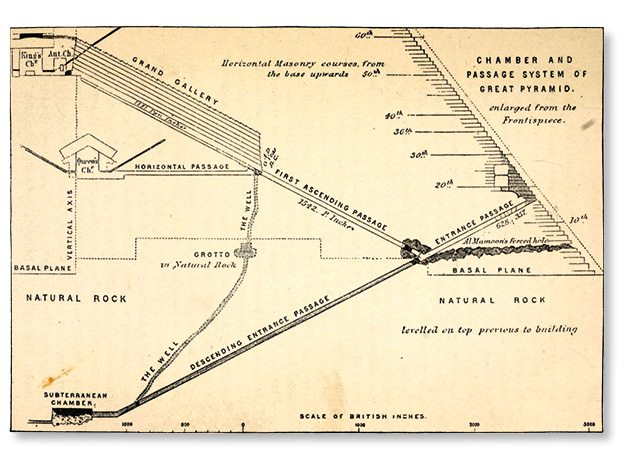
Smyth corresponded with Taylor and decided to visit Egypt himself, although the Royal Society refused him a grant. He travelled to Giza taking with him a range of equipment, including a special camera, and set about making a huge number of measurements of the dimensions of Great Pyramid and its internal passages, and the angles of slope of the passages. He was the first to photograph the interior of the pyramid, using a magnesium light and producing stereo images. He developed the theory that all the dimensions were multiples of a single unit, which he called the ‘pyramid inch’ (equal to 1.001 British inches, about 2.54 cm). He went on to propose other units of measurement, such as the ‘pyramid pint’ and a temperature scale. He believed that the pyramid-inch unit was ‘God-given’, handed down through the ages from the time of Noah’s son Shem. He said that the number of pyramid inches in the perimeter of the pyramid was 100 times the number of days in a year. He also calculated a numerical relationship between the height of the pyramid in inches and the distance of the earth from the sun in miles. Using his astronomical training, he calculated the exact latitude and longitude of the pyramid.
From his work on the pyramid, and drawing on Taylor’s theories, he became a proponent of British Israelism, the belief that the British are direct descendants of the Ten Lost Tribes of ancient Israel; he thought that the Hyksos were Hebrews, and that they built the Great Pyramid directed by the hand of God.
Smyth published his findings in Our Inheritance in the Great Pyramid (1864, with further expanded editions later), Life and Work in the Great Pyramid (1867), and On the Antiquity of Intellectual Man (1868). He was awarded the 1865-1867 Keith Gold Medal (for scientific papers) by the Royal Society of Edinburgh, but, in 1874, the Royal Society of London rejected his paper on the design of Khufu’s pyramid, as they had Taylor’s. He gained support for his ideas particularly in America, but scientific investigators gradually marginalised him. It was Flinders Petrie who finally demolished his pyramid hypothesis when he showed that Smyth’s measurements were incorrect.
Several websites provide more detailed information about Smyth, and in 2019 an exhibition was held in Edinburgh commemorating the bicentenary of his birth. His sister Henrietta married the Reverend Baden Powell, and their son Robert became the founder of the worldwide Scout Movement. In 1855, Smyth married Jessie Duncan, who was an experienced geologist. She accompanied him on all his travels and is buried beside him in the churchyard at Sharow.
Dr John J Taylor is a retired consultant pathologist and a lifelong amateur Egyptologist. He has contributed several articles to Ancient Egypt magazine. John is a resident of Jersey in the Channel Islands, where he has been closely involved with the promotion and teaching of Egyptology.